Live aus Panama · wächst weiterLive from Panama · still growing
Panamá2 0 2 6
Drei Wochen zwischen Pazifik und Karibik — Altstadt, Vulkankrater,
Hochland-Kaffee und ein Bungalow über dem Riff.Three weeks between the Pacific and the Caribbean — a colonial old town, a volcanic crater, highland coffee and a bungalow above the reef.
28. Juli – 16. August · Max & Charlotte28 July – 16 August · Max & Charlotte
scrollen ↓scroll ↓
Die ReiseThe journey
Sieben Kapitel, fünf Regionen, ein Land.Seven chapters, five regions, one country.
Von der kolonialen Altstadt über einen bewohnten Vulkankrater und das
Kaffeehochland bis zu den Inseln der Karibik. Wir sind gerade unterwegs — dieser
Bericht wächst mit der Reise. Alle paar Tage kommt ein Kapitel dazu, samt Bildern und dem,
was unterwegs hängengeblieben ist.From the colonial old town through an inhabited volcanic crater and the coffee highlands to the islands of the Caribbean. We are on the road right now — this account grows as the trip does. Every few days another chapter appears, with pictures and whatever stuck with us along the way.
4 von 7 Kapiteln · zuletzt aktualisiert am 6. August 20264 of 7 chapters · last updated 6 August 2026
19
NächteNights
~1 400
km über Landkm overland
5
RegionenRegions
2
OzeaneOceans
Die RouteThe route
Einmal quer durch PanamaStraight across Panama
LegendeLegend
über Landoverland
Inlandsflugdomestic flight
Land & LeuteGood to know
Ein paar Dinge, die man über Panama wissen sollteA few things worth knowing about Panama
Zwischen den Etappen ist uns einiges aufgefallen, das die Reiseführer nur am Rande erwähnen — und das Panama erst richtig erklärt.Between the stages we picked up on a few things the guidebooks only mention in passing — and that really explain Panama.
Panama in ZahlenPanama by the numbers
BevölkerungPopulation
~4,5 Mio.
FlächeArea
75.420 km² — etwa so groß wie Bayern75,420 km² — about the size of Bavaria
HauptstadtCapital
Panama-StadtPanama City
WährungCurrency
US-Dollar & Balboa (1:1)US dollar & balboa (1:1)
BIP pro KopfGDP per capita
~19.100 USD — der höchste Mittelamerikas~US$19,100 — the highest in Central America
WirtschaftswachstumEconomic growth
Ø ~4,7 %/Jahr — Spitze der Region~4.7%/yr on average — leading the region
SicherheitSafety
~13 Tötungsdelikte je 100.000 — unter dem Regionsschnitt~13 homicides per 100,000 — below the regional average
ArmeeArmy
keine — 1990 abgeschafftnone — abolished in 1990
WährungCurrency
Zwei Währungen, ein WertTwo currencies, one value
Bezahlt wird in US-Dollar — offiziell aber heißt die Währung Balboa, seit 1904 fest im Verhältnis 1:1 an den Dollar gekoppelt. Die Scheine sind US-Dollar, den Balboa gibt es nur als Münze, in Größe und Gewicht identisch mit den US-Cents.You pay in US dollars — but the official currency is the balboa, pegged 1:1 to the dollar since 1904. The banknotes are US dollars; the balboa exists only as coins, identical in size and weight to US cents.
Papiergeld in Balboa? Das gab es genau einmal: 1941 ließ Präsident Arnulfo Arias Scheine drucken — nach seinem Sturz wurden sie schon nach sieben Tagen wieder eingezogen. Sammler nennen sie bis heute die „Seven-Day Notes".Paper balboas? They existed exactly once: in 1941 President Arnulfo Arias had notes printed — after his overthrow they were withdrawn within seven days. Collectors still call them the "Seven-Day Notes".
NamensgeberThe namesake
Wer war Balboa?Who was Balboa?
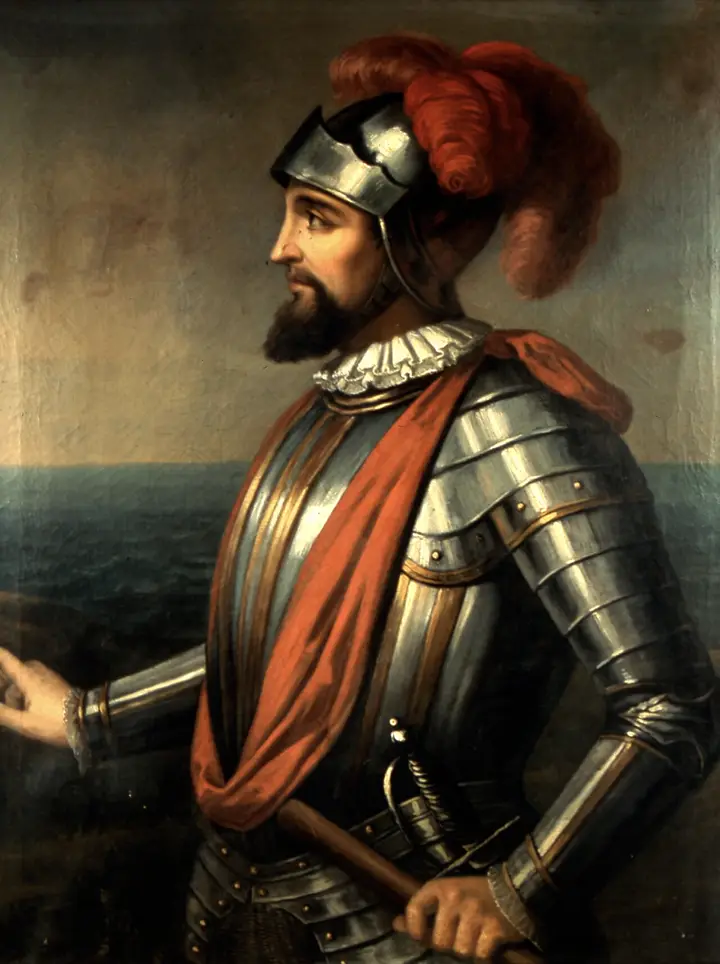
Vasco Núñez de Balboa · gemeinfreiVasco Núñez de Balboa · public domain
Die Währung trägt den Namen des spanischen Entdeckers Vasco Núñez de Balboa, der 1513 als erster Europäer vom amerikanischen Festland aus den Pazifik erblickte — er taufte ihn „Mar del Sur", das Südmeer.The currency is named after the Spanish explorer Vasco Núñez de Balboa, who in 1513 became the first European to sight the Pacific from the American mainland — he named it the "Mar del Sur", the South Sea.
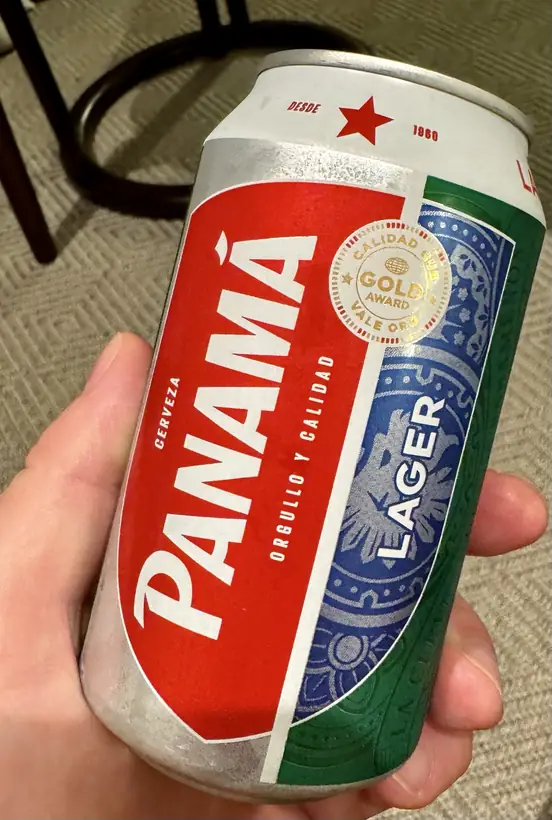
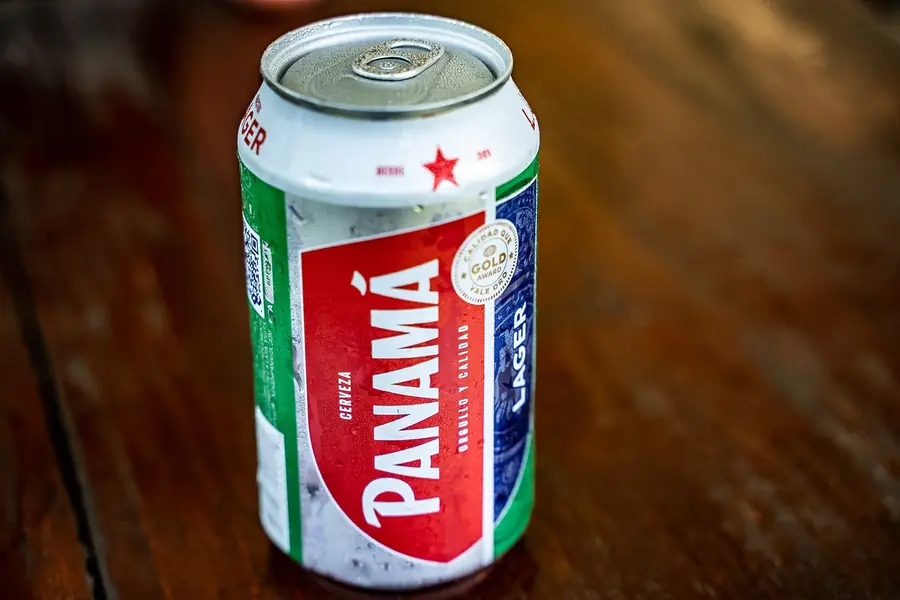
Sein Name steckt heute überall im Land: in der Währung, im wichtigsten Pazifikhafen — und in einem der bekanntesten Biere Panamas.His name is everywhere in the country today: in the currency, in the main Pacific port — and in one of Panama's best-known beers.
GeografieGeography
Sonnenaufgang über dem PazifikSunrise over the Pacific
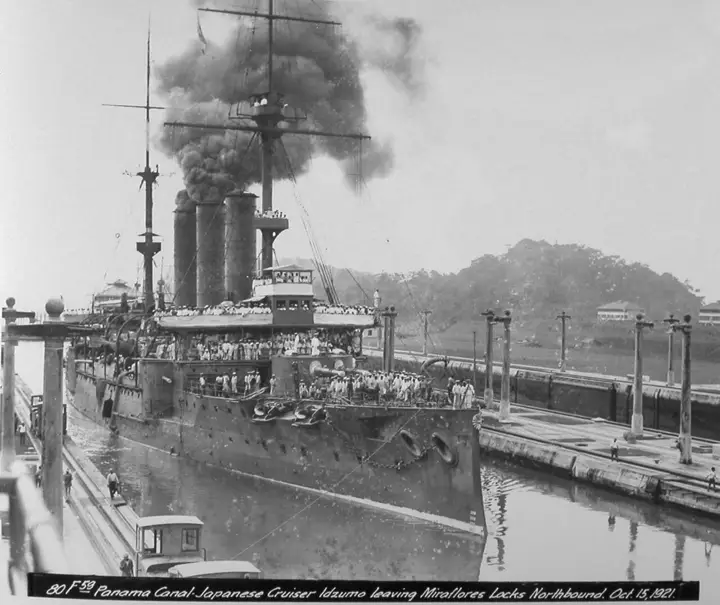
Miraflores-Schleusen, 1921 · gemeinfreiMiraflores Locks, 1921 · public domain
Man stellt sich Panama als senkrechte Brücke zwischen den Kontinenten vor — tatsächlich liegt das Land quer, in einer weiten S-Kurve. Am Kanal liegt der Pazifik deshalb östlich des Atlantiks.We picture Panama as a vertical bridge between the continents — but the country actually lies sideways, in a wide S-shaped bend. At the canal, that puts the Pacific east of the Atlantic.
Die Folge: Panama ist einer der wenigen Orte der Welt, an denen man die Sonne über dem Pazifik aufgehen und über dem Atlantik untergehen sehen kann.The result: Panama is one of the few places on Earth where you can watch the sun rise over the Pacific and set over the Atlantic.
Menschen & GlaubePeople & faith
Ein freundliches NebeneinanderA friendly coexistence
Panama ist ein Einwanderungsland — ein Schmelztiegel aus indigenen Völkern und afrokaribischen, europäischen, chinesischen, arabischen und jüdischen Wurzeln. Geprägt ist es überwiegend christlich (katholisch, zunehmend evangelikal), lebt aber eine bemerkenswerte Toleranz: Konfessionen und Kulturen stehen erstaunlich freundlich nebeneinander.Panama is a country of immigrants — a melting pot of indigenous peoples and African-Caribbean, European, Chinese, Arab and Jewish roots. It is predominantly Christian (Catholic, increasingly evangelical), yet strikingly tolerant: faiths and cultures sit remarkably comfortably side by side.
Ein Beispiel ist die jüdische Gemeinde — mit rund 10.000 Menschen die größte Mittelamerikas; Panama hatte sogar schon jüdische Präsidenten, Antisemitismus ist kaum ein Thema. Dazu die enge Bindung an die USA und ein unternehmerischer, marktwirtschaftlicher Geist — vieles fühlt sich für Europäer zugleich vertraut und ganz eigen an.One example is the Jewish community — around 10,000 people, the largest in Central America; Panama has even had Jewish presidents, and antisemitism is barely an issue. Add the close ties to the USA and a distinctly entrepreneurial, free-market spirit — much of it feels both familiar and entirely its own to European visitors.
HauptstadtThe capital
Ein Bürgermeister wie kein andererA mayor like no other
Panama-Stadt regiert seit 2024 Mayer Mizrachi — ein junger Tech-Unternehmer (er gründete einen verschlüsselten Messenger), der praktisch nur über Social Media und ohne nennenswertes Wahlkampfbudget gewann. Er ist der erste jüdische Bürgermeister der Stadt und einer der ranghöchsten jüdischen Amtsträger Lateinamerikas — ein sprechendes Sinnbild für die Offenheit des Landes.Panama City has been run since 2024 by Mayer Mizrachi — a young tech entrepreneur (he founded an encrypted messenger) who won almost entirely via social media and with next to no campaign budget. He is the city's first Jewish mayor and one of the highest-ranking Jewish officials in Latin America — a telling symbol of the country's openness.
SicherheitSecurity
Ein Land ohne Armee — aber mit vielen UniformenA country without an army — but plenty of uniforms
Weil Panama seit 1990 kein Militär mehr hat, sorgt die zivile „Fuerza Pública" für Sicherheit — vier Dienste, dazu eine Einheit eigens für Touristen:Because Panama has had no military since 1990, the civilian "Fuerza Pública" keeps order — four services, plus a unit dedicated to tourists:
Policía Nacional — die klassische Polizei: öffentliche Ordnung, Kriminalitätsbekämpfung und Streife in Städten und Dörfern.the classic police force: public order, crime-fighting and patrols in towns and cities.
SENAFRONT(Grenzdienst) — bewacht die Land- und Flussgrenzen, vor allem den wilden Darién zu Kolumbien; gegen Schmuggel, Drogen und illegale Migration.(border service) — guards the land and river borders, above all the wild Darién toward Colombia; against smuggling, drugs and illegal migration.
SENAN(Luft- & Seedienst) — Küstenwache und Luftüberwachung: Meere, Küsten, Inseln und Drogenabwehr zu Wasser und in der Luft.(air & naval service) — coastguard and aerial surveillance: seas, coasts, islands and drug interdiction by water and air.
SPI(Institutioneller Schutz) — Personenschutz für Präsident und Würdenträger, dazu strategische Orte, Kanalufer und belebte Plätze wie die Cinta Costera.(institutional protection) — bodyguards for the president and dignitaries, plus strategic sites, the canal banks and busy spots like the Cinta Costera.
Policía de Turismo — die freundlichen, die man als Reisender am ehesten trifft: eigens für Touristen da, etwa in der Altstadt Casco Viejo.the friendly ones you're most likely to meet as a traveller: dedicated to tourists, e.g. in the old town of Casco Viejo.
Natur & KlimaNature & climate
Mehr Vögel als die USA und Kanada zusammenMore birds than the USA and Canada combined
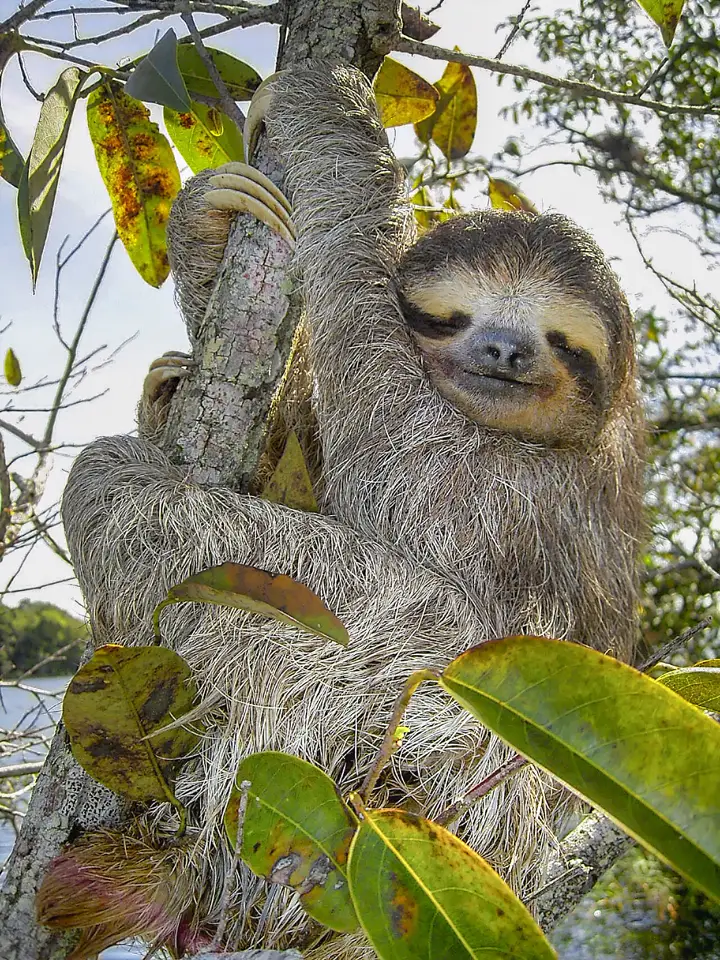
Faultier · gemeinfreiA sloth · public domain
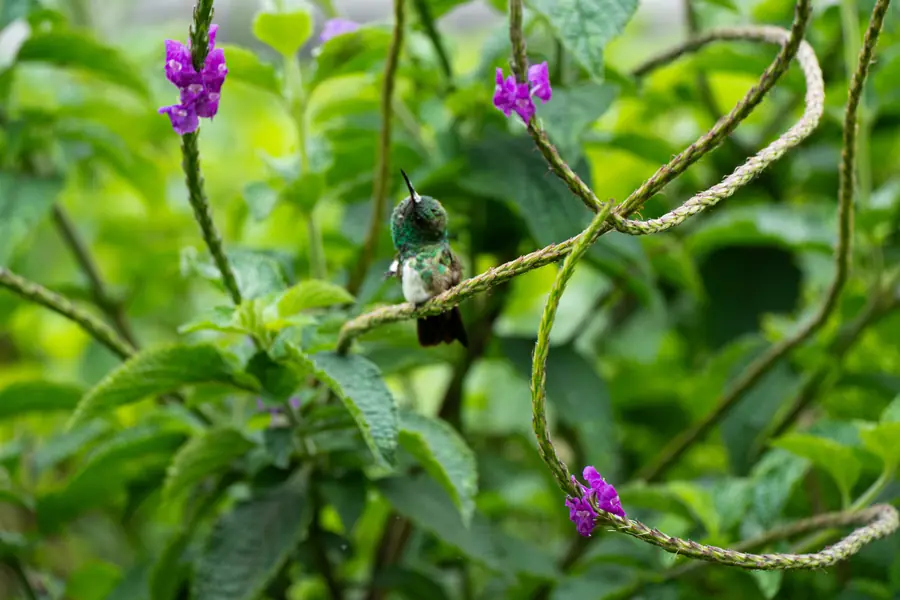
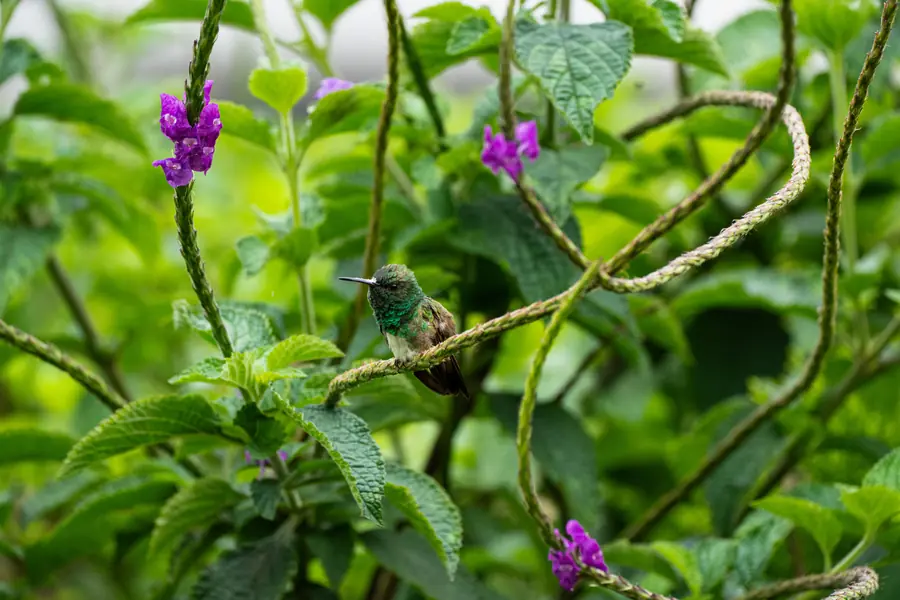
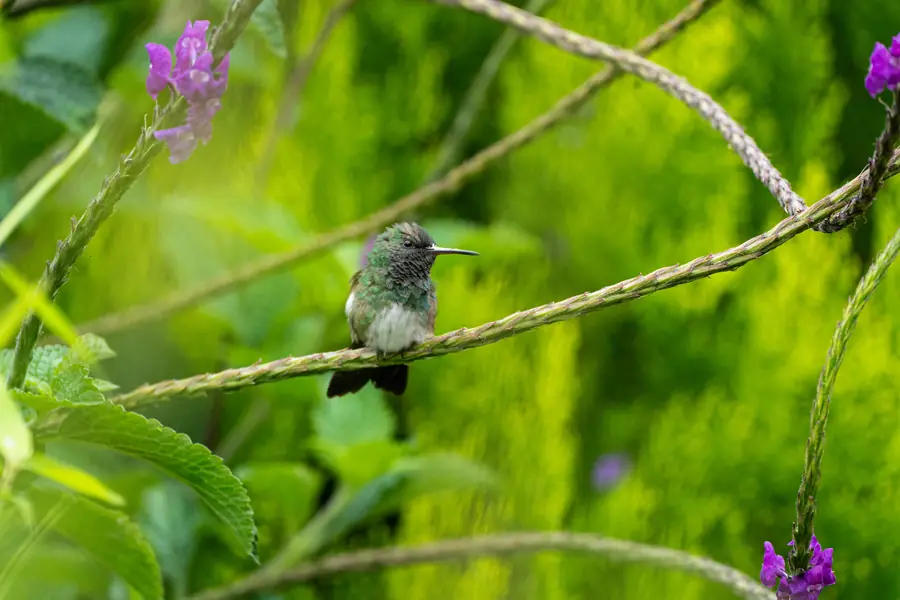
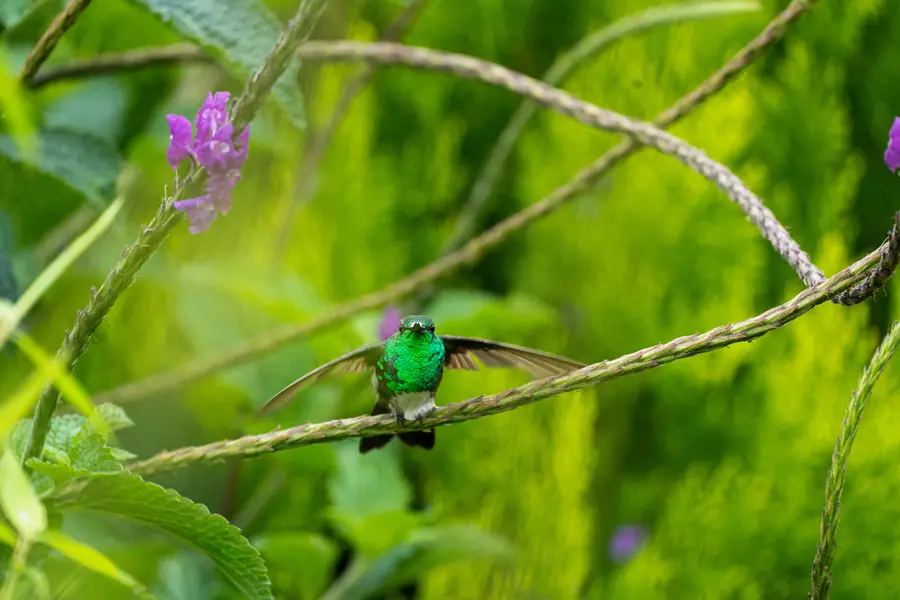
Auf einer Fläche etwa so groß wie Bayern drängen sich über 100 Kleinklimata — vom Tieflandregenwald über Nebelwälder bis zu Karibikinseln. Das Ergebnis ist eine irre Artenvielfalt: fast 1.000 Vogelarten, mehr als die USA und Kanada zusammen, darunter allein 59 Kolibri-Arten. Dazu Faultiere, Kapuzineraffen, Tukane und der mächtige Harpyienadler.In an area about the size of Bavaria, more than 100 microclimates crowd together — from lowland rainforest and cloud forest to Caribbean islands. The result is astonishing biodiversity: nearly 1,000 bird species, more than the USA and Canada combined, including 59 species of hummingbird alone. Plus sloths, capuchin monkeys, toucans and the mighty harpy eagle.
Das Klima ist tropisch mit zwei Jahreszeiten — Trockenzeit (Dez–Apr) und Regenzeit (Mai–Nov). Im Tiefland ganzjährig warme 26–32 °C, im Hochland um Boquete angenehm kühle 15–22 °C. Die Kolibri-Schwärme und die Faultiere haben wir selbst erlebt — sie tauchen an den unmöglichsten Stellen auf.The climate is tropical with two seasons — dry (Dec–Apr) and rainy (May–Nov). The lowlands stay a warm 26–32 °C year-round, while the highlands around Boquete are a pleasant 15–22 °C. We saw the hummingbird swarms and the sloths ourselves — they turn up in the most unlikely places.
1
Panama-Stadt · Casco ViejoPanama City · Casco Viejo
Zwischen Ruinen und WolkenkratzernBetween ruins and skyscrapers
28. Juli – 1. August · vier Nächte28 July – 1 August · four nights
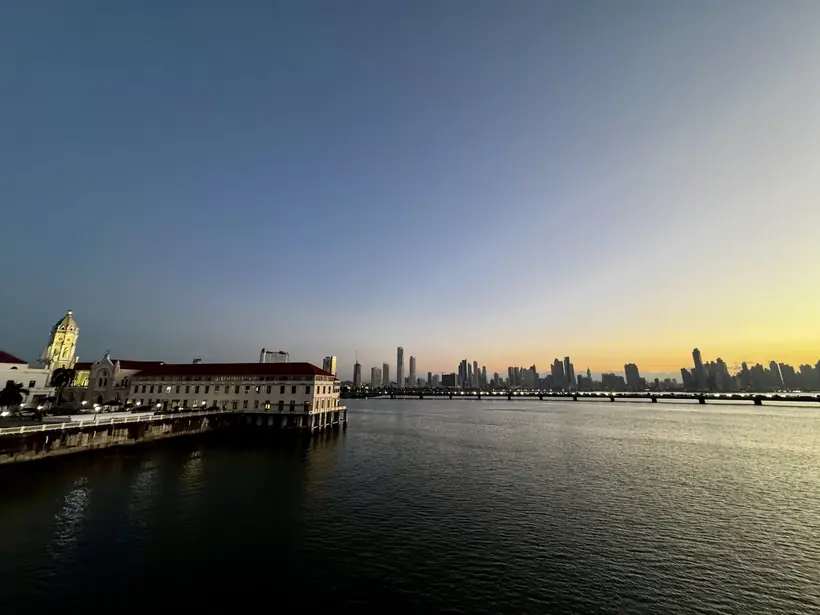
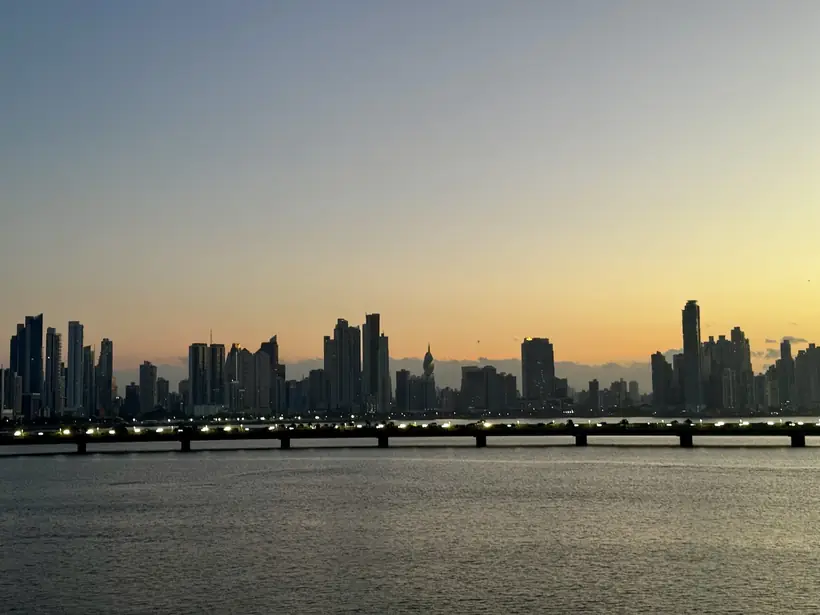
Panama-Stadt ist vermutlich die einzige Hauptstadt der Welt, in der die
Ruinen einer 500 Jahre alten Stadt und eine Skyline aus Glastürmen im selben Blickfeld
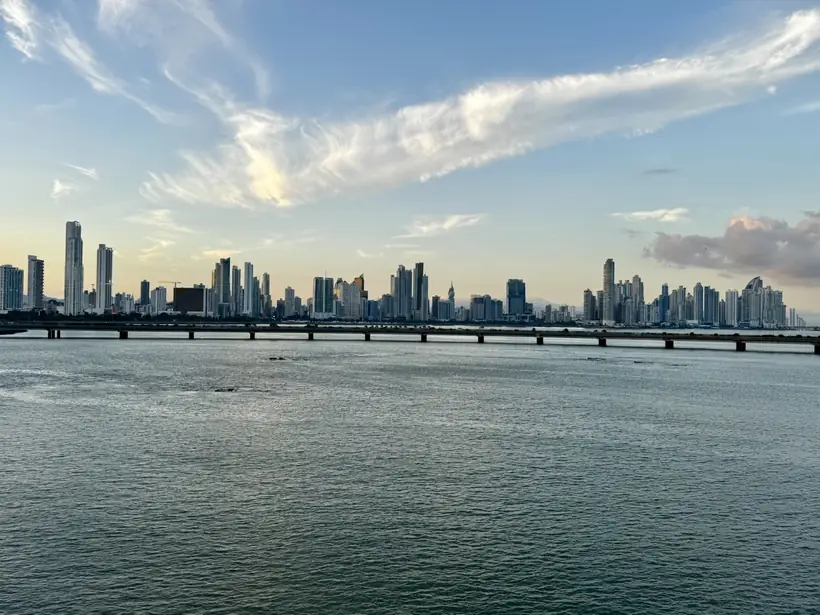
liegen. Dieser Kontrast prägt alles hier — und er war unser stärkster erster Eindruck.Panama City is probably the only capital in the world where the ruins of a 500-year-old town and a skyline of glass towers sit in the same field of view. That contrast shapes everything here — and it was our strongest first impression.
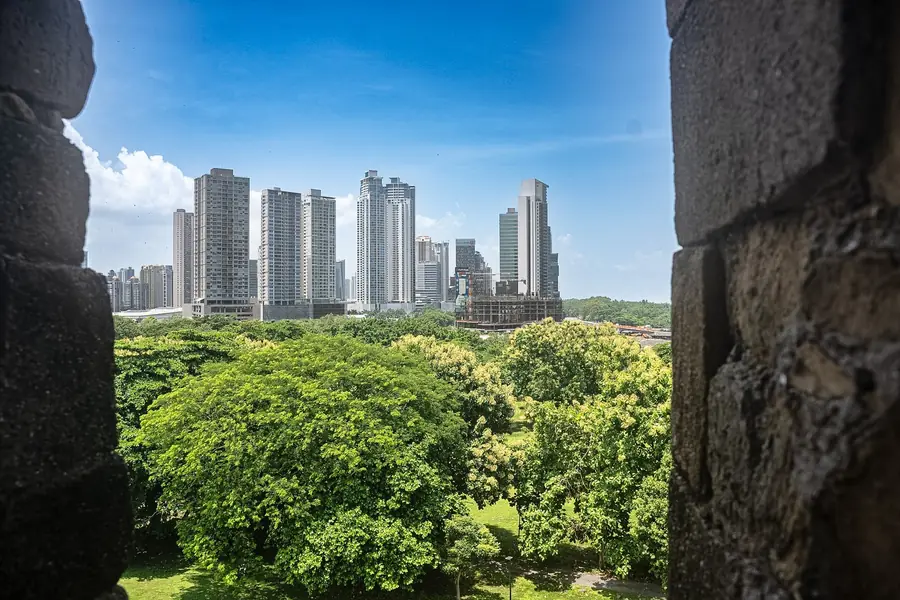
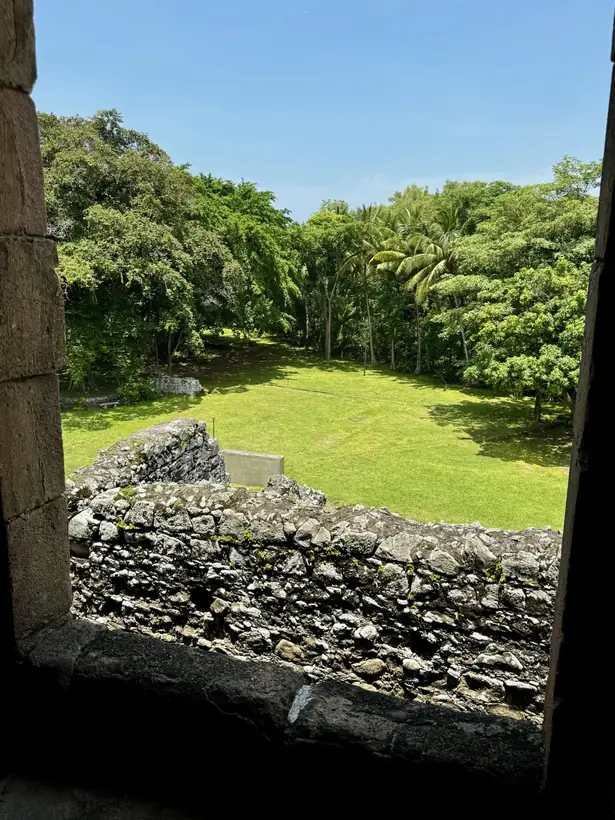
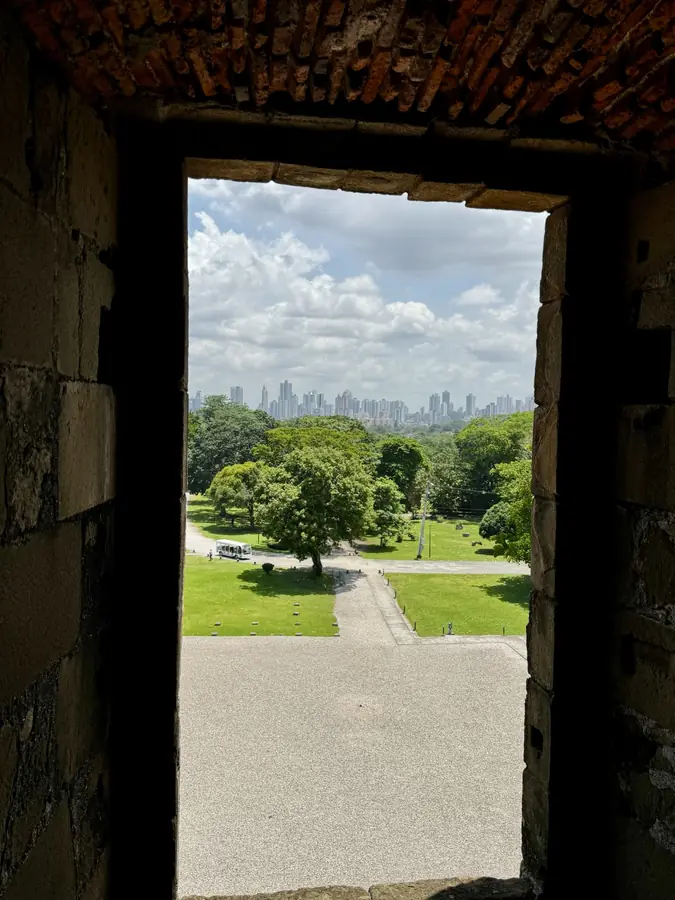
Beides in einem Bild: Fotografiert aus dem Turmfenster der alten
Kathedrale — im Hintergrund die Hochhäuser von Punta Pacífica.Both in one picture: shot from the tower window of the old cathedral — the high-rises of Punta Pacífica in the background.
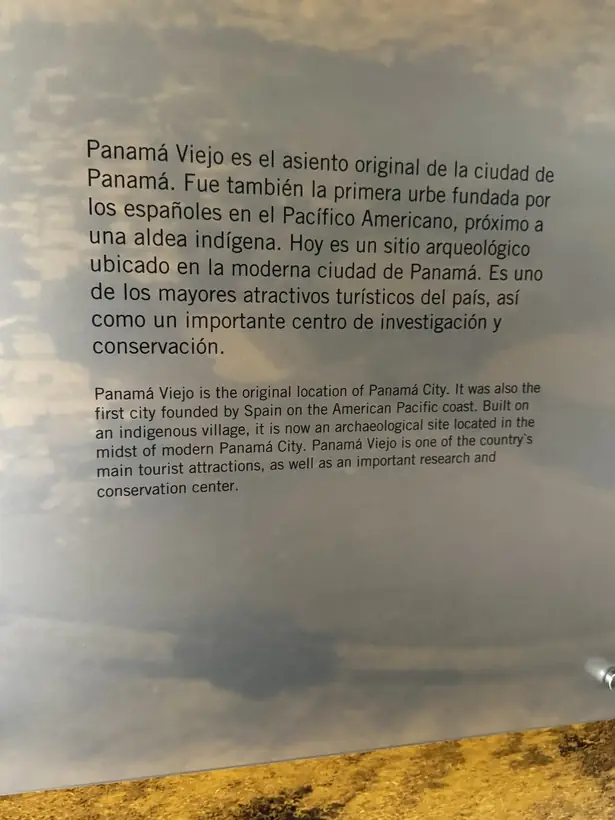
Die Geschichte lässt sich an zwei Orten ablesen. Panamá Viejo, 1519 gegründet,
war die erste spanische Stadt am Pazifik und Umschlagplatz für das Gold aus Peru. 1671
brannte der Freibeuter Henry Morgan sie nieder. Zwei Jahre später bauten die Spanier zwei
Kilometer westlich neu, auf einer besser zu verteidigenden Halbinsel: das heutige
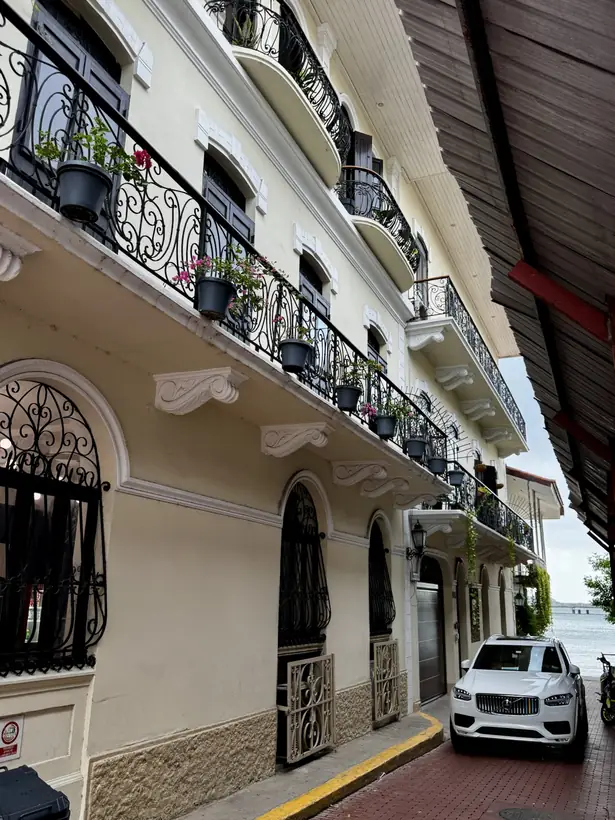
Casco Viejo, wo wir vier Nächte wohnten.The history is written in two places. Panamá Viejo, founded in 1519, was the first Spanish city on the Pacific and the transit point for the gold coming out of Peru. In 1671 the privateer Henry Morgan burned it down. Two years later the Spanish rebuilt two kilometres to the west, on a peninsula that was easier to defend: today's Casco Viejo, where we stayed for four nights.
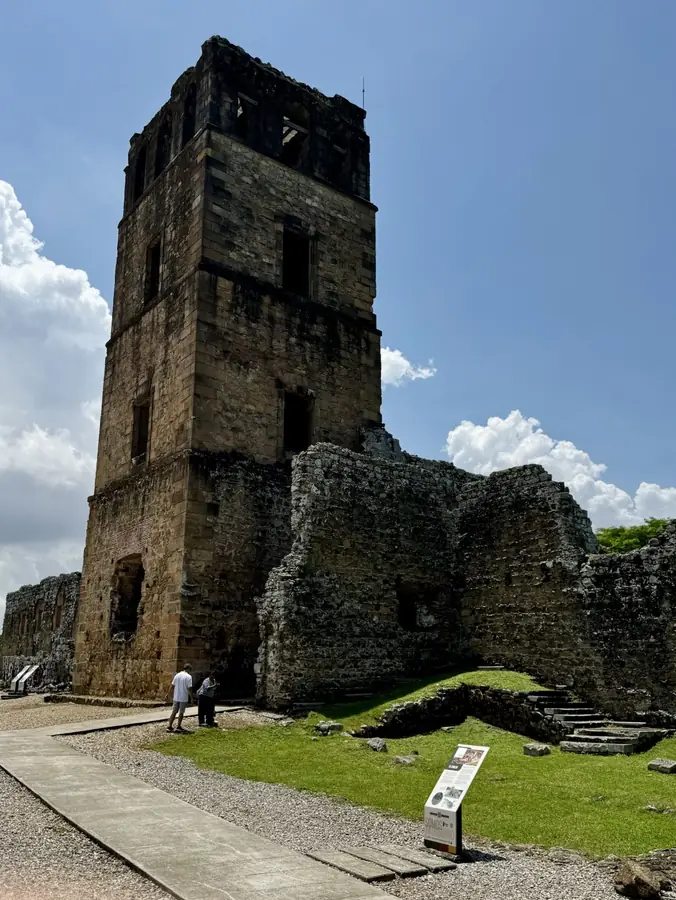
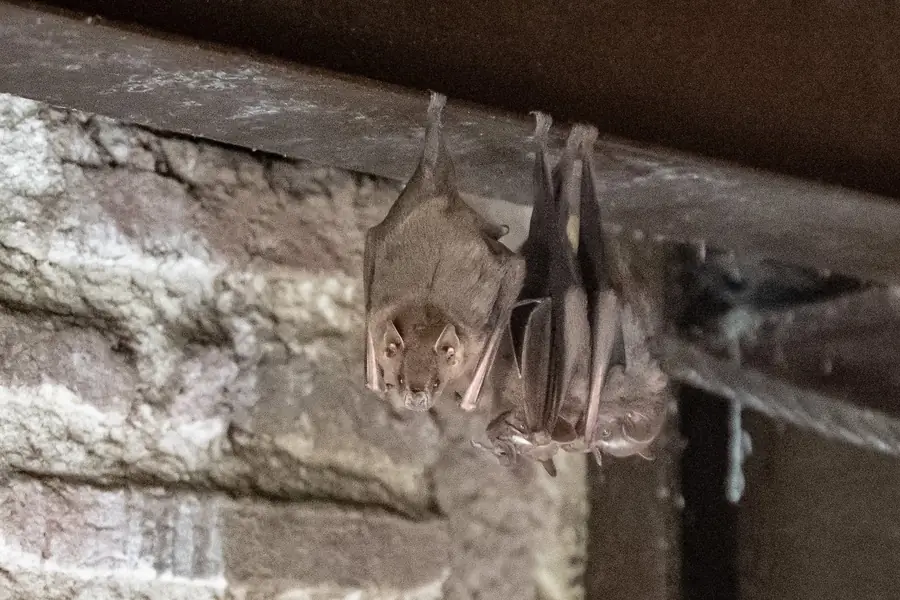
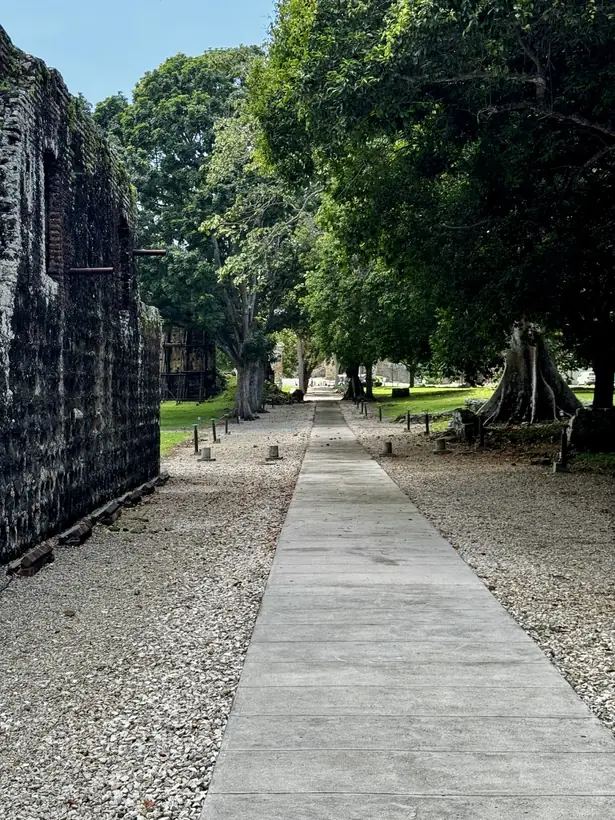
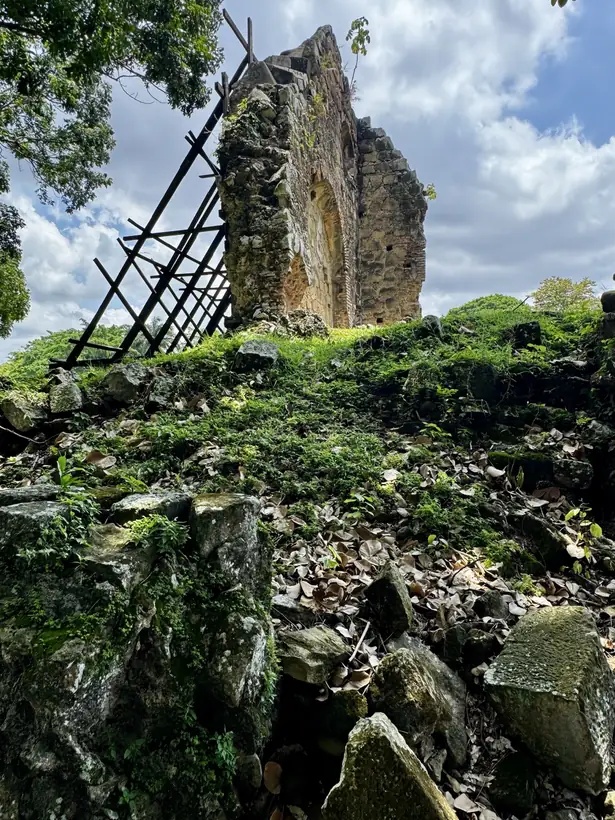
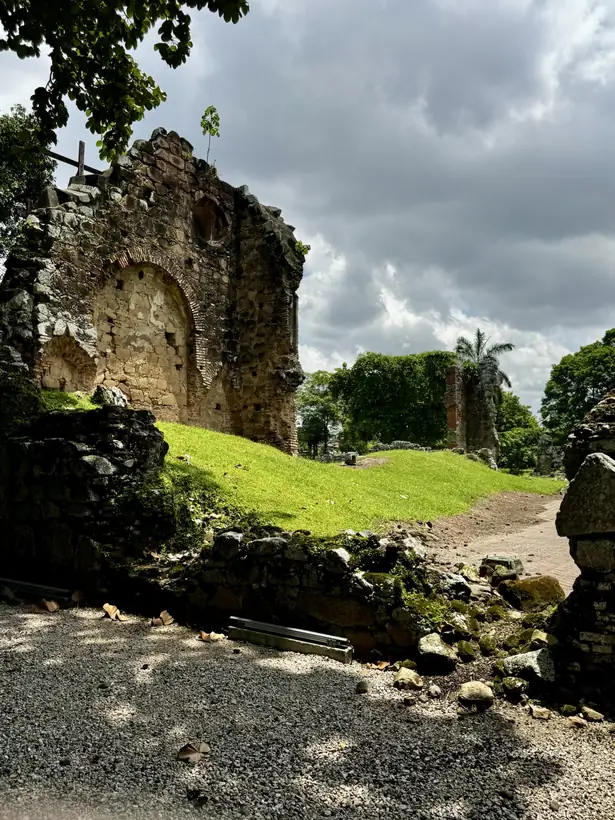
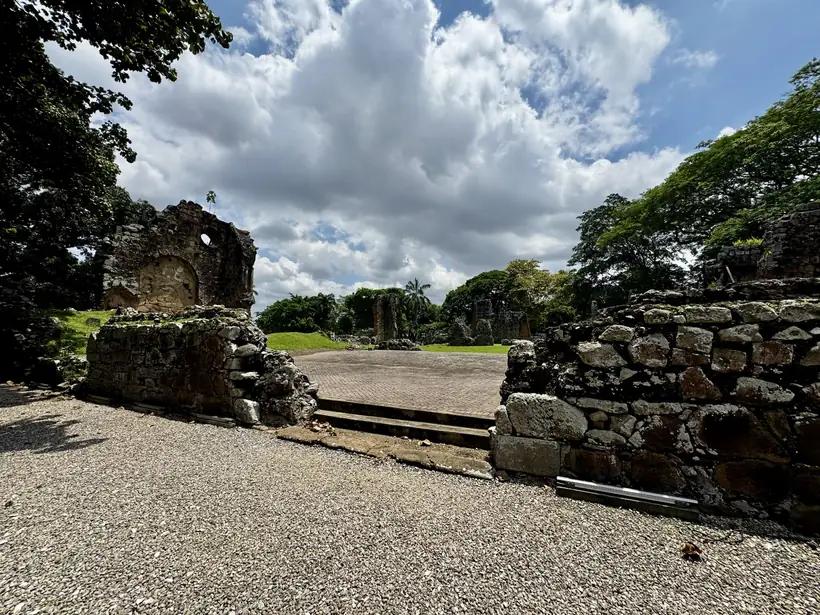
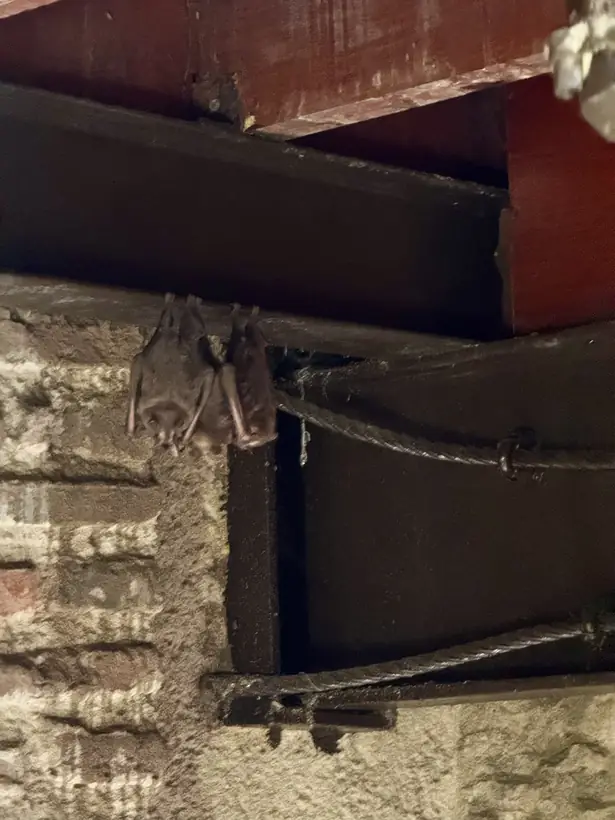
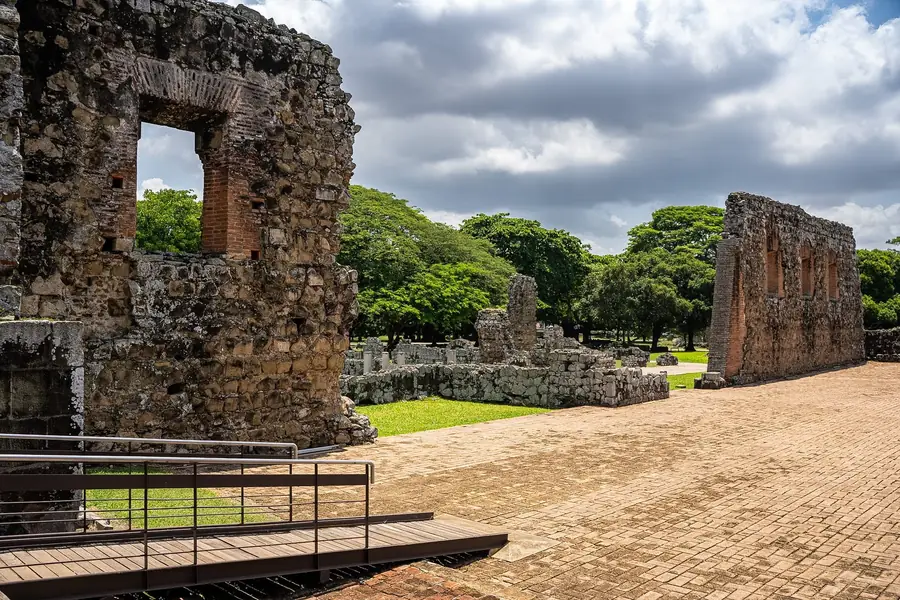
Das Gelände von Panamá Viejo ist riesig und gut aufgearbeitet — man kann sich die
Stadt tatsächlich vorstellen. Wir sind den alten Turm hinaufgestiegen und haben dort
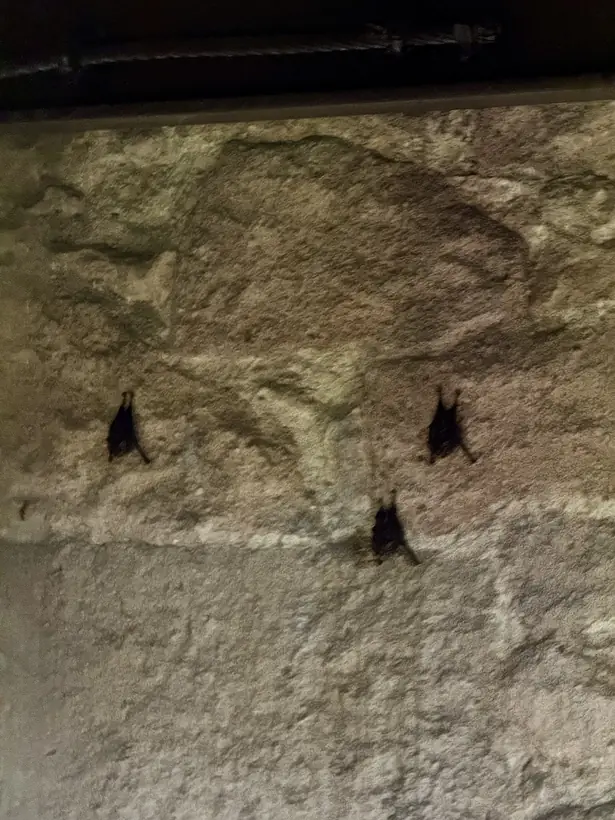
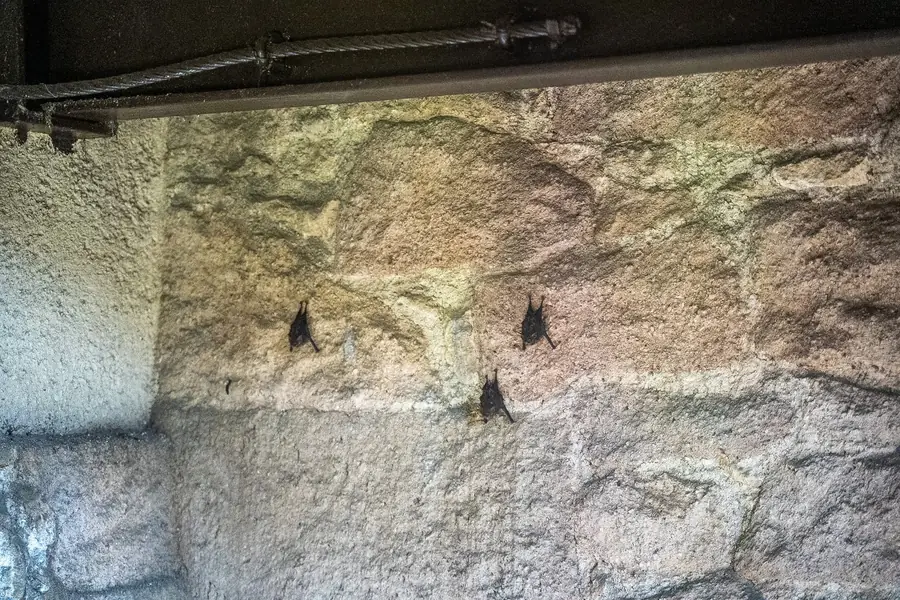
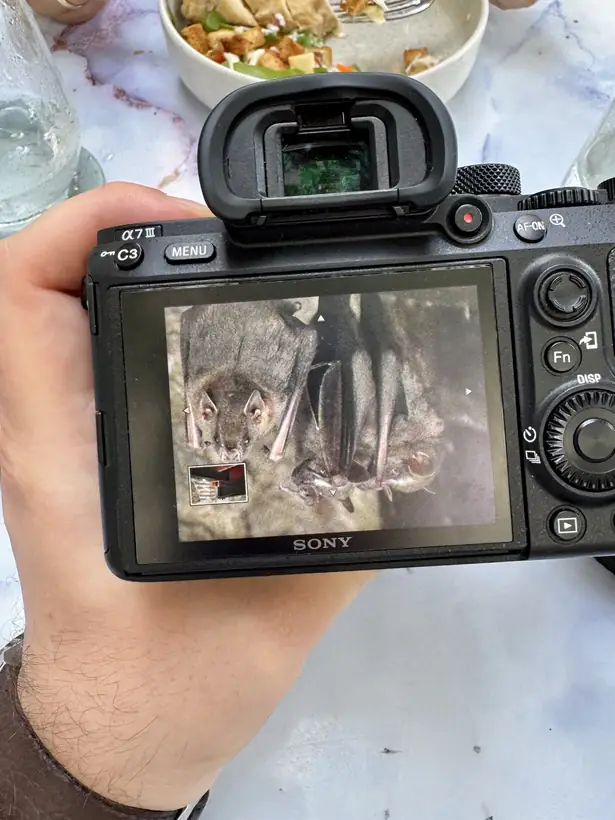
oben Fledermäuse gefunden, überraschend große. Von den Mauern sieht man dann
beides gleichzeitig: verwitterten Bruchstein im Vordergrund, die Hochhäuser von Punta
Pacifica am Horizont.The site of Panamá Viejo is vast and beautifully presented — you can genuinely picture the city as it was. We climbed the old tower and found bats up there, surprisingly big ones. From the walls you see both at once: weathered rubble stone in the foreground, the high-rises of Punta Pacífica on the horizon.
Der Turm, auf dem wir standen.The tower we stood on.Und die Mitbewohner darin — man sieht sie erst, wenn sich die Augen
an das Dunkel gewöhnt haben.And its residents inside — you only see them once your eyes have adjusted to the dark.
Hier hat uns auch die tropische Hitze zum ersten Mal richtig erwischt. Nicht die
Temperatur allein — es ist die Feuchtigkeit, die drückt. Nach dem Aufstieg waren wir
deutlich fertiger, als der Weg es vermuten ließ. Inzwischen haben wir uns daran gewöhnt.This is also where the tropical heat got us properly for the first time. It isn't the temperature on its own — it's the humidity that leans on you. After the climb we were far more worn out than the walk had any right to make us. By now we have got used to it.
Gut zu wissenGood to know
Warum die Stadt zweimal gebaut wurdeWhy the city was built twice
Panamá Viejo war ab 1519 der Umschlagplatz für das Silber und Gold, das aus Peru
kam und von hier über den Isthmus zur Karibikküste gebracht wurde. Das machte die
Stadt sagenhaft reich — und zum Ziel.From 1519 Panamá Viejo was the transit point for the silver and gold that came up from Peru and went on across the isthmus to the Caribbean coast. That made the city fabulously rich — and a target.
1671 zog der walisische Freibeuter Henry Morgan mit rund 1.400 Mann über
den Isthmus. Die Stadt ging in Flammen auf; ob die Angreifer sie anzündeten oder die
Verteidiger selbst, ist bis heute umstritten. Was blieb, waren die Ruinen, die man
heute besichtigt.In 1671 the Welsh privateer Henry Morgan crossed the isthmus with some 1,400 men. The city went up in flames; whether the attackers set it alight or the defenders did is still disputed today. What was left are the ruins you can visit now.
Die Spanier bauten zwei Jahre später neu — diesmal auf einer Halbinsel mit
Stadtmauer. Beide Orte, Panamá Viejo und Casco Viejo, gehören heute zum
UNESCO-Welterbe.The Spanish rebuilt two years later — this time on a peninsula, behind a city wall. Both sites, Panamá Viejo and Casco Viejo, are UNESCO World Heritage today.
Der KanalThe canal
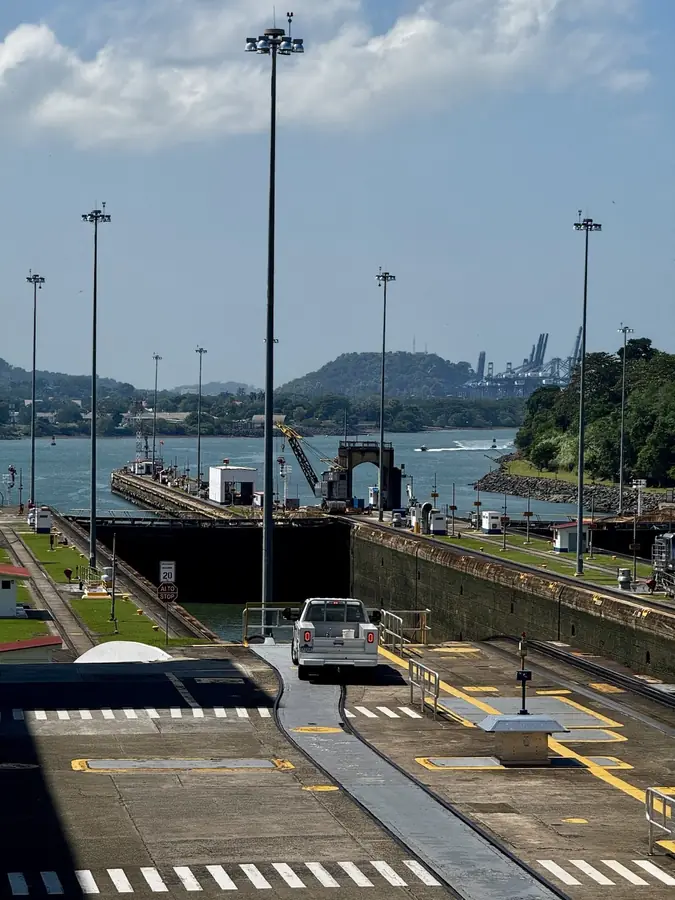
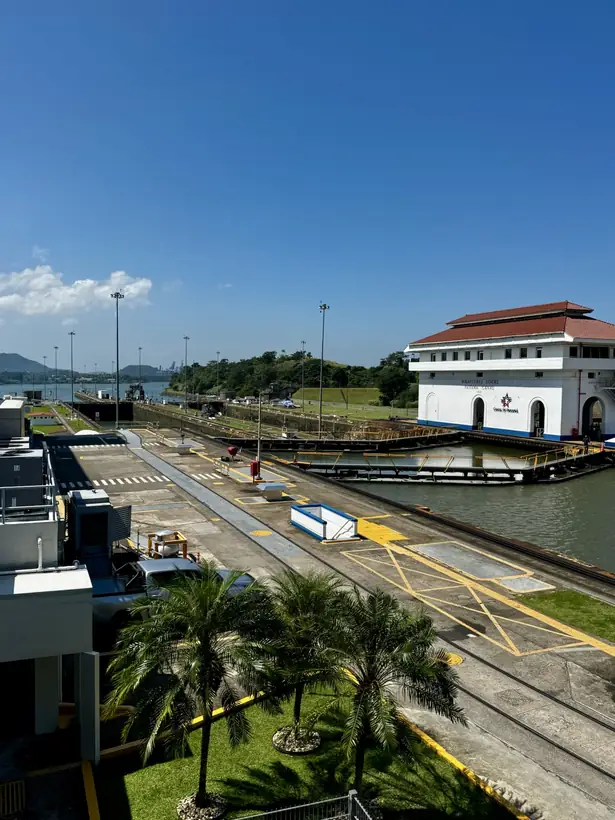
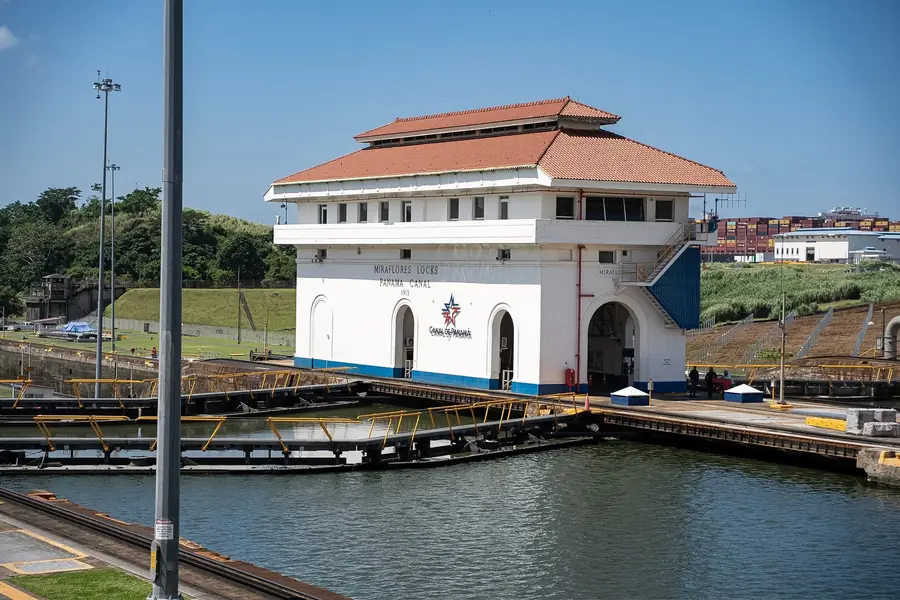
Die Miraflores-Schleusen sind der zugänglichste Punkt am Kanal. Vom Besucherzentrum
aus steht man direkt über der Kammer — nah genug, dass die Anlage ihre Größe nicht
mehr verstecken kann.The Miraflores Locks are the most accessible point on the canal. From the visitor centre you stand directly above the chamber — close enough that the structure can no longer hide its size.
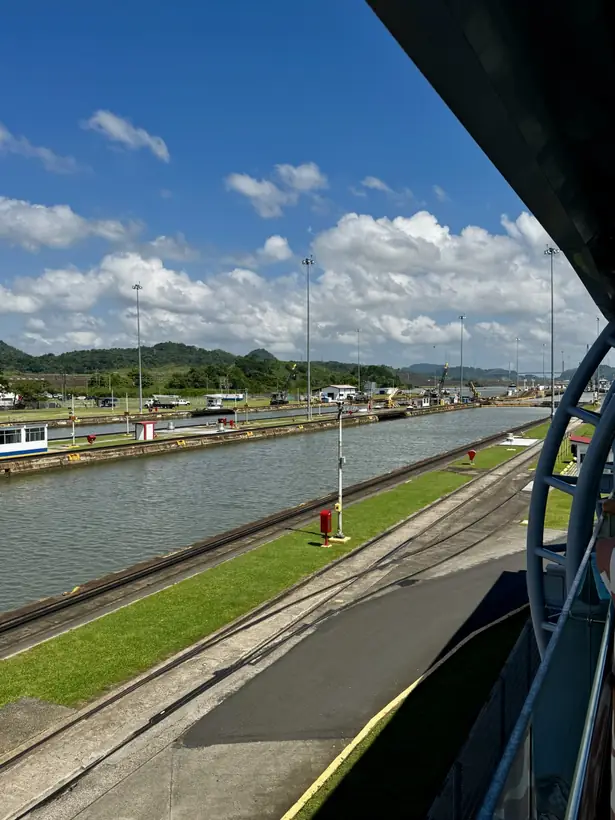
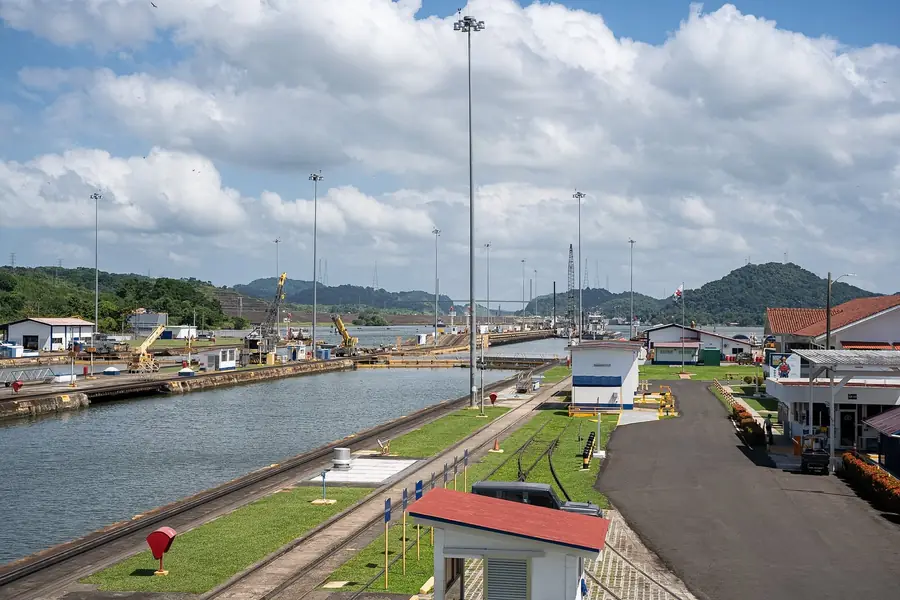
Bei uns blieb die Kammer leer — was den Vorteil hat, dass man die
Dimension sieht: 320 Meter lang, 33 Meter breit. Ein Panamax-Frachter lässt darin zu
beiden Seiten kaum mehr als eine Handbreit und wird von Lokomotiven auf den seitlichen
Schienen gezogen.Our chamber stayed empty — which at least has the advantage that you can take in the scale: 320 metres long, 33 metres wide. A Panamax freighter leaves barely a hand's width on either side and is hauled through by locomotives running on the rails alongside.
Was einen dort wirklich packt, ist die Ingenieursleistung — und was ihr
vorausging. Schon 1698 versuchten Schotten, sich am Isthmus festzusetzen; das
Unternehmen scheiterte so gründlich, dass es Schottland an den Rand des Ruins brachte.
Die Spanier suchten jahrhundertelang nach einem Weg über die Landenge. Die Franzosen
begannen 1881 mit dem Kanalbau und gaben nach acht Jahren und rund 22.000 Toten auf.
Erst die USA brachten das Werk zwischen 1904 und 1914 zu Ende — und übergaben
den Kanal 1999 an Panama.What really gets you there is the engineering — and everything that led up to it. As early as 1698 the Scots tried to gain a foothold on the isthmus; the venture failed so completely that it pushed Scotland to the brink of ruin. The Spanish spent centuries looking for a way across the land bridge. The French began digging in 1881 and gave up after eight years and some 22,000 deaths. Only the United States finished the job between 1904 and 1914 — and handed the canal over to Panama in 1999.
Diese Nähe zu den Vereinigten Staaten prägt das Land bis heute. Man zahlt mit
US-Dollar, man trifft überall Amerikaner, und man spürt eine Verbundenheit, die weit
über Handelsbeziehungen hinausgeht.That closeness to the United States still shapes the country today. You pay in US dollars, you meet Americans everywhere, and you sense a bond that goes well beyond trade.
Dass wir uns hier vom ersten Tag an zurechtgefunden haben, sagt allerdings mehr über
uns als über Panama. Wer aus Europa kommt, erkennt vieles wieder — Zahlungsmittel,
Infrastruktur, Serviceverständnis. Panama selbst ist vor allem eines: ein
Durchgangsland. Die Landenge war immer wichtiger als das, was auf ihr liegt —
erst für das Gold aus Peru, dann für die Eisenbahn, schließlich für den Kanal. Ausgerichtet
ist das Land nicht über den Atlantik, sondern zwischen zwei Ozeanen und nach Norden.That we found our feet here from day one says more about us than about Panama, mind you. Anyone coming from Europe recognises a great deal — the currency, the infrastructure, the idea of service. Panama itself is above all one thing: a country you pass through. The isthmus was always more important than whatever sat on it — first for the gold from Peru, then for the railway, finally for the canal. This country doesn't face across the Atlantic; it faces between two oceans, and north.
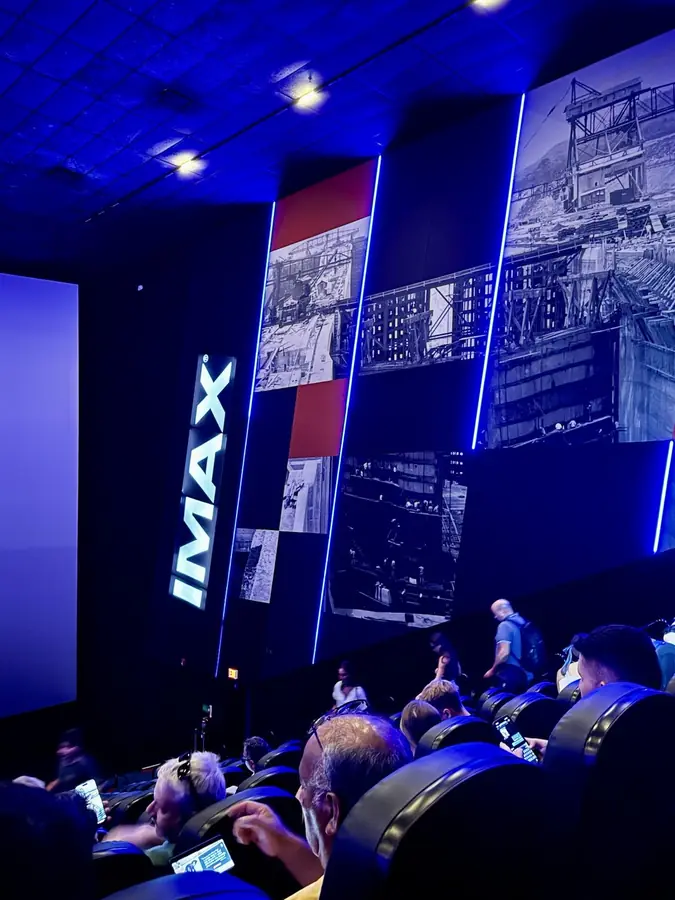
Womit wir überhaupt nicht gerechnet hatten: ein vollausgestattetes IMAX-Kino
mitten im Besucherzentrum. 45 Minuten Film, 3D, bester Sound — und man holt sich vorher
Popcorn wie in einem normalen Kino. Die Produktion hält jeder großen Naturdokumentation
stand. Unbedingt einplanen.Something we had not seen coming at all: a fully equipped IMAX cinema in the middle of the visitor centre. A 45-minute film, 3D, excellent sound — and you pick up popcorn beforehand exactly as you would at home. The production holds its own against any big nature documentary. Plan it in.
Eines sollte man wissen: Während unseres Besuchs fuhr kein einziges Schiff durch
die Schleuse. Für uns war das nicht schlimm — die Anlage beeindruckt auch leer, und
im Film sieht man die Durchfahrt ohnehin aus Perspektiven, die man von der Tribüne nie
bekäme. Wer aber genau deswegen herkommt, sollte sich vorher über die Durchfahrtszeiten
informieren.One thing worth knowing: during our visit not a single ship came through the lock. That didn't spoil it for us — the structure is impressive empty too, and the film shows the passage from angles you would never get from the grandstand anyway. But if that transit is the reason you are coming, check the schedule beforehand.
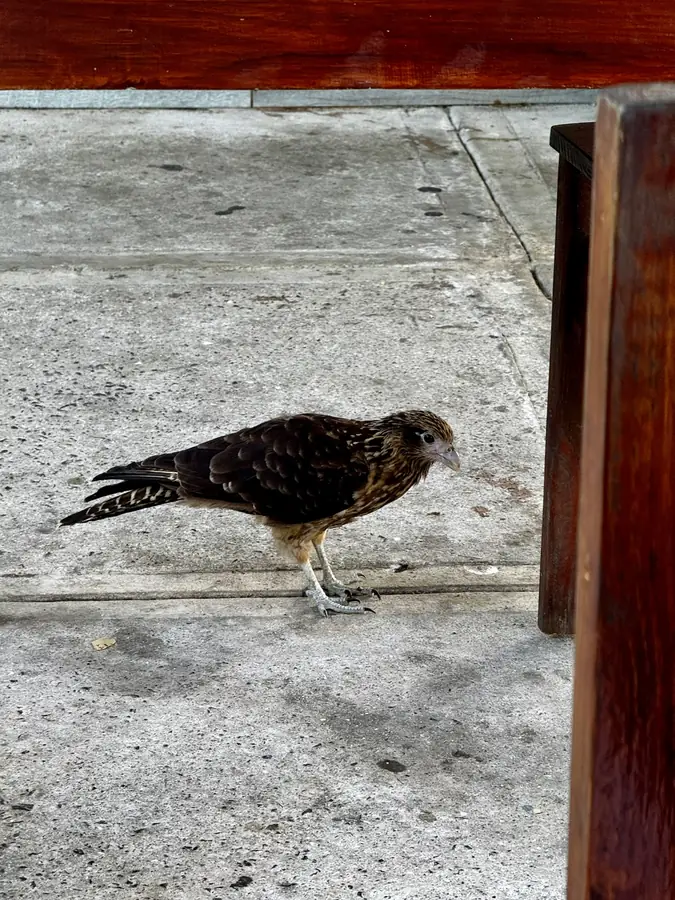
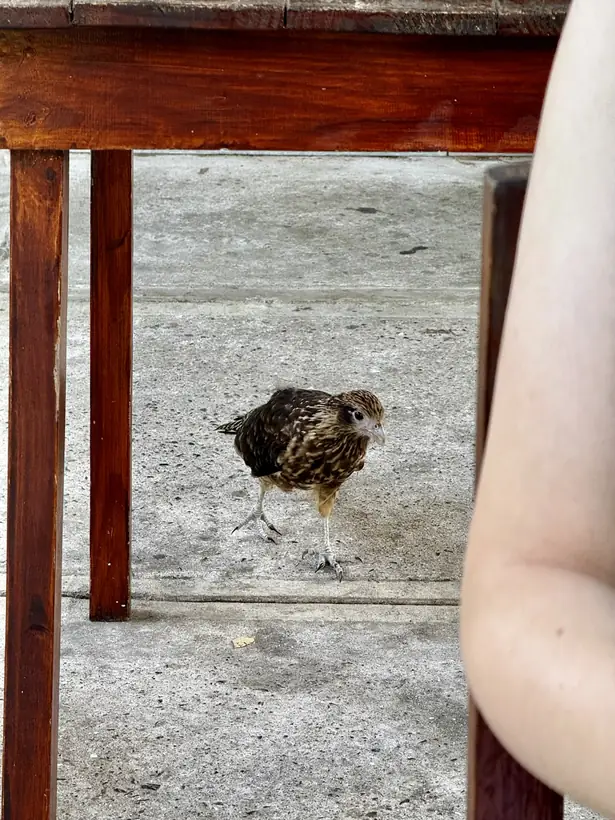
Das IMAX — mit Popcorn, mitten in der Kanalanlage.The IMAX — with popcorn, right inside the canal complex.Draußen läuft ein Karakara zwischen den Tischen umher — der Vogel,
der Panamas Wappen ziert, und er hat vor niemandem Respekt.Outside, a caracara wanders between the tables — the bird on Panama's coat of arms, and it has no respect for anyone.
Zahlen zum KanalThe canal in numbers
82 Kilometer, die die Welt verändert haben82 kilometres that changed the world
Rund 14.000 Schiffe passieren den Kanal jedes Jahr. Ein einziger
Schleusenvorgang verbraucht etwa 200 Millionen Liter Süßwasser — es kommt aus
dem Gatúnsee und fließt anschließend ins Meer. Deshalb ist der Kanal in Dürrejahren
unmittelbar bedroht.Around 14,000 ships pass through the canal every year. A single lockage uses roughly 200 million litres of fresh water — it comes from Gatún Lake and then runs out to sea. Which is why drought years are an immediate threat to the canal.
Bis 2016 bestimmte der Kanal sogar den weltweiten Schiffbau: „Panamax" hieß die
Größe, die gerade noch durch die Kammern passte. Seit der Erweiterung gibt es
„Neopanamax" — und die alten Schleusen von Miraflores wirken daneben fast zierlich.Until 2016 the canal even dictated shipbuilding worldwide: “Panamax” was the size that would just squeeze through the chambers. Since the expansion there is “Neopanamax” — next to which the old Miraflores locks look almost dainty.
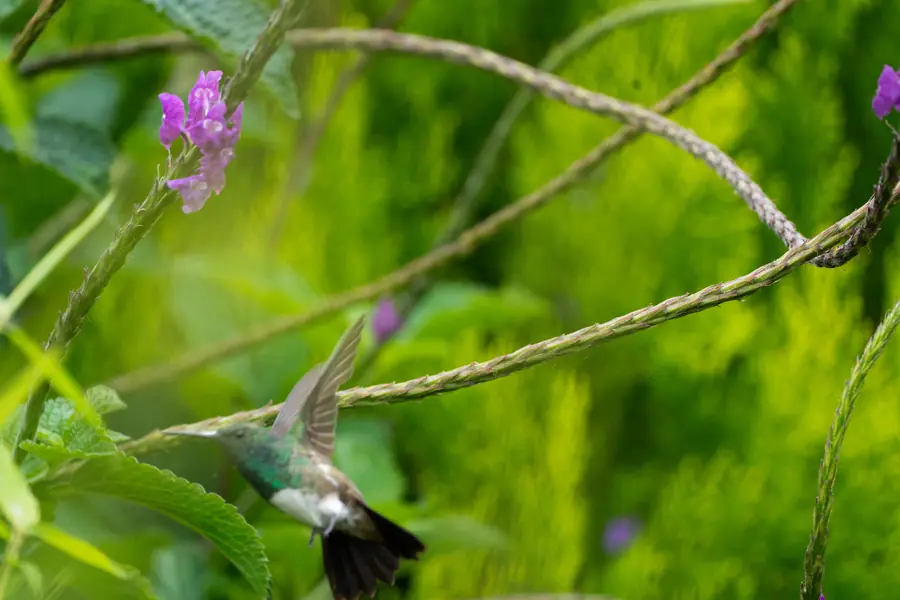
Nebenbei, im Grün vor dem Besucherzentrum: unser erster Kolibri. Ein Flimmern,
drei Sekunden, weg. Die ersten von vielen.In passing, in the greenery in front of the visitor centre: our first hummingbird. A shimmer, three seconds, gone. The first of many.
Was uns überrascht hatWhat surprised us
Dass man vom ersten Moment an merkt, in Lateinamerika zu sein — und zwar nicht nur
wegen der Wärme. Es ist der entschleunigte Rhythmus, in dem hier Dinge geschehen.
Und wie freundlich Menschen reagieren, wenn man selbst freundlich auftritt.That you notice from the very first moment that you are in Latin America — and not only because of the warmth. It's the unhurried rhythm in which things happen here. And how kindly people respond when you are friendly yourself.
Was uns dabei besonders gefallen hat: Es ist eine andere Welt und eine andere Kultur —
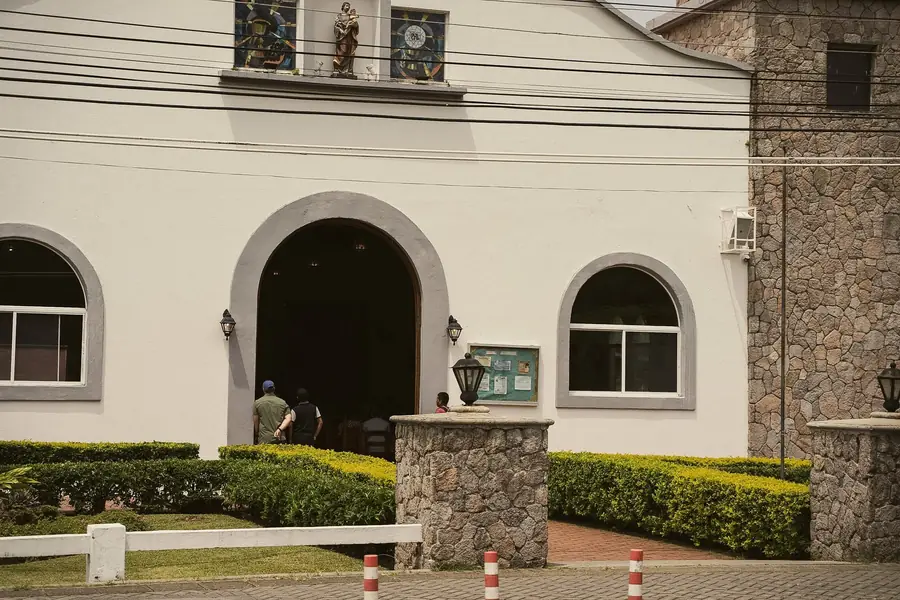
und trotzdem eine zutiefst christlich geprägte. Sonntags sind die Kirchen hier
voll. Diese Kombination war uns von Anfang an sympathisch.Something we particularly liked: it is another world and another culture — and still a deeply Christian one. On Sundays the churches here are full. That combination appealed to us from the start.
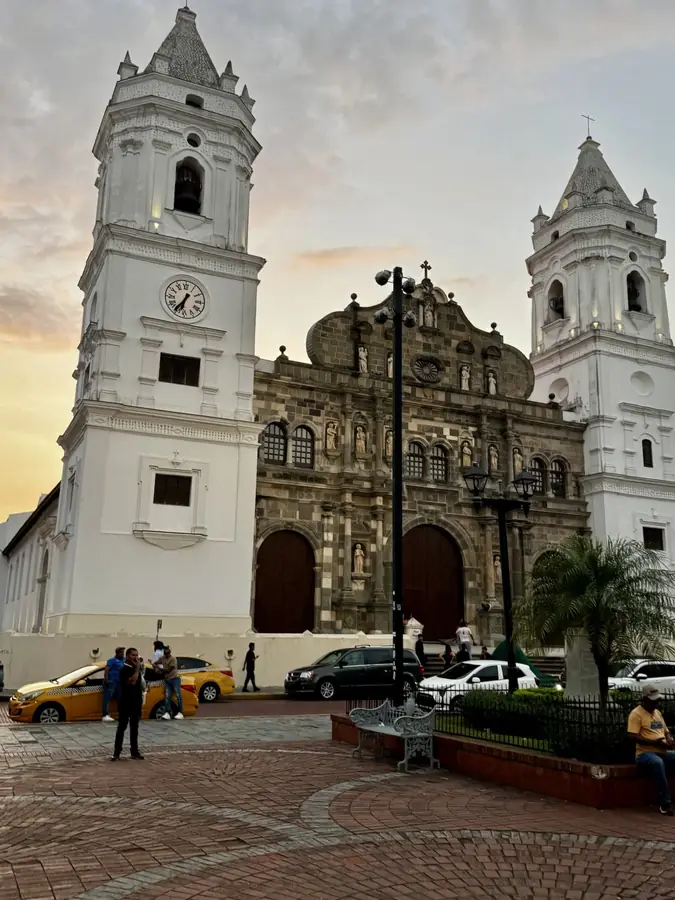
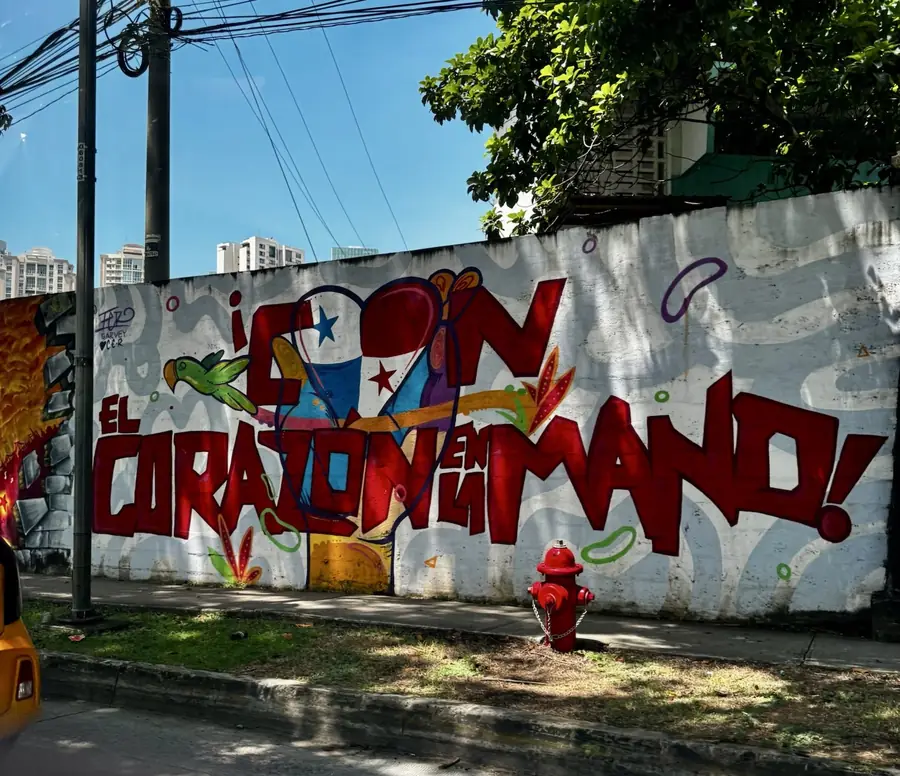
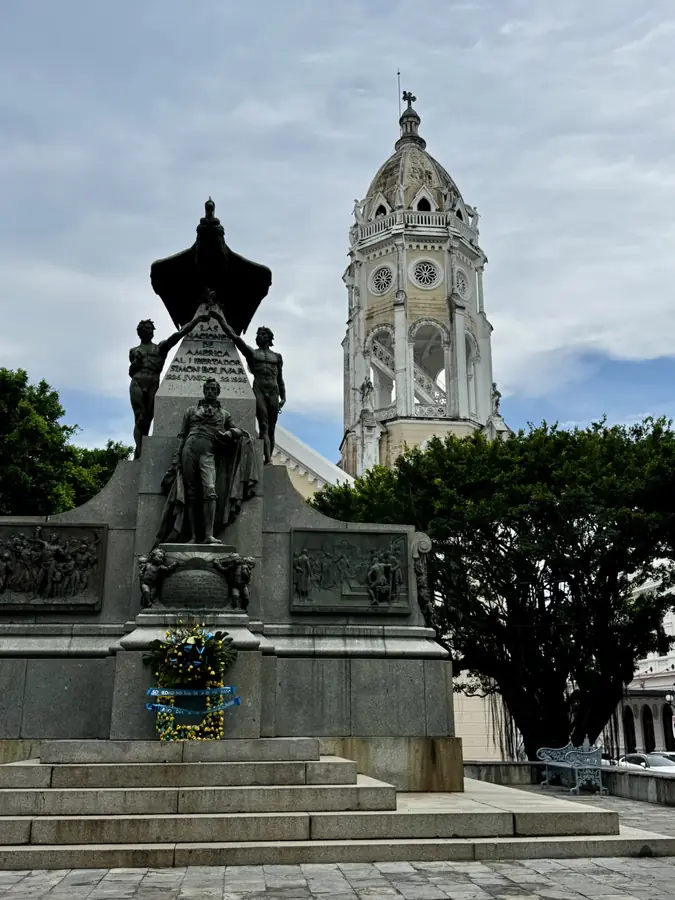
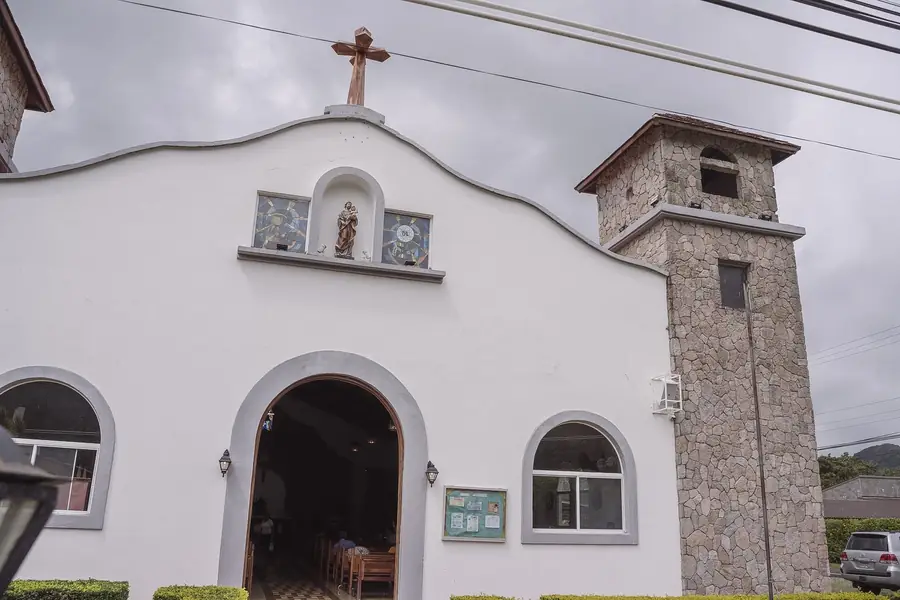
Die Kathedrale von Casco Viejo.The cathedral of Casco Viejo.„Con el corazón en la mano" — mit dem Herzen in der Hand. Trifft es ganz gut.“Con el corazón en la mano” — with your heart in your hand. That about sums it up.
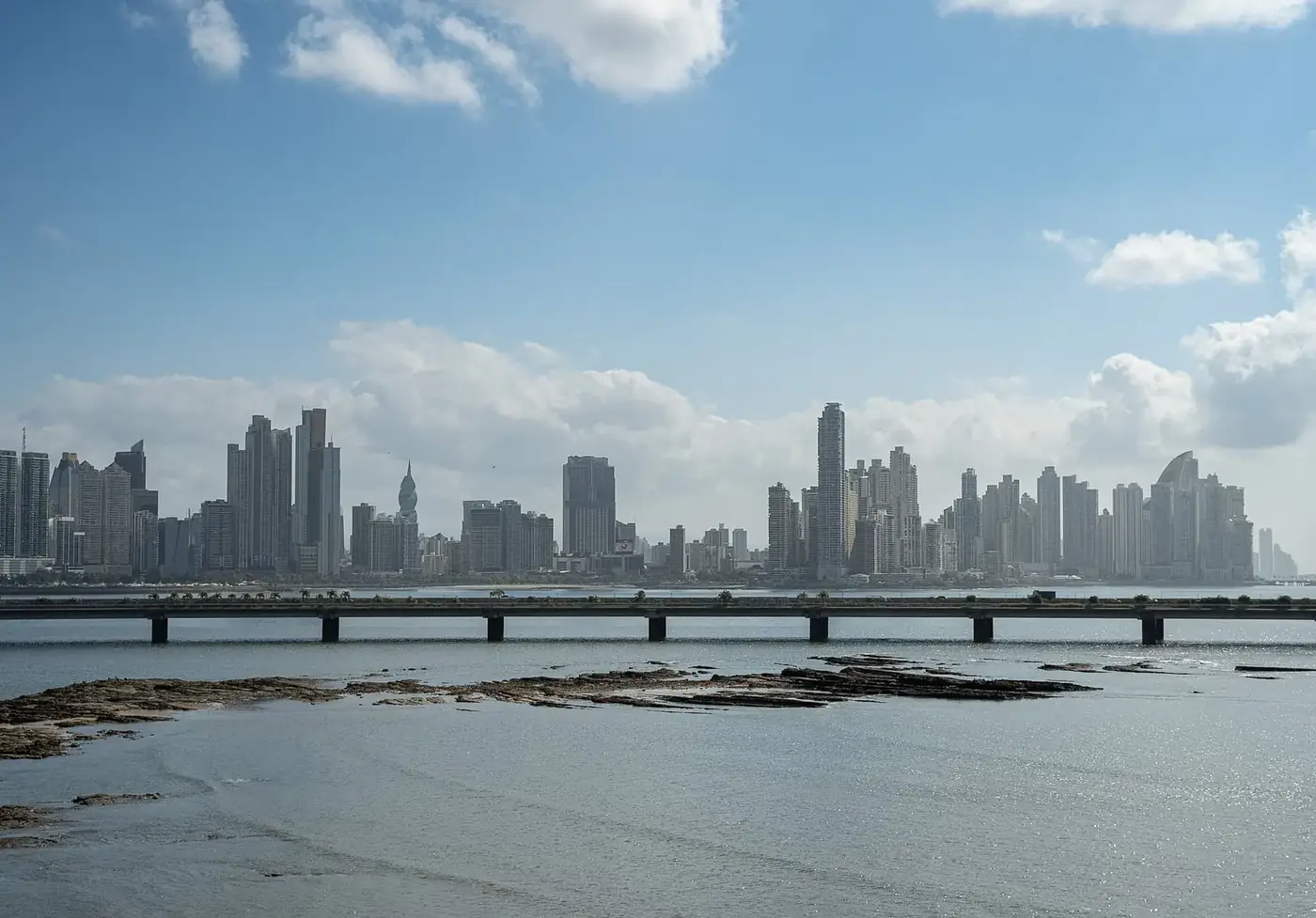
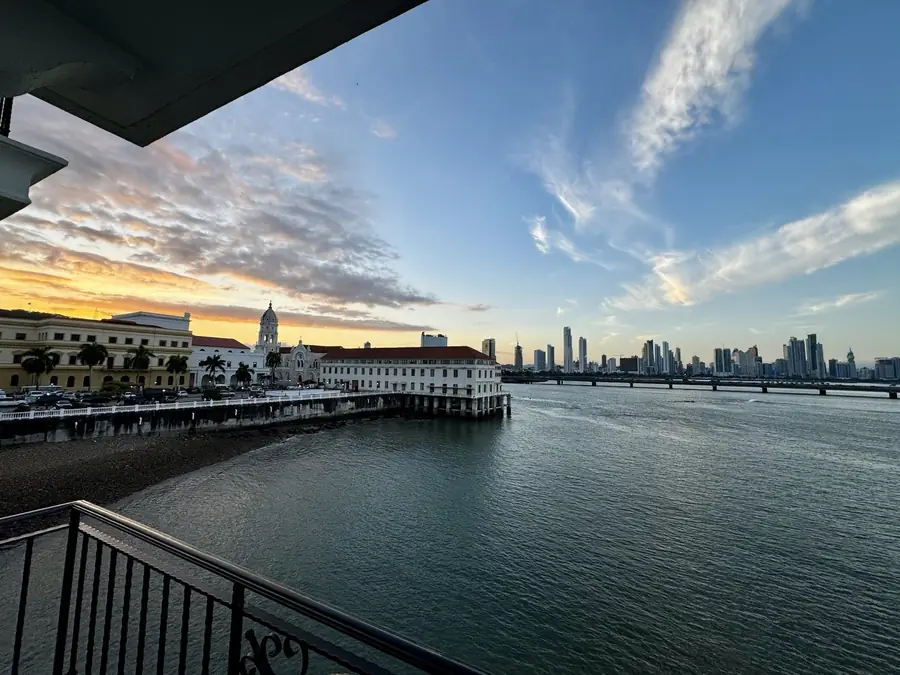
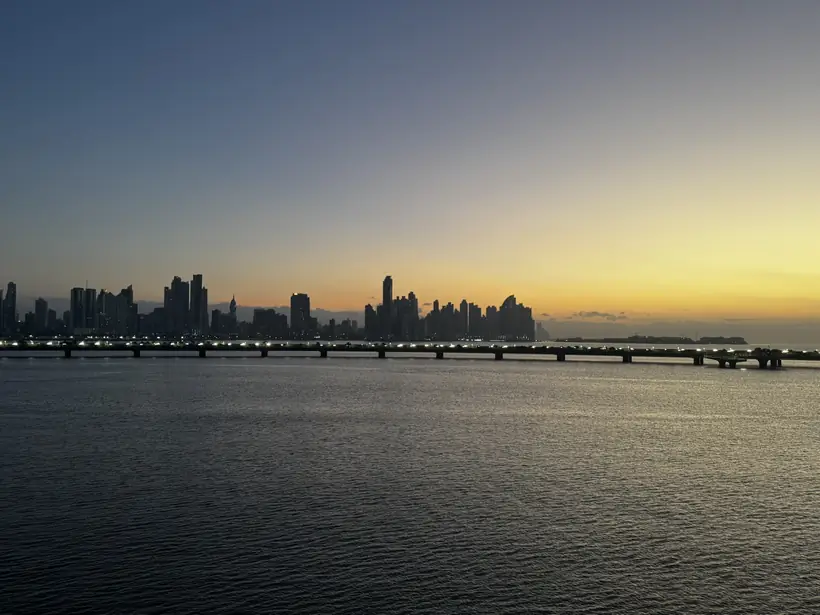
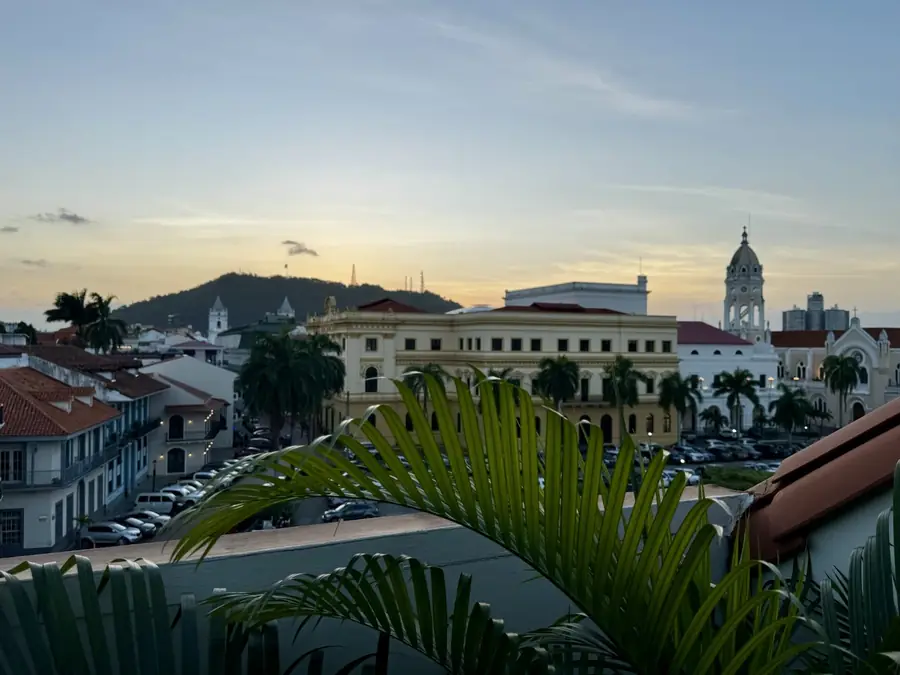
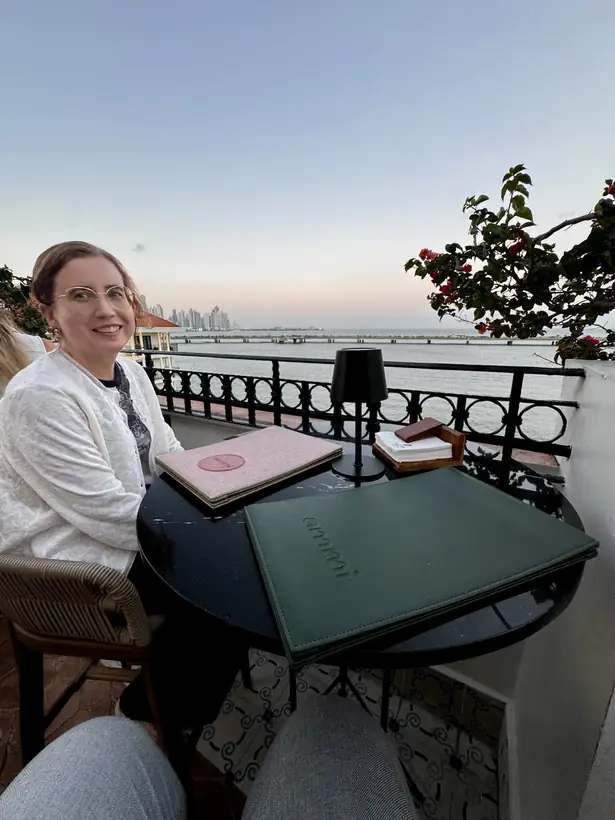
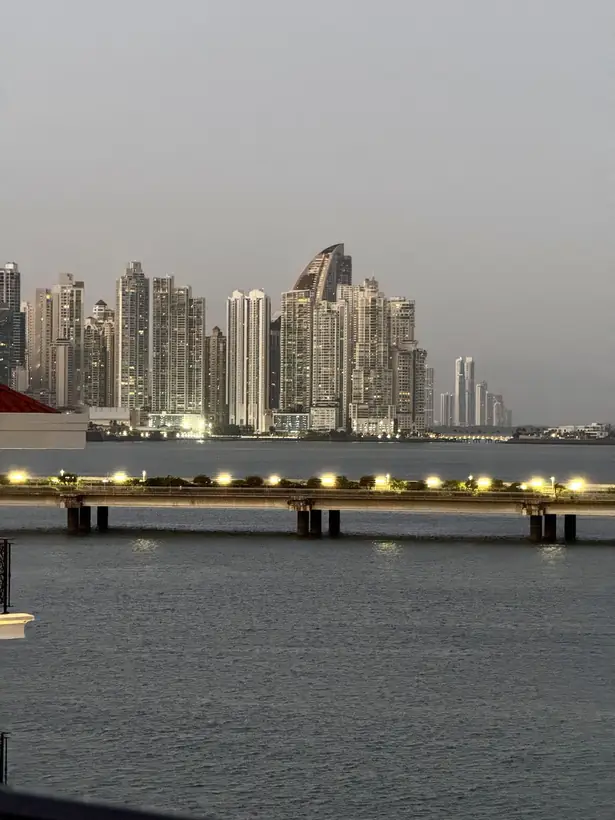
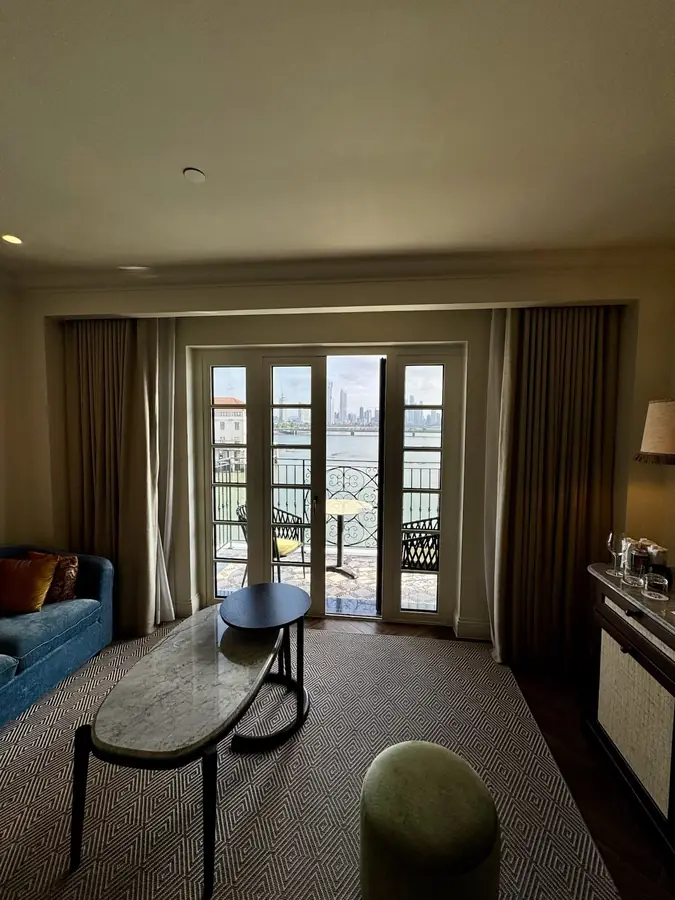
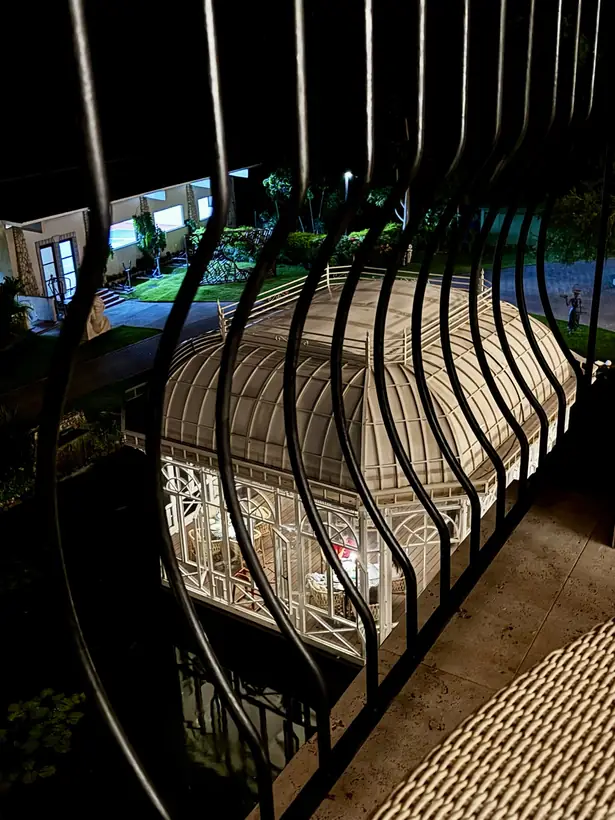
Am schönsten war es abends auf dem eigenen Zimmer: Die Sonne fällt hinter die Skyline,
die Türme schalten nacheinander ihre Lichter an, und zwischen Altstadt und Hochhäusern
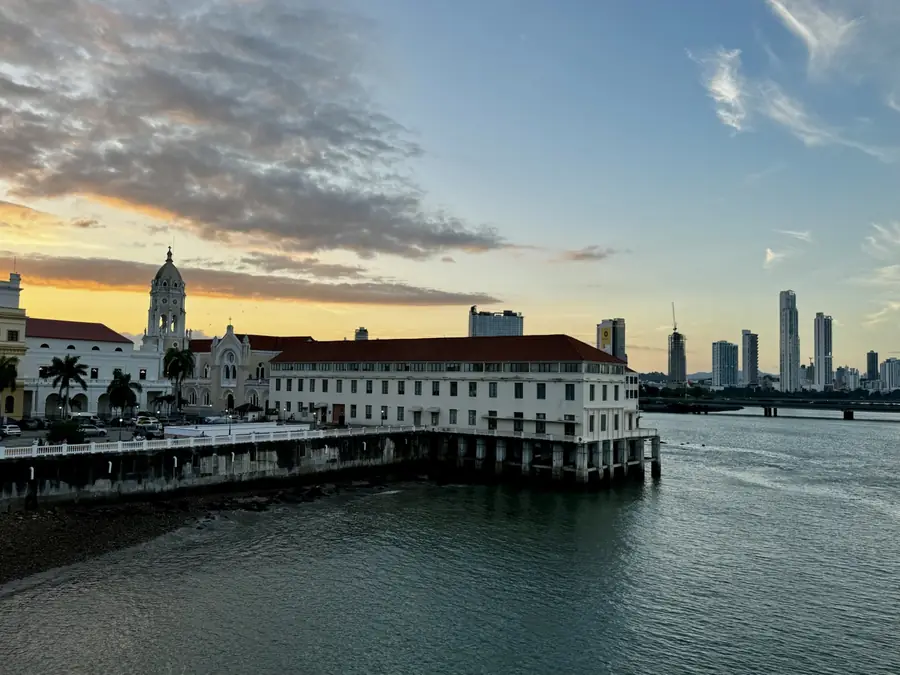
liegt die Bucht. Für diesen Blick muss man nirgendwohin.The best of it was in our own room in the evening: the sun drops behind the skyline, the towers switch on their lights one after another, and the bay lies between the old town and the high-rises. For that view you don't have to go anywhere at all.
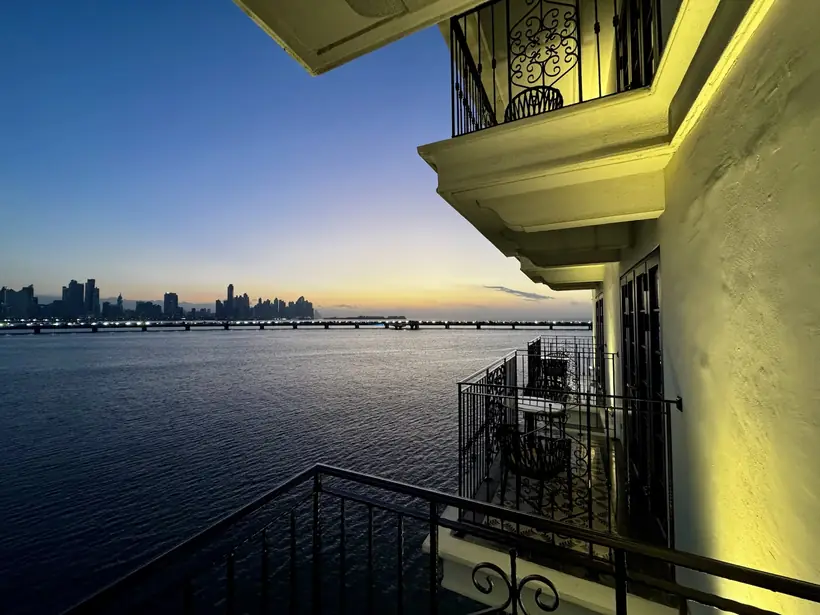
Der Blick aus unserem Zimmer. Über die Dächer der Altstadt und die
Bucht auf die Hochhäuser — die Fläche dazwischen ist Wasser, das bei Ebbe zum
Teil verschwindet.The view from our room. Across the rooftops of the old town and the bay to the high-rises — the surface in between is water, and part of it disappears at low tide.
Bilder aus Panama-StadtPictures from Panama City
Blättern · zum Vergrößern anklickenSwipe · click to enlarge
28. Juli · Panama-Stadt
28. Juli · Panama-Stadt
28. Juli · Panama-Stadt
28. Juli · Panama-Stadt
28. Juli · Panama-Stadt
28. Juli · Panama-Stadt
28. Juli · Panama-Stadt
28. Juli · Panama-Stadt
28. Juli · Panama-Stadt
28. Juli · Panama-Stadt
28. Juli · Panama-Stadt
28. Juli · Panama-Stadt
28. Juli · Panama-Stadt
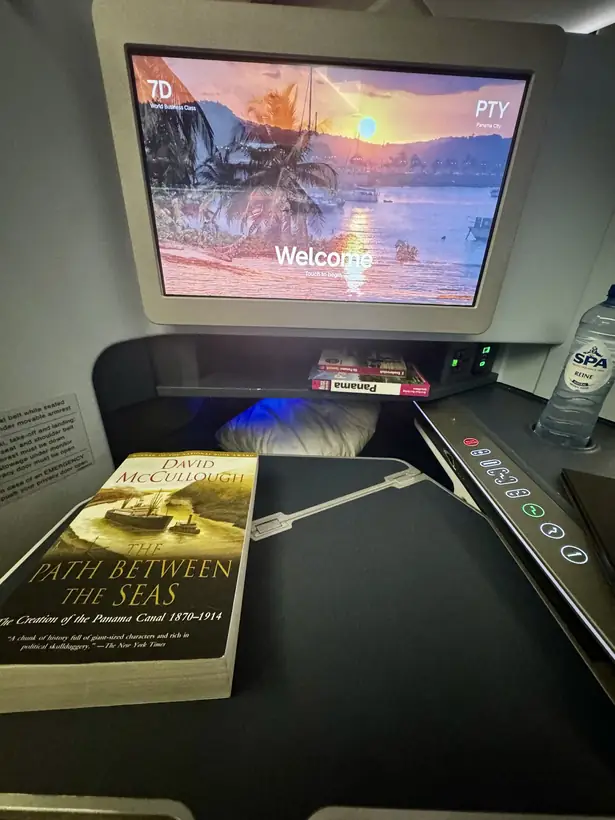
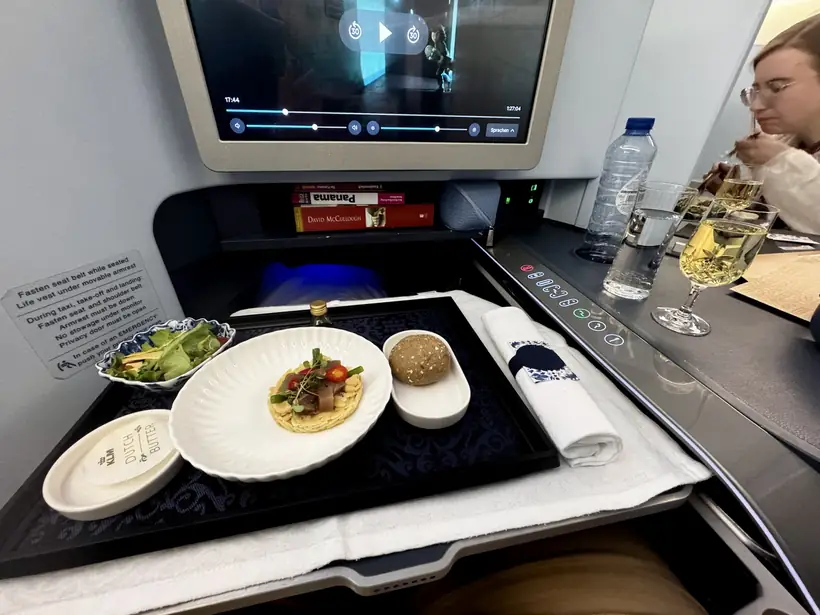
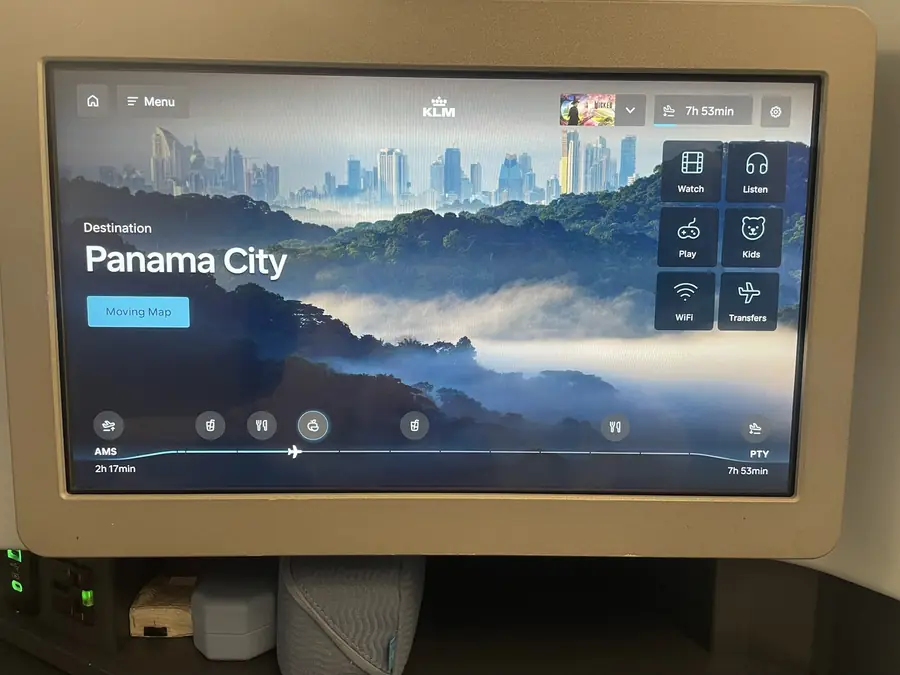
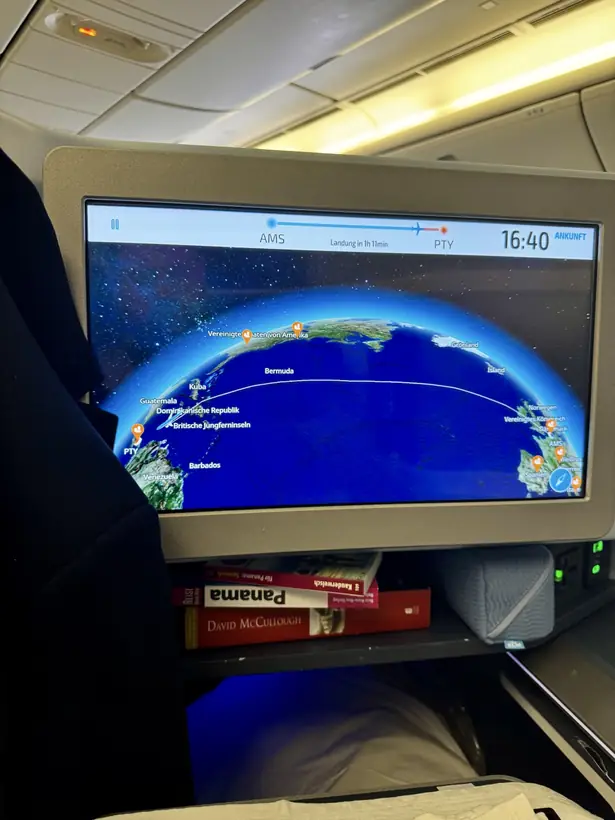
Der Bordmonitor weiß, wohin es geht
28. Juli · Panama-Stadt
28. Juli · Panama-Stadt
28. Juli · Panama-Stadt
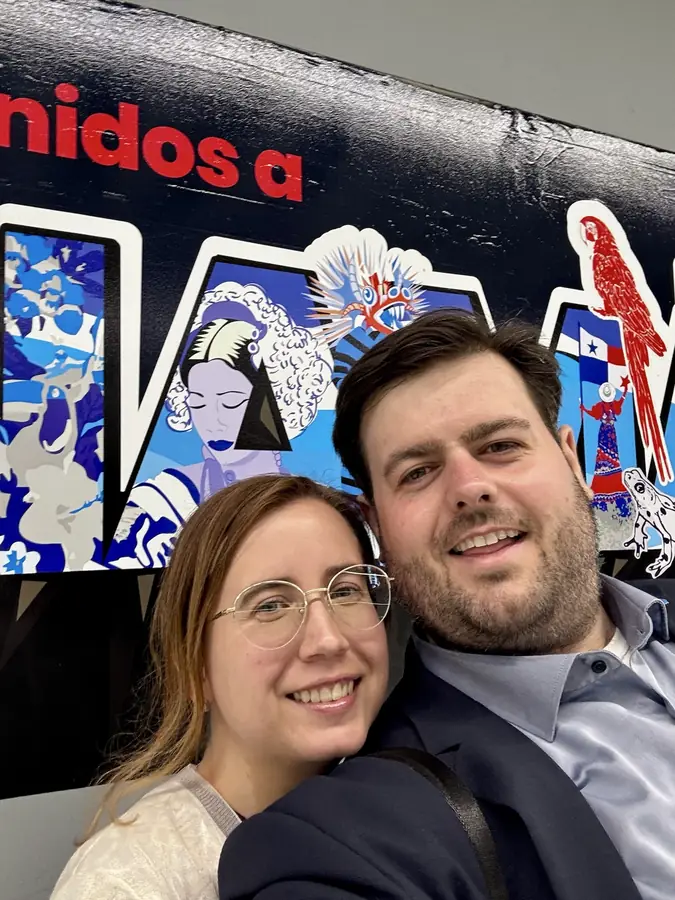
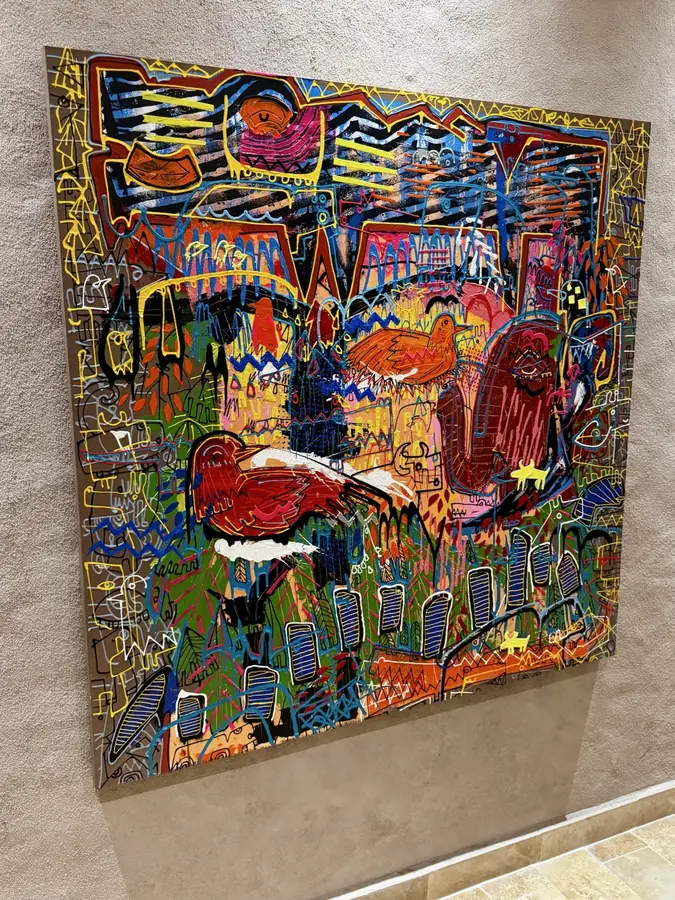
Angekommen — und gleich das erste bemalte Willkommen
29. Juli · Panama-Stadt
Der Blick aus unserem Hotelzimmer, kurz vor Sonnenuntergang
Sonnenuntergang über den Dächern der Altstadt
Erster Abend, und die Stadt hatte uns schon
29. Juli · Panama-Stadt
29. Juli · Panama-Stadt
29. Juli · Panama-Stadt
29. Juli · Panama-Stadt
29. Juli · Panama-Stadt
29. Juli · Panama-Stadt
29. Juli · Panama-Stadt
29. Juli · Panama-Stadt
29. Juli · Panama-Stadt
29. Juli · Panama-Stadt
29. Juli · Panama-Stadt
Bei Ebbe wird gesammelt, wo Stunden später Meer ist
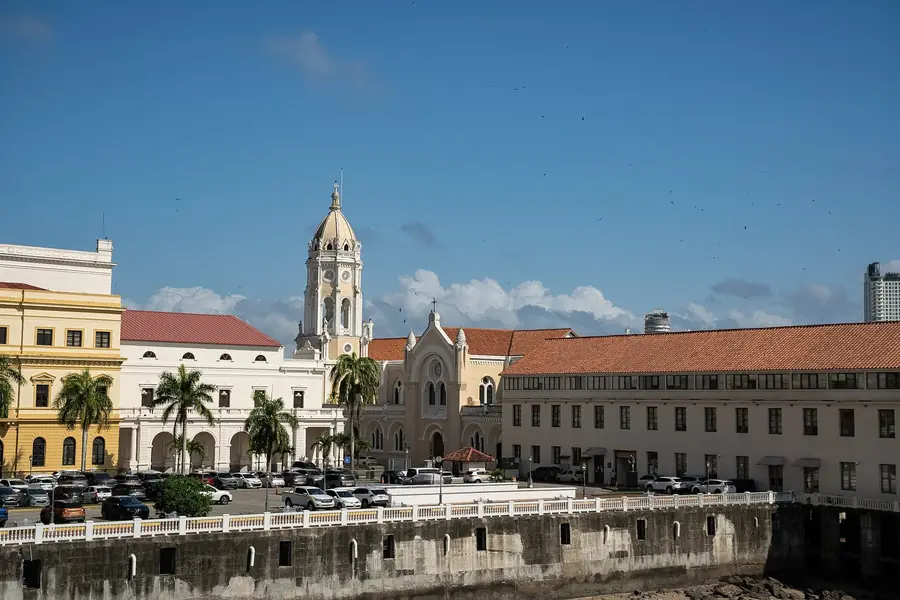
Kirchturm über den Dächern von Casco Viejo
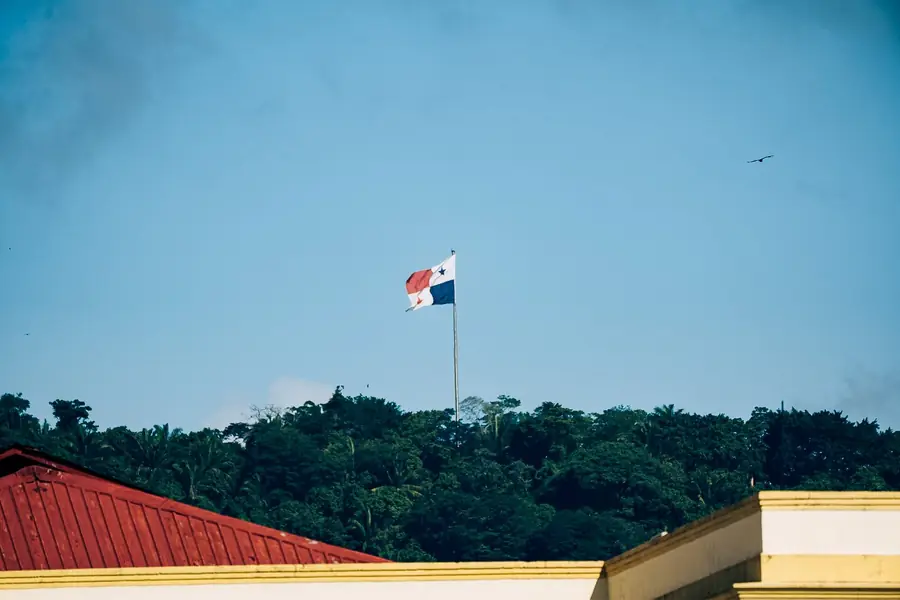
Die Flagge auf dem Cerro Ancón — seit 1977 wieder panamaisch
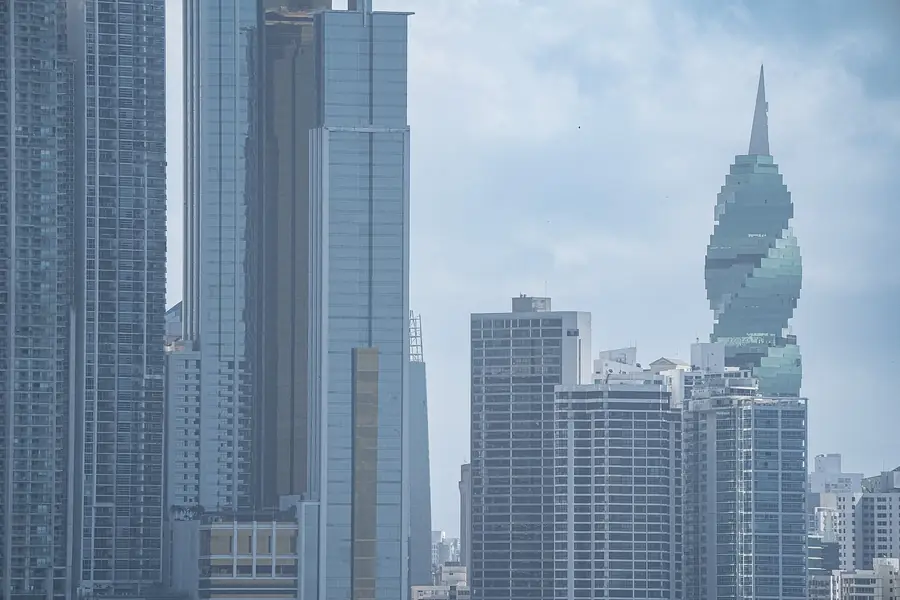
Der gedrehte F&F Tower zwischen den Türmen
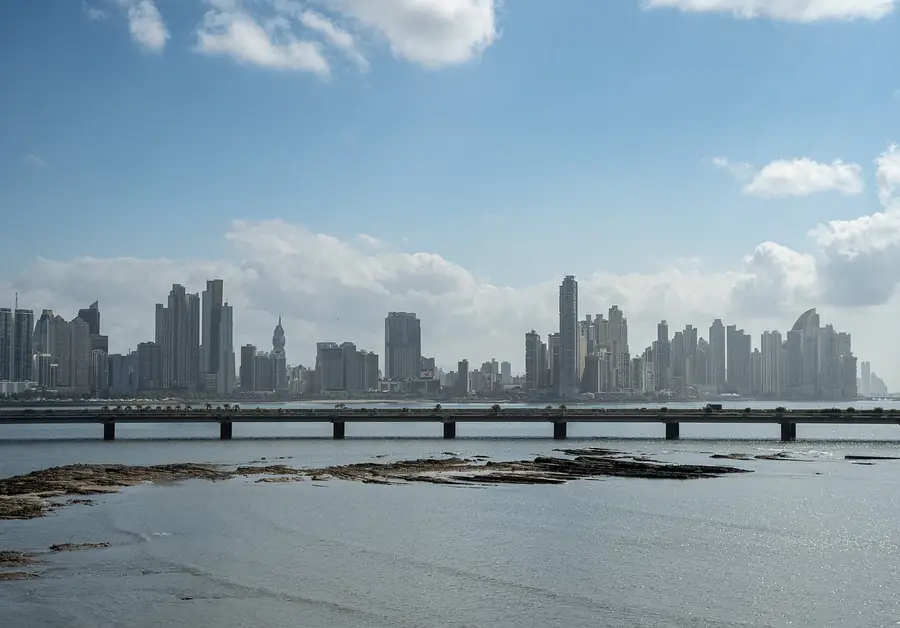
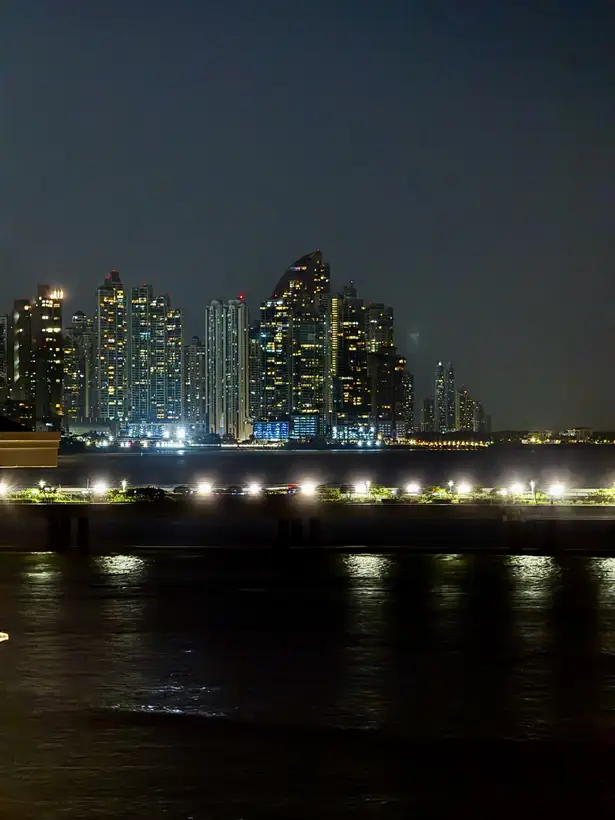
Die Skyline über der Bucht — vorne liegt der Meeresboden trocken
Casco Viejo vom Wasser aus
29. Juli · Panama-Stadt
29. Juli · Panama-Stadt
Die leere Kammer — 320 Meter lang, 33 Meter breit
Die Miraflores-Schleusen — 200 Millionen Liter pro Schleusung
Das Kontrollhaus zwischen den beiden Schleusenkammern
29. Juli · Panama-Stadt
Das IMAX im Besucherzentrum — Kanalgeschichte mit Popcorn
29. Juli · Panama-Stadt
29. Juli · Panama-Stadt
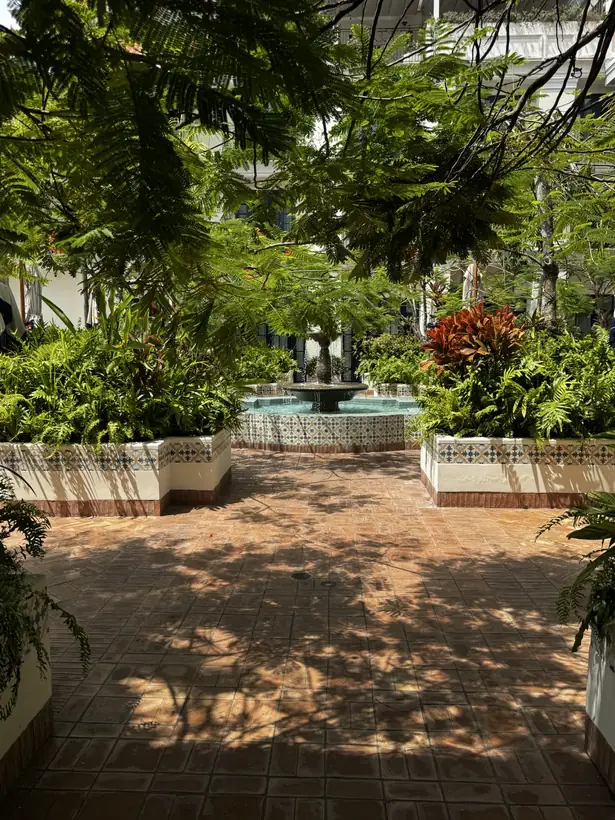
Der Innenhof unseres Hotels in der Altstadt
29. Juli · Panama-Stadt
Die Cocktailkarte ist farbenfroh
29. Juli · Panama-Stadt
29. Juli · Panama-Stadt
29. Juli · Panama-Stadt
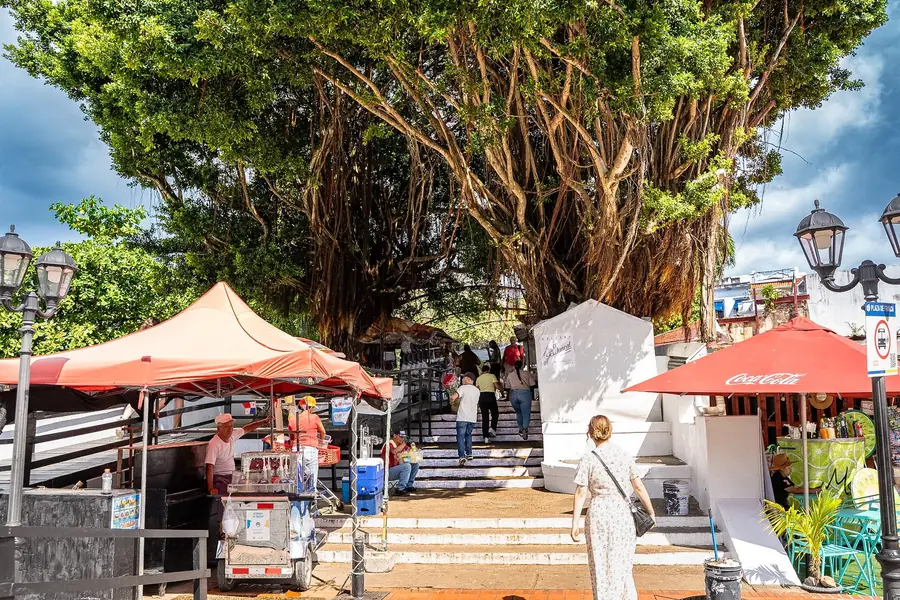
Ein mächtiger Feigenbaum beschattet die Marktstände
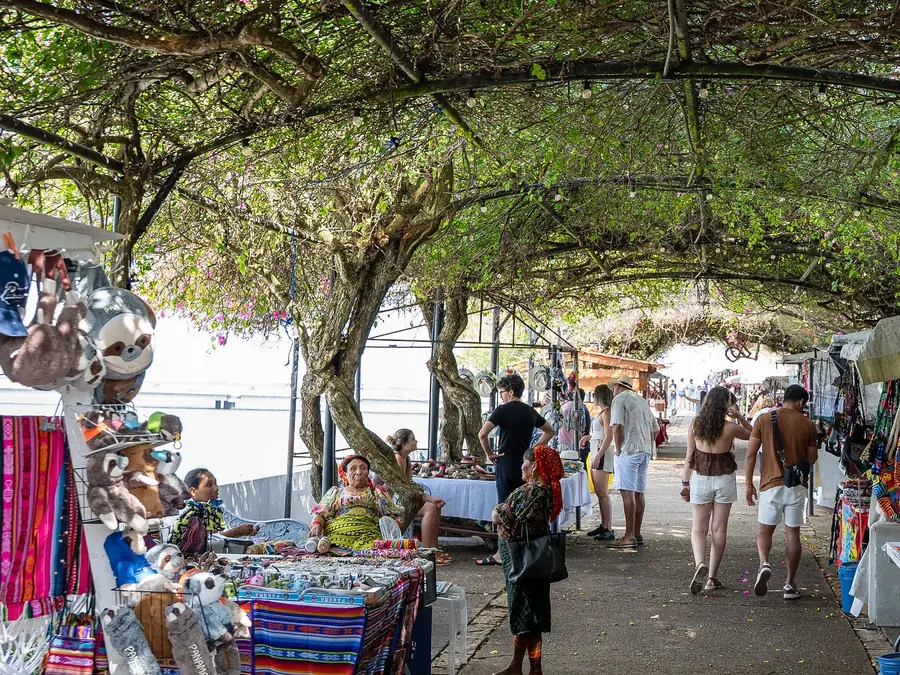
Kunsthandwerksmarkt unter den Bäumen an der Promenade
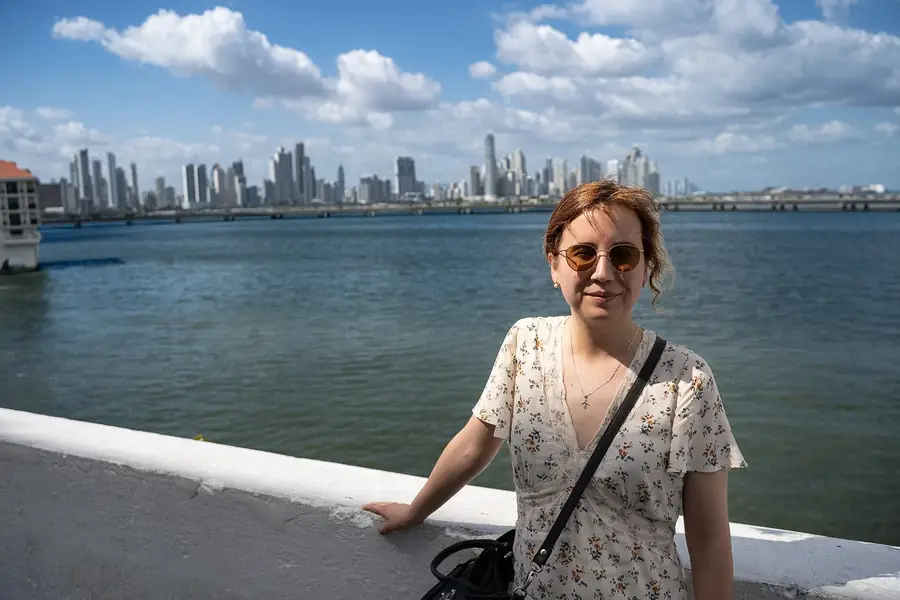
Von der Altstadtmauer über die Bucht
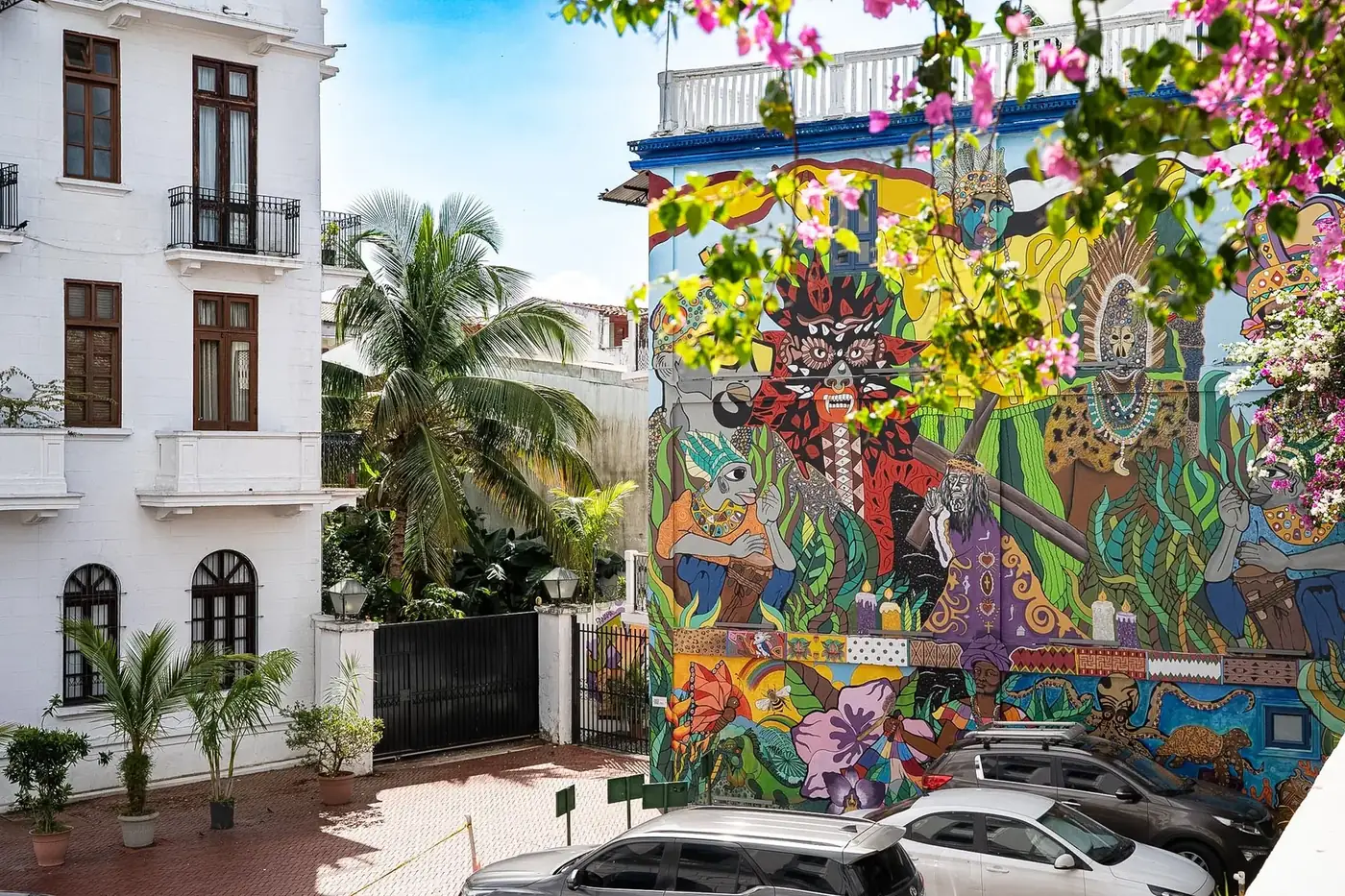
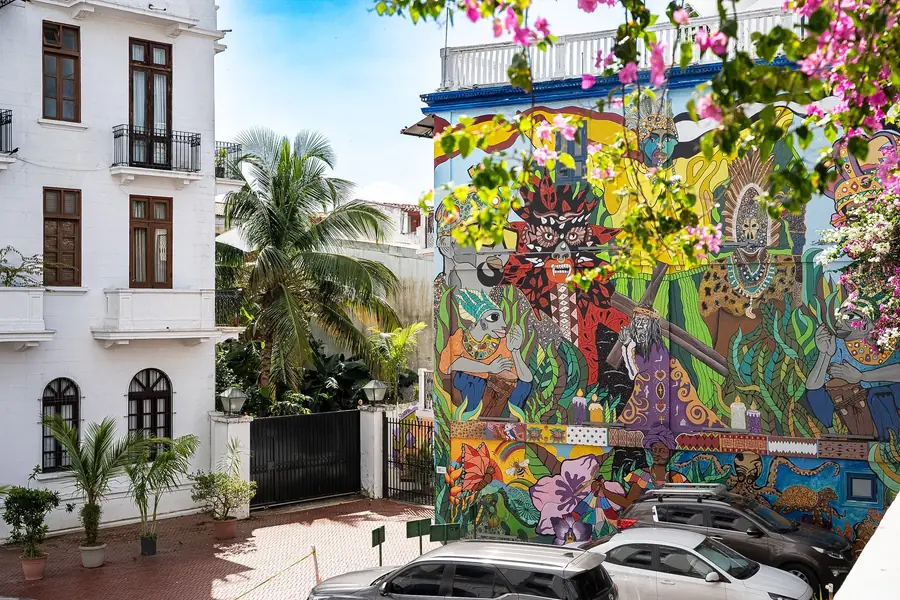
Wandbild in Casco Viejo — die Farben dieser Seite kommen von hier
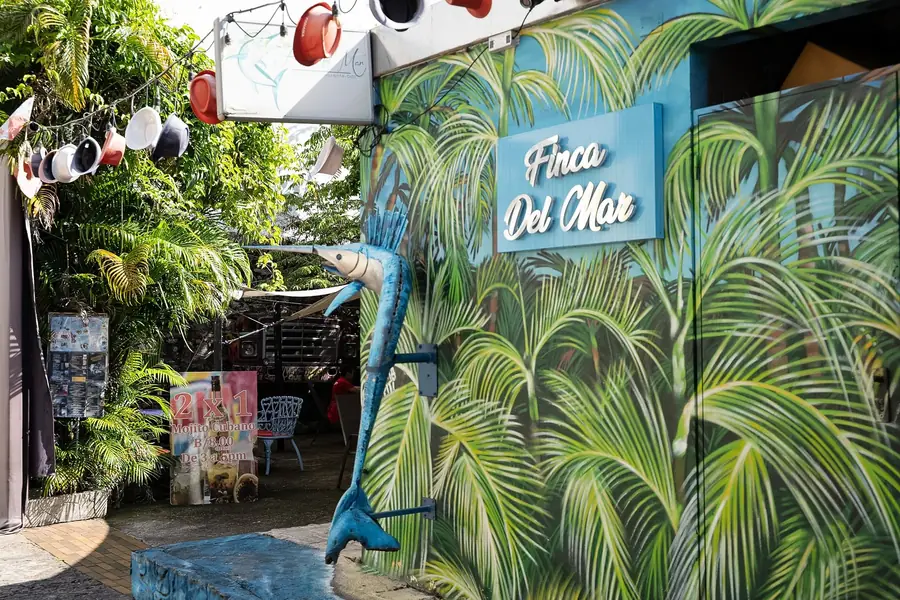
„Finca Del Mar" — bemalte Fassade in der Altstadt
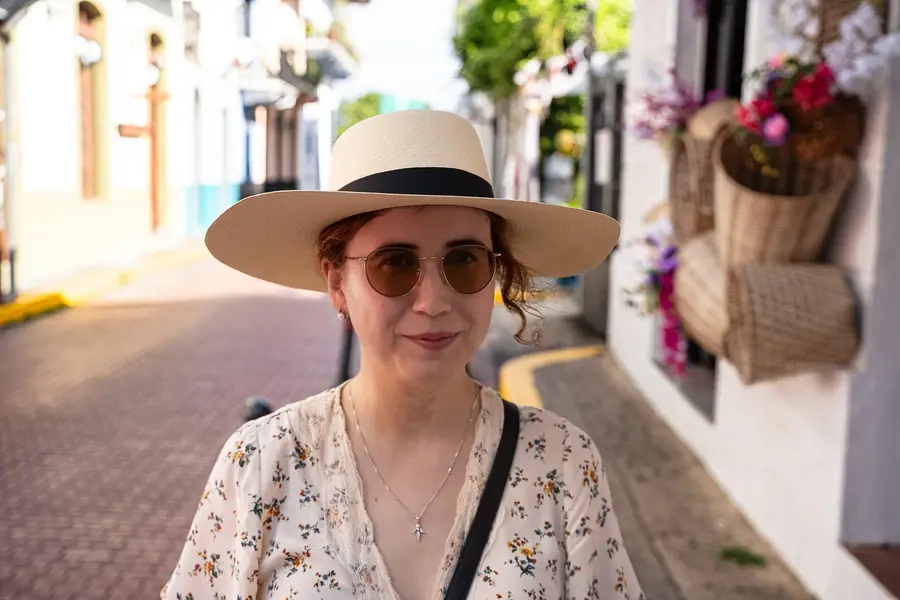
Noch mit dem ecuadorianischen Hut — das ändert sich in Kapitel 2
29. Juli · Panama-Stadt
29. Juli · Panama-Stadt
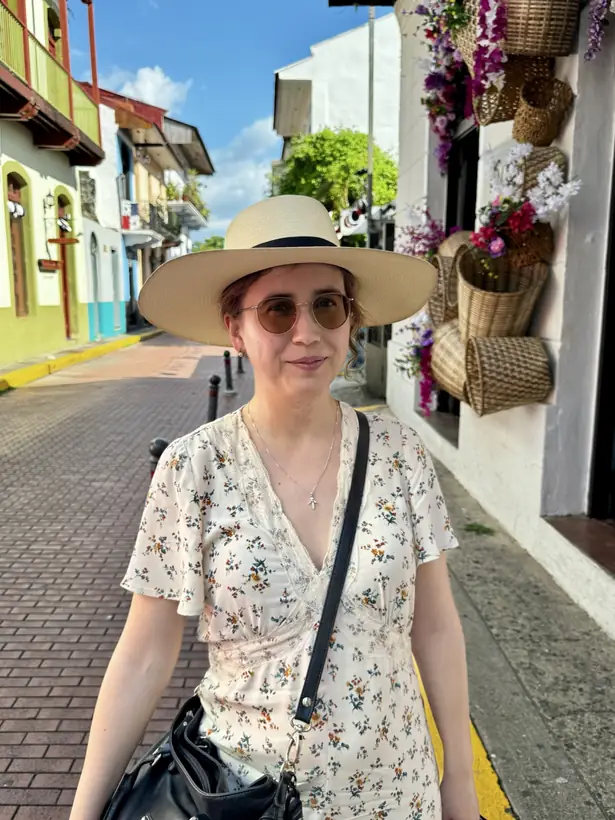
Der Hut, Fassung eins — noch aus Ecuador
29. Juli · Panama-Stadt
29. Juli · Panama-Stadt
Über den Dächern von Casco Viejo
30. Juli · Panama-Stadt
30. Juli · Panama-Stadt
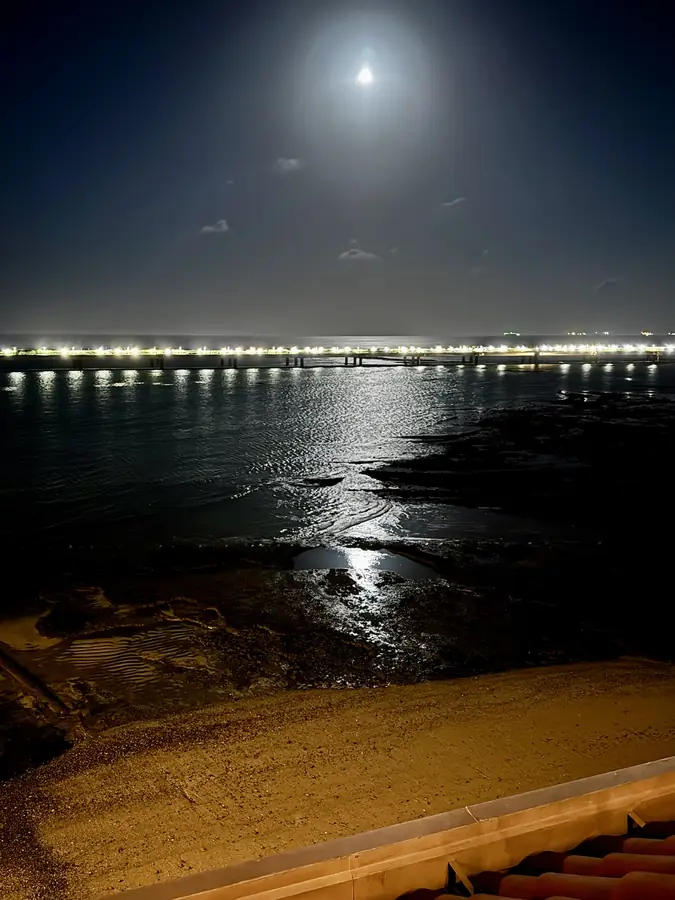
Mond über der Bucht, durch die Zweige am Balkon
30. Juli · Panama-Stadt
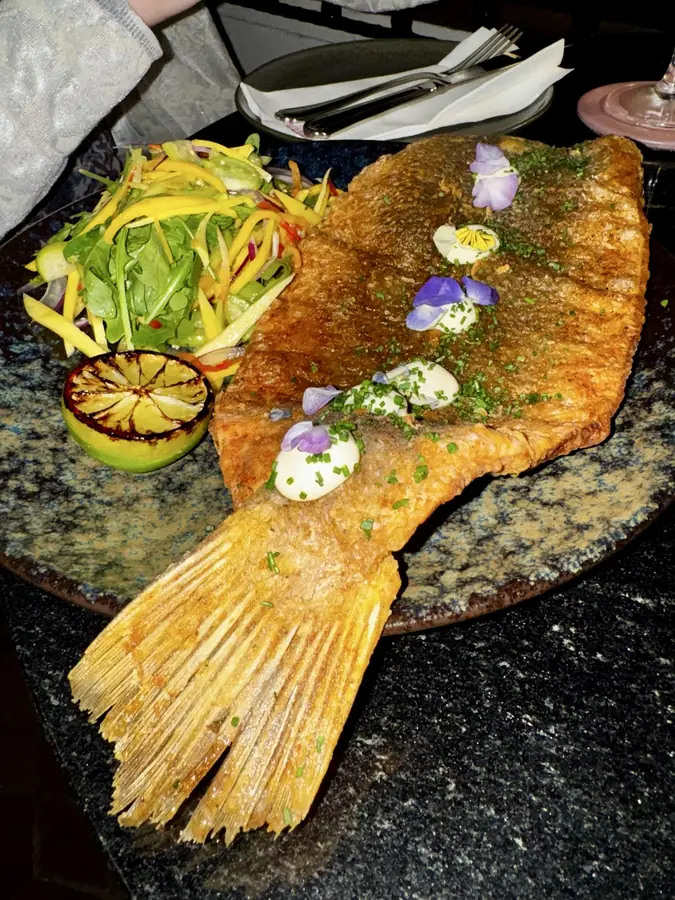
Auch die feine Küche arbeitet mit Fisch
30. Juli · Panama-Stadt
Und derselbe Mond auf dem Wasser
30. Juli · Panama-Stadt
30. Juli · Panama-Stadt
30. Juli · Panama-Stadt
30. Juli · Panama-Stadt
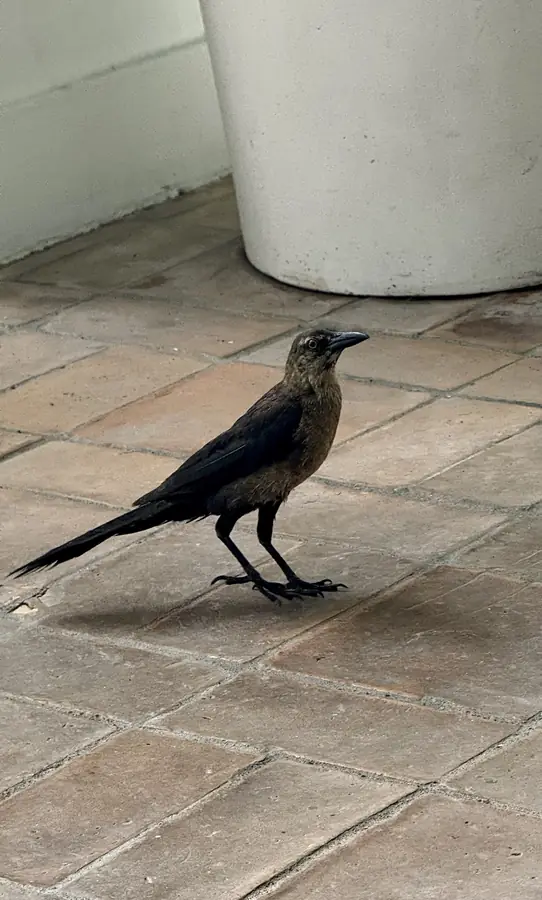
Ein Grackle spaziert über die Fliesen — Panamas häufigster Mitbewohner
30. Juli · Panama-Stadt
31. Juli · Panama-Stadt
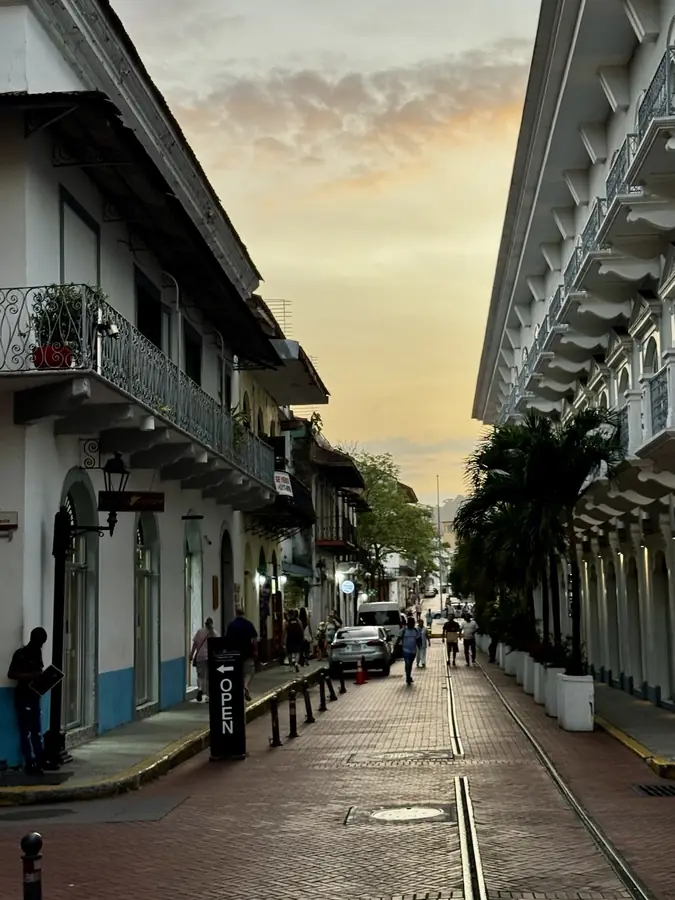
Casco Viejo, wenn die Hitze nachlässt
Die Kathedrale der neuen Altstadt am Abend
31. Juli · Panama-Stadt
Ceviche — an der Küste die Selbstverständlichkeit schlechthin
31. Juli · Panama-Stadt
31. Juli · Panama-Stadt
31. Juli · Panama-Stadt
Ganzer frittierter Fisch mit Beilagen — so isst man hier mittags
31. Juli · Panama-Stadt
31. Juli · Panama-Stadt
31. Juli · Panama-Stadt
„Con el corazón en la mano" — mit dem Herzen in der Hand
31. Juli · Panama-Stadt
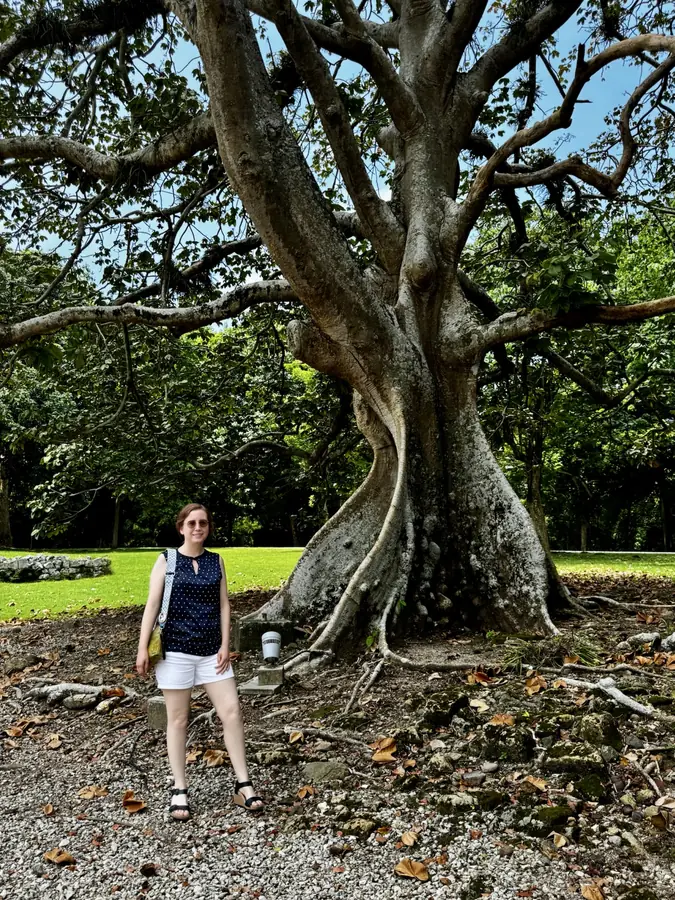
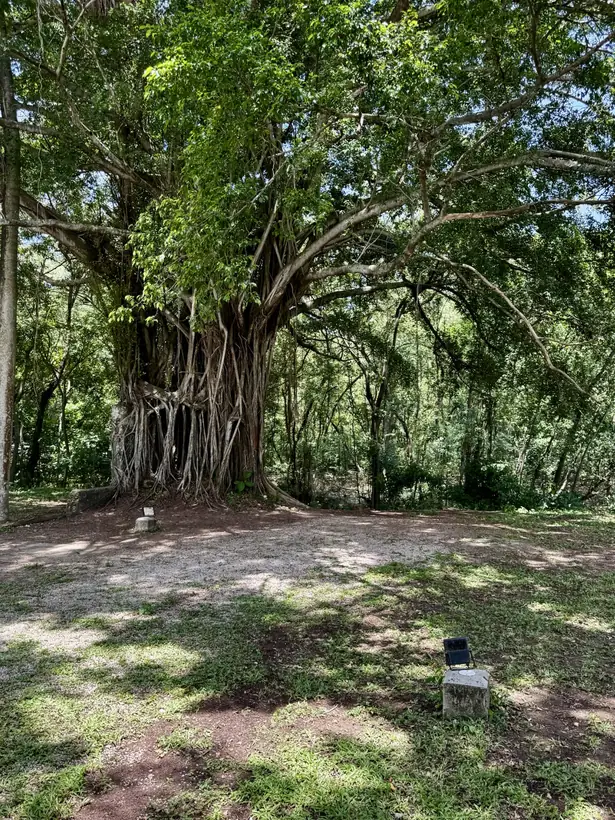
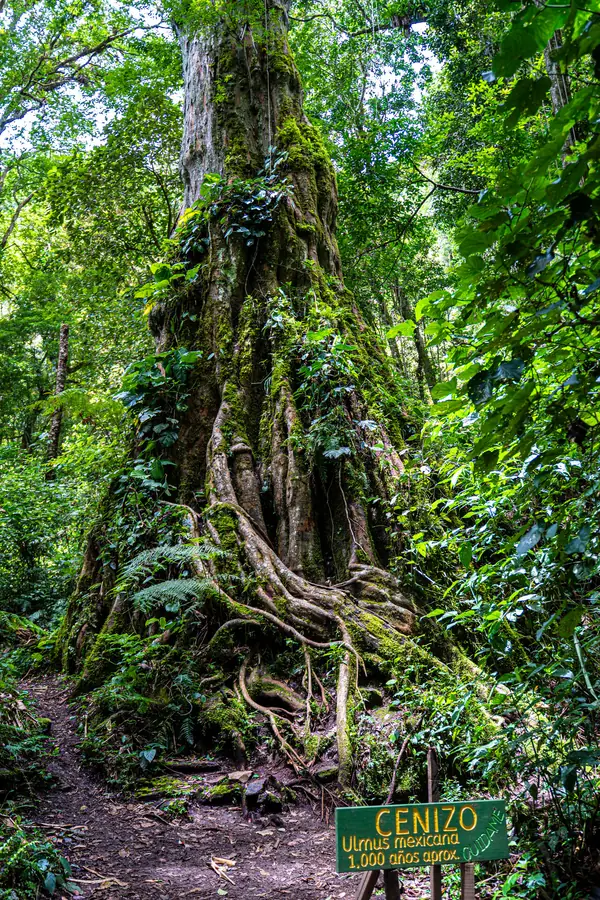
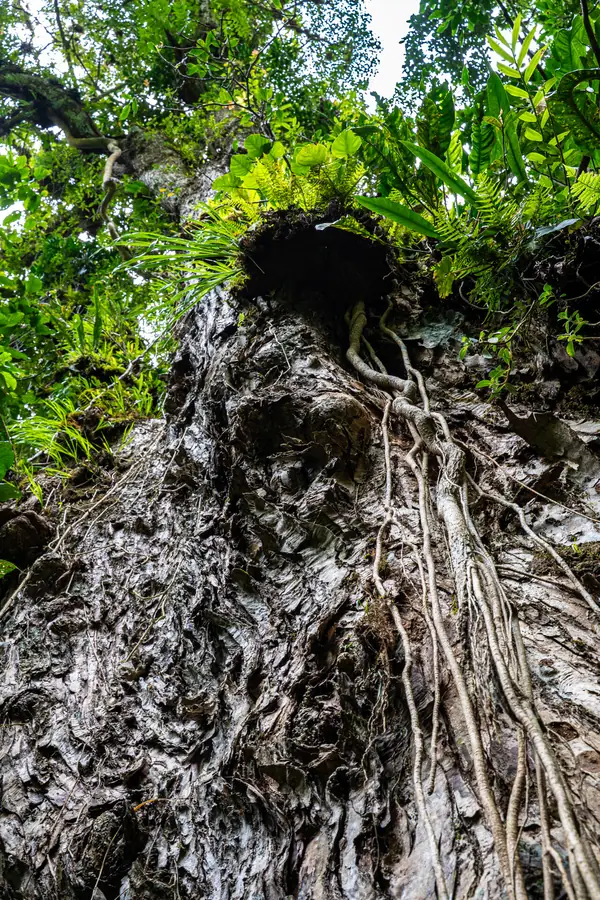
Der Würgefeigenbaum von Panamá Viejo — der Maßstab steht daneben
31. Juli · Panama-Stadt
31. Juli · Panama-Stadt
31. Juli · Panama-Stadt
31. Juli · Panama-Stadt
31. Juli · Panama-Stadt
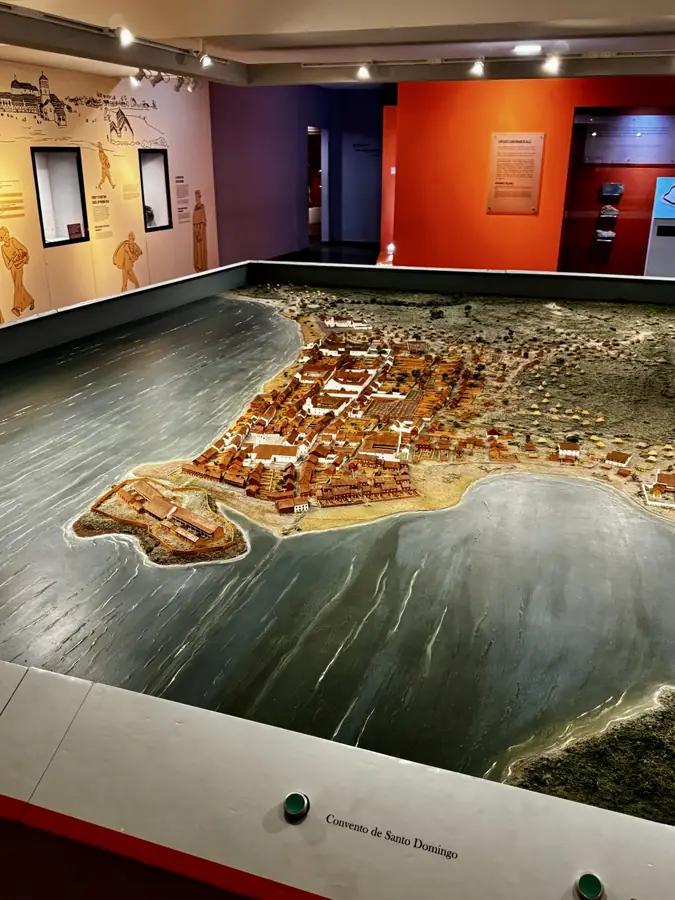
Im Museum: So sah die Stadt vor der Zerstörung aus
31. Juli · Panama-Stadt
Der Kathedralturm — das Wahrzeichen der zerstörten Stadt
31. Juli · Panama-Stadt
31. Juli · Panama-Stadt
31. Juli · Panama-Stadt
Durch ein Tor der alten Stadt auf die Türme von heute
Aus dem Turm von 1519 auf die Türme von heute
Im Turm hängen sie direkt über einem
Zwei von vielen — man merkt es erst, wenn sich die Augen gewöhnen
Panamá Viejo — was Henry Morgan 1671 übrig ließ
Dazu gehört genau ein Getränk
31. Juli · Panama-Stadt
Ein Karakara spaziert zwischen den Tischen — Panamas Wappenvogel
31. Juli · Panama-Stadt
Abendprogramm in der Altstadt
31. Juli · Panama-Stadt
31. Juli · Panama-Stadt
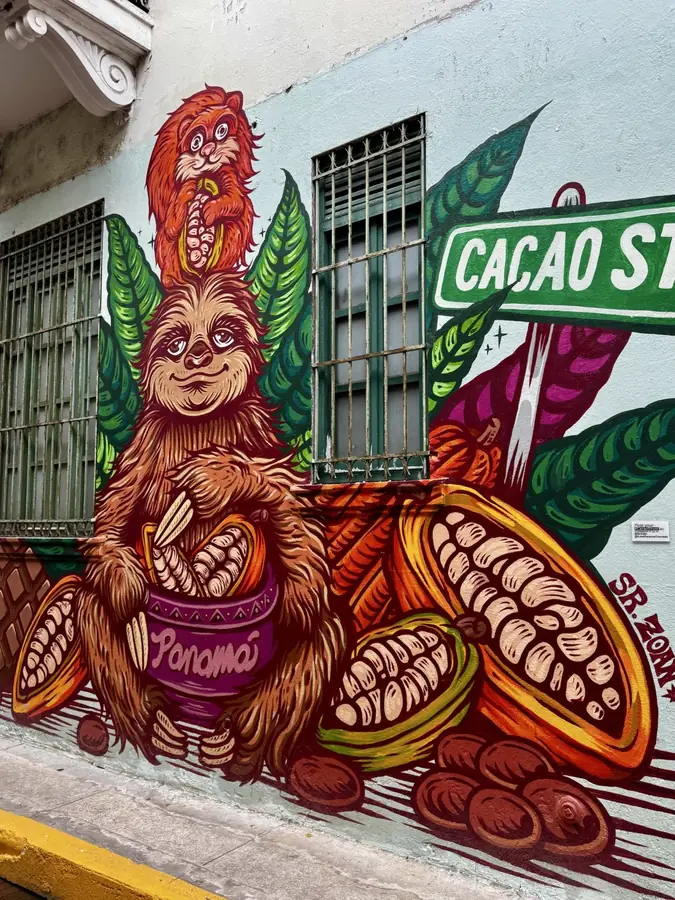
Kakao ist hier kein Nebenprodukt, sondern Handwerk
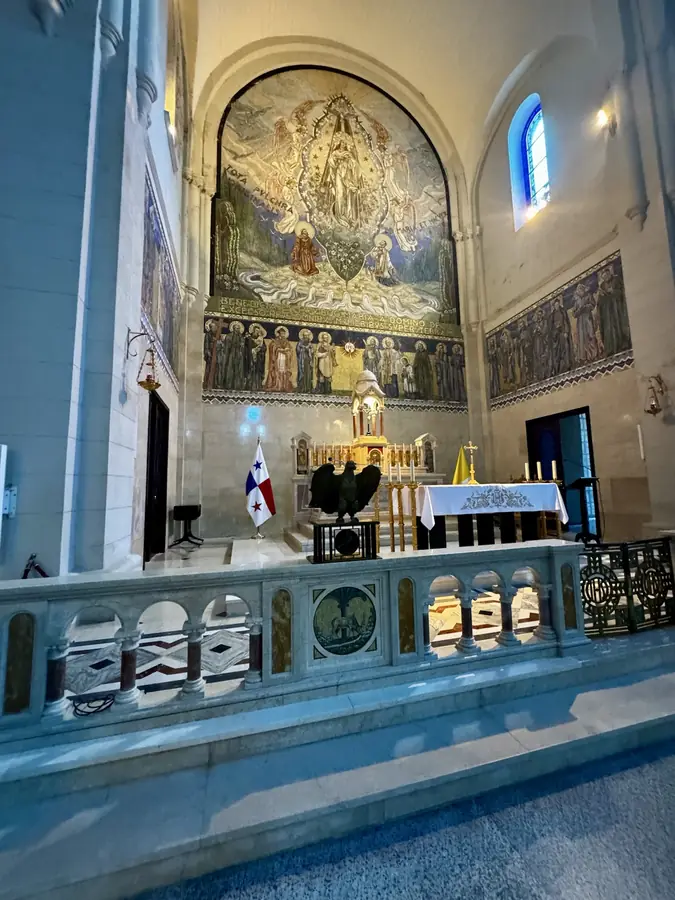
Die Kathedrale von Casco Viejo mit dem Denkmal davor
Innen: Mosaik und Licht
31. Juli · Panama-Stadt
31. Juli · Panama-Stadt
1. August · Panama-Stadt
1. August · Panama-Stadt
1. August · Panama-Stadt
1. August · Panama-Stadt
1. August · Panama-Stadt
1. August · Panama-Stadt
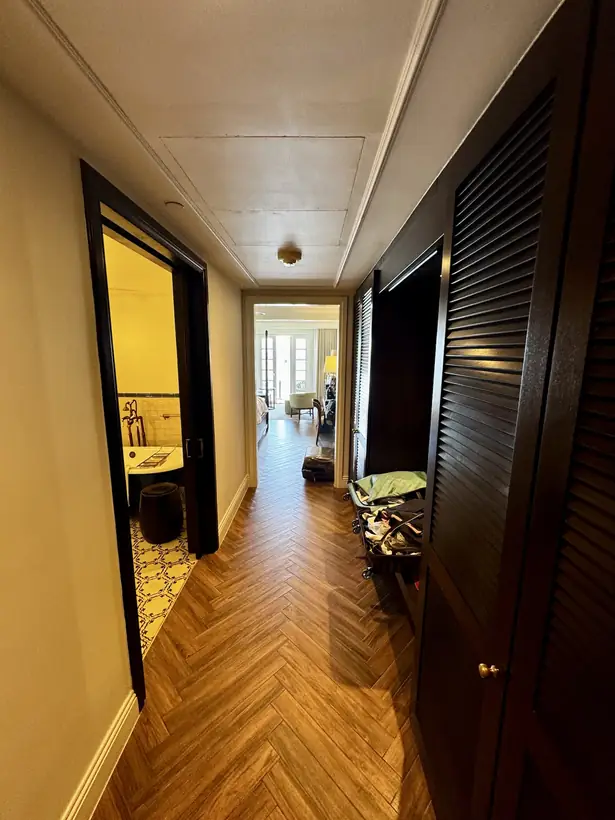
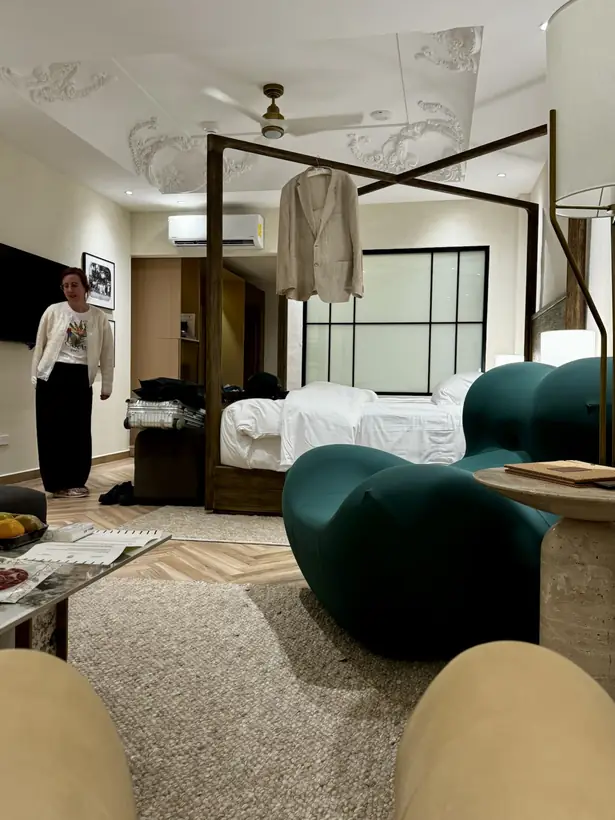
Unser Zimmer in der Altstadt
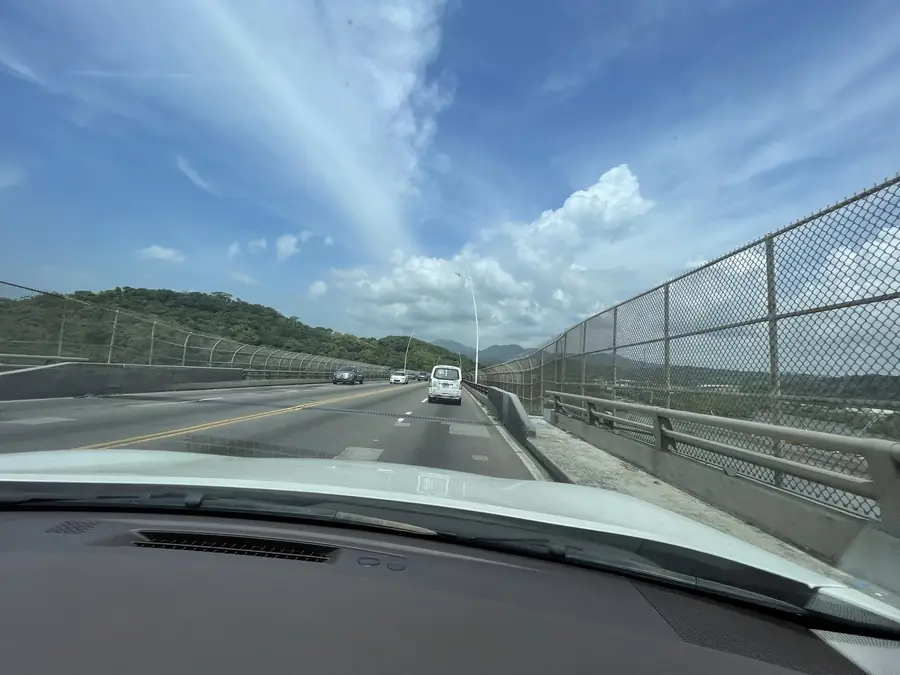
Über eine der großen Brücken hinaus aus der Stadt
2
El Valle de Antón · VulkankraterEl Valle de Antón · volcanic crater
Leben im erloschenen VulkanLife inside an extinct volcano
1. – 3. August · zwei Nächte1–3 August · two nights
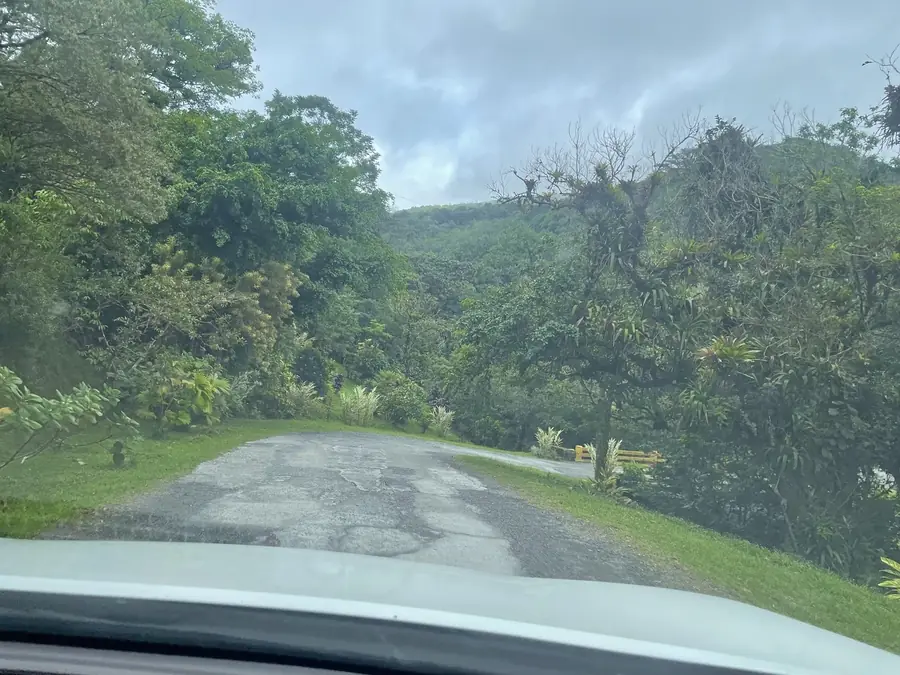
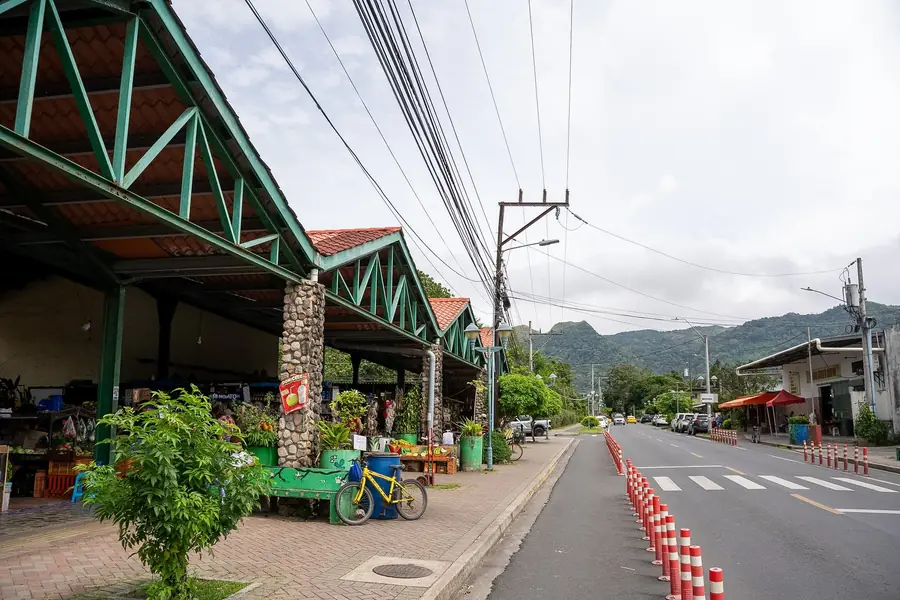
Zwei Stunden westlich von Panama-Stadt führt die Straße bergauf, wird eng
und kurvig, und die Luft wird spürbar kühler. Oben liegt El Valle de Antón — ein Dorf
mitten im Krater eines erloschenen Vulkans. Der Kessel misst rund sechs Kilometer im
Durchmesser und gehört zu den wenigen bewohnten Vulkankratern der Welt.Two hours west of Panama City the road starts to climb, narrows, begins to wind, and the air turns noticeably cooler. At the top lies El Valle de Antón — a village in the crater of an extinct volcano. The basin is about six kilometres across and is one of the very few inhabited volcanic craters in the world.
Die Strecke dorthin. Irgendwann hören die Werbetafeln der
Panamericana auf, die Straße wird schmal, und links und rechts stehen Bananenstauden.
Aufgenommen von Charlotte vom Beifahrersitz.The road out there. At some point the billboards of the Pan-American Highway stop, the road narrows, and there are banana plants to the left and right. Filmed by Charlotte from the passenger seat.
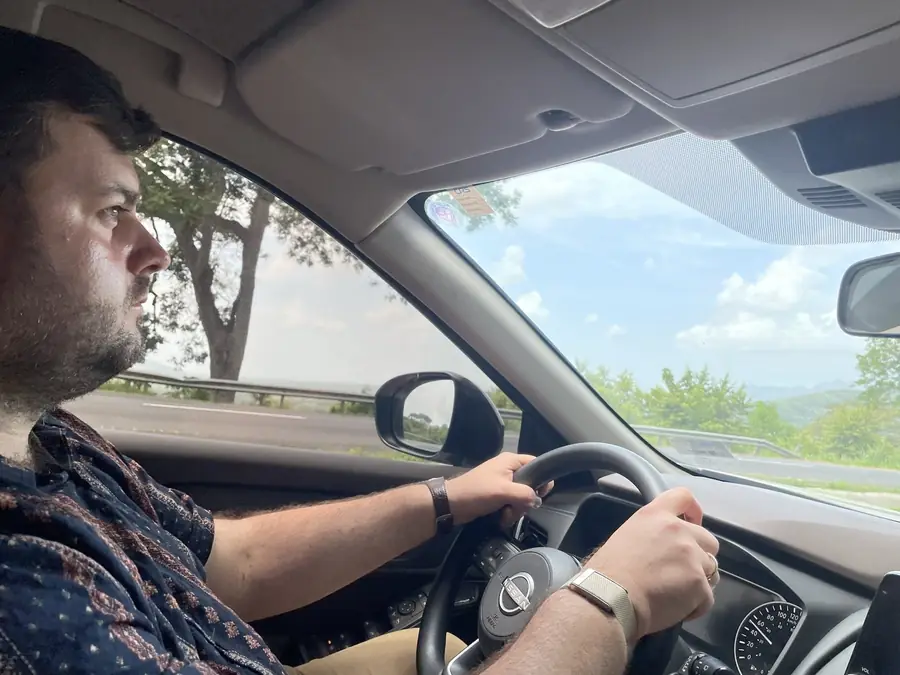
Die Strecke selbst ist kein Selbstläufer. Auf den Krater hinauf und wieder hinunter
geht es in engen Serpentinen, und die Einheimischen sind das Fahren in den Bergen ganz
anders gewohnt. Wer sich vorausschauend und eher zurückhaltend verhält, kommt gut durch —
Spaß macht es sowieso. Aber es ist eine Strecke, die man nicht nebenbei fährt.The drive itself is not something you do on autopilot. Up into the crater and back down again it is tight hairpins, and the locals have a rather different relationship with mountain roads. Look ahead, hold back a little, and you get through fine — and it is fun regardless. But it is a road that wants your full attention.
Die letzten Kilometer hinauf. Aufgenommen vom Beifahrersitz —
eng, kurvig, und vor uns meistens ein Lastwagen. Genau so sieht die Anfahrt aus.The last few kilometres up. Filmed from the passenger seat — narrow, winding, and usually a lorry in front of us. That is exactly what the approach looks like.
Gut zu wissenGood to know
Ein Dorf in einem VulkanA village inside a volcano
El Valle liegt in der Caldera des Valle-de-Antón-Vulkans, die vor etwa
1,1 Millionen Jahren entstand, als der Gipfel bei einem gewaltigen Ausbruch in sich
zusammenbrach. Der Kessel füllte sich anschließend mit Wasser — der Kratersee blieb
rund eine halbe Million Jahre, bis der Rand an einer Stelle brach und der See
auslief. Zurück blieb ein flacher, extrem fruchtbarer Talboden auf 600 Metern Höhe.El Valle sits in the caldera of the Valle de Antón volcano, formed around 1.1 million years ago when the summit collapsed in an enormous eruption. The basin then filled with water — the crater lake lasted roughly half a million years, until the rim broke at one point and the lake drained away. What remained was a flat, extraordinarily fertile valley floor at 600 metres.
Genau das erklärt beides: warum hier überhaupt jemand wohnt — und warum es angenehm
kühl ist. Bewohnte Vulkankrater dieser Größe gibt es weltweit nur eine Handvoll.That explains both things at once: why anyone lives up here at all — and why it is so pleasantly cool. There are only a handful of inhabited volcanic craters this size anywhere in the world.
Das Wetter, über das alle redenThe weather everyone warns you about
Wir sind mitten in der Regenzeit hier, und die ist deutlich freundlicher als ihr Ruf.
Vormittags ist praktisch immer Sonne — stabil, um die 30 Grad. Nachmittags nieselt es
dann ab und zu. Nicht das Unwetter, das man erwartet, eher eine kurze Unterbrechung.
Regencapes hatten wir aus Deutschland dabei — gebraucht haben wir sie bis heute kein
einziges Mal. Wenn es regnet, ist das hier eher angenehm als lästig.We are here in the middle of the rainy season, and it is far friendlier than its reputation. Mornings are almost always sunny — steady, around 30 degrees. In the afternoon it drizzles now and then. Not the storm you expect, more of a short interruption. We brought rain capes from Germany — and have not used them once. When it rains here it is pleasant rather than annoying.
Der Krater ist dabei die Ausnahme: Abends sind es hier oben 23 bis 24 Grad mit einer
Brise. Max fand das sehr angenehm, Charlotte schon fast frisch. An der Küste sind es
durchgehend gute 30 Grad, gerne auch mal 35.The crater is the exception: in the evening it is 23 to 24 degrees up here, with a breeze. Max found that very agreeable, Charlotte almost chilly. On the coast it is a solid 30 degrees around the clock, and happily 35.
Warum wir die India Dormida nicht gegangen sindWhy we skipped the India Dormida
Die India Dormida — der Bergrücken, dessen Silhouette an eine schlafende Frau erinnert
— ist die Wanderung von El Valle. Wir haben sie bewusst ausgelassen. Der Reiz der
Tour ist der freie Blick von oben ins Tal, und in der Regenzeit war es schlicht zu
bewölkt. Man steht dann nicht über dem Krater, sondern schaut in Wolken und
ärgert sich, dass die Aussicht fehlt, für die man hochgelaufen ist.The India Dormida — the ridge whose silhouette looks like a sleeping woman — is the hike in El Valle. We left it out deliberately. The appeal of the walk is the open view down into the valley, and in the rainy season it was simply too cloudy. You end up standing not above the crater but inside a cloud, annoyed about the view you climbed up for.
Also die andere Richtung: hinein in den Wald.So the other direction instead: into the forest.
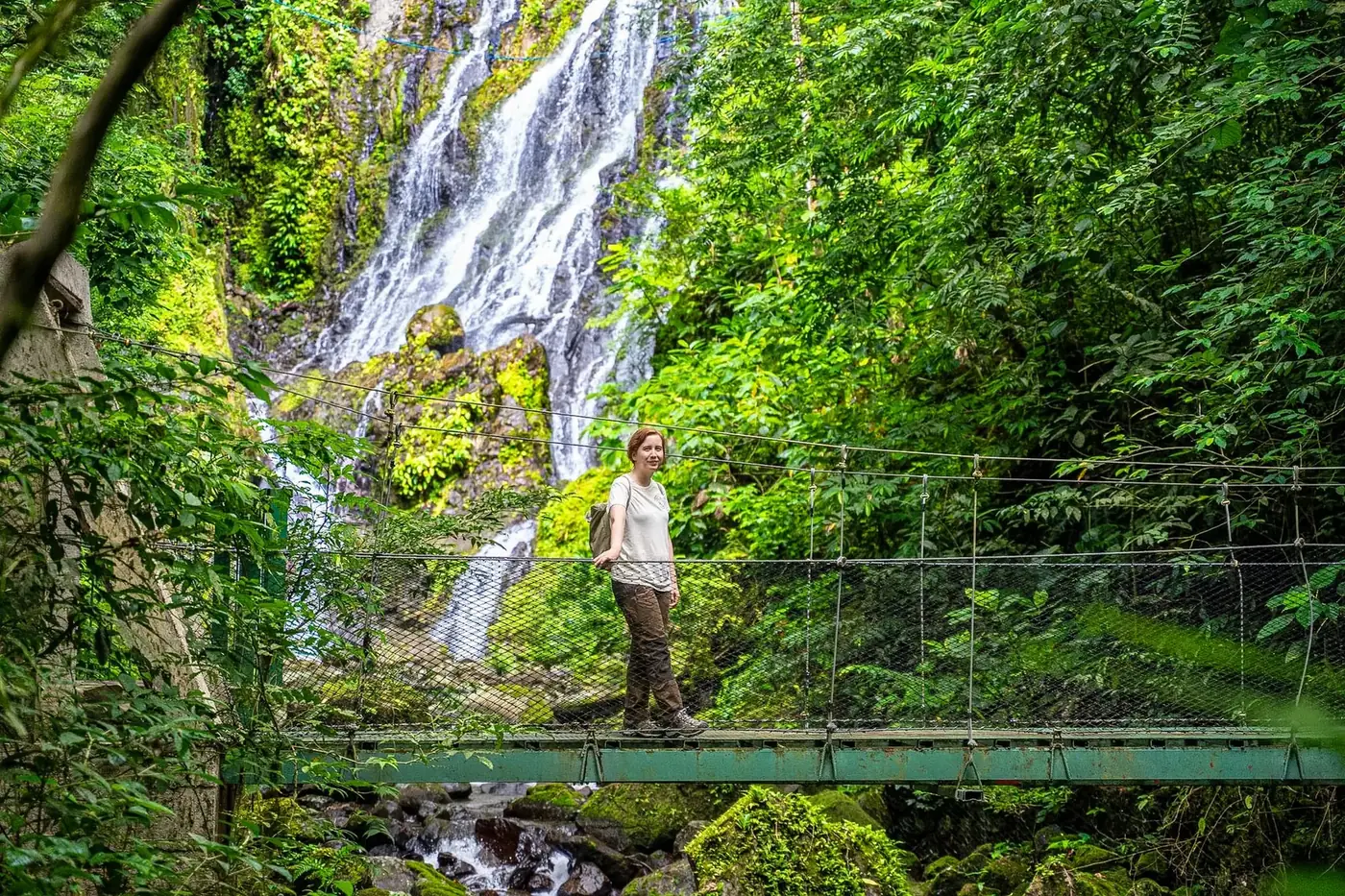
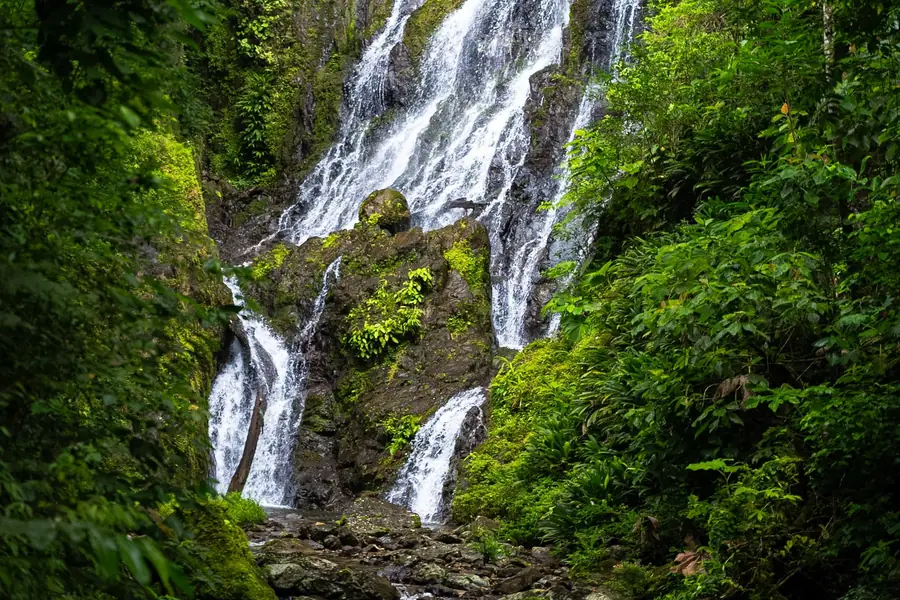
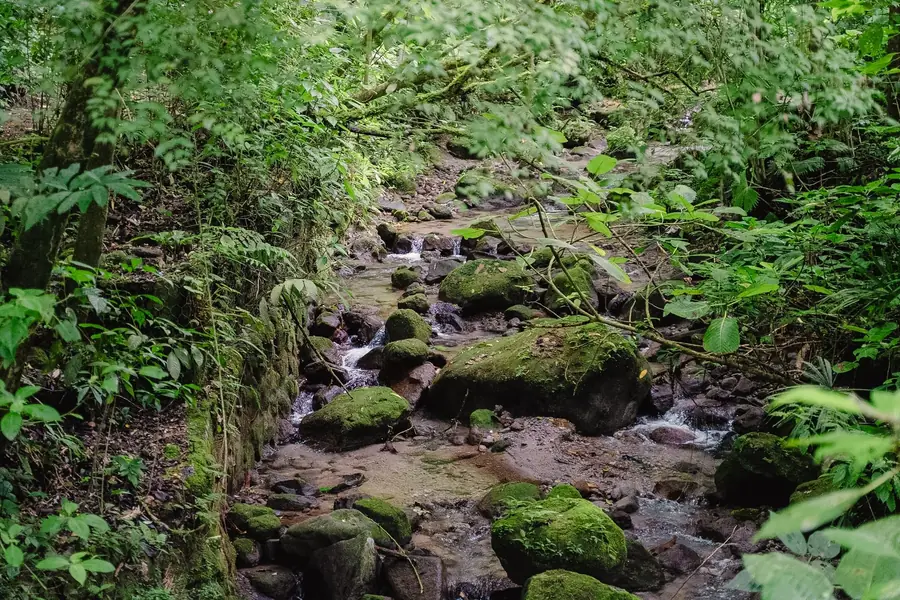
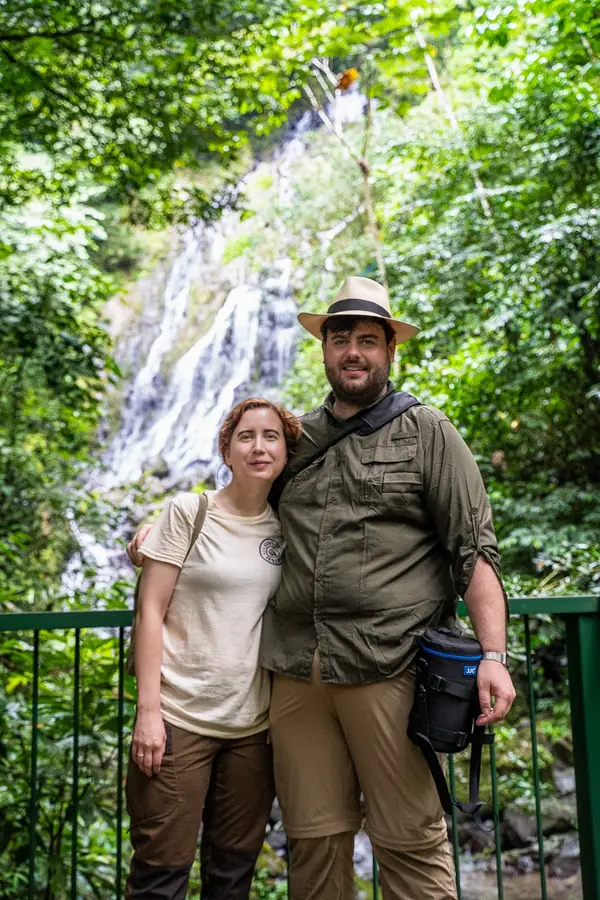
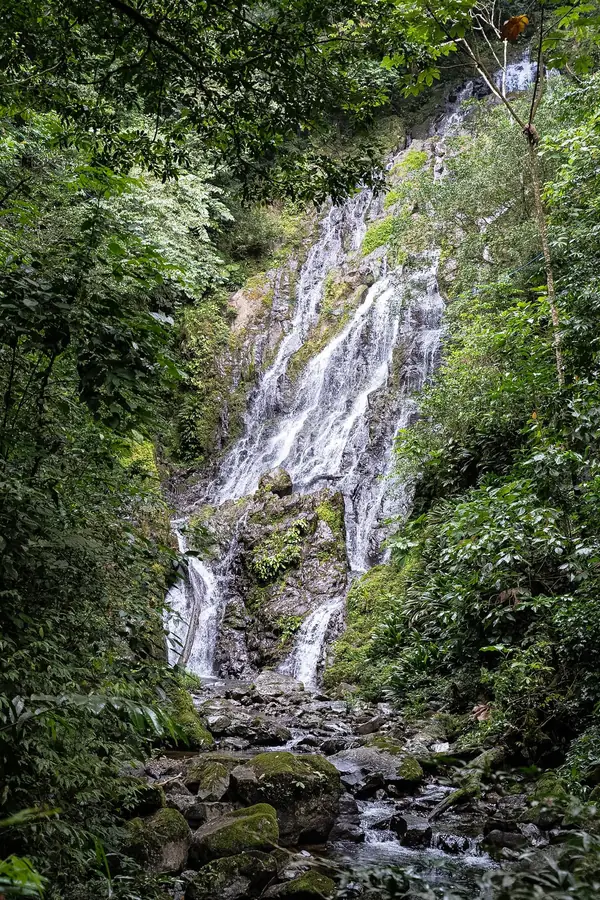
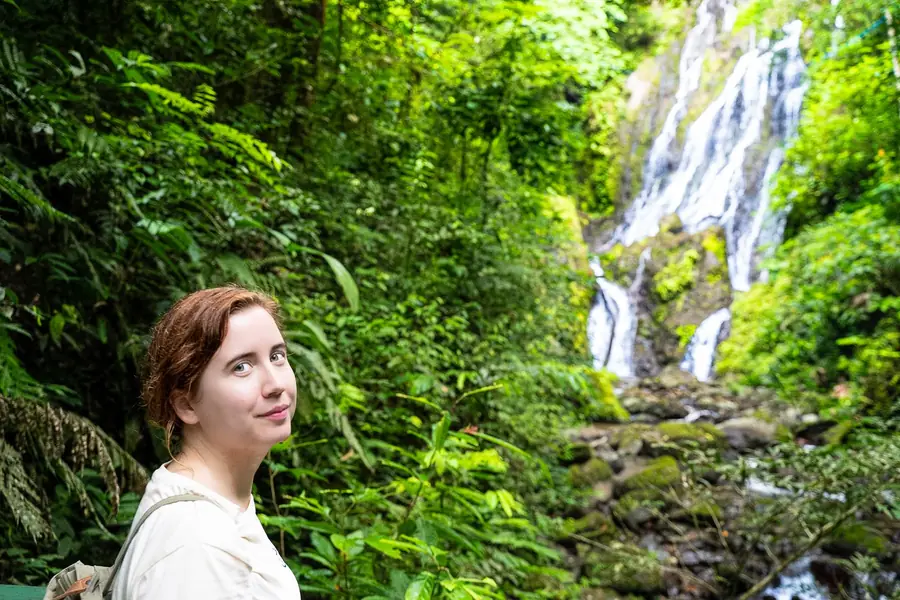
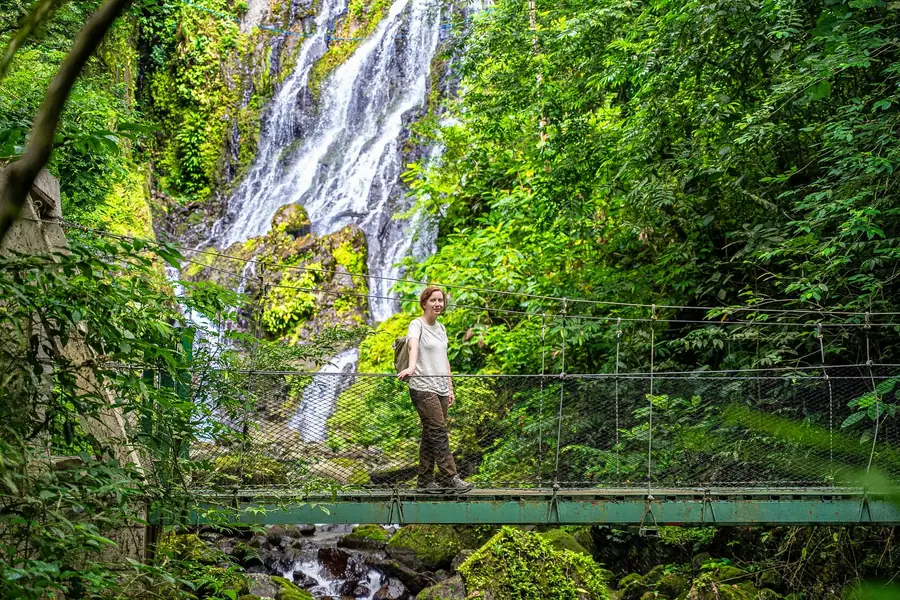
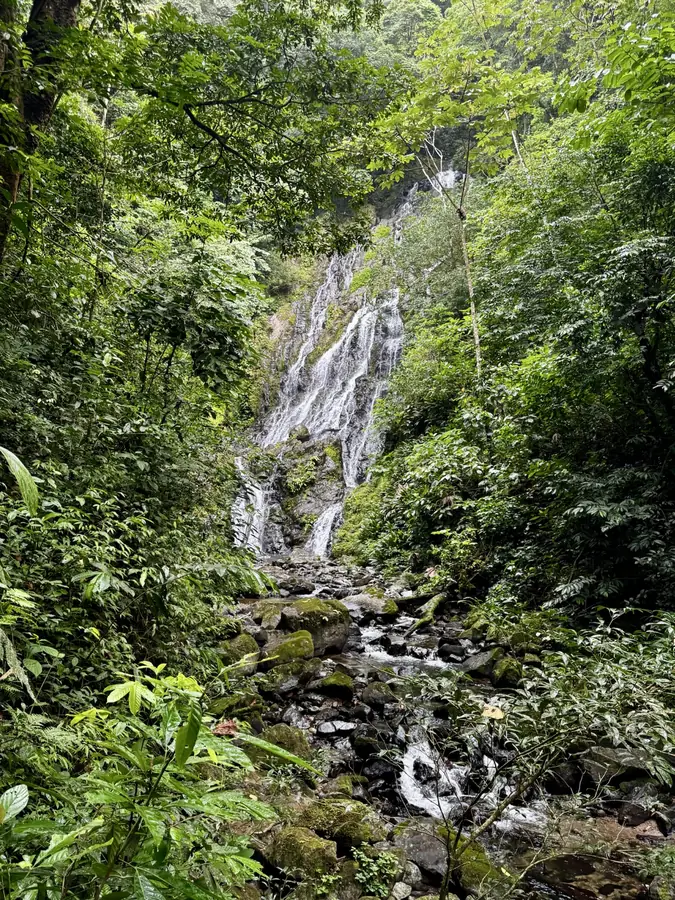
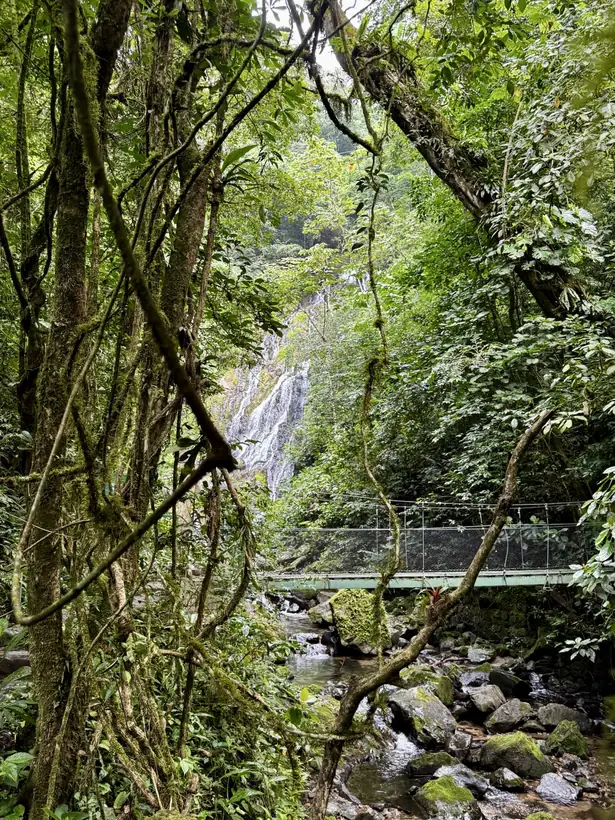
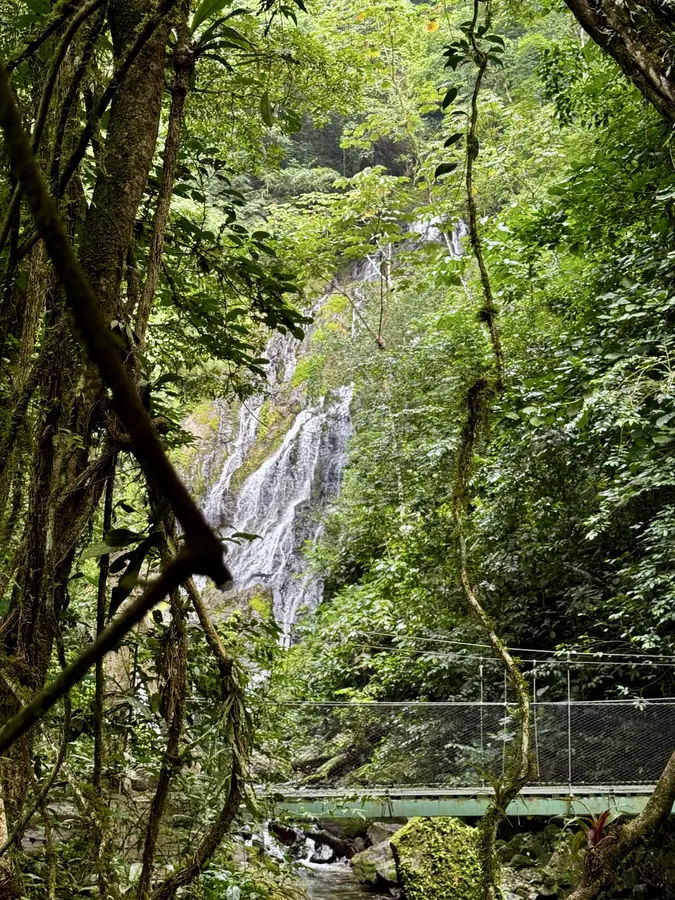
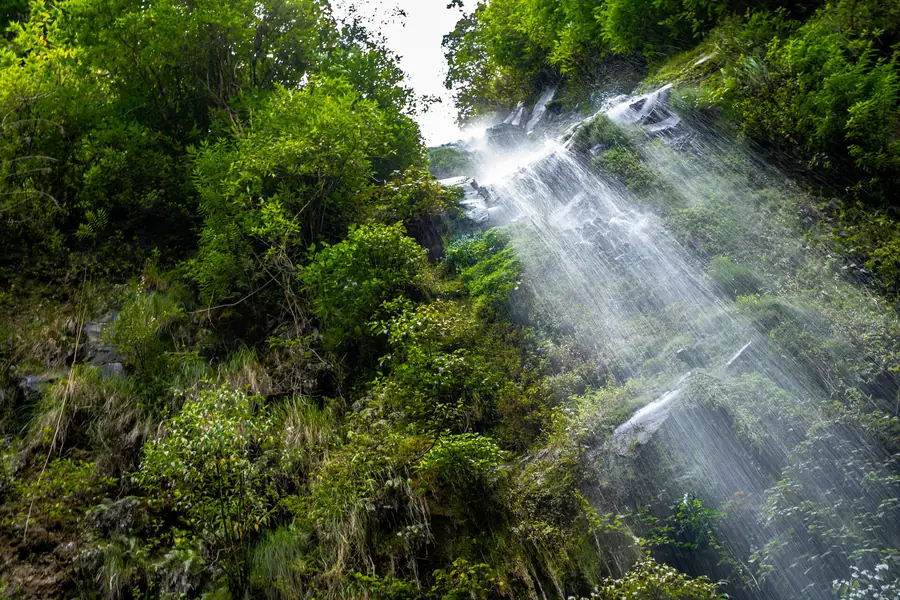
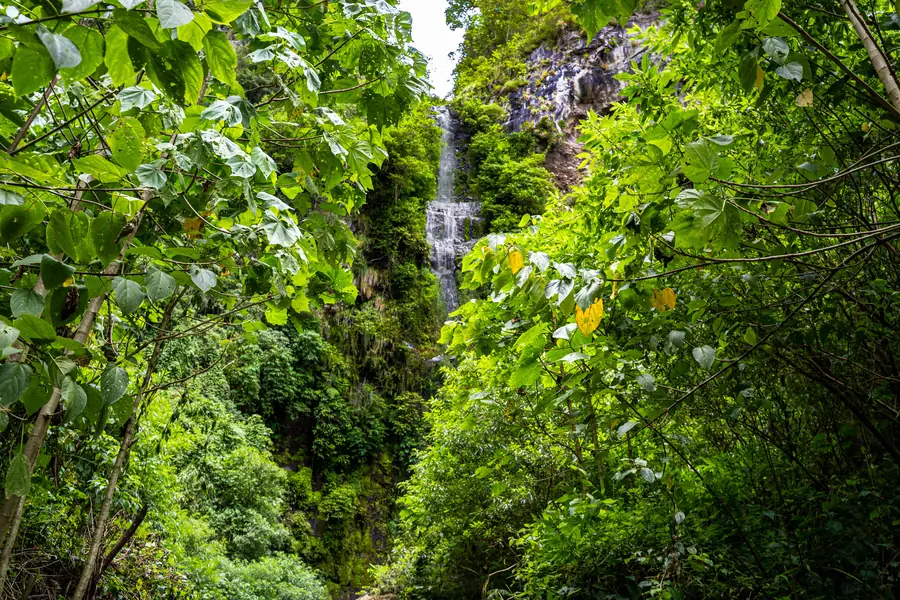
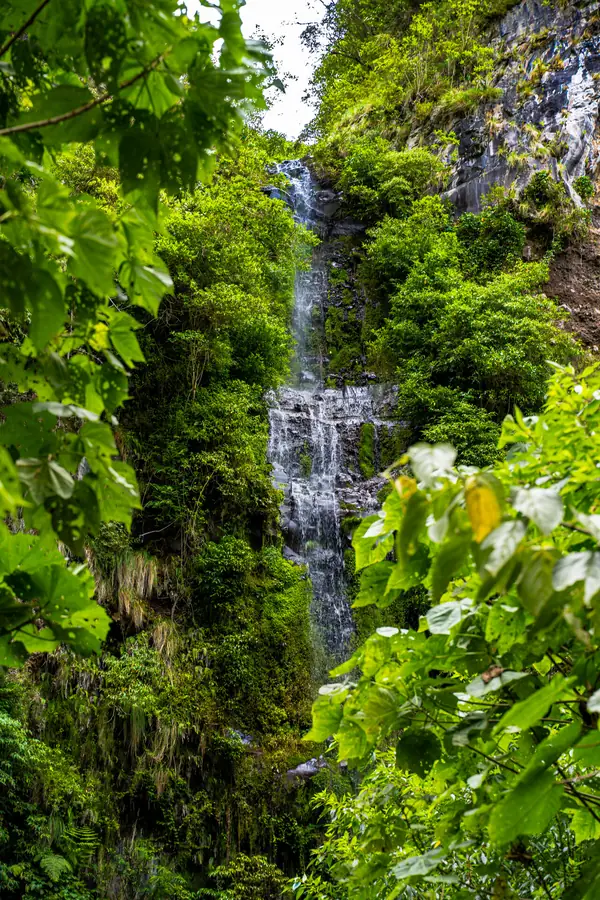
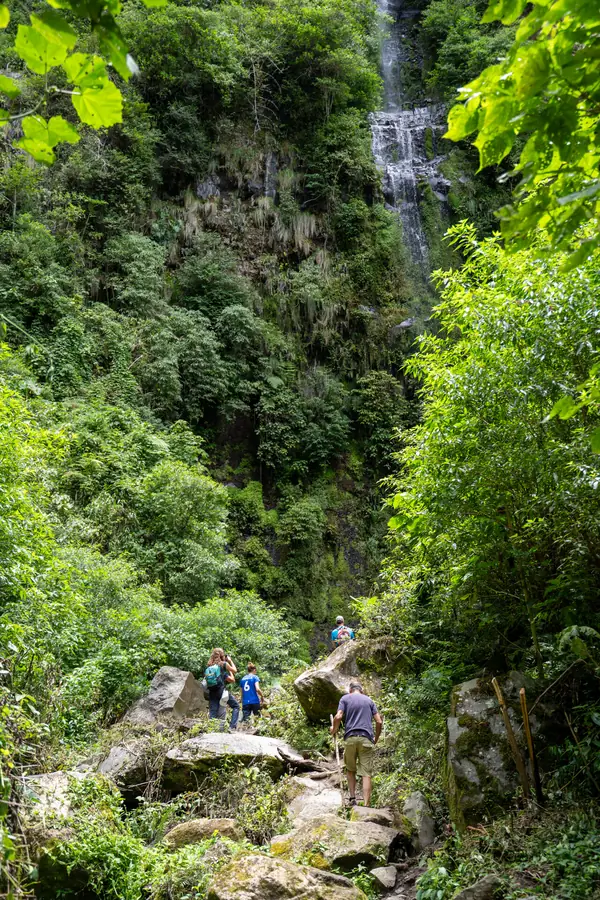
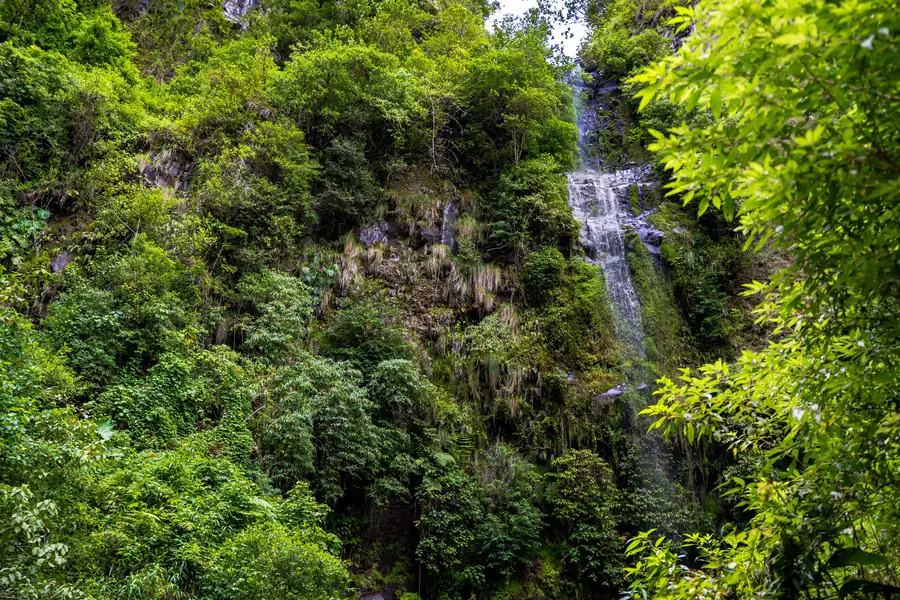
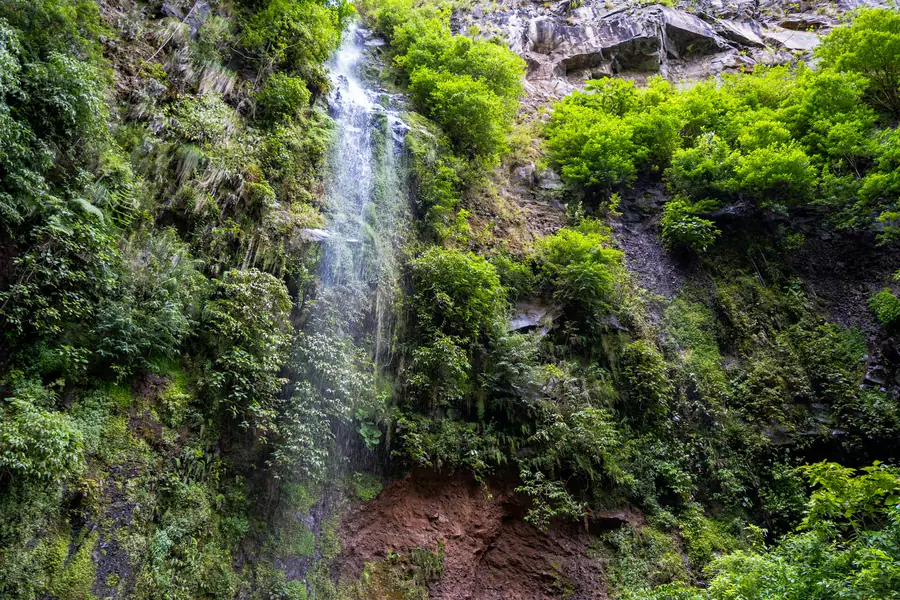
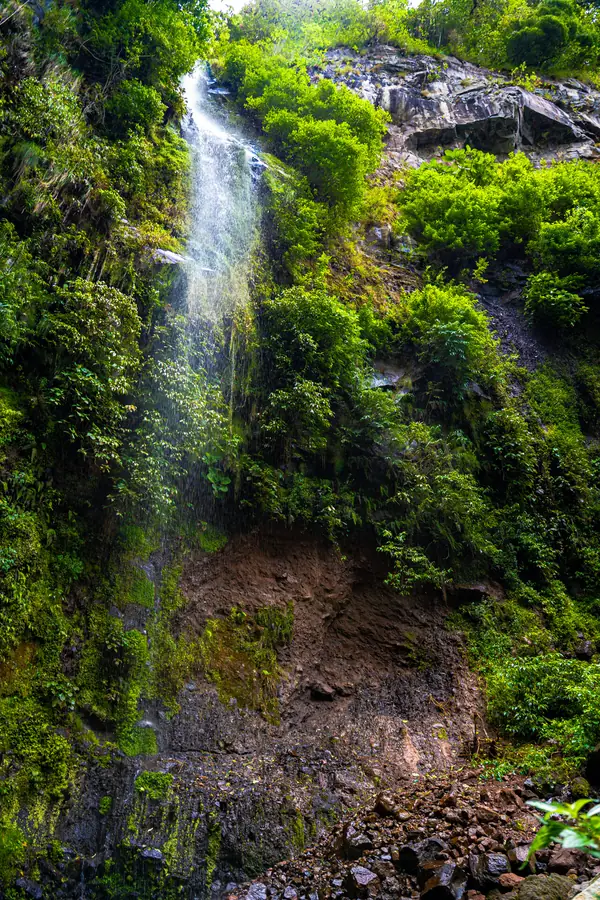
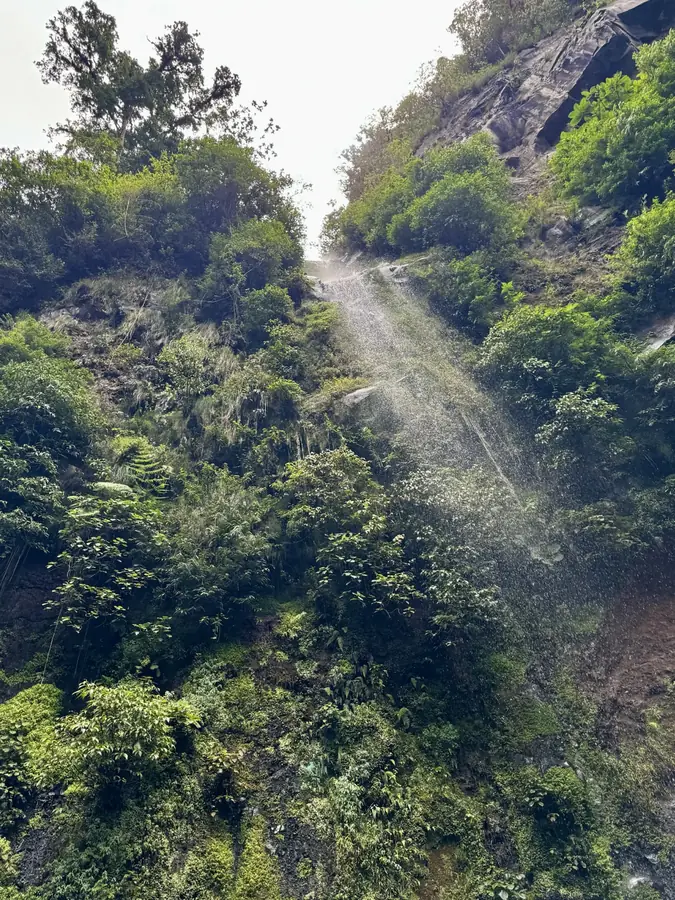
Chorro El Macho. In der Regenzeit führt er deutlich mehr Wasser als
im Rest des Jahres — das ist der Ausgleich für die Wolken über den Bergen.Chorro El Macho. In the rainy season it carries far more water than during the rest of the year — that is the trade-off for the clouds over the mountains.
Der erste echte RegenwaldOur first real rainforest
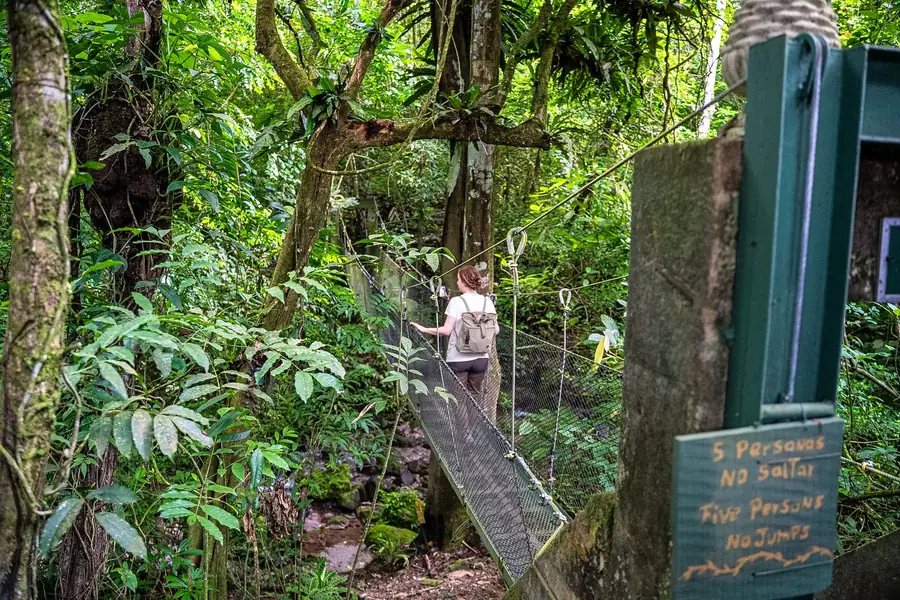
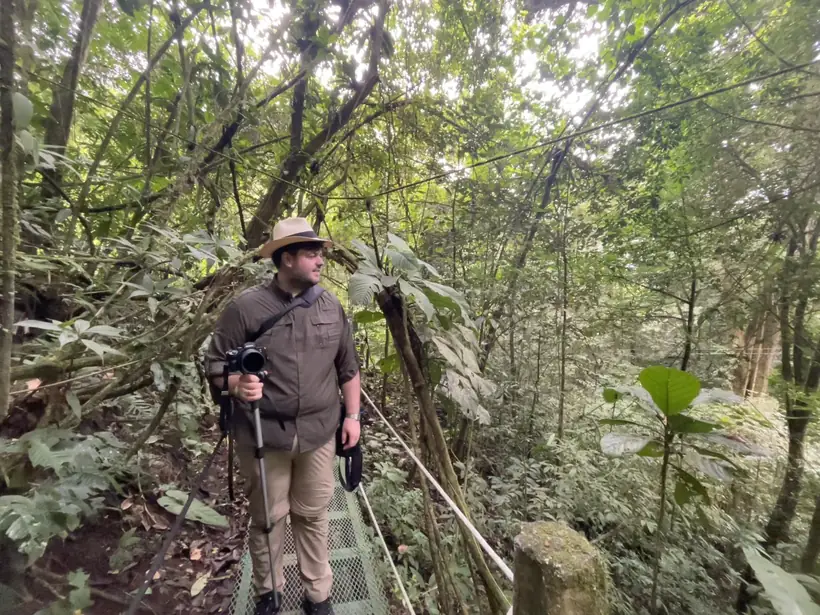
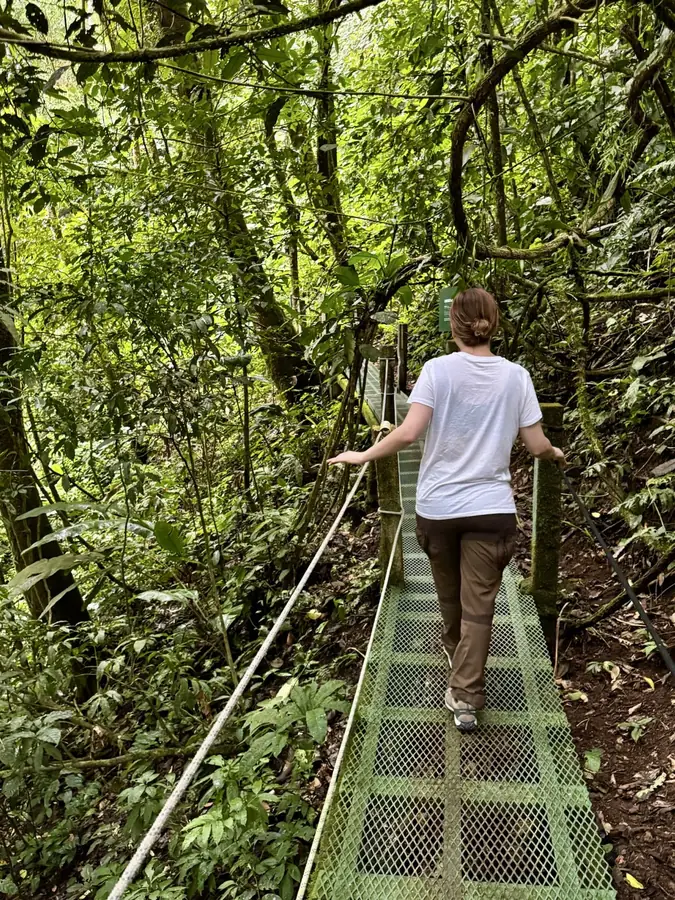
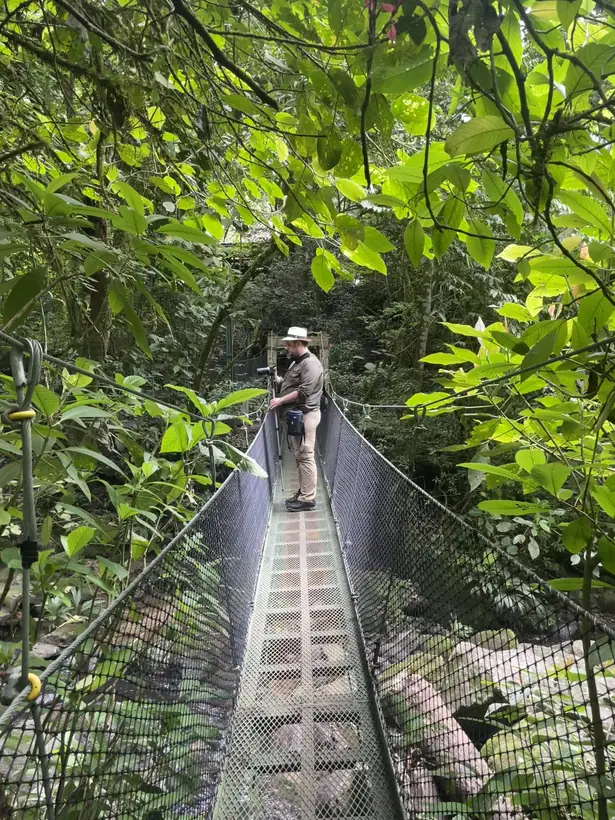
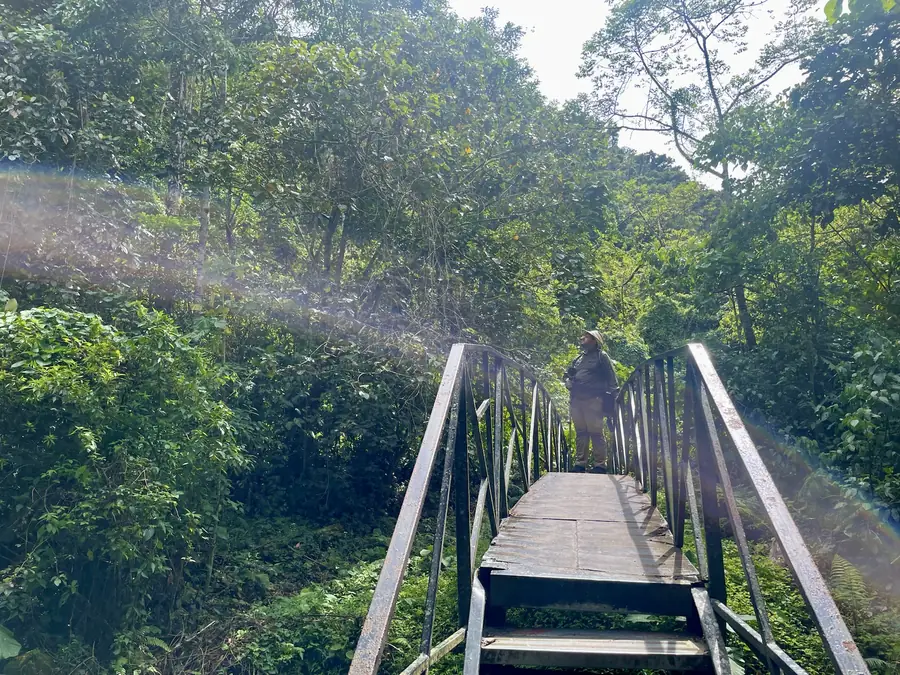
Der Weg zum Wasserfall Chorro El Macho ist kurz und gut befestigt — mit
Geländern und genug Möglichkeiten, sich festzuhalten, denn rutschig wird es schon. Genau
das macht ihn geeignet für alle, die noch nie in einem Regenwald waren. Man ist ein
Stück weit geschützt und erlebt trotzdem zum ersten Mal echten Dschungel, echten
Regenwald. Für uns war das der beeindruckendste Moment der Etappe.The path to the Chorro El Macho waterfall is short and well made — handrails, plenty to hold on to, because it does get slippery. That is exactly what makes it right for anyone who has never been in a rainforest. You are protected up to a point and still meet real jungle, real rainforest, for the first time. For us it was the most striking moment of this leg.
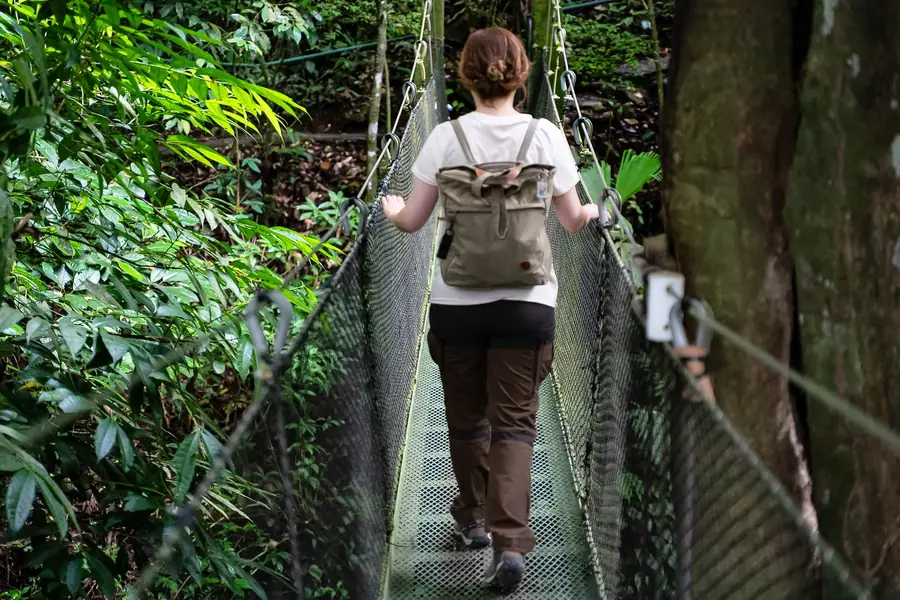
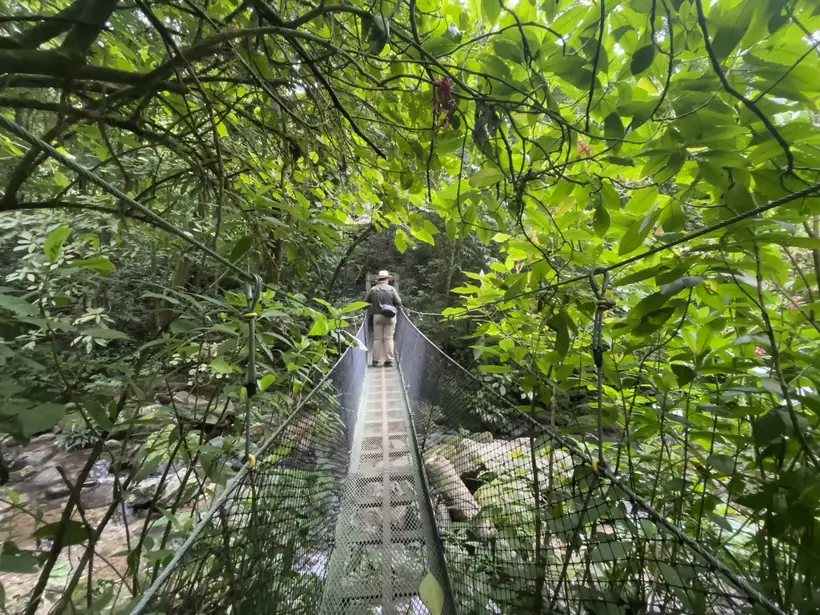
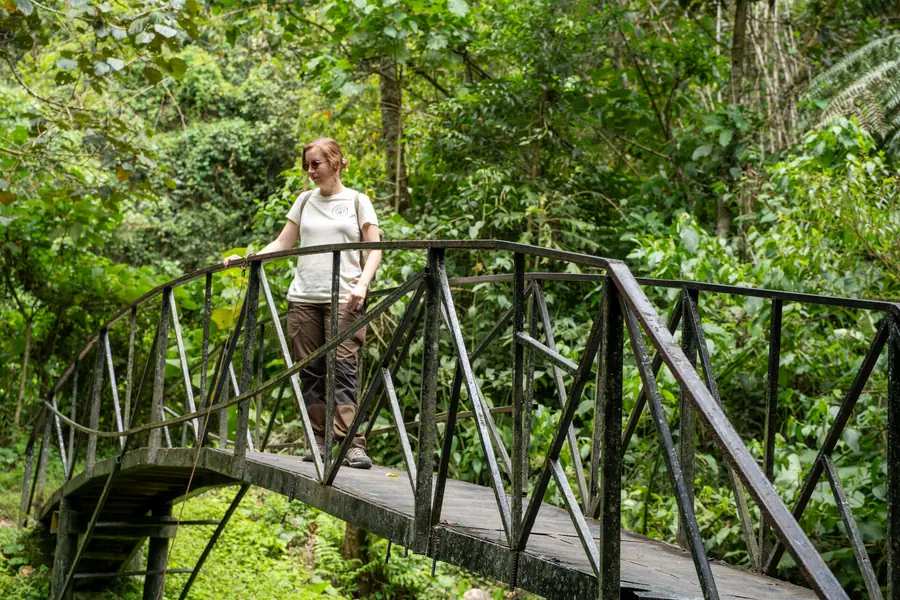
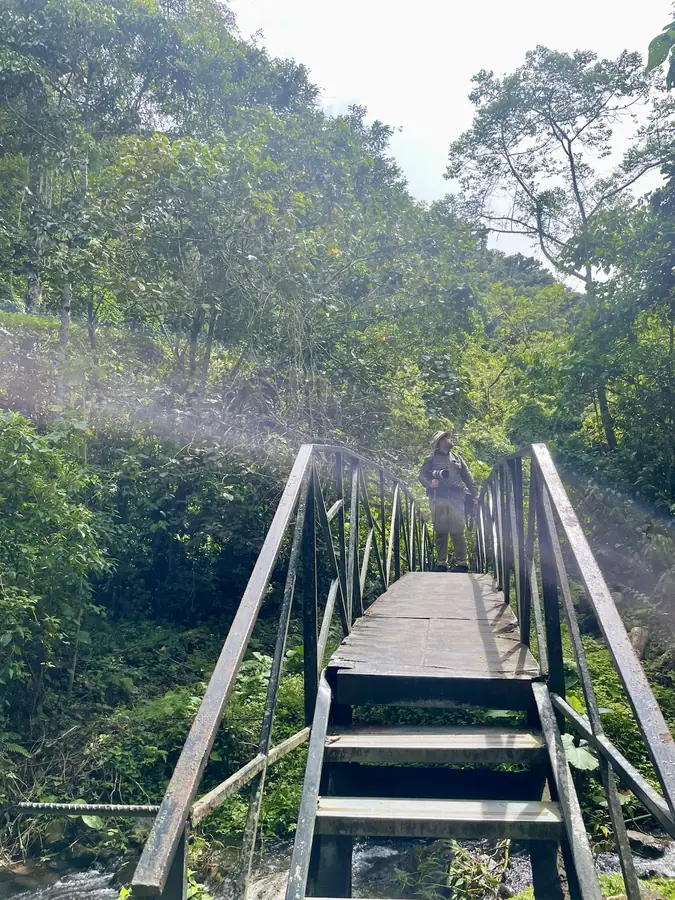
Gut gesichert, mit Geländern — genau deshalb geht der Weg auch für
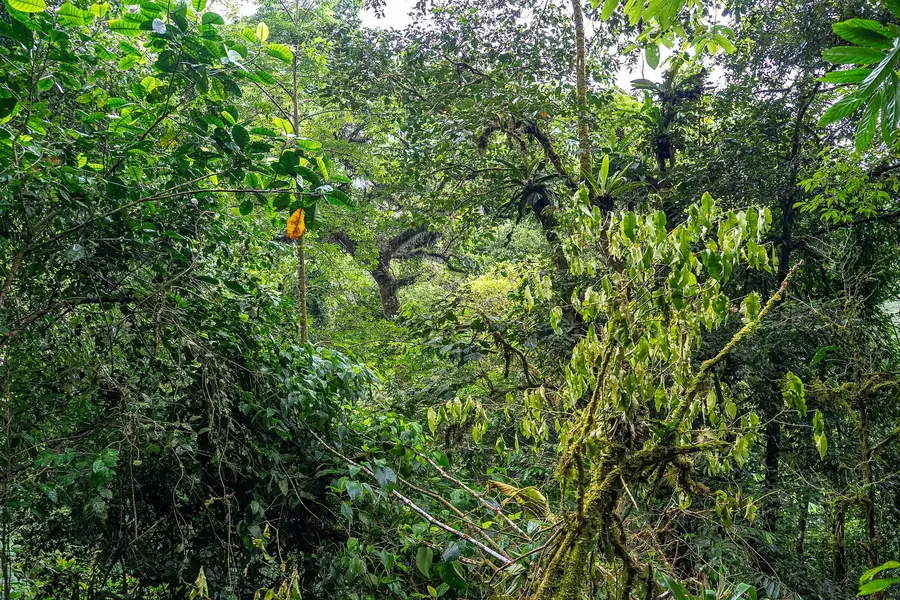
Regenwald-Neulinge.Well secured, with handrails — which is precisely why the trail works for rainforest first-timers.Nach oben schauen lohnt sich: Das Dach schließt sich vollständig.It pays to look up: the canopy closes completely.
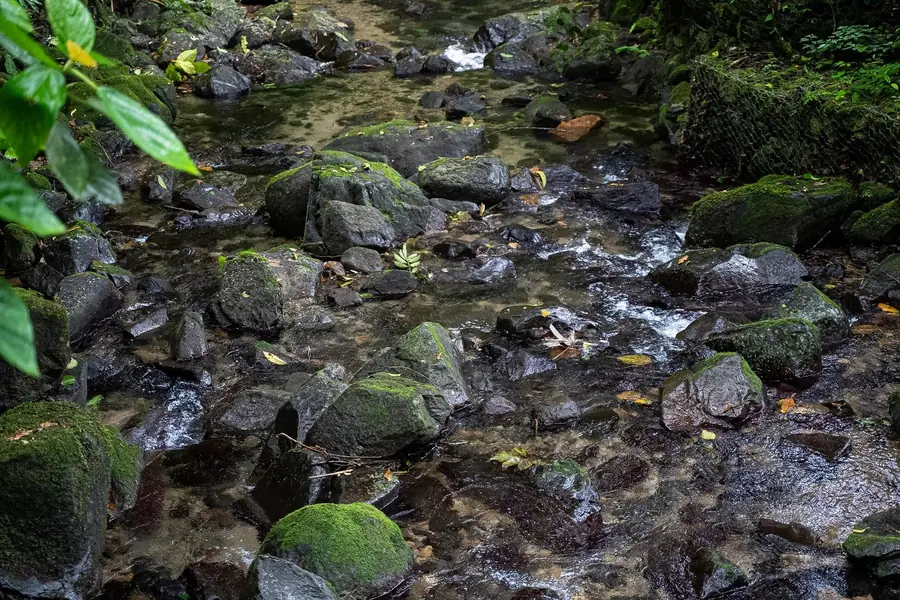
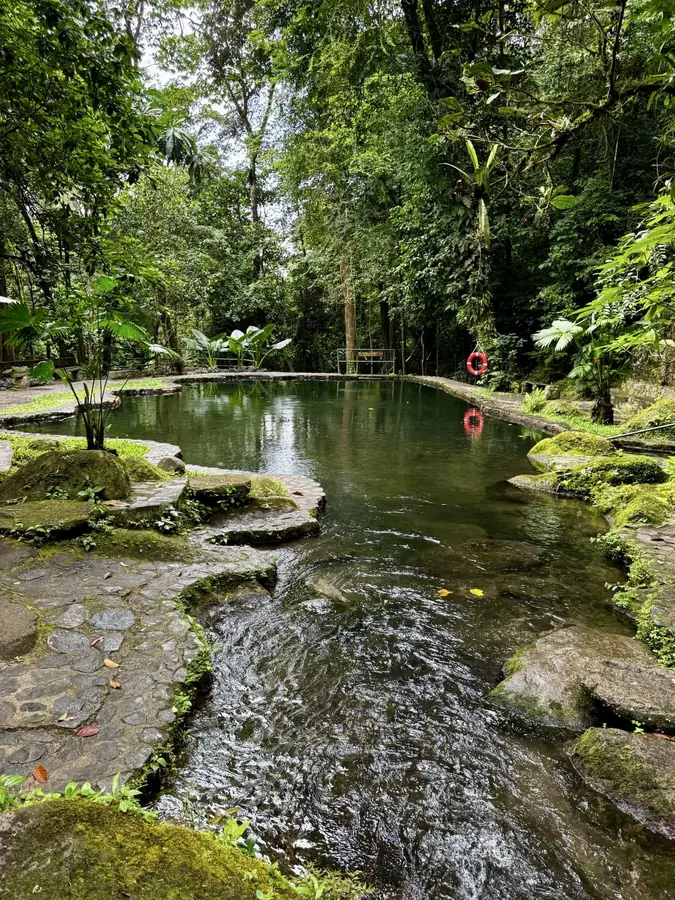
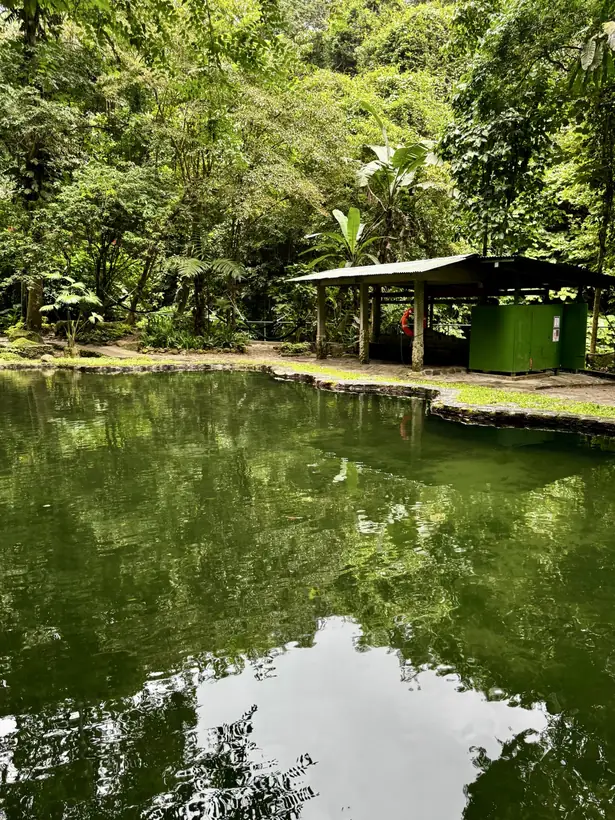
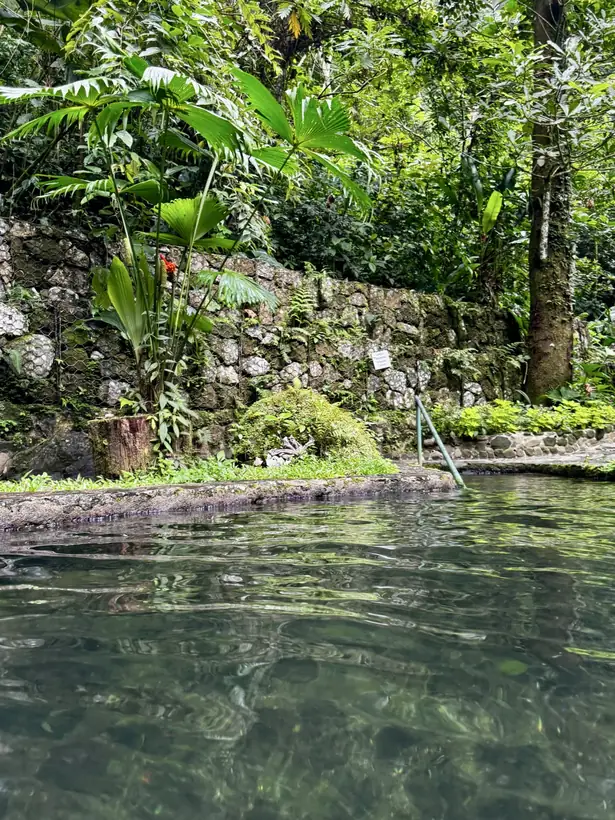
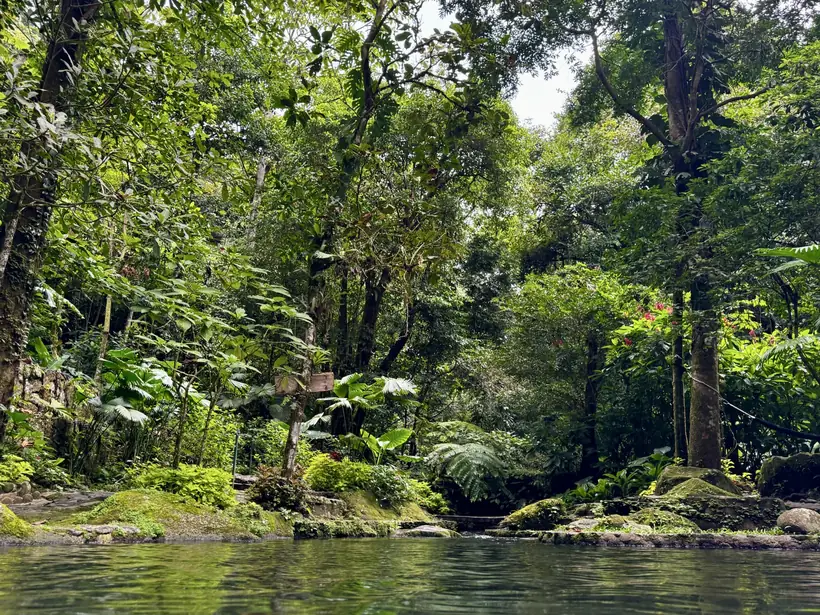
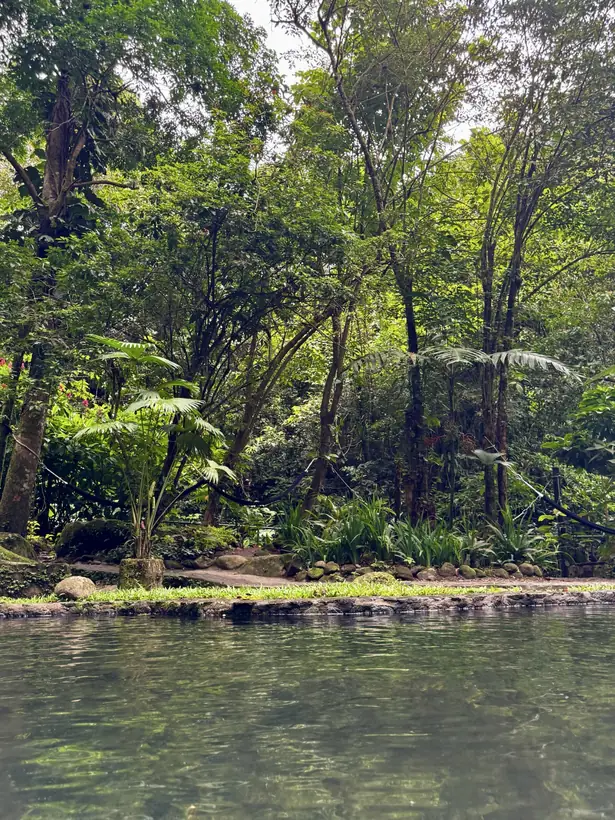
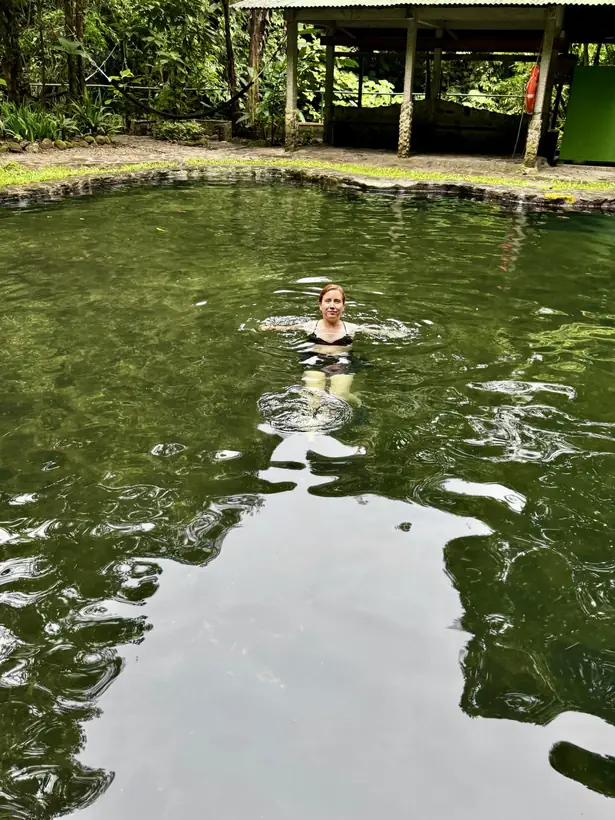
Der Fluss, der vom Wasserfall kommt, wird weiter unten aufgestaut. Dort kann man
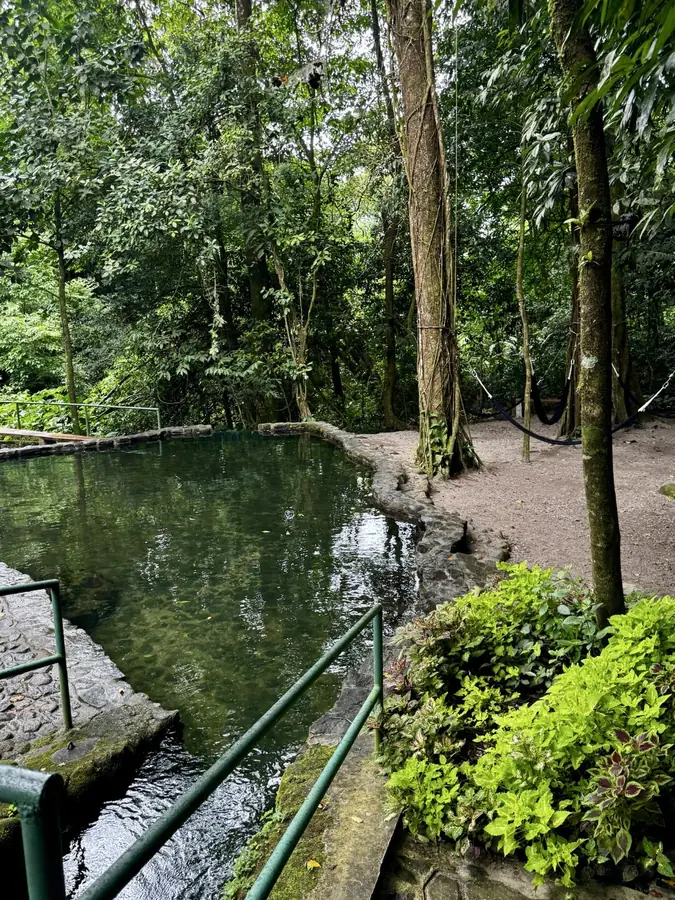
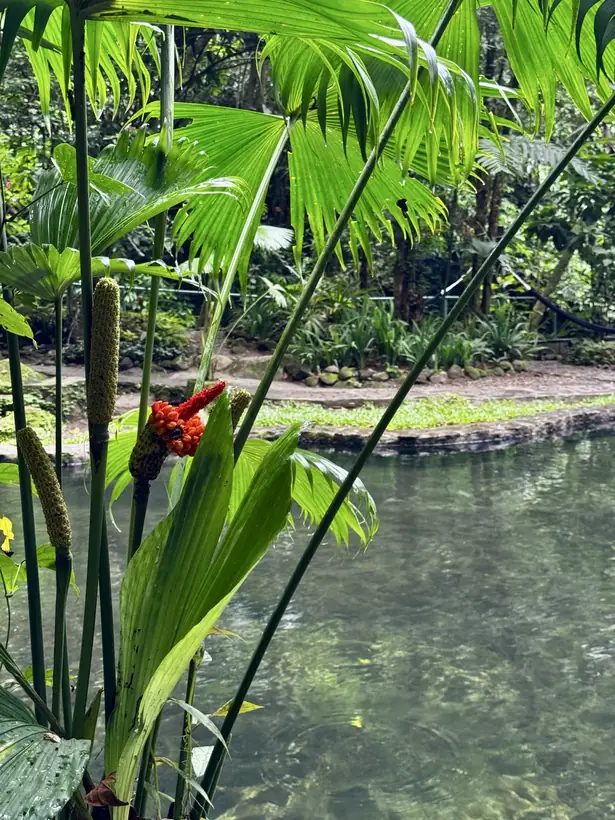
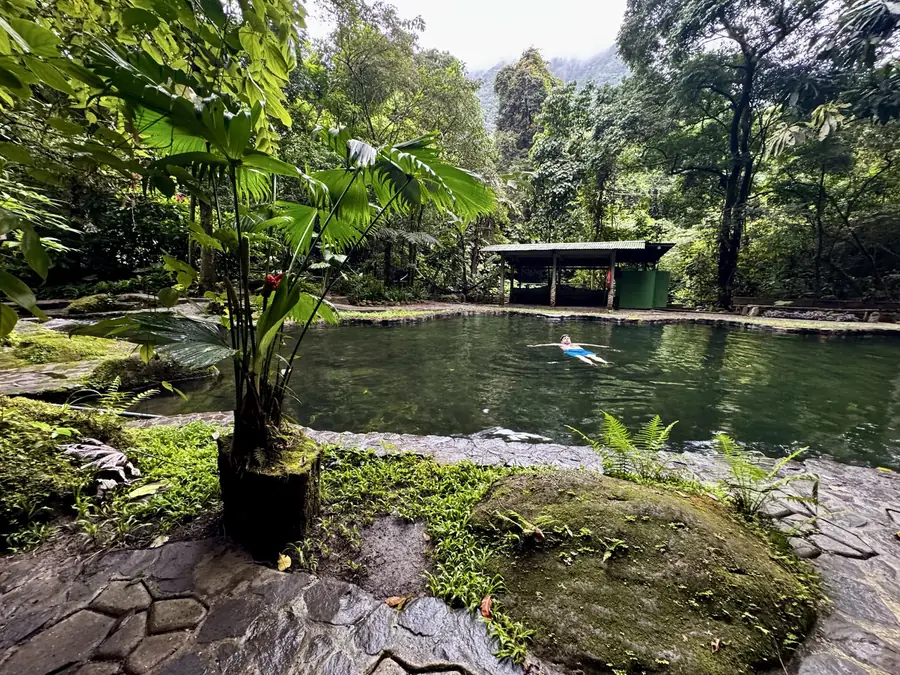
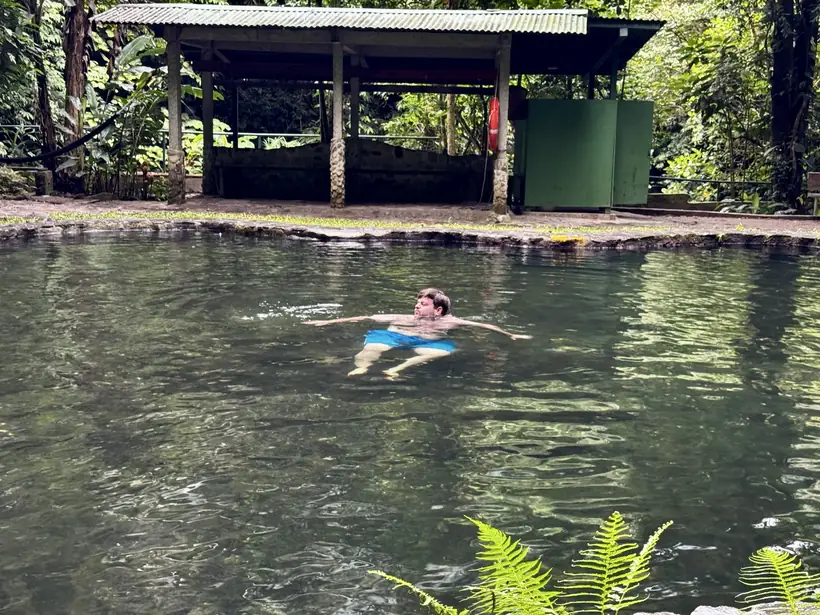
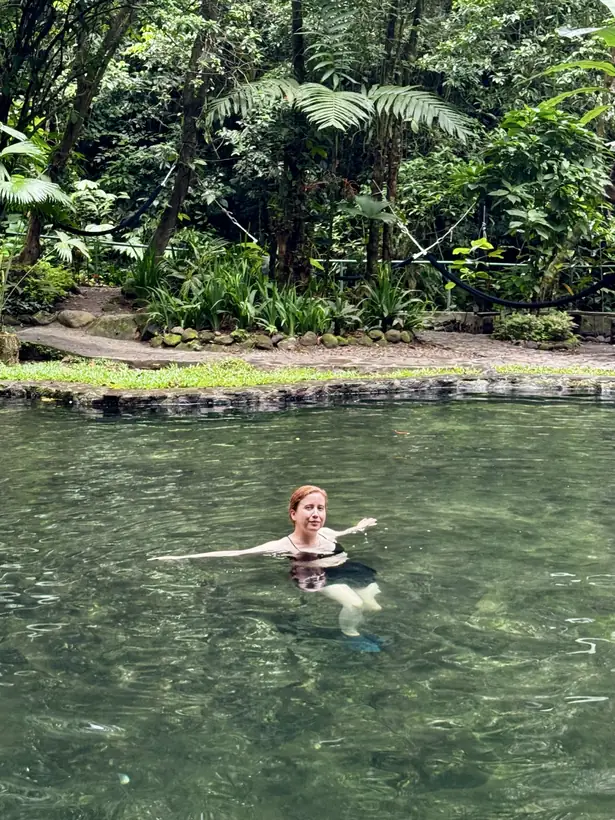
baden — in einem aufgestauten Fluss, mitten im Dschungel, im Vulkankrater, während es
ab und zu leicht nieselt. Das Wasser ist sehr frisch, aber genau deshalb eine gute
Abkühlung. Am Sonntag gegen halb elf war es dort schon voll, der Spot ist bekannt. Wir
sind am Montagmorgen um halb neun wiedergekommen — und hatten ihn für uns allein. Unter
einem Wasserfall im Dschungel allein zu baden, ist etwas Besonderes. Und wenn es dabei
anfängt zu nieseln, wird es sogar ausgesprochen romantisch.The river coming down from the waterfall is dammed further along. You can swim there — in a dammed river, in the middle of the jungle, inside a volcanic crater, with the odd bit of drizzle coming down. The water is very fresh, which is precisely why it cools you off so well. On Sunday around half past ten it was already busy; the spot is no secret. We came back on Monday morning at half past eight — and had it entirely to ourselves. Swimming alone under a waterfall in the jungle is something else. And when it starts to drizzle while you do, it gets decidedly romantic.
Panamas WappentierPanama's national animal
Der goldene Frosch, den es nicht mehr gibtThe golden frog that no longer exists
Der Goldfrosch (Atelopus zeteki) ist Panamas Nationalsymbol — er
steht auf Lottoscheinen, Souvenirs und in jedem Hotel. In freier Wildbahn gilt er
seit 2009 als ausgestorben; ein eingeschleppter Pilz, der Chytridpilz, hat die
Bestände innerhalb weniger Jahre vernichtet. El Valle war einer seiner letzten
Rückzugsorte.The golden frog (Atelopus zeteki) is Panama's national symbol — it turns up on lottery tickets, on souvenirs and in every hotel. In the wild it has been considered extinct since 2009; an introduced fungus, the chytrid fungus, wiped out the populations within a few years. El Valle was one of its last refuges.
Überlebt hat er nur in Zuchtstationen — eine davon liegt hier im Ort. Am
14. August ist offizieller Día Nacional de la Rana Dorada. Wir sind an
dem Tag noch im Land.It survives only in breeding stations — one of them is here in the village. 14 August is the official Día Nacional de la Rana Dorada. We will still be in the country that day.
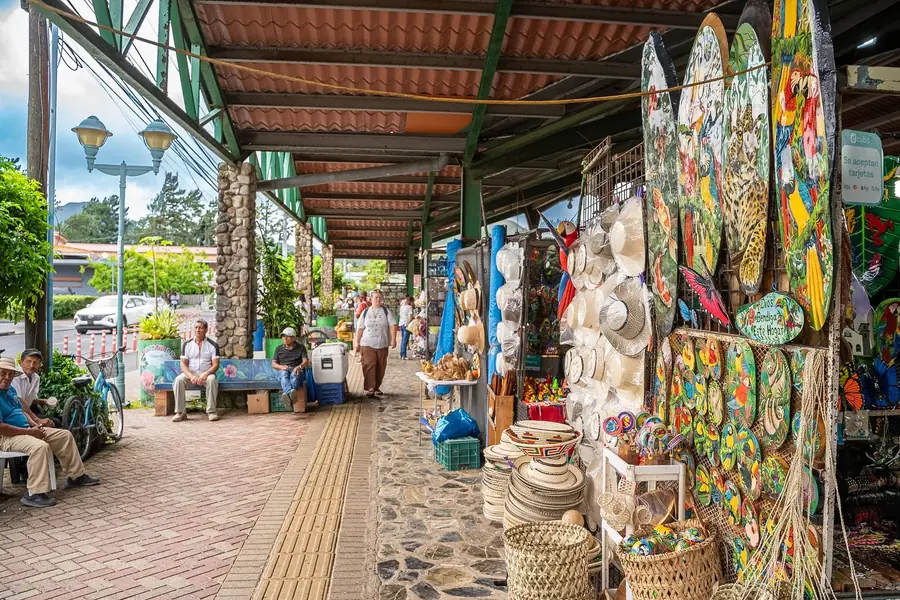
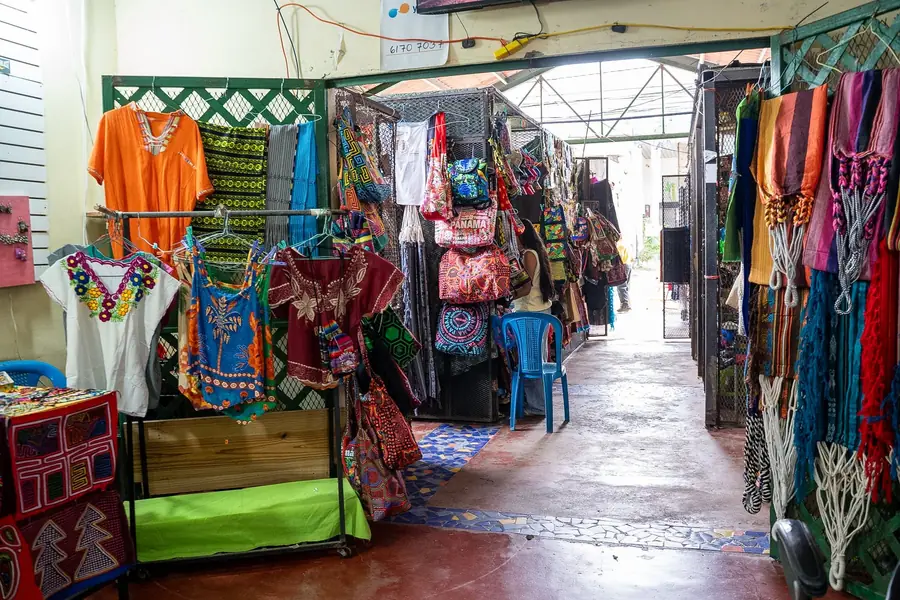
Sonntagsmarkt, Kirche, HutSunday market, church, hat
El Valles Kunsthandwerksmarkt ist der bekannteste des Landes, und sonntags ist er am
größten. Er ist beides gleichzeitig: touristisch, weil vieles für Besucher gemacht ist —
und lokal, weil die Einheimischen selbst da sind. Sonntagvormittag ist die Kirche voll,
danach gehen alle über den Markt und in die kleinen Restaurants ringsherum zum
Mittagessen.El Valle's craft market is the best known in the country, and Sunday is its biggest day. It manages to be both things at once: touristy, because much of it is made for visitors — and local, because the locals are there themselves. On Sunday morning the church is full, and afterwards everyone drifts through the market and into the small restaurants around it for lunch.
Was uns aufgefallen ist: Niemand bedrängt einen. Kein „kauf hier, kauf hier". Man
wird freundlich gegrüßt, und wer etwas will, wird freundlich bedient — man merkt, dass
sie sich freuen. Unangenehm, wie man es von Märkten anderswo auf der Welt kennt, war es
hier an keiner Stelle.What struck us: nobody pushes you. No “buy here, buy here”. You get a friendly hello, and if you want something you are served warmly — you can tell they are pleased. Not once did it feel uncomfortable the way markets elsewhere in the world can.
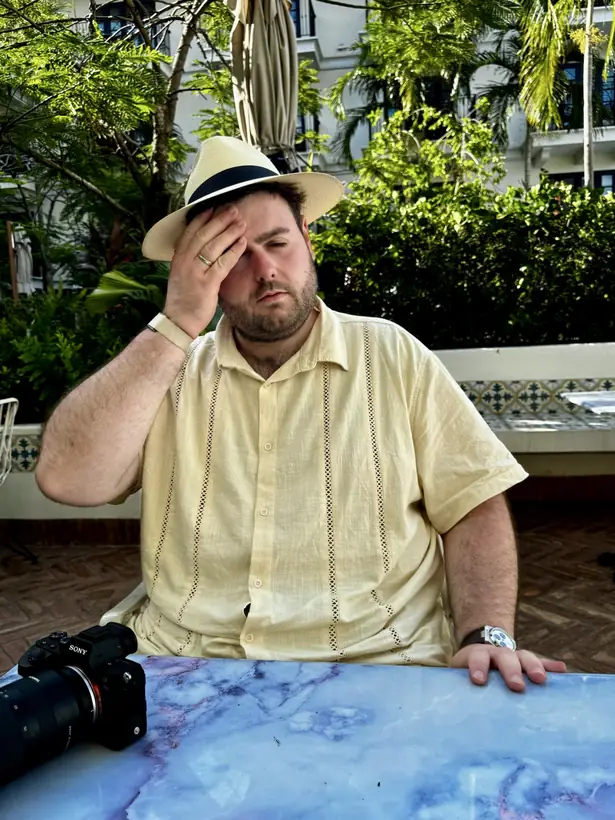
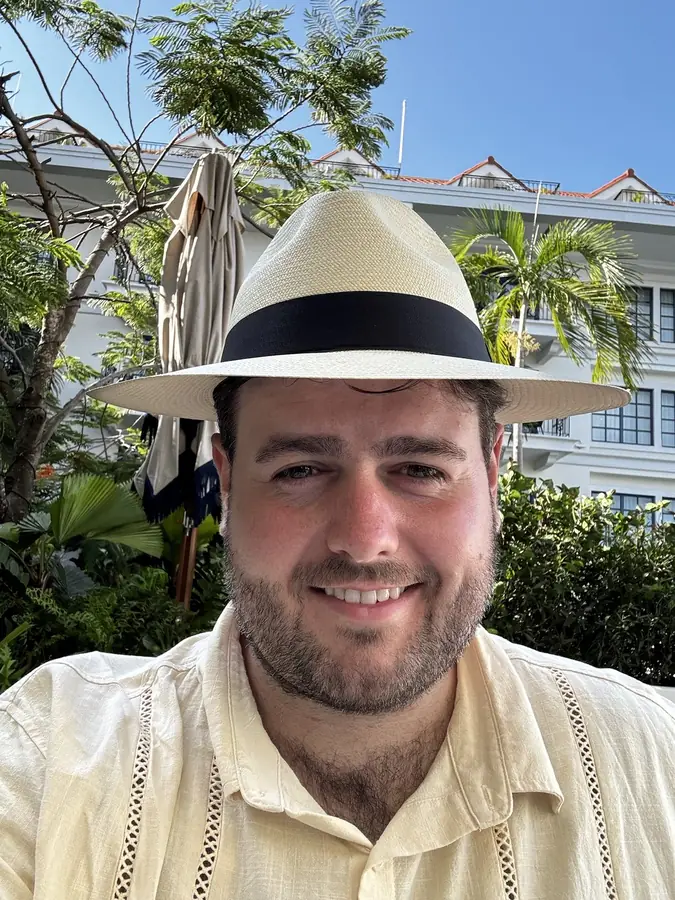
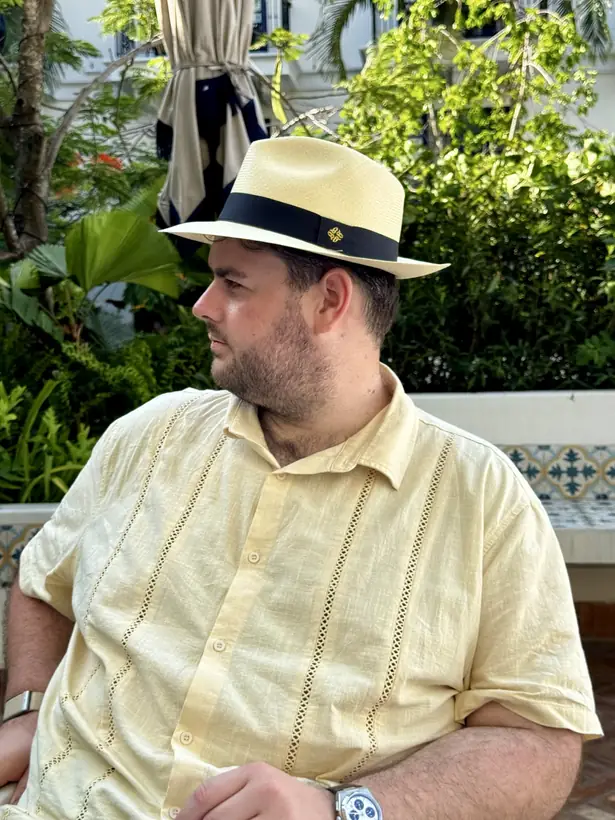
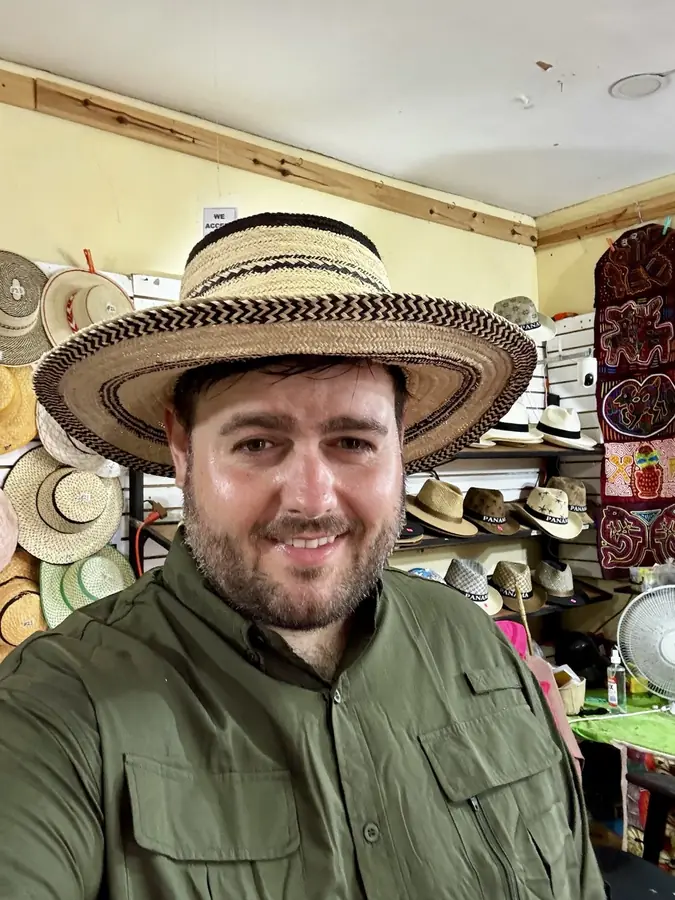
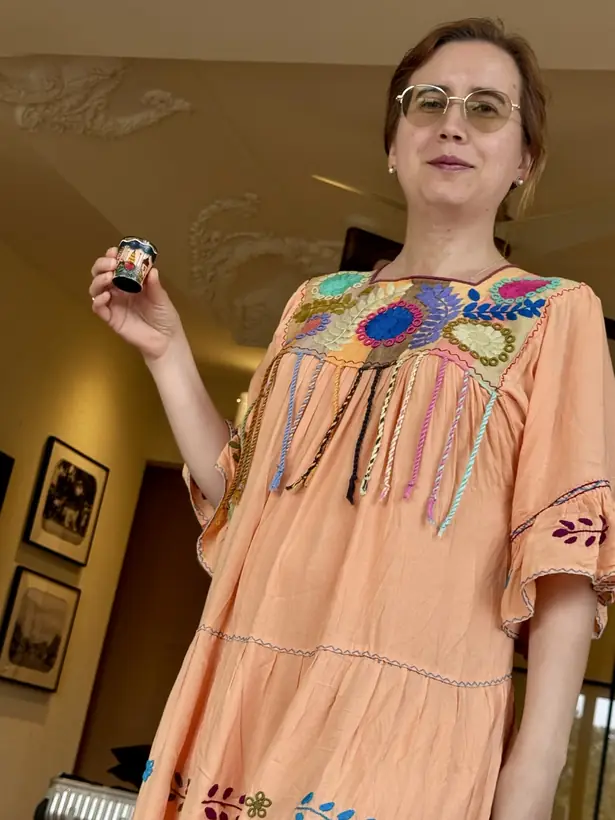
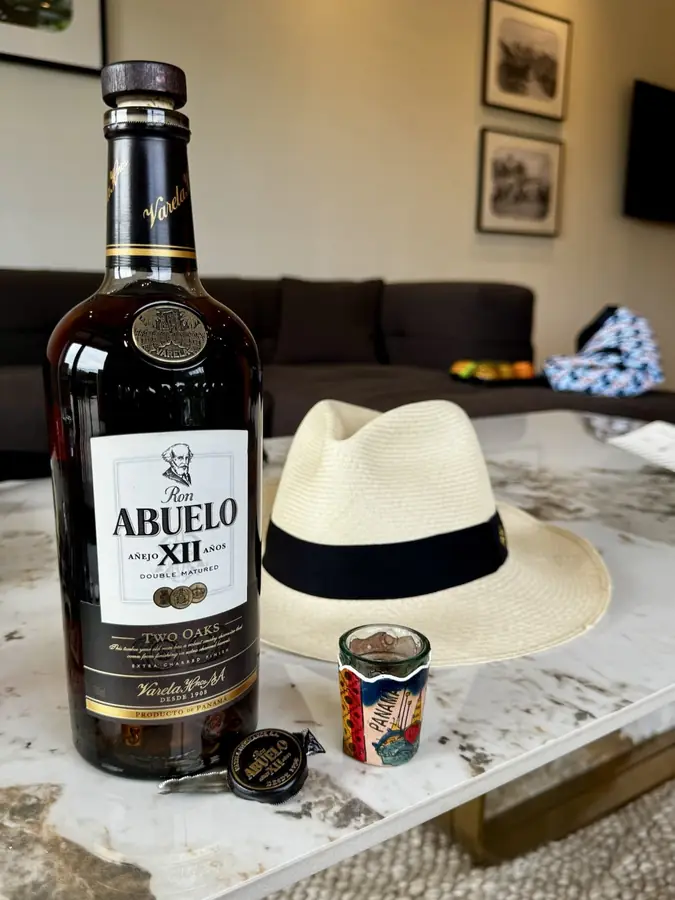
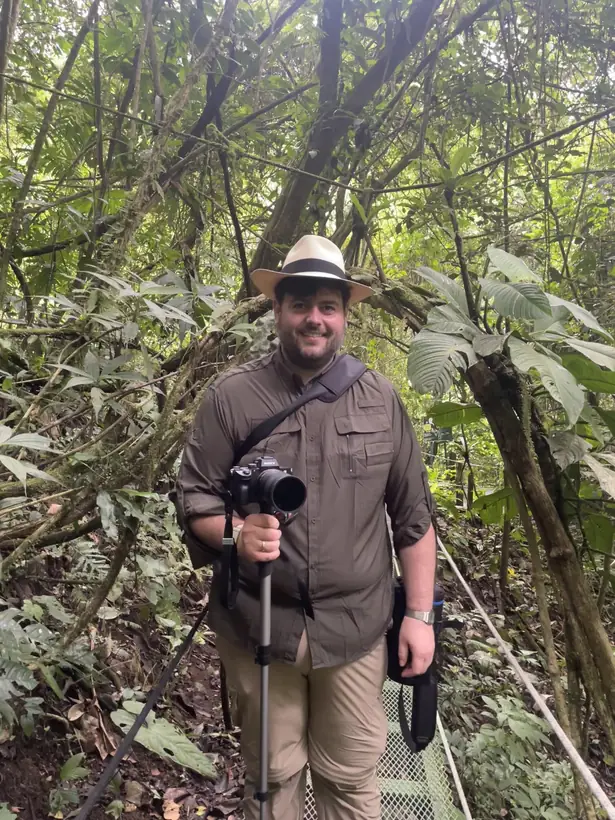
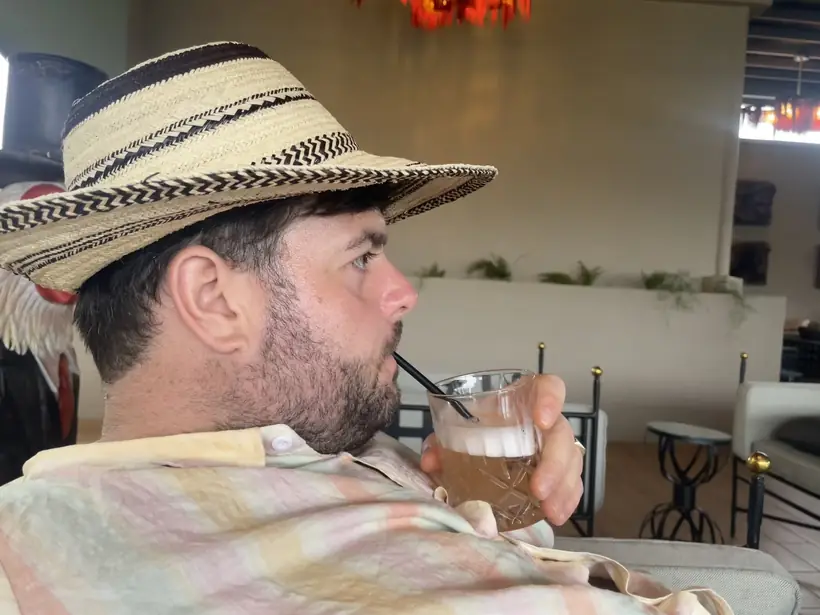
Und hier haben wir den Hut gefunden. Für 75 Dollar — den echten
panamaischen, den Sombrero Pintao. Die Wirkung ist erstaunlich: Einheimische, die
ihn sehen, sind sichtlich entzückt, dass wir den richtigen tragen und nicht das
ecuadorianische Modell. Kein Souvenir hat auf dieser Reise mehr Türen geöffnet.And this is where we found the hat. Seventy-five dollars — the genuine Panamanian one, the Sombrero Pintao. The effect is remarkable: locals who spot it are visibly delighted that we are wearing the right one and not the Ecuadorian model. No souvenir on this trip has opened more doors.
In der Markthalle hängen sie reihenweise.In the market hall they hang in rows.Und das ist der Moment, in dem der richtige gefunden war.And this is the moment we found the right one.
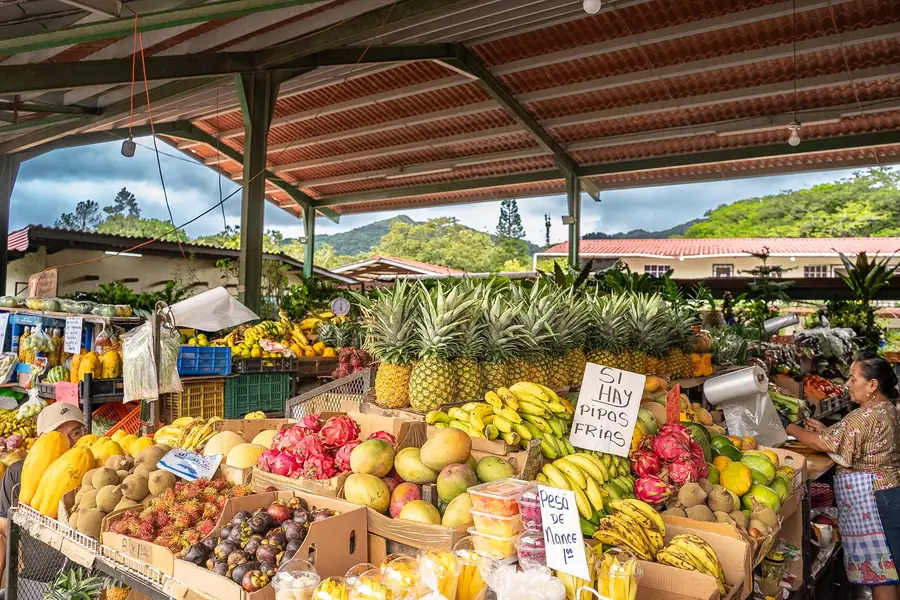
Der lokale Teil des Marktes. Ananas, Mango, Papaya — und daneben
Sorten, deren Namen wir bis heute nicht kennen.The local half of the market. Pineapple, mango, papaya — and beside them varieties whose names we still don't know.
Die Sache mit dem HutAbout that hat
Der Panamahut kommt aus EcuadorThe Panama hat comes from Ecuador
Der weltberühmte „Panama hat" wird seit jeher in Ecuador aus den Fasern der
Toquilla-Palme geflochten. Den Namen bekam er nur, weil Panama im 19. Jahrhundert der
Umschlagplatz war: Die Hüte gingen über den Isthmus in die Welt, und die Käufer
benannten sie nach dem Hafen, nicht nach der Werkstatt. Endgültig festgeschrieben hat
das Theodore Roosevelt, der sich 1906 auf der Kanalbaustelle mit einem solchen
Hut fotografieren ließ. Die UNESCO führt das ecuadorianische Flechthandwerk seit
2012 als immaterielles Kulturerbe.The world-famous “Panama hat” has always been woven in Ecuador, from the fibres of the toquilla palm. It got its name only because Panama was the trading hub in the 19th century: the hats crossed the isthmus on their way out into the world, and buyers named them after the port rather than the workshop. Theodore Roosevelt settled the matter for good when he had himself photographed wearing one on the canal construction site in 1906. UNESCO has listed the Ecuadorian weaving craft as intangible cultural heritage since 2012.
Panamas eigener Hut ist ein anderer: der Sombrero Pintao aus der Provinz
Coclé, in der El Valle liegt. Er wird aus fünf verschiedenen Pflanzenfasern
geflochten, die dunklen Ringe entstehen durch Färben mit Pflanzensud und Schlamm —
nicht mit Farbe. Ein guter Hut braucht Wochen. Seit 2017 steht auch er auf der
UNESCO-Liste. Dass Besucher den Unterschied kennen, kommt selten genug vor, dass es
jedes Mal auffällt.Panama's own hat is a different thing altogether: the Sombrero Pintao from the province of Coclé, where El Valle lies. It is woven from five different plant fibres, and the dark rings come from dyeing with plant brews and mud — not paint. A good hat takes weeks. Since 2017 it too is on the UNESCO list. Visitors who know the difference are rare enough that it gets noticed every single time.
Wohnen zwischen SkulpturenLiving among sculptures
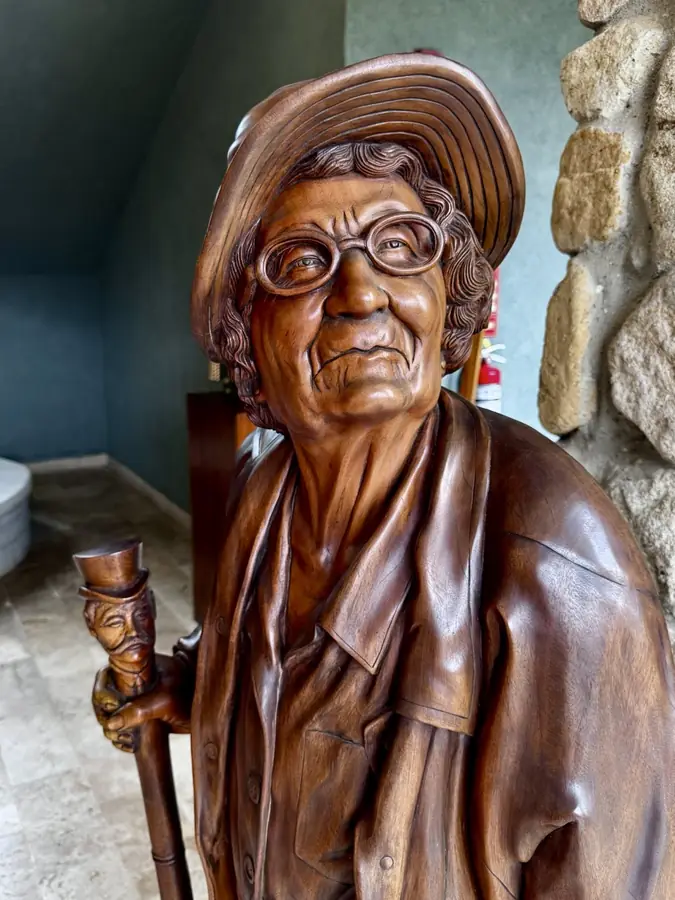
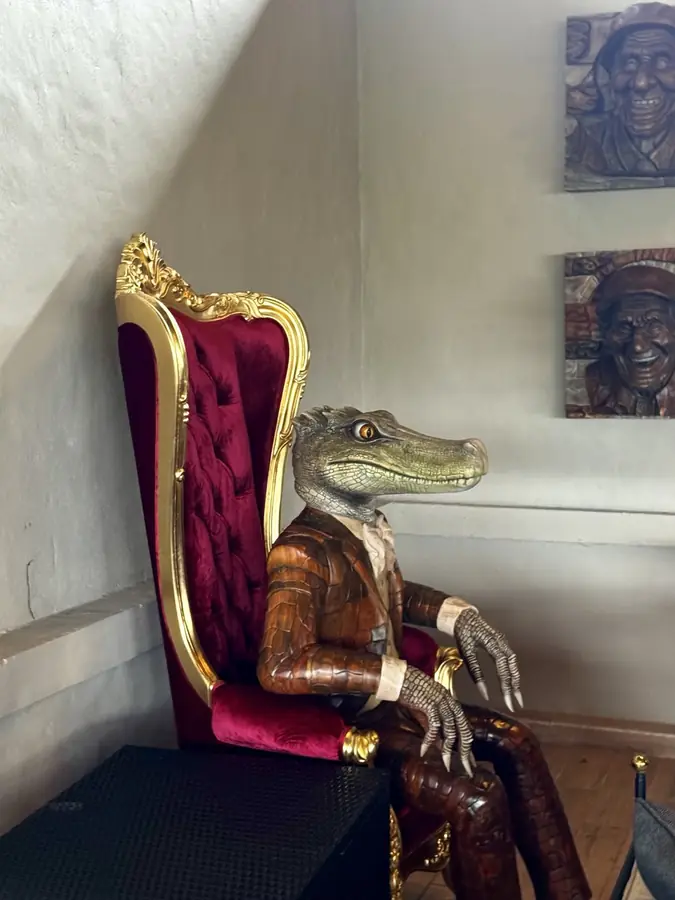
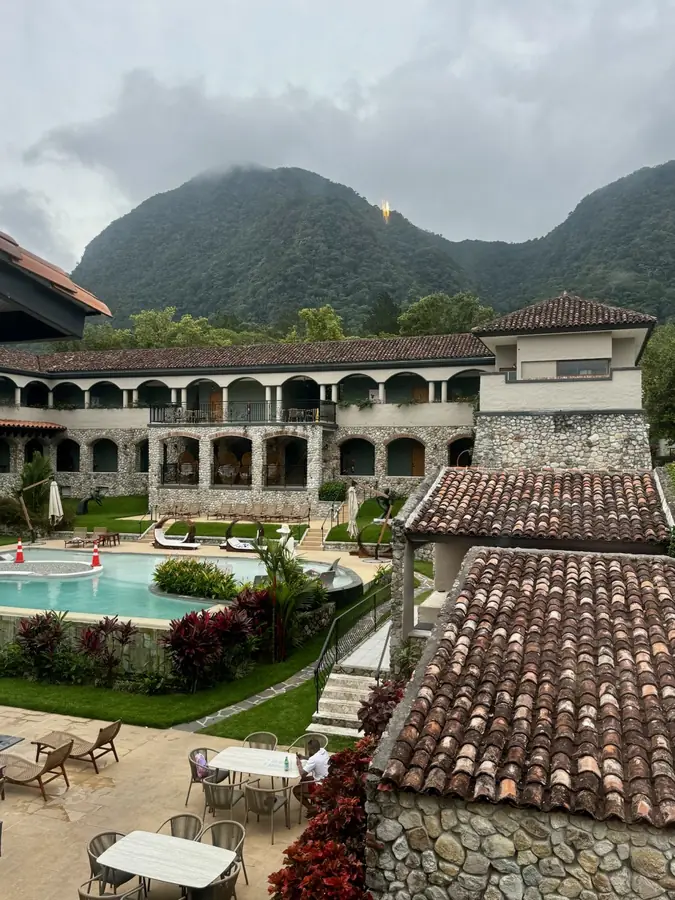
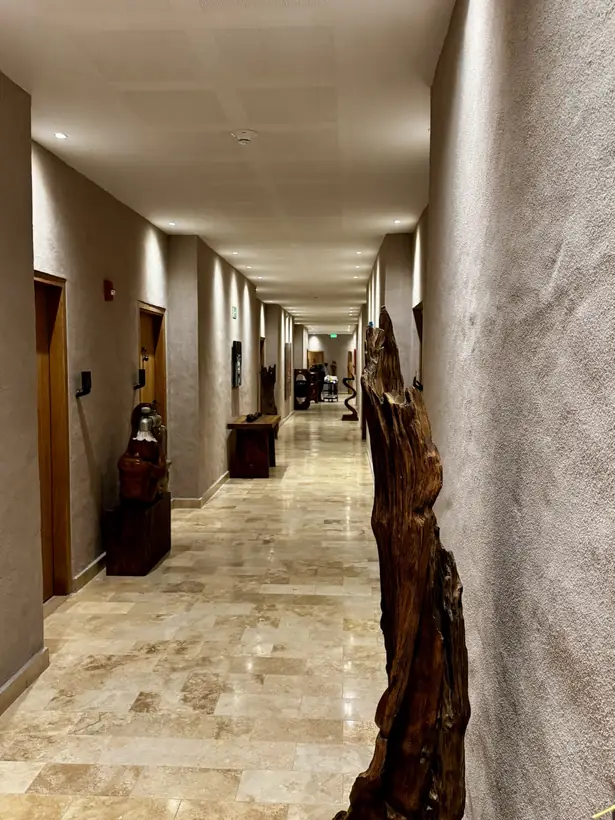
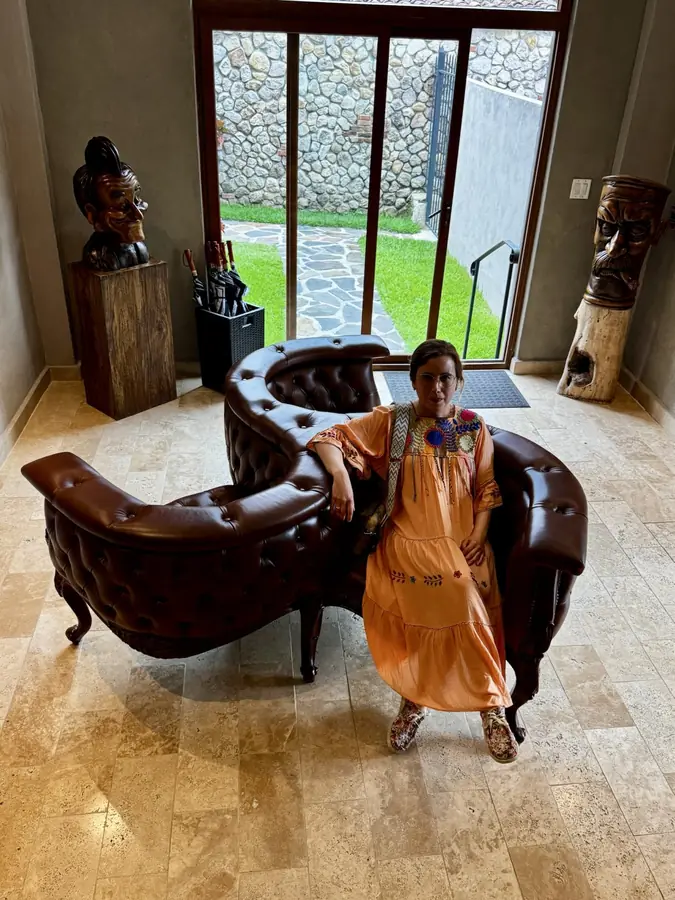
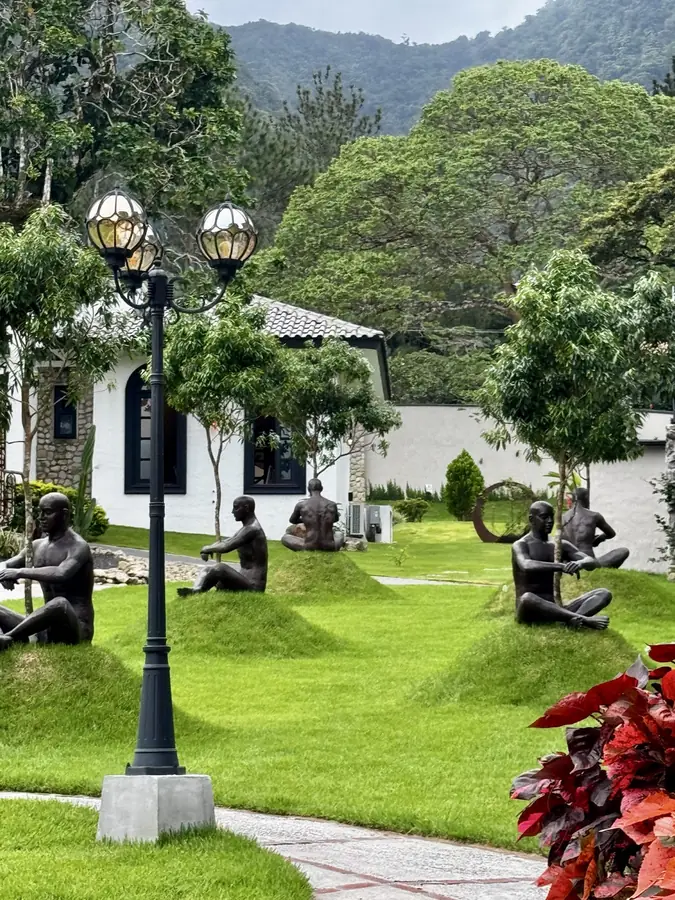
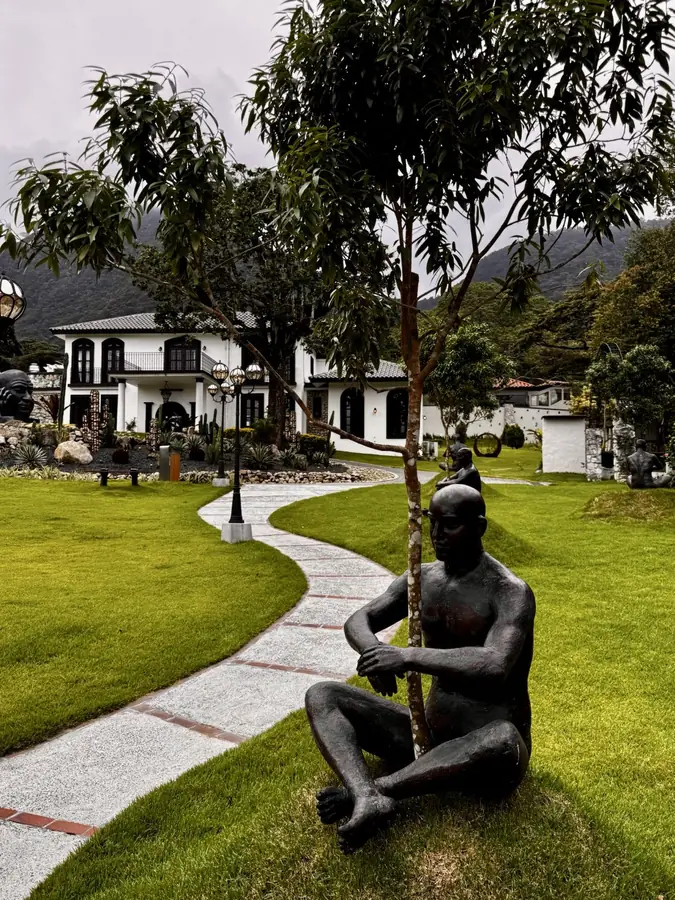
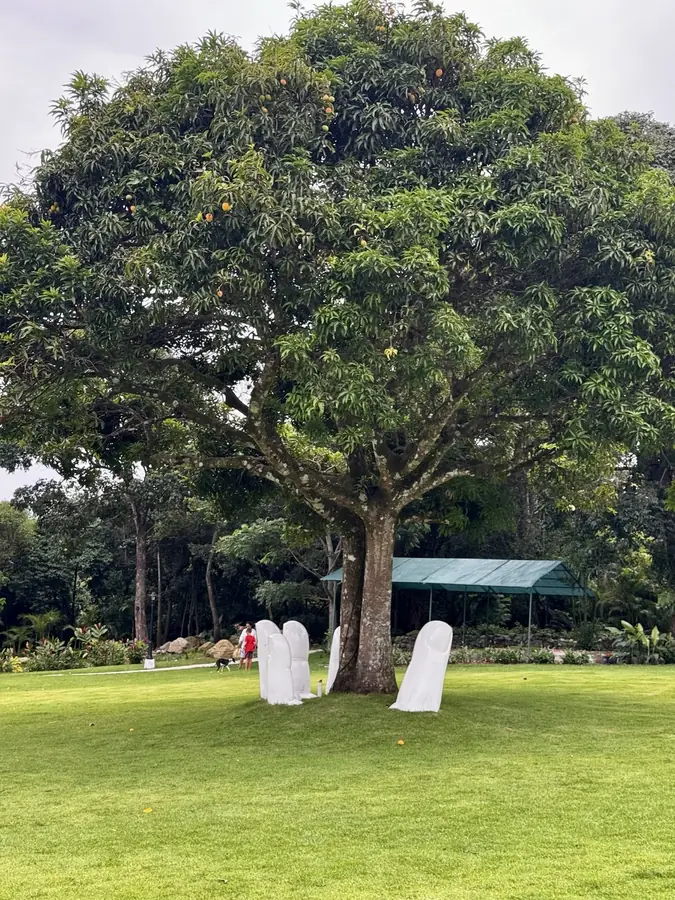
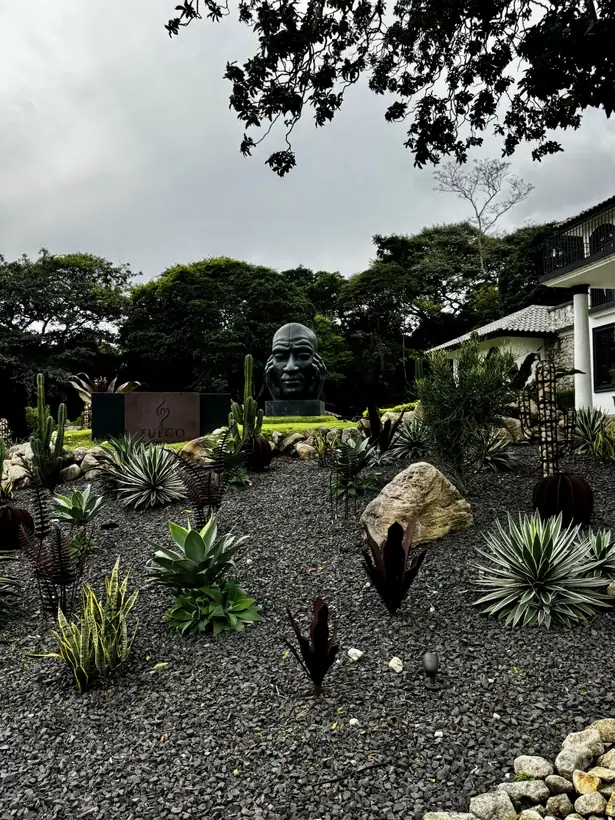
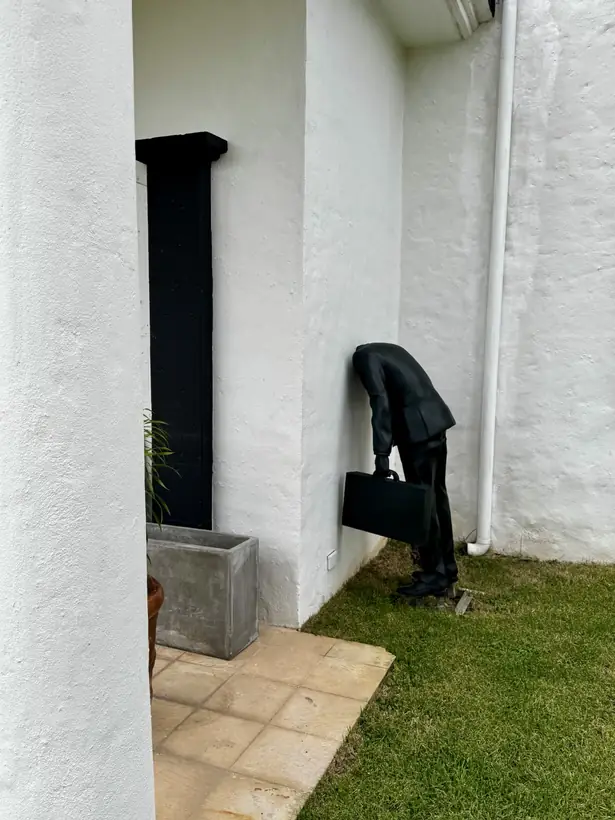
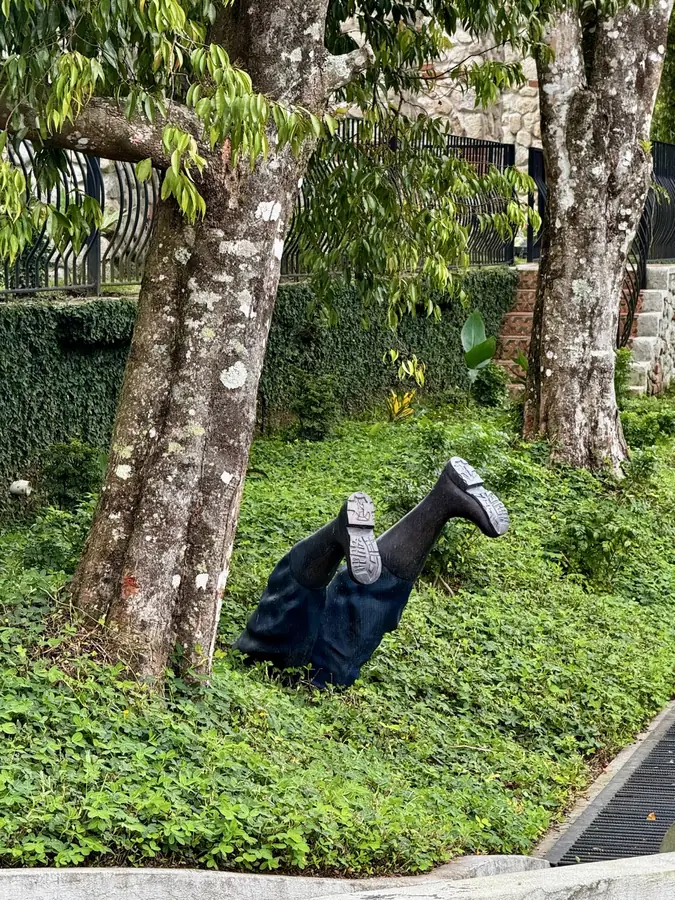
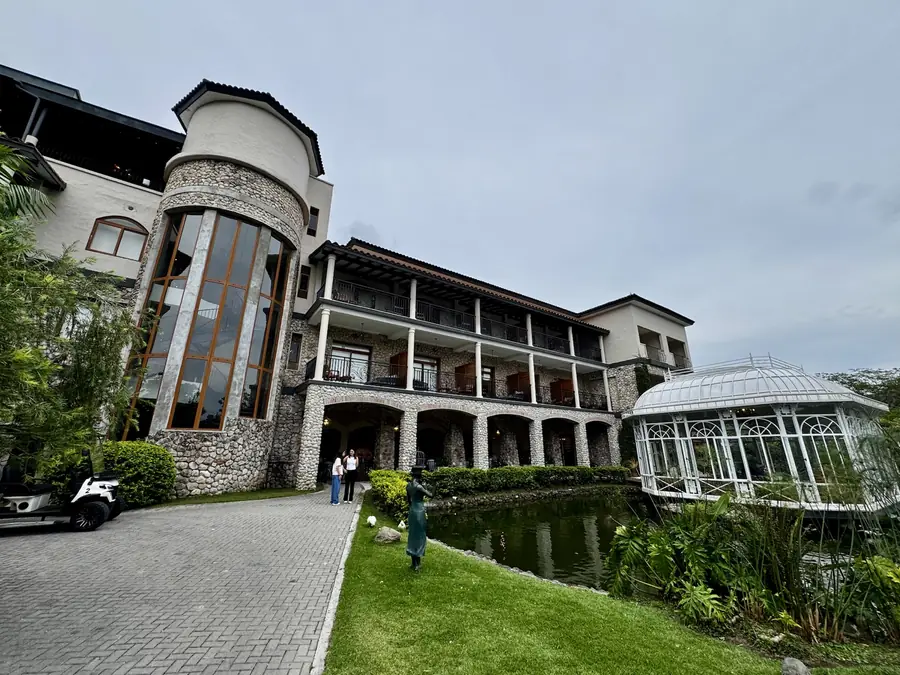
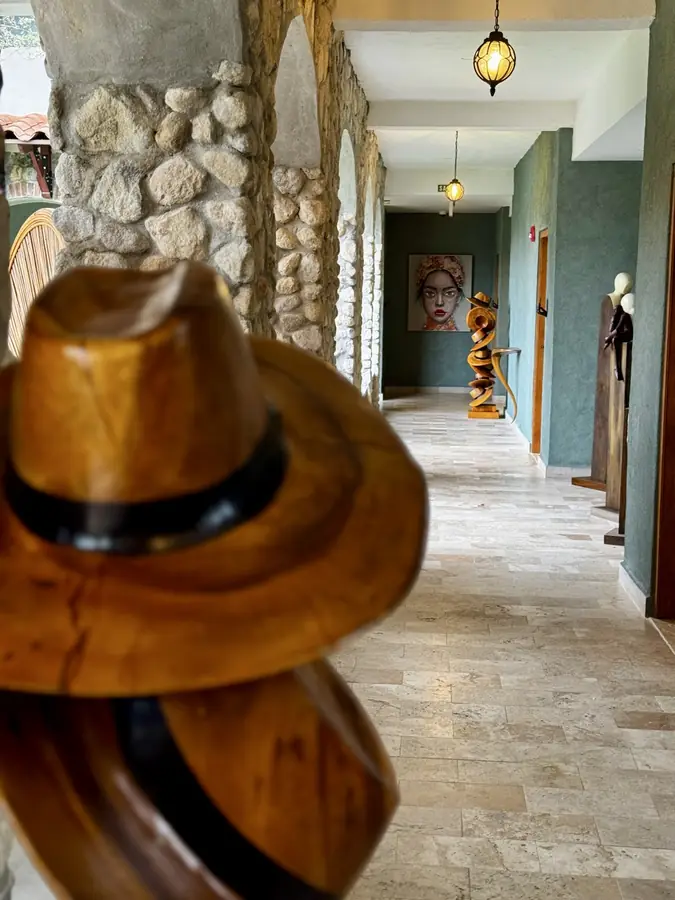
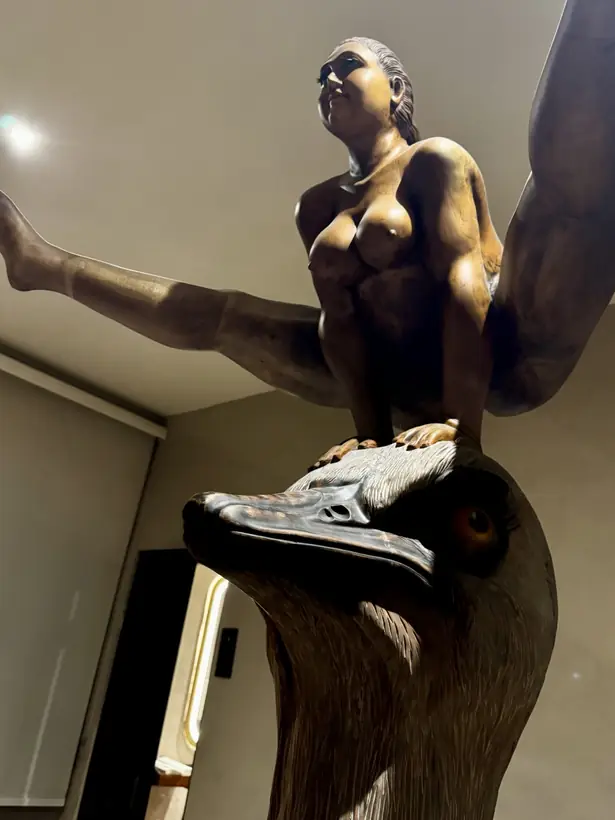
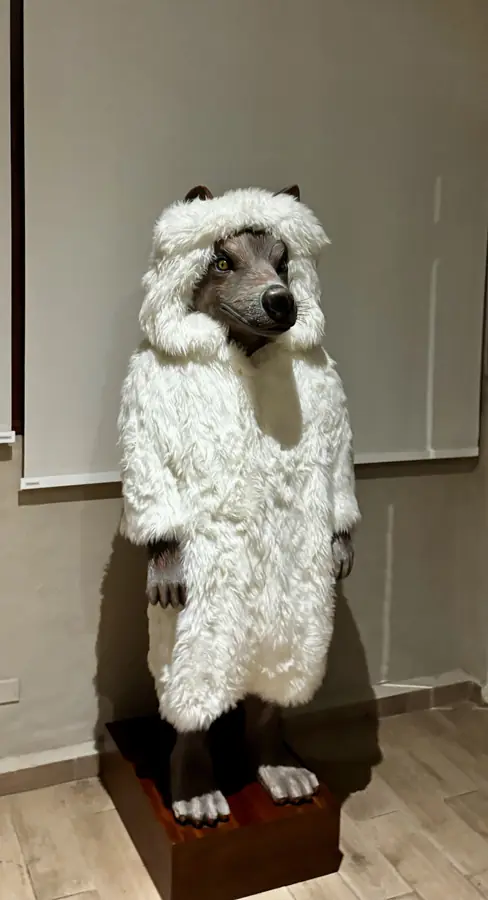
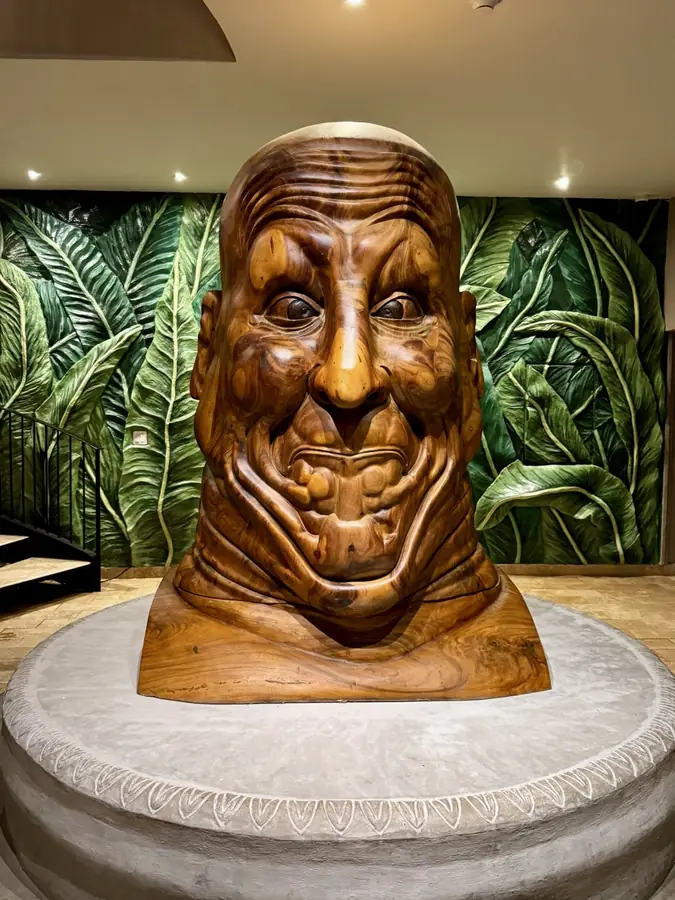
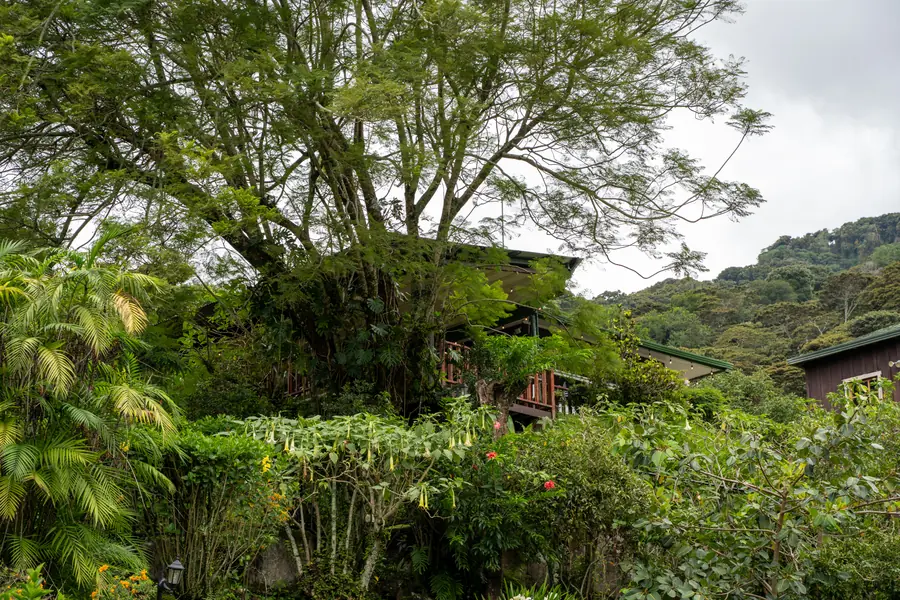
Unser Hotel, La Compañía del Valle, stand so in keinem Reiseführer. Skulpturen
überall — nicht nur im Garten, sondern auf jedem Flur, an jeder Ecke ein Blickfang, auch
einiges Komische dabei. Anfangs dachten wir, das könnte kitschig werden. Wurde es nicht;
es war eigentlich sehr interessant.Our hotel, La Compañía del Valle, was not in any guidebook quite like this. Sculptures everywhere — not only in the garden but along every corridor, something to catch your eye at every corner, and some of it decidedly odd. At first we thought it might tip into kitsch. It didn't; it was genuinely interesting.
Manche Figuren schaut man länger an, als man vorhatte.Some of the figures hold you longer than you meant to stay.Und dann steht da ein Krokodil auf einem Thron.And then there's a crocodile on a throne.
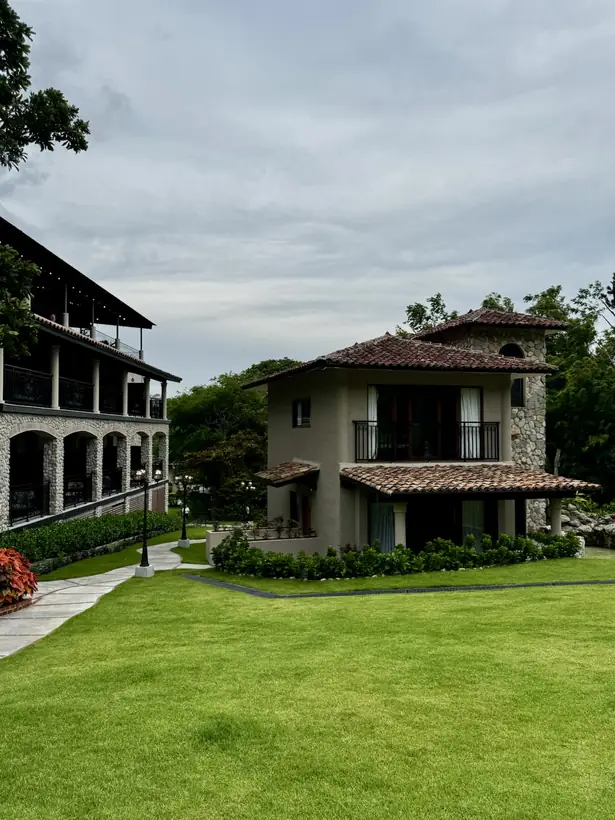
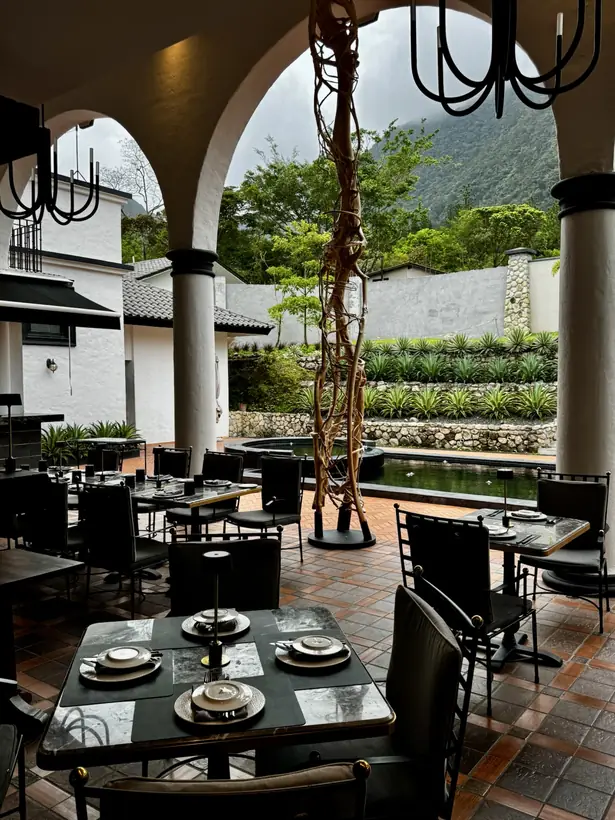
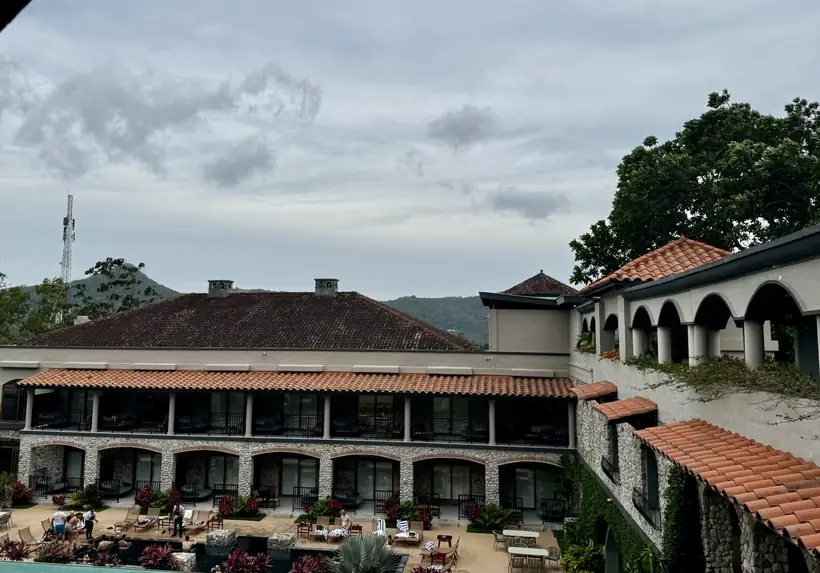
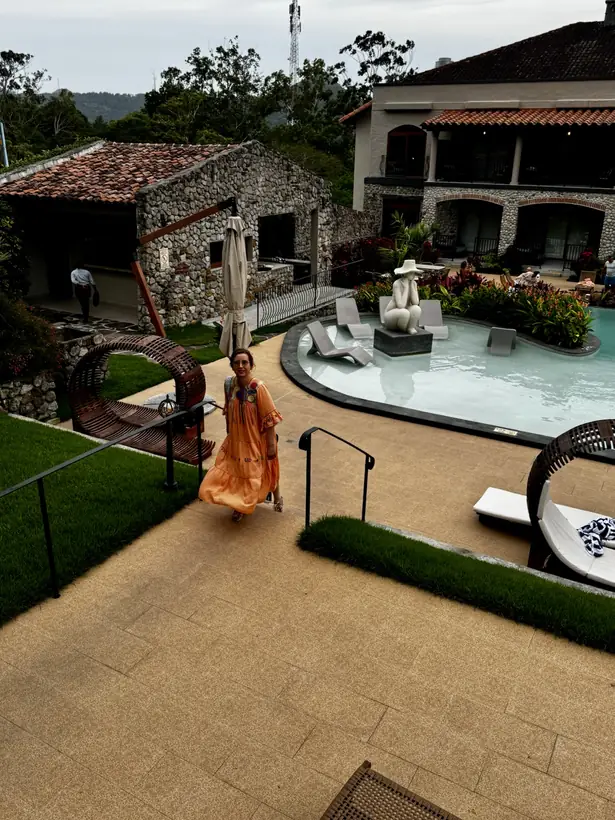
Fünf Sterne, keine Frage, aber ein anderer Typ Haus als das Sofitel in Panama-Stadt —
eher ein Spa-Hotel als klassisch-edel. Der schönste Platz war die Bar: sitzen und auf
die Bäume und die Berge des Kraterrands schauen.Five stars, no question, but a different kind of house from the Sofitel in Panama City — more spa hotel than classic grandeur. The best spot was the bar: sitting there looking out at the trees and the mountains of the crater rim.
Die Hotelbar. Halb offen, halb überdacht — und dahinter steigt
gleich der bewaldete Kraterrand auf. Hier saßen wir am liebsten.The hotel bar. Half open, half roofed — and the wooded crater rim rises up right behind it. This was our favourite place to sit.Die Anlage liegt im Kessel. Was dahinter aufsteigt, ist der
Kraterrand — meistens mit Wolken obendrauf.The grounds lie inside the basin. What rises behind them is the crater rim — usually with clouds on top.
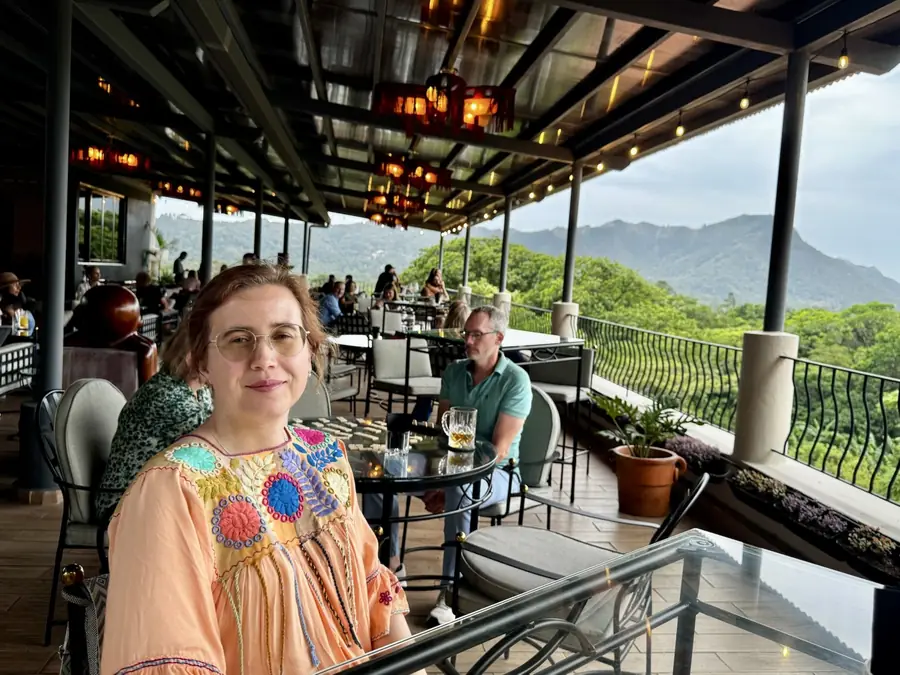
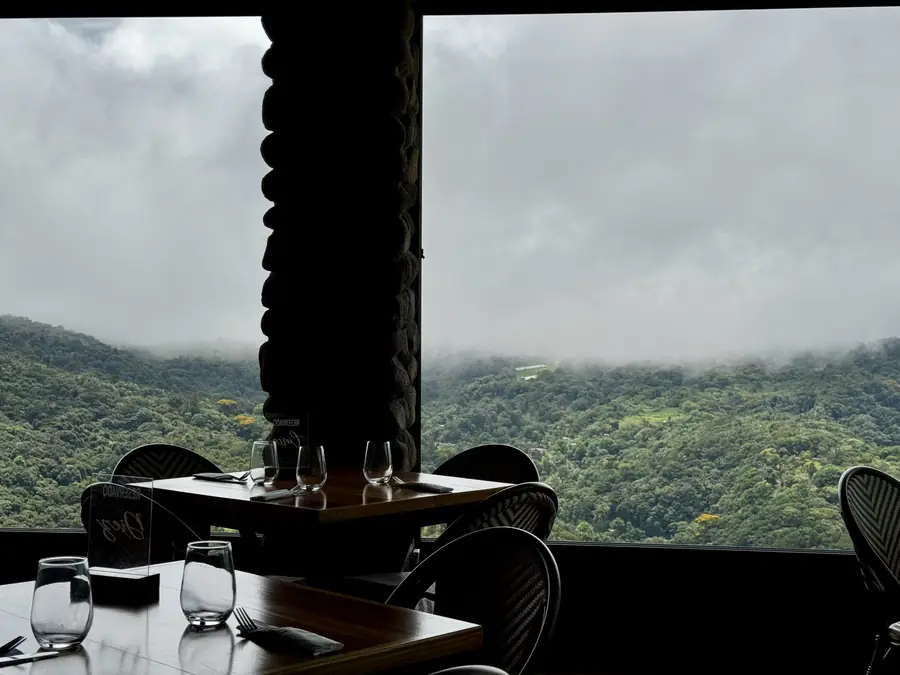
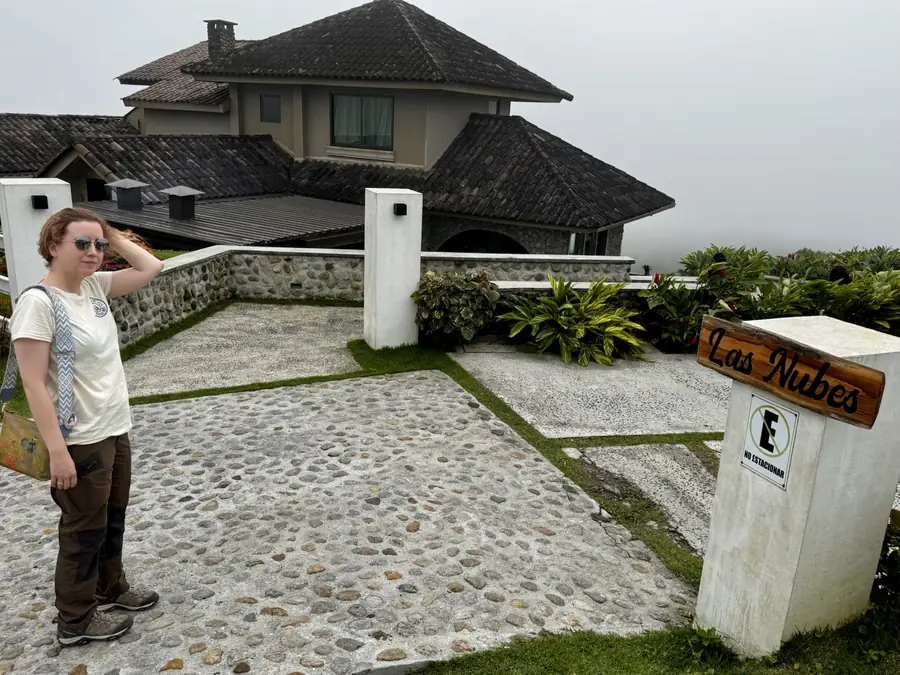
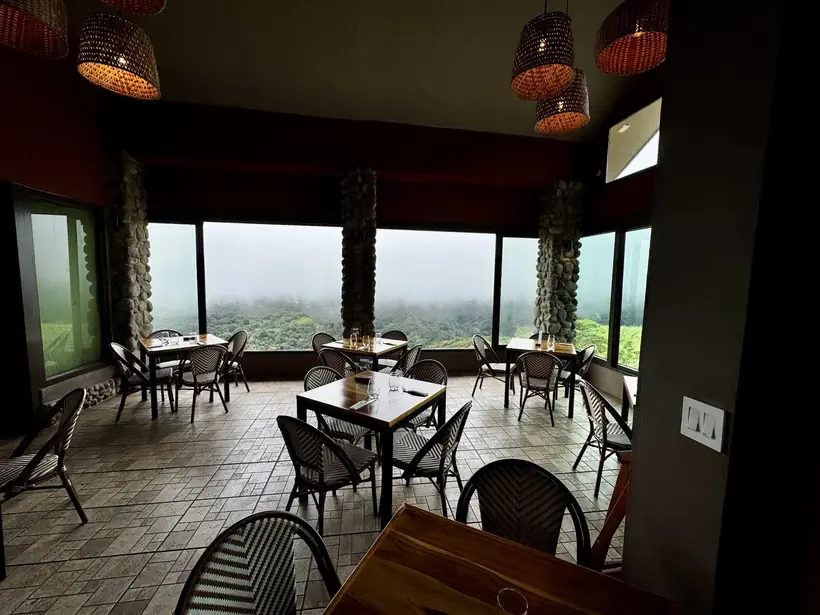
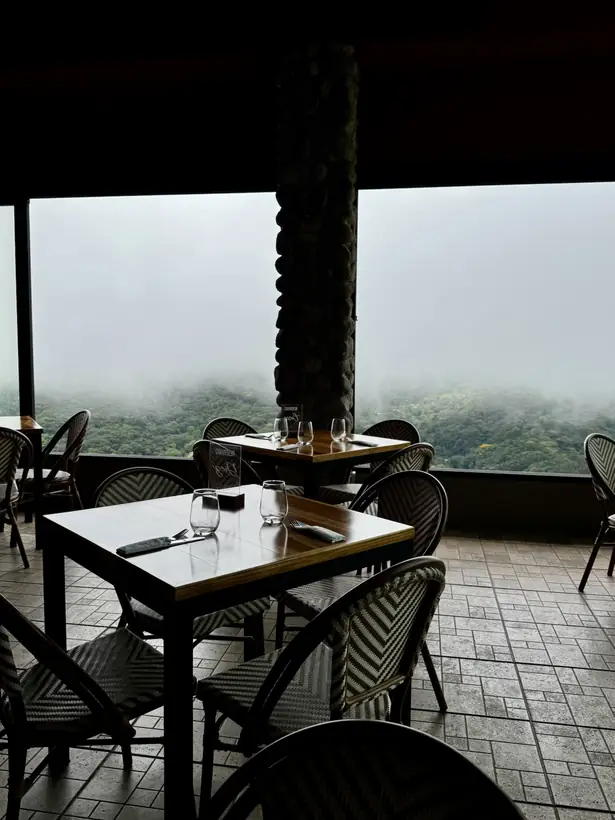
Gegessen haben wir oben am Kraterrand, im Las Nubes. Riesige Fensterfronten,
durch die man in den Krater hinunter auf das Dorf schaut. Dort sollte man unbedingt
reservieren — wir waren kurz vor zwölf da, hatten unverschämtes Glück mit einem freien
Tisch, und das Personal hat ihn extra noch schnell für uns fertig gemacht.We ate up on the crater rim, at Las Nubes. Huge windows looking down into the crater and onto the village. Book ahead — we turned up just before twelve, had shameless luck with a free table, and the staff quickly laid it for us on the spot.
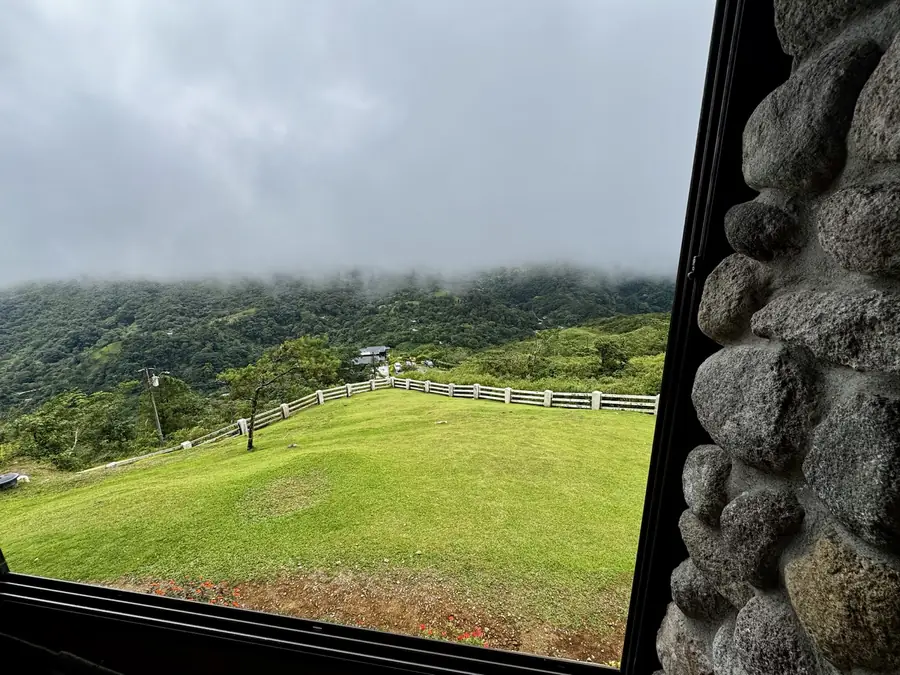
Las Nubes — „Die Wolken". Durch die Fensterfront schaut man über
den Krater. An manchen Nachmittagen macht der Name sich selbst wahr, dann zieht es
von unten weiß herein. Die Schilder auf den Tischen sagen alles: reservado.Las Nubes — “the clouds”. Through the window front you look out across the crater. On some afternoons the name proves itself and the white comes drifting up from below. The signs on the tables say it all: reservado.
Bilder aus El VallePictures from El Valle
Blättern · zum Vergrößern anklickenSwipe · click to enlarge
Fonda am Straßenrand — hier isst das Land zu Mittag
Die Straße hinauf in den Krater
Die Etappen dazwischen gehören auch zur Reise
Zwischen den Stationen wird gefahren — meistens selbst
Tanken an der Landstraße
1. August · El Valle
1. August · El Valle
1. August · El Valle
1. August · El Valle
1. August · El Valle
Der Blick vom Zimmer in den Garten
1. August · El Valle
1. August · El Valle
1. August · El Valle
1. August · El Valle
1. August · El Valle
Abuelo, der panamaische Rum — und der richtige Hut
2. August · El Valle
Nachmittags auf dem Balkon — mehr Programm braucht es nicht
2. August · El Valle
Die Anlage liegt im Kessel — dahinter steigen die Kraterränder auf, meist in Wolken
Kunst steht hier nicht in einer Ecke, sondern im Weg — im besten Sinn
Figuren im Gras — der Garten ist Teil der Ausstellung
Der Garten ist selbst eine Ausstellung
Der Skulpturengarten unter dem großen Baum
2. August · El Valle
2. August · El Valle
2. August · El Valle
2. August · El Valle
Auch im Garten wird man beobachtet
La Compañía del Valle von außen
2. August · El Valle
Der Hut findet überall einen Platz
2. August · El Valle
Anfangs dachten wir, das wird kitschig. Wurde es nicht.
Und dann steht da ein Krokodil auf einem Thron
2. August · El Valle
2. August · El Valle
2. August · El Valle
Und manches ist einfach nur komisch
Die Farben, die überall in Panama auftauchen
2. August · El Valle
2. August · El Valle
2. August · El Valle
2. August · El Valle
Das Hotelrestaurant
2. August · El Valle
2. August · El Valle
An jeder Ecke ein Blickfang
Der Pfad — schmal, aber befestigt und mit Geländern
Gut gesichert — deshalb geht der Weg auch für Regenwald-Neulinge
Der Fluss, der weiter unten aufgestaut wird
2. August · El Valle · von Charlotte
2. August · El Valle · von Charlotte
Nach oben schauen — das Dach schließt sich
Klares Wasser über schwarzem Vulkangestein
Der erste echte Regenwald für uns beide
Chorro El Macho — in der Regenzeit auf voller Kraft
Von unten bis oben — gut 30 Meter durch den Regenwald
Am Fuß des Wasserfalls
Die Hängebrücke führt direkt vor dem Fall entlang
2. August · El Valle · von Charlotte
2. August · El Valle · von Charlotte
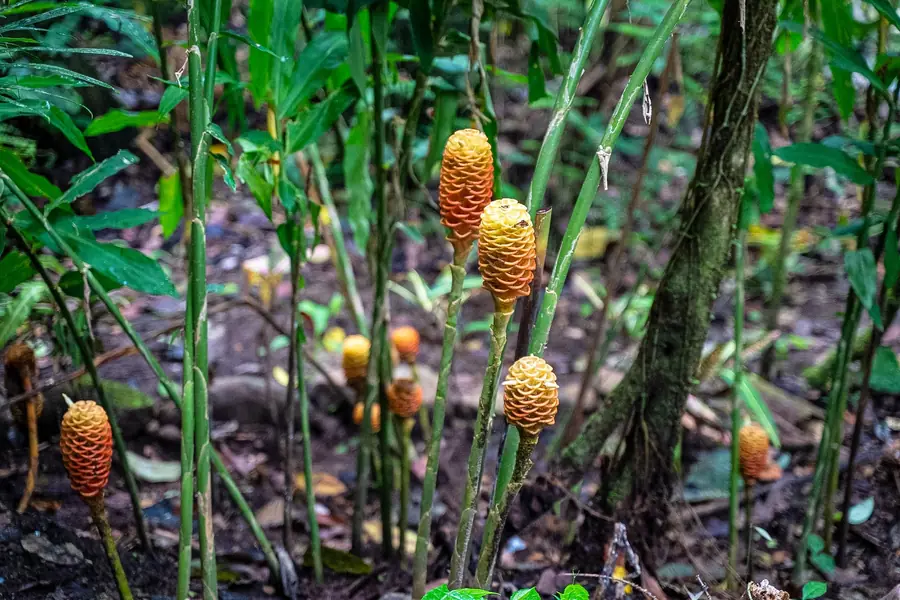
Wilder Ingwer, direkt am Weg
2. August · El Valle
2. August · El Valle
Sonntagvormittag ist die Kirche voll — danach geht es auf den Markt
Der Moment, in dem der richtige Hut gefunden war — 75 Dollar
Textilien und Kunsthandwerk zwischen den Ständen
Die Markthalle — hier hängen die Hüte
Ananas, Mango, Papaya — der lokale Teil des Marktes
Der Ort selbst: eine Hauptstraße, Berge ringsum
La Compañía del Valle — unser Haus im Krater
Angekommen am Las Nubes
2. August · El Valle
Vom Kraterrand hinunter, wenn die Wolken kurz aufreißen
2. August · El Valle
Las Nubes — reservierte Tische an der Fensterfront
2. August · El Valle
2. August · El Valle · von Charlotte
Unterwegs im Krater
Der Wasserfall, durch das Blattwerk gesehen
3. August · El Valle
Die Hängebrücke quert direkt vor dem Fall
Der Badeplatz — montags um halb neun für uns allein
3. August · El Valle
3. August · El Valle
Hier wird der Fluss gestaut — mitten im Wald
3. August · El Valle
Der Badeplatz in ganzer Ausdehnung
3. August · El Valle
3. August · El Valle
3. August · El Valle
3. August · El Valle
3. August · El Valle
3. August · El Valle
2. August · El Valle · von Charlotte
1. August · El Valle · von Charlotte
3
Playa Blanca · PazifikPlaya Blanca · Pacific
Schwarzer Sand und ein leeres ResortBlack sand and an empty resort
3. – 5. August · zwei Nächte3–5 August · two nights
Anderthalb Stunden vom Krater hinunter ans Meer — und das Thermometer
macht den Unterschied deutlicher als jede Landkarte. Oben in El Valle waren es abends
25 Grad. Hier unten sind es 35.An hour and a half down from the crater to the sea — and the thermometer makes the difference clearer than any map. Up in El Valle it was 25 degrees in the evening. Down here it is 35.
Der Weg dorthin erzählt die Veränderung mit. In den Bergen ist alles grün und dicht,
Richtung Küste wird das Land bewirtschaftet: Ranches, Weiden, Landwirtschaft. Der
Übergang kommt nicht abrupt, sondern schiebt sich langsam ins Bild.The drive tells the story of that change. In the mountains everything is green and dense; towards the coast the land is worked: ranches, pasture, agriculture. The transition isn't abrupt, it slides into the picture slowly.
Sand, der am Magneten hängen bleibtSand that sticks to a magnet
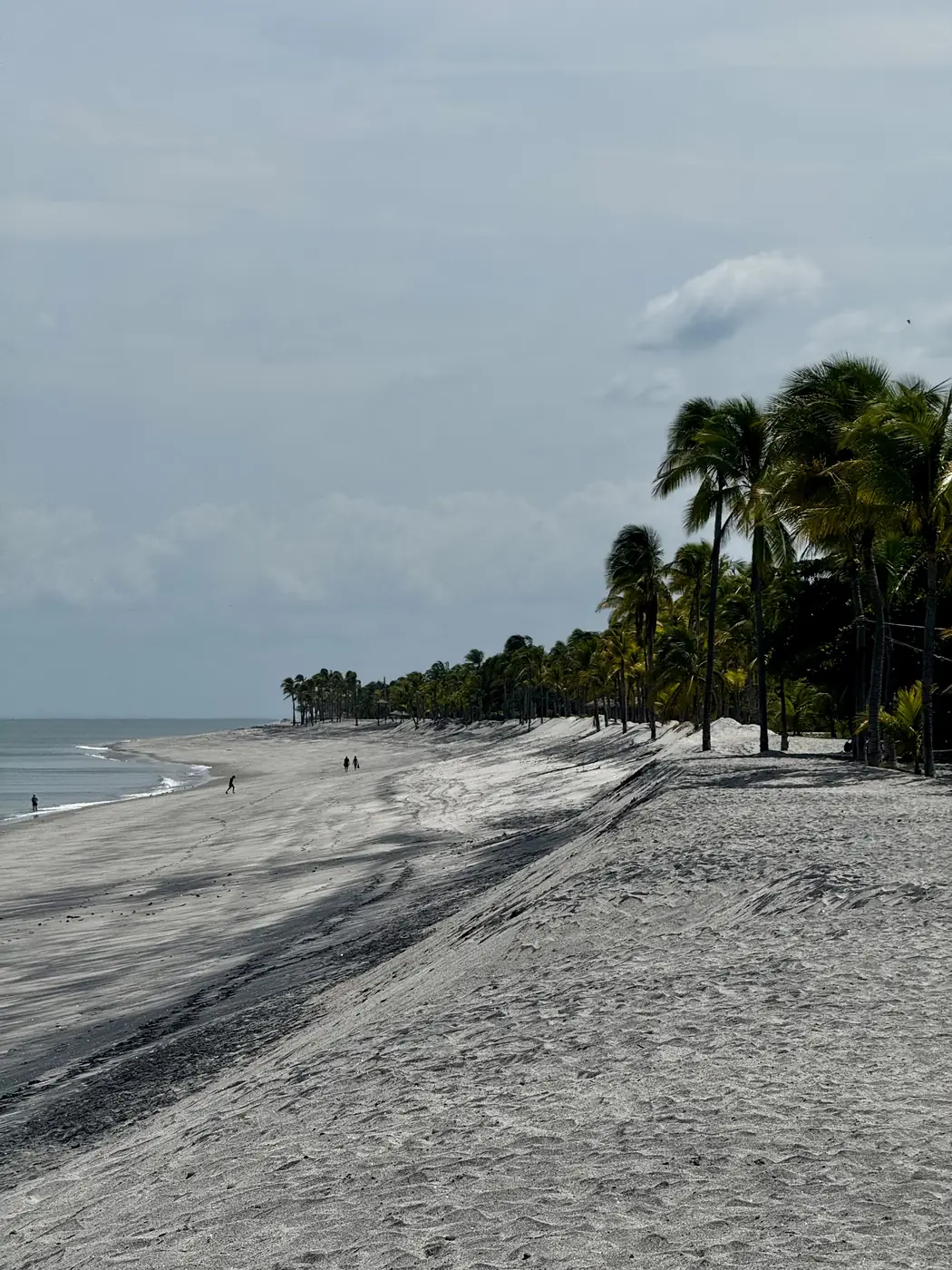
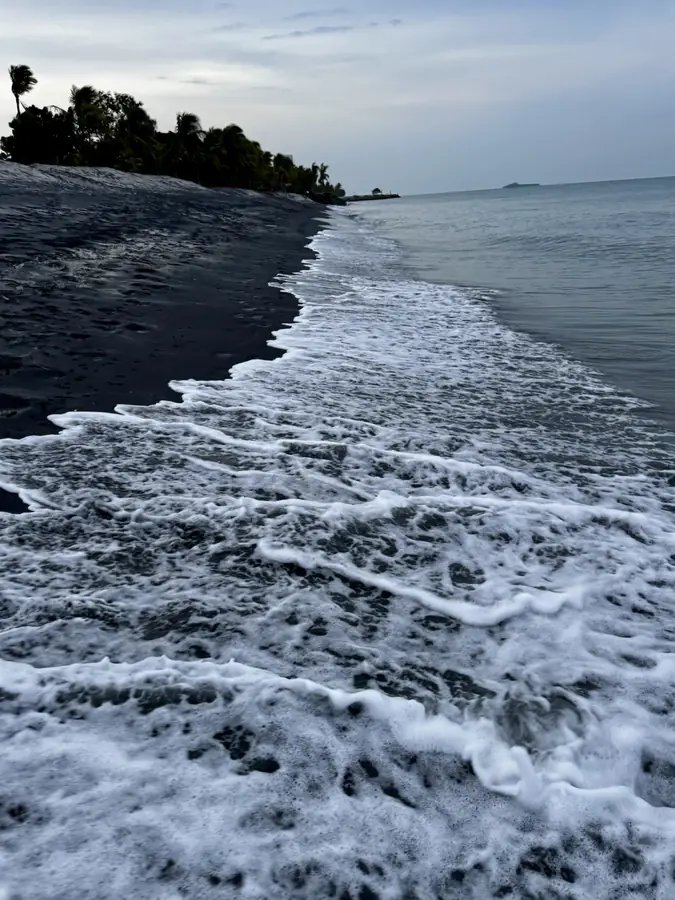
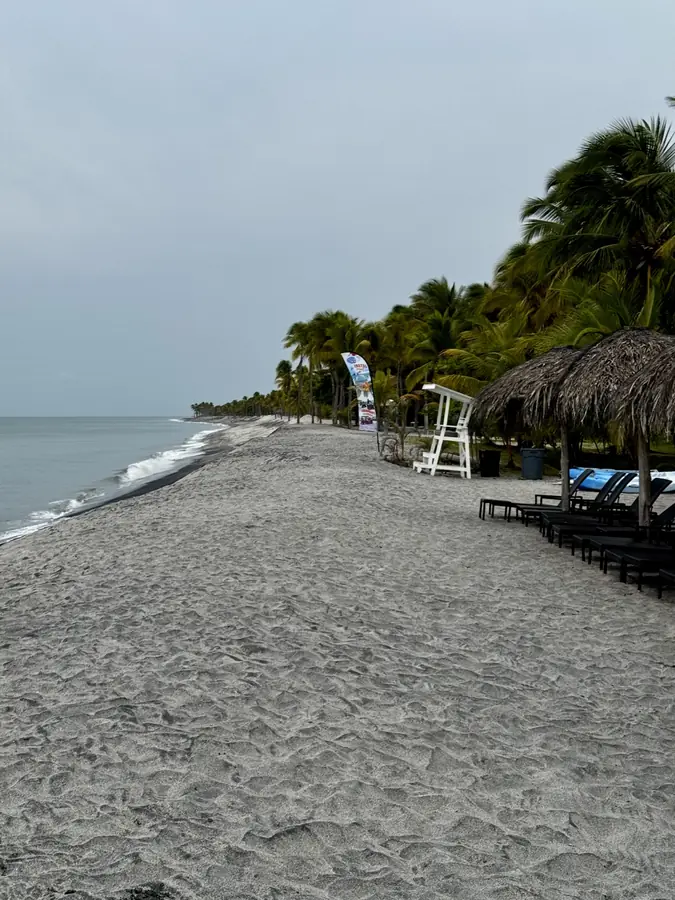
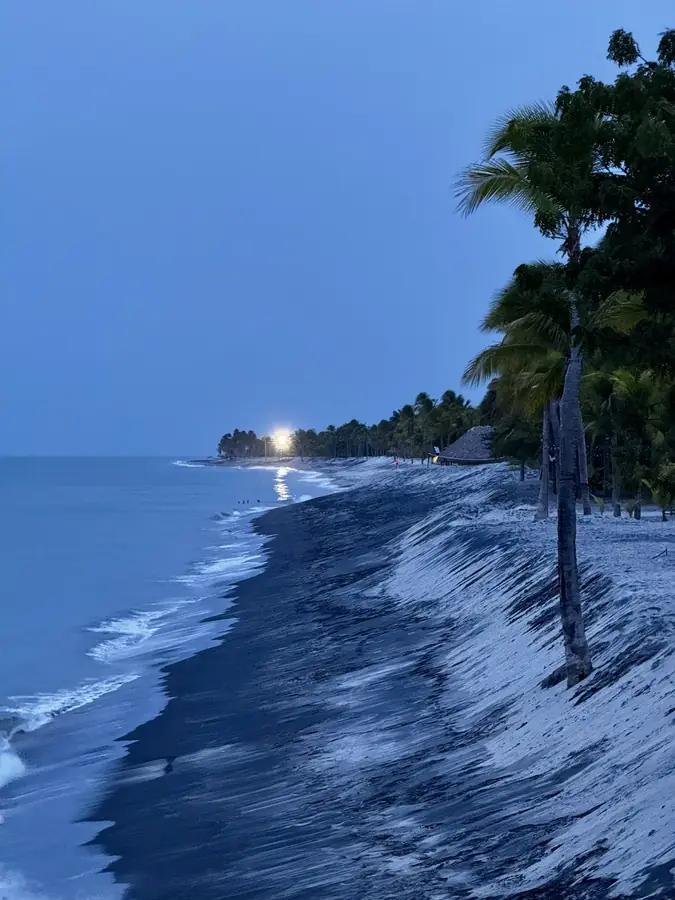
Und dann der Strand. Schwarzer Vulkansand — nicht dunkelgrau, sondern wirklich
schwarz. Wer einen Magneten daran hält, bekommt ihn nicht mehr sauber: Der eisenhaltige
Anteil bleibt kleben. Mittags kann man ihn barfuß nicht betreten, da heizt er sich auf
wie eine Herdplatte.And then the beach. Black volcanic sand — not dark grey, genuinely black. Hold a magnet to it and you will never get it clean again: the iron-bearing part clings on. At midday you cannot walk on it barefoot; it heats up like a hotplate.
Das Wasser ist ruhig, kaum Wellen, ein Rettungsschwimmer mit Fahne sitzt am Strand.
Für uns war es trotzdem etwas Besonderes: Wir sind ja eher Ostseekinder — und
jetzt zum ersten Mal der Pazifik, dieses warme Wasser, das man sonst nur von Postkarten
kennt.The water is calm, barely a wave, a lifeguard with a flag sits on the beach. It was still something special for us: we grew up on the Baltic — and now, for the first time, the Pacific, that warm water you otherwise only know from postcards.
Schwarz und weiß. Der Sand ist vulkanischen Ursprungs und enthält
so viel Eisen, dass ein Magnet ihn anzieht.Black and white. The sand is volcanic in origin and holds so much iron that a magnet picks it up.
Gut zu wissenGood to know
Warum die Gezeiten hier so extrem sindWhy the tides here are so extreme
Der Tidenhub an Panamas Pazifikküste beträgt bis zu fünf Meter. An der
Karibikseite — Luftlinie kaum achtzig Kilometer entfernt — sind es gerade einmal
dreißig Zentimeter. Zwei Ozeane, ein Land, völlig verschiedene Rhythmen.The tidal range on Panama's Pacific coast reaches five metres. On the Caribbean side — barely eighty kilometres away as the crow flies — it is all of thirty centimetres. Two oceans, one country, completely different rhythms.
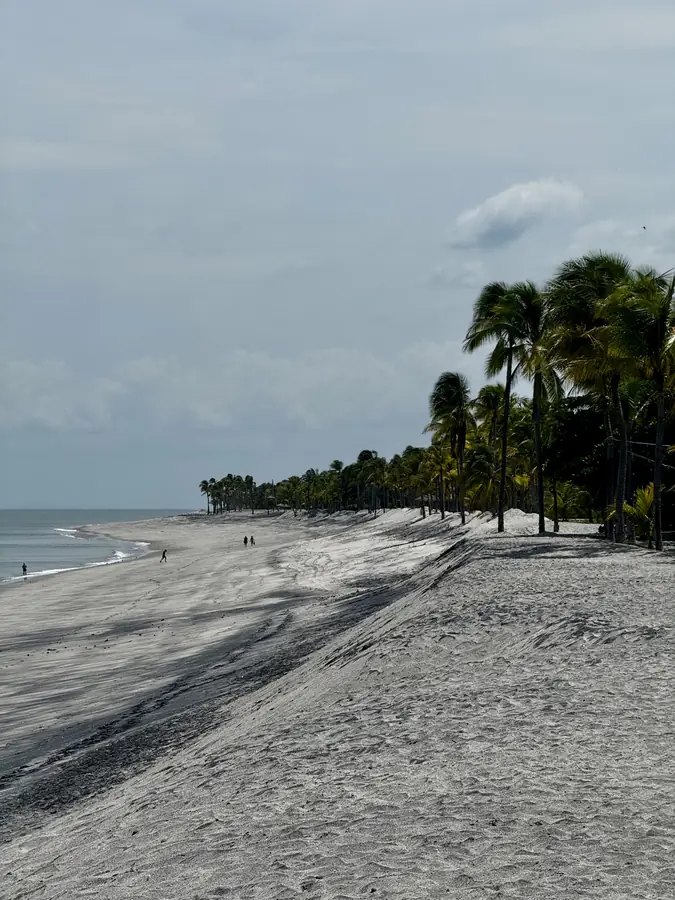
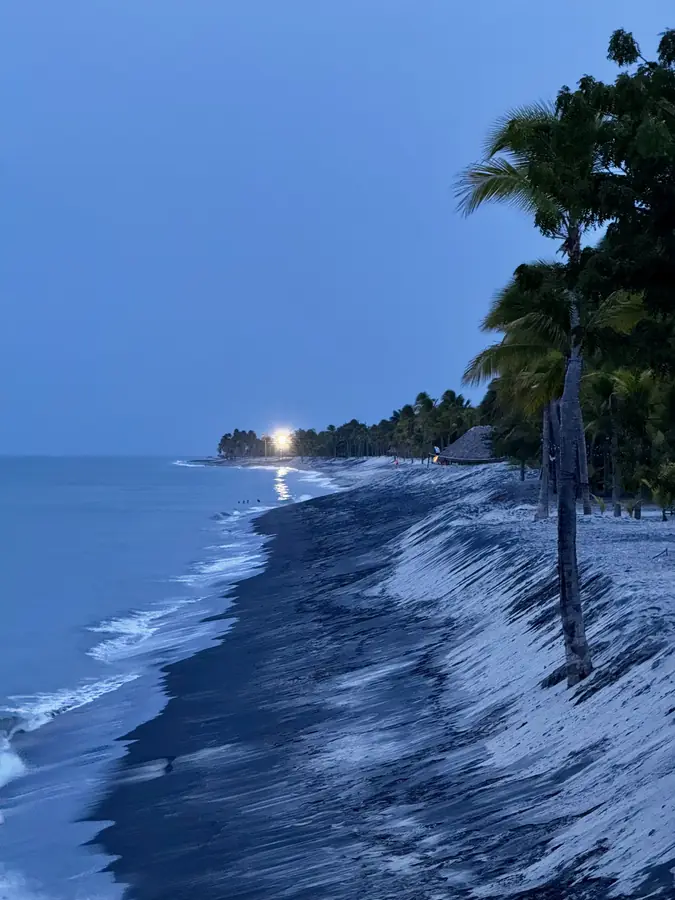
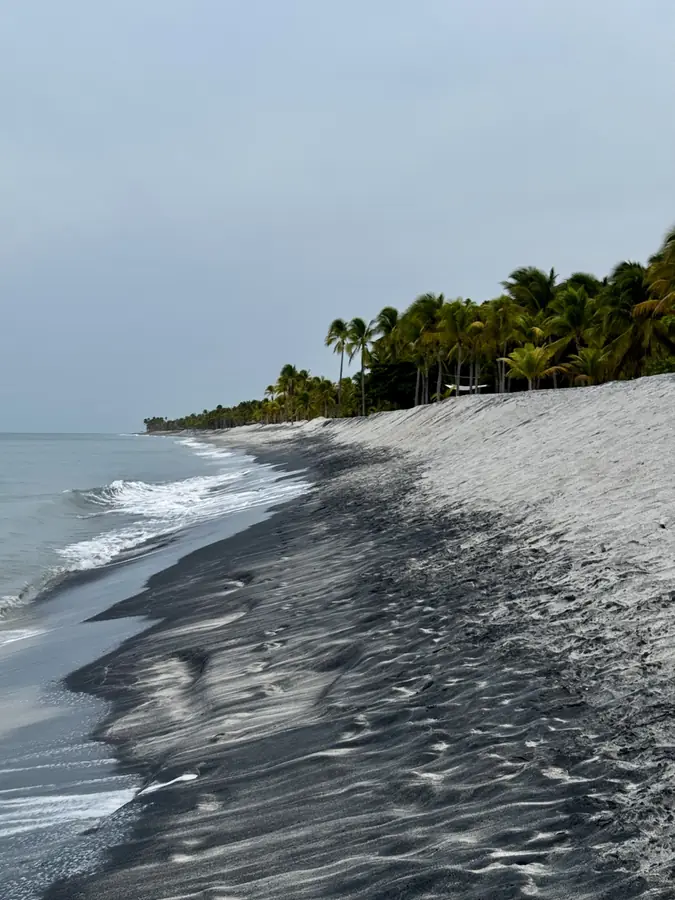
Man sieht es hier wie im Lehrbuch: Abends bei Flut ist der Strand schmal und
steil. Tagsüber bei Ebbe liegt eine riesige Fläche frei — schwarz zum Land hin,
heller zum Wasser. Genau dieser Unterschied zwischen den Meeresspiegeln ist
übrigens einer der Gründe, warum der Kanal Schleusen braucht und nicht
einfach auf Meereshöhe durchgegraben werden konnte.You can watch it here as if from a textbook: in the evening at high tide the beach is narrow and steep. During the day at low tide an enormous expanse lies open — black towards the land, lighter towards the water. That difference between the two sea levels, incidentally, is one of the reasons the canal needs locks and could not simply be cut through at sea level.
Bei Ebbe. Der Strand liegt weit offen, der dunkle Streifen zieht
sich bis zum Wasser hinunter.At low tide. The beach lies wide open, the dark band running all the way down to the water.Und bei Flut. Derselbe Abschnitt, wenige Stunden später — vom
hellen Sand ist kaum noch etwas übrig.And at high tide. The same stretch a few hours later — barely any of the pale sand is left.
Der erste TropensturmThe first tropical storm
Am Strandtag lief es bis zum Nachmittag perfekt: Sonne, Hitze, ruhiges Wasser. Dann
zog es zu, und es kam der erste richtige Wolkenbruch der Reise, mit Blitz und
Donner. Innerhalb von Minuten fiel die Temperatur um etwa fünf Grad.On our beach day everything was perfect until the afternoon: sun, heat, calm water. Then it clouded over and the first proper downpour of the trip arrived, with thunder and lightning. Within minutes the temperature dropped by about five degrees.
Das Personal reagierte sofort und organisierte einen Shuttle zurück zum Zimmer. Den
angebotenen Schirm haben wir abgelehnt — wir sind ja auch nicht aus Zucker.The staff reacted immediately and organised a shuttle back to our room. We turned down the umbrella they offered — we are not made of sugar.
Das Haus — und die leere AnlageThe hotel — and the empty resort
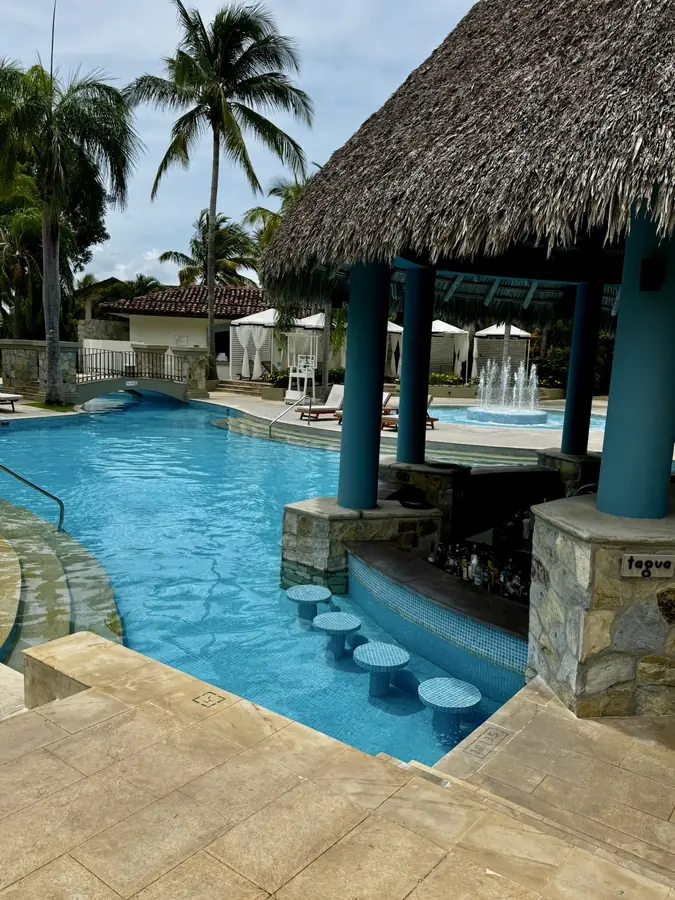
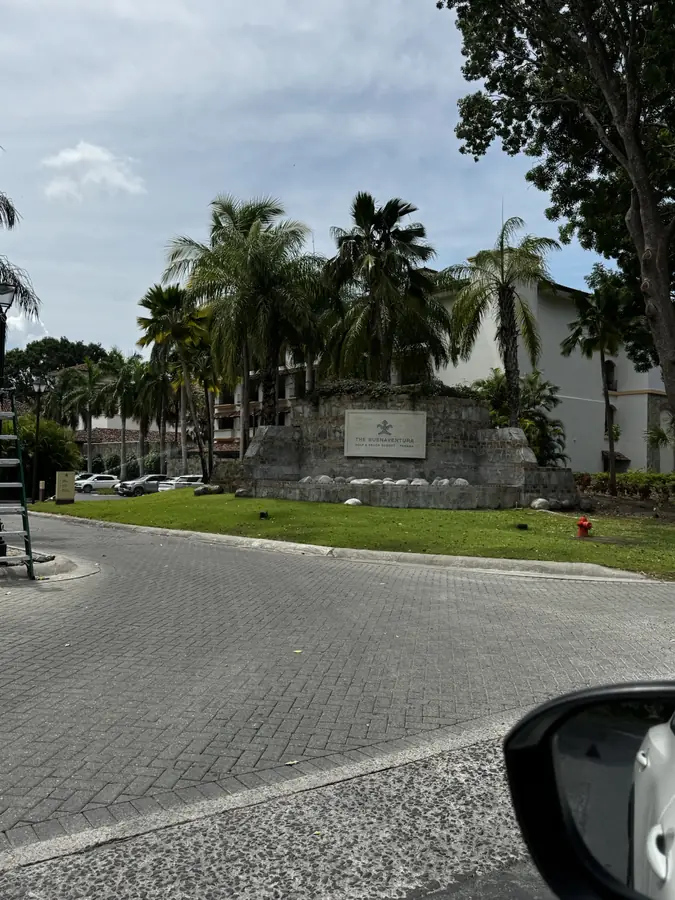
The Buenaventura ist eine große Anlage mit allem, was dazugehört: ein wirklich
schönes Zimmer, mehrere Pools, freundliche Leute. Wir haben uns dort gut aufgehoben
gefühlt.The Buenaventura is a large resort with everything that goes with it: a genuinely lovely room, several pools, friendly people. We felt well looked after there.
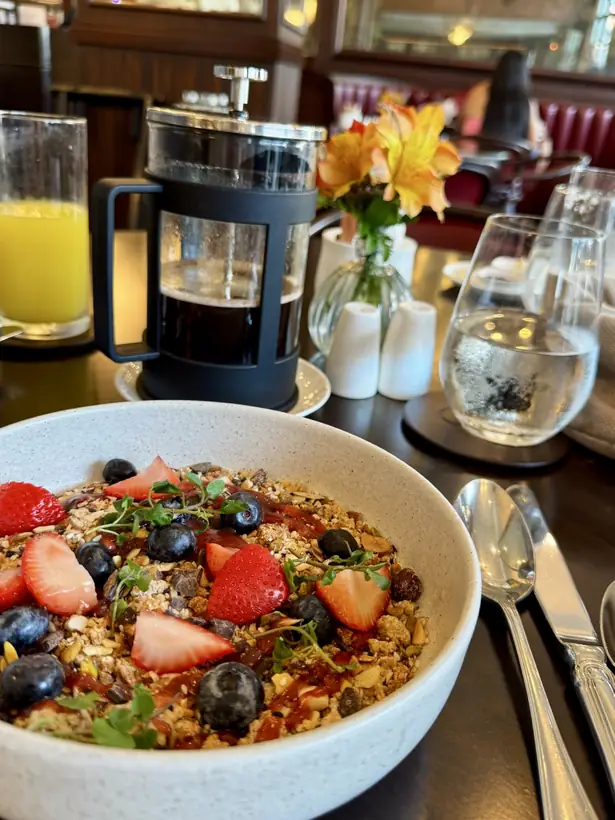
Nur das Frühstück war nicht besonders — da bin ich als gelernter Koch
vielleicht auch strenger als andere. Am zweiten Morgen haben wir es ausgelassen und
lieber unterwegs gefrühstückt.Only breakfast was nothing special — though as a trained chef I may be stricter than most. On the second morning we skipped it and ate somewhere along the road instead.
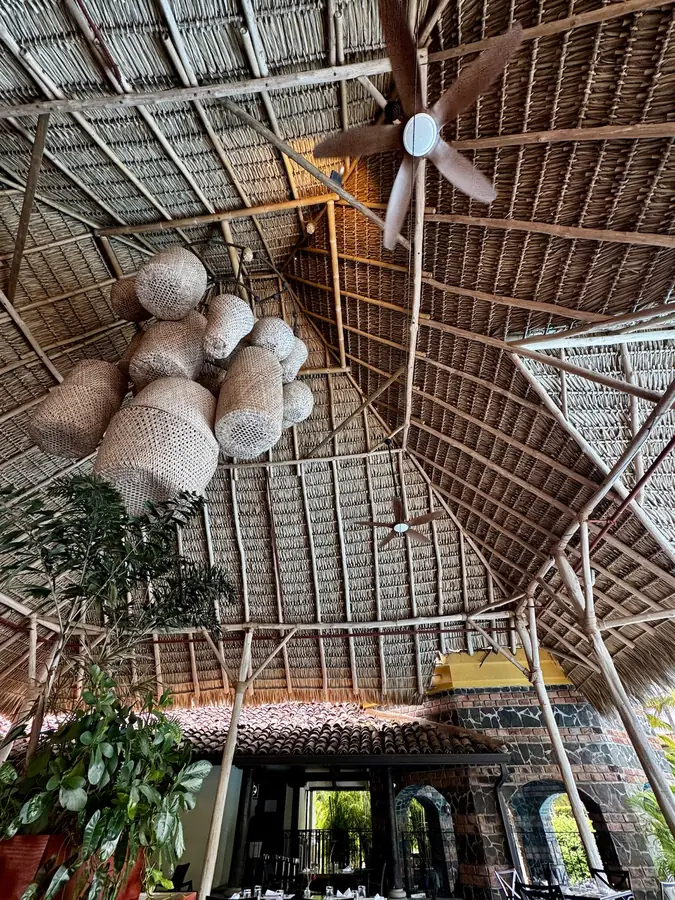
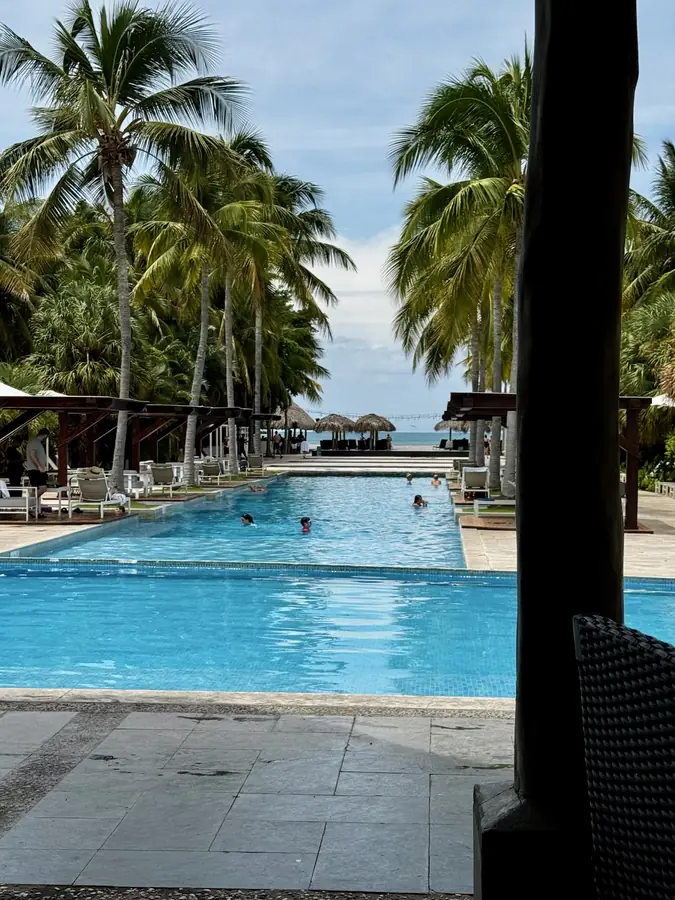
Was den Aufenthalt aber am meisten geprägt hat, war etwas ganz anderes: die
Nebensaison. Leere Villen, leere Hochhäuser, ein leerer Pool, und ab halb sieben ist
es dunkel. Man läuft durch eine Anlage, die für Hunderte gebaut wurde, und begegnet
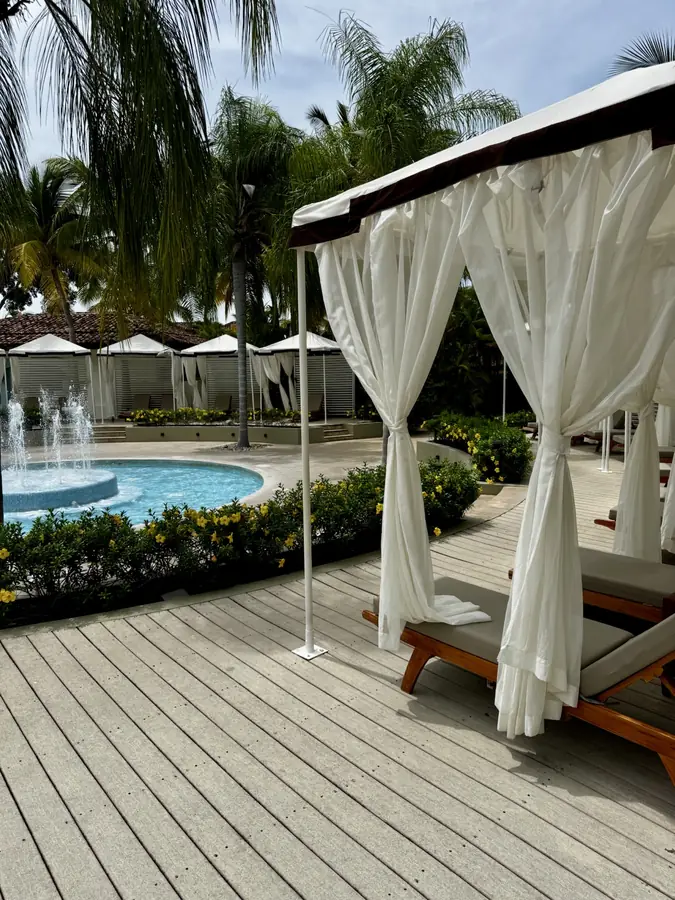
kaum jemandem. Das hat etwas Eigenes — ein bisschen verloren fühlt man sich schon.But what shaped the stay most was something else entirely: the off season. Empty villas, empty towers, an empty pool, and darkness from half past six. You walk through a resort built for hundreds and hardly meet a soul. It has a quality of its own — you do feel a little lost.
Der Pool, an einem Nachmittag im August.The pool, on an August afternoon.Ganz allein war man dann doch nicht.Entirely alone we were not, as it turned out.
Bilder aus Playa BlancaPictures from Playa Blanca
Blättern · zum Vergrößern anklickenSwipe · click to enlarge
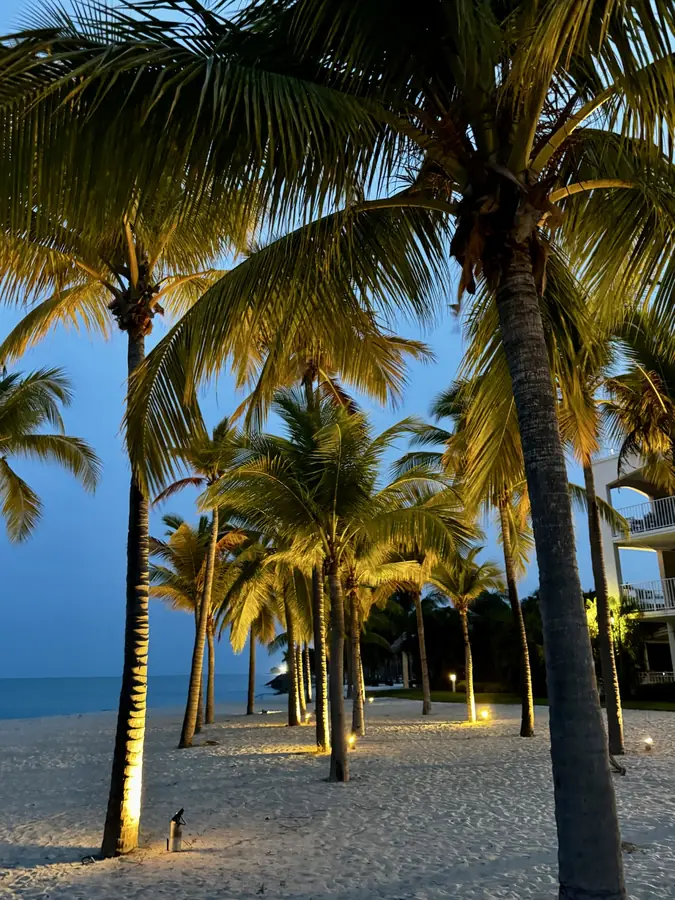
Ankunft: eine Palmenallee bis zum Horizont
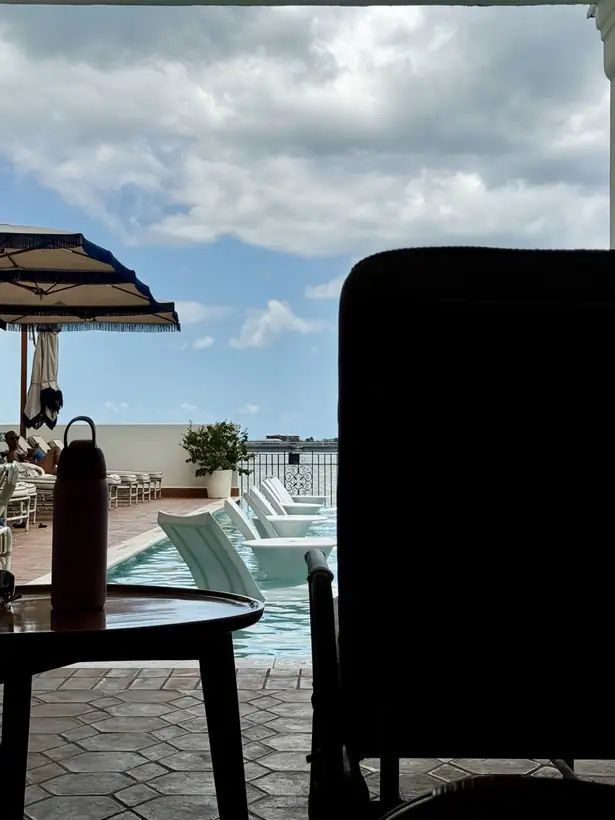
Der Pool der Anlage — in der Nebensaison meistens menschenleer
Eine Kabane am Pool, für niemanden reserviert
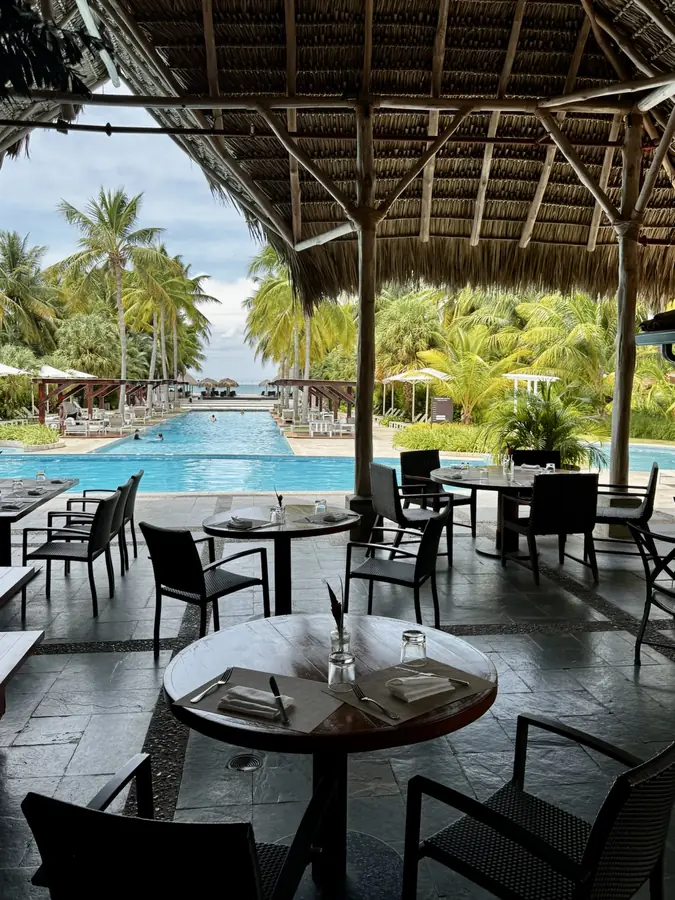
Das Restaurant ist zum Pool hin offen
Drinnen hängen die Sessel von der Decke
Von der Terrasse aus durch die Palmen geschaut
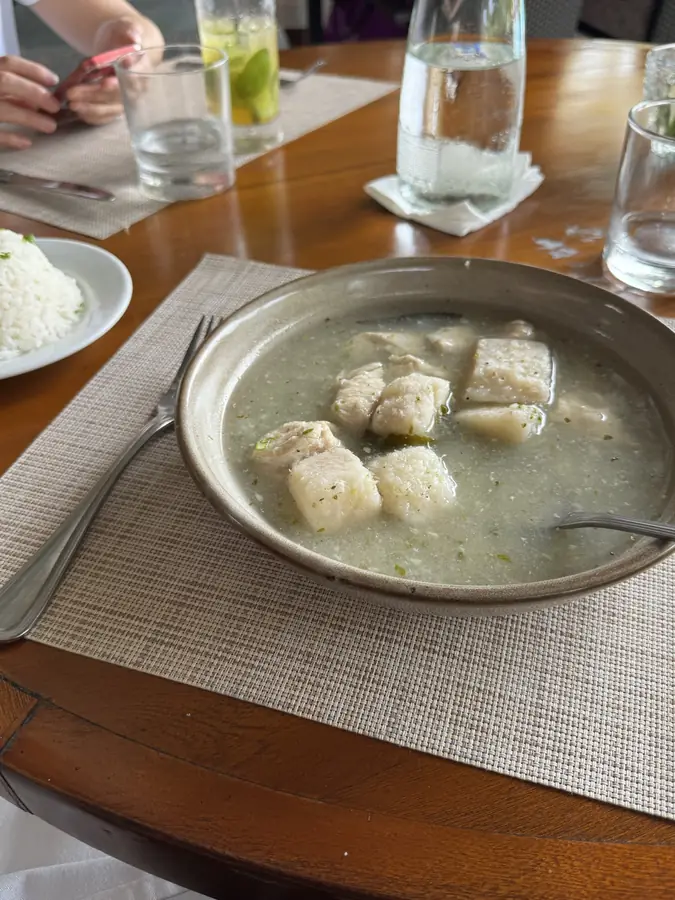
Sancocho — Panamas Nationalsuppe: Hähnchen, Yuca und viel Culantro
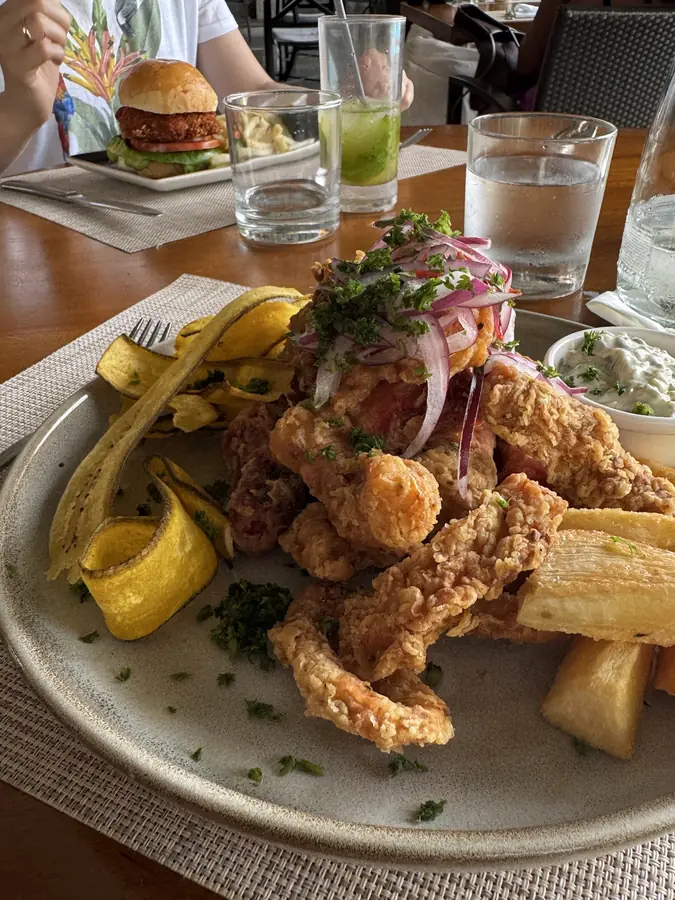
Frittierte Meeresfrüchte — Garnelen und Pulpo, dazu Kochbananen und Yuca
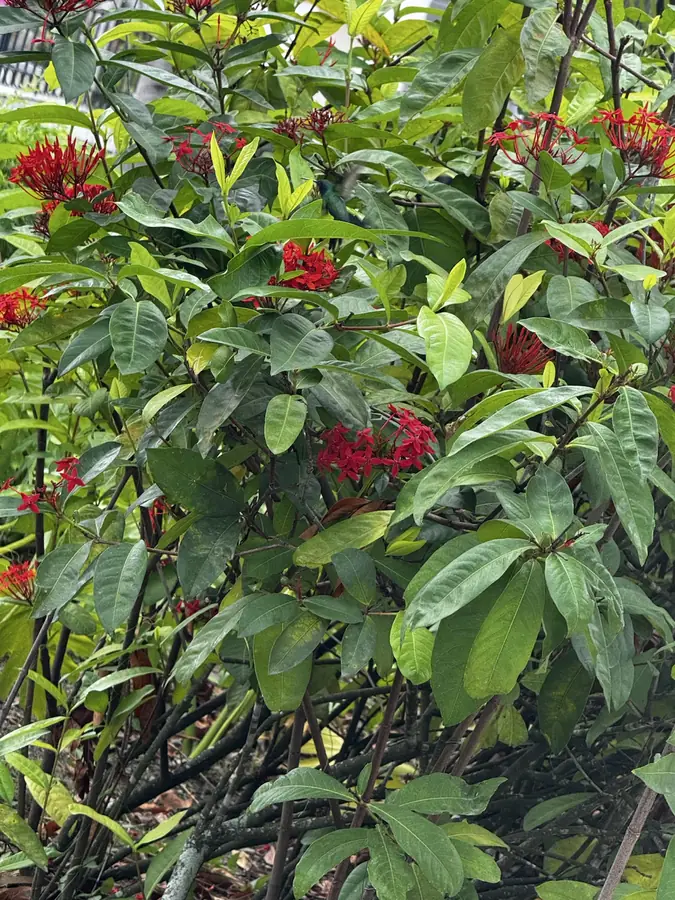
Rote Blüten, wohin man schaut
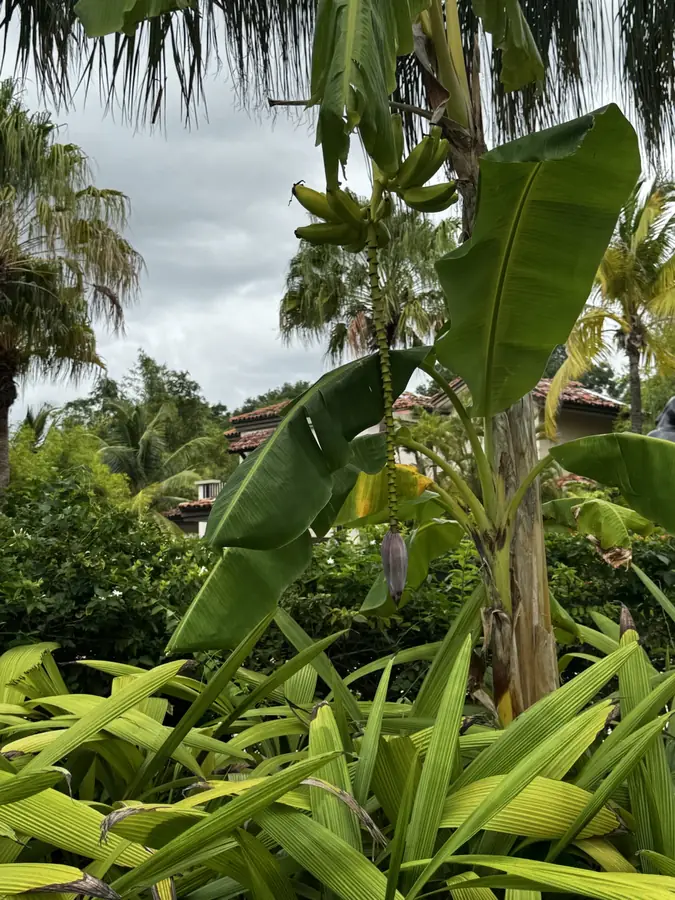
Bananenstauden gleich neben der Palme
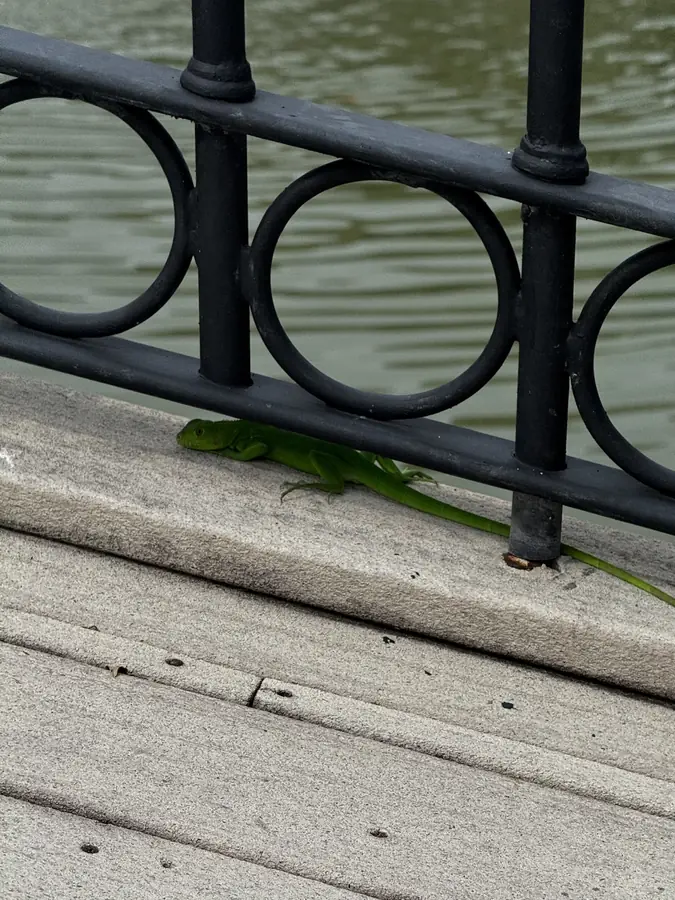
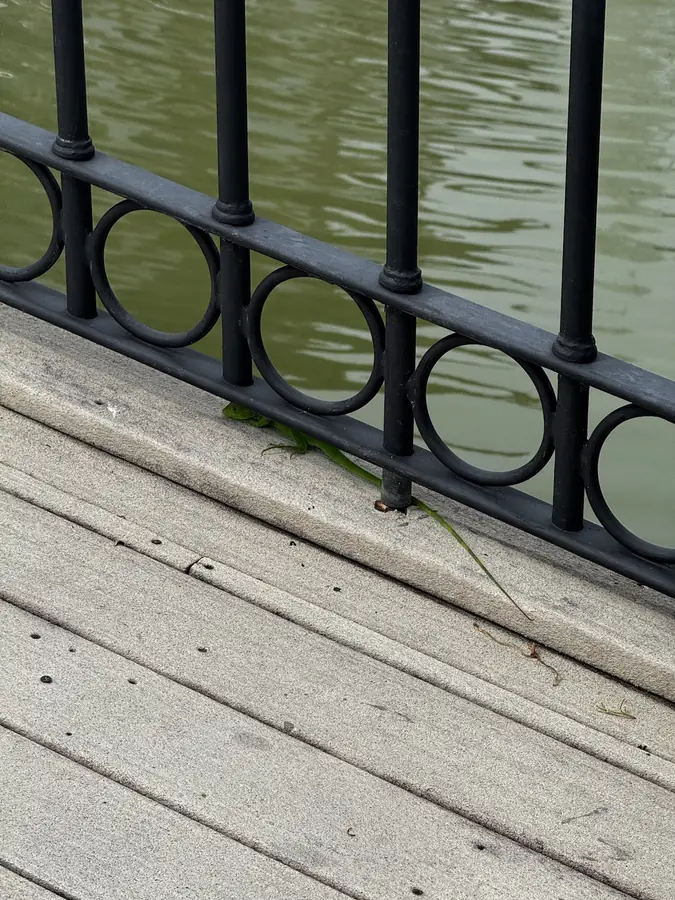
Ein kleiner Leguan am Rand des Wassers
Er lässt sich nicht aus der Ruhe bringen
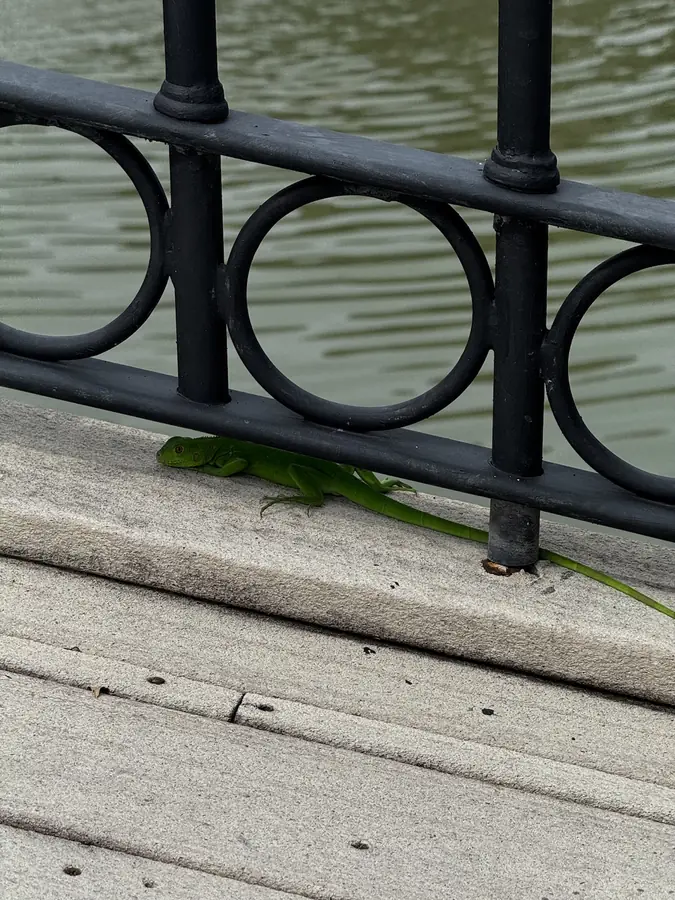
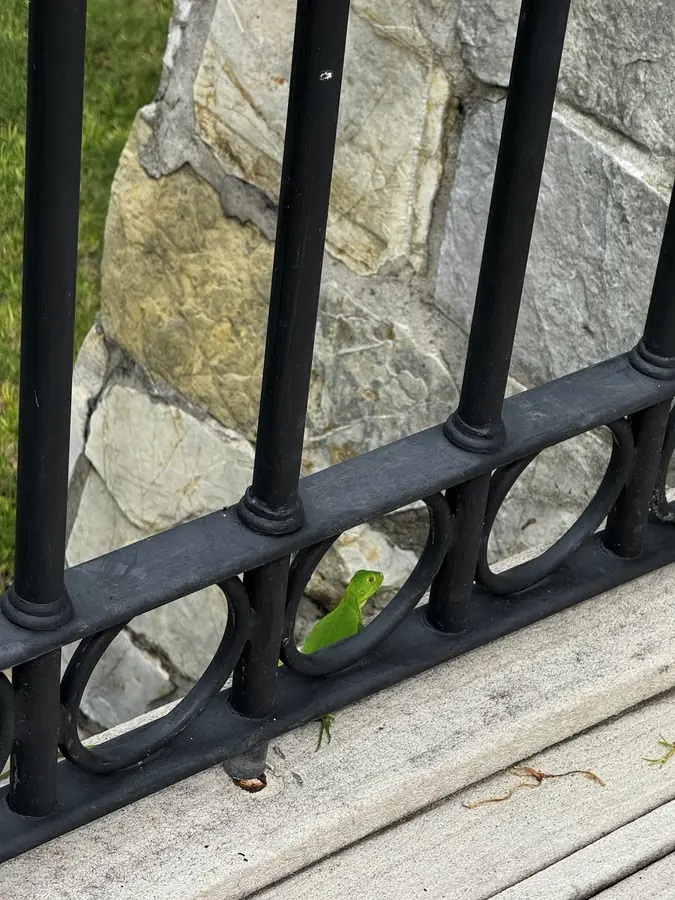
Ein junger Leguan auf der Treppenstufe
Grün auf Grau, direkt am Zaun
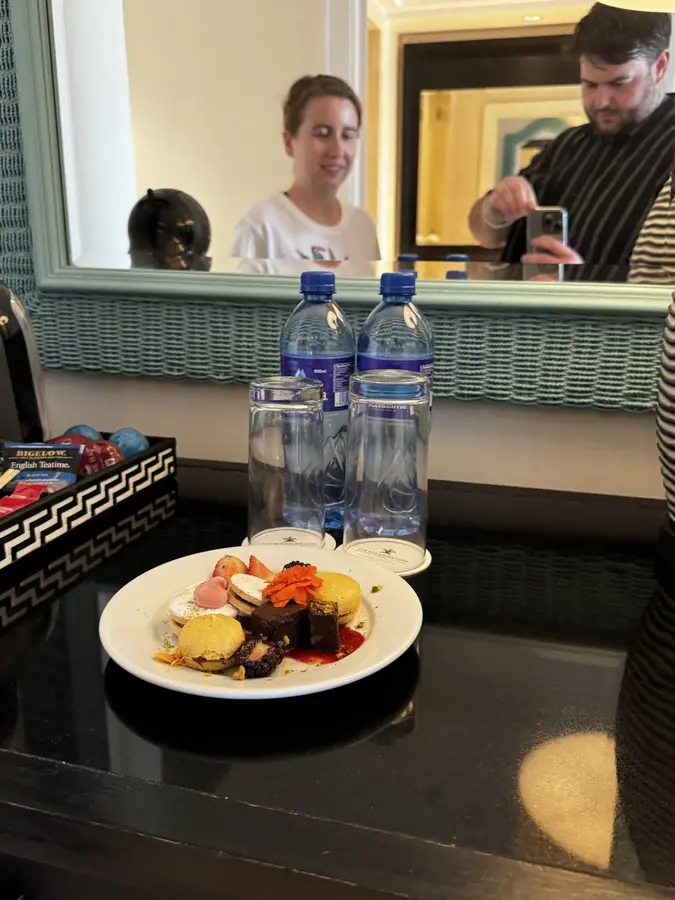
Wir beide im Spiegel — davor der Willkommensgruß des Hauses
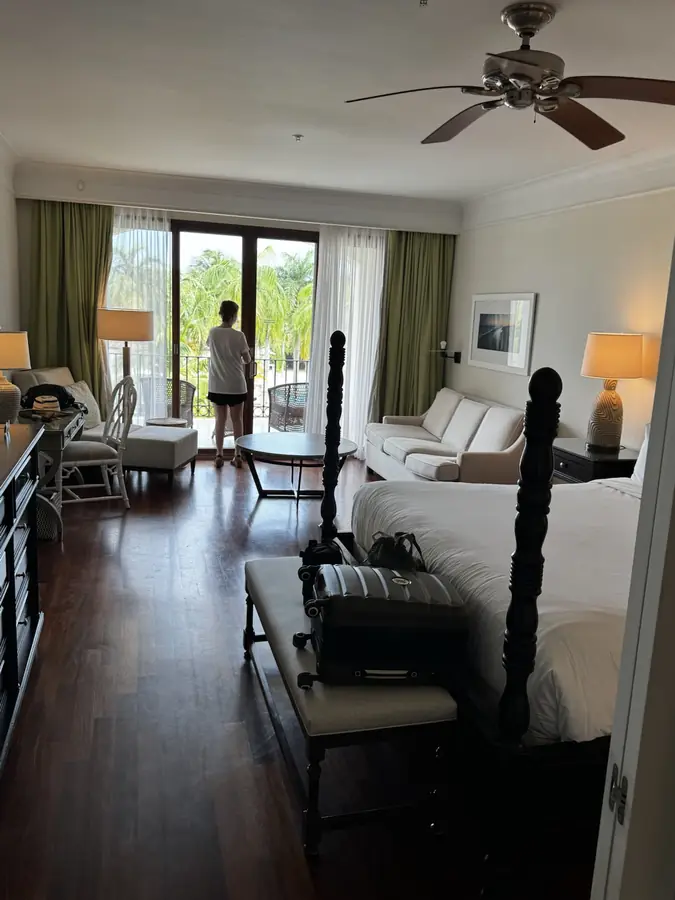
Unser Zimmer, die Tür ins Grüne
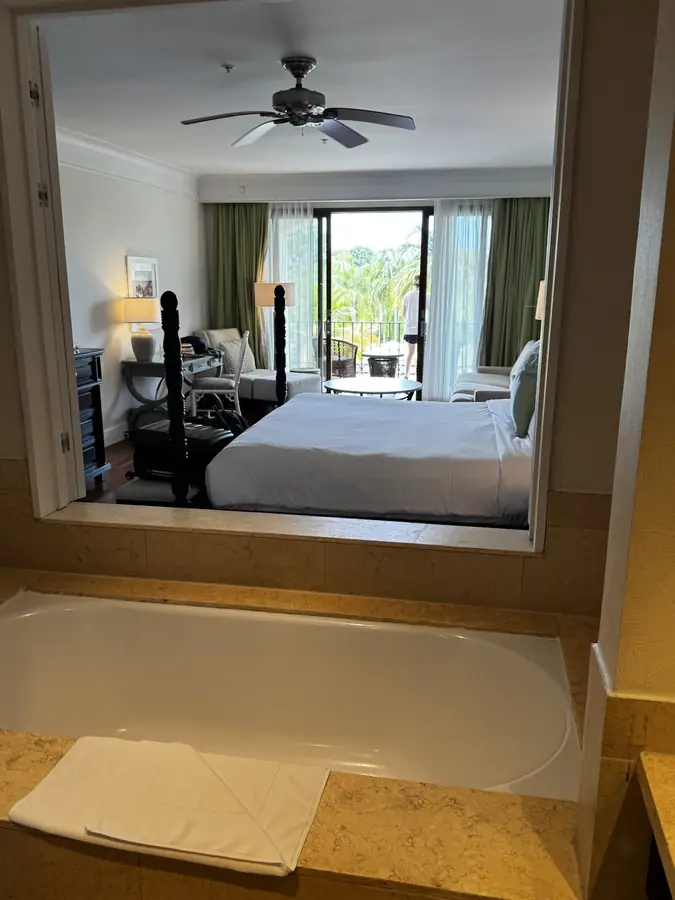
Bett, Ventilator, Blick nach draußen
Steg über der Lagune
Der Balkon gehörte den Palmen
Abends wird der Innenhof angestrahlt
Die Lounge am Abend, warm ausgeleuchtet
Ein ganzer Wald hängt über dem Sofa
Sonnenschirme aus Palmwedeln auf dunklem Sand
Die Brandung läuft flach aus, der Himmel zieht zu
Weiße Gischt auf fast schwarzem Sand
Am Wasser
Dämmerung über dem Pazifik
Palmen gegen den letzten Tageshimmel
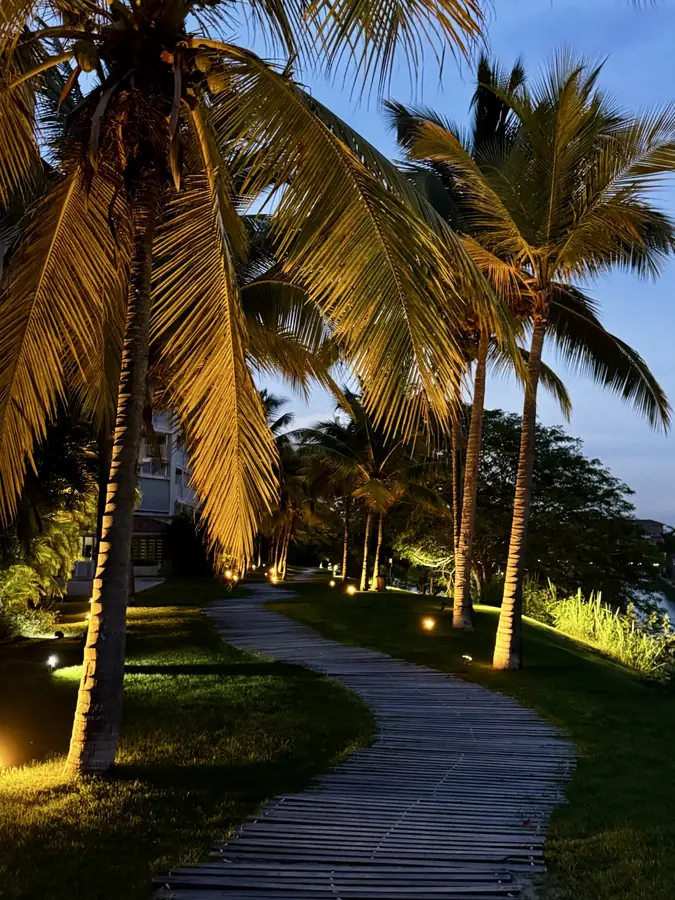
Ab halb sieben braucht der Weg Licht
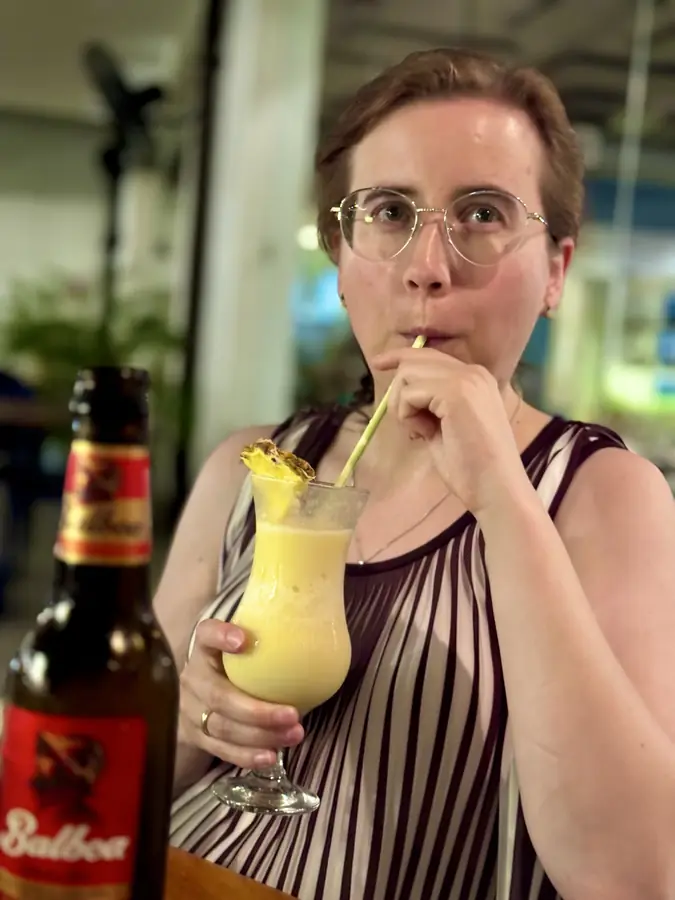
Piña Colada am Strand
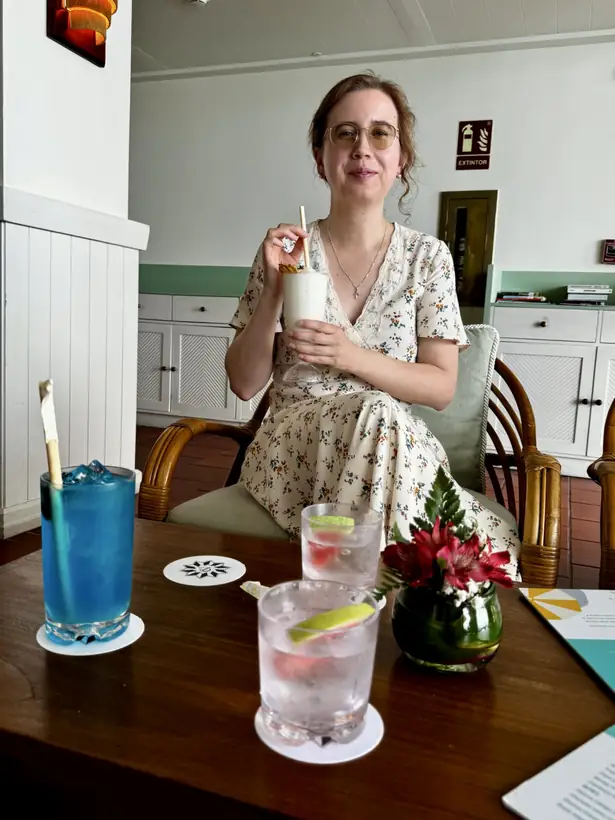
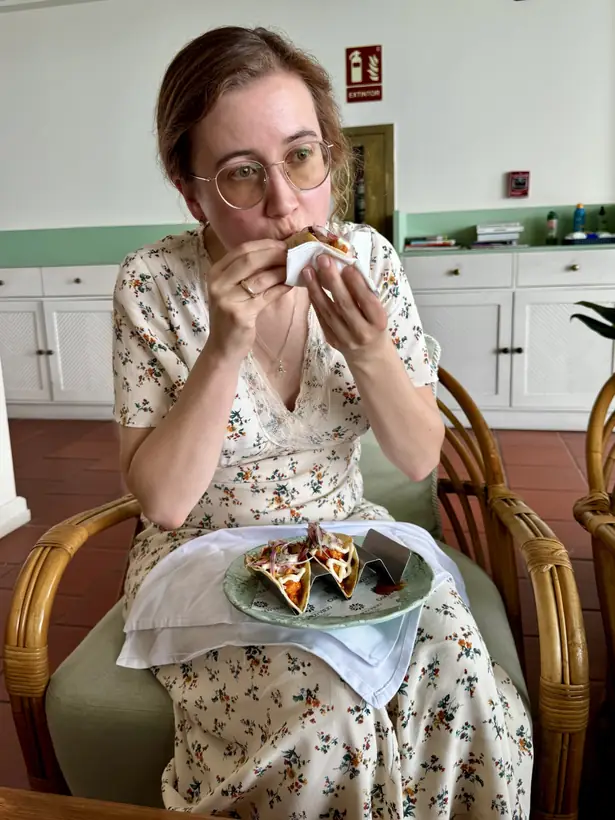
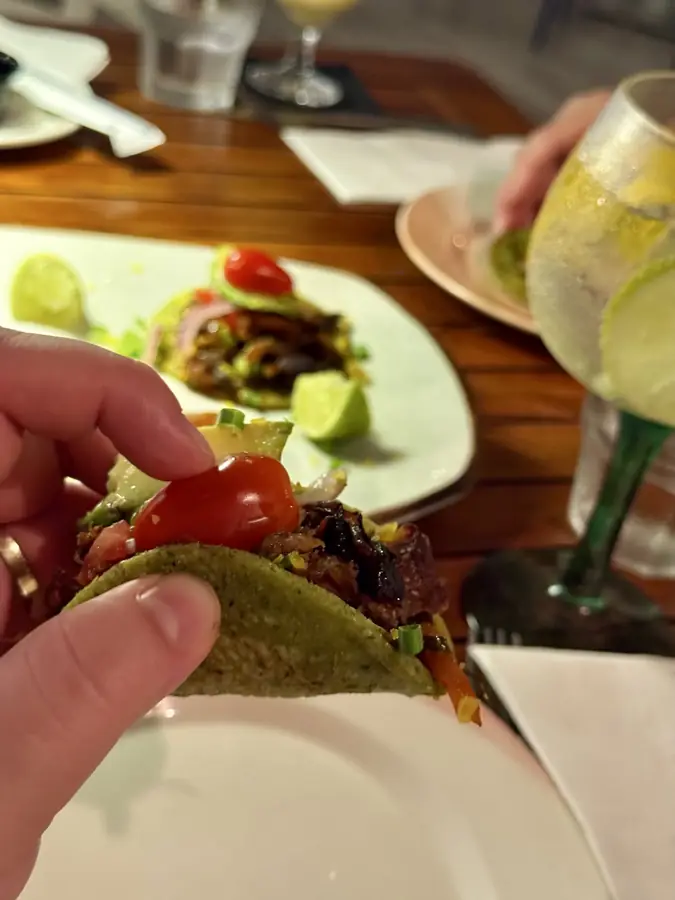
Tacos und Cocktails, mehr braucht es nicht
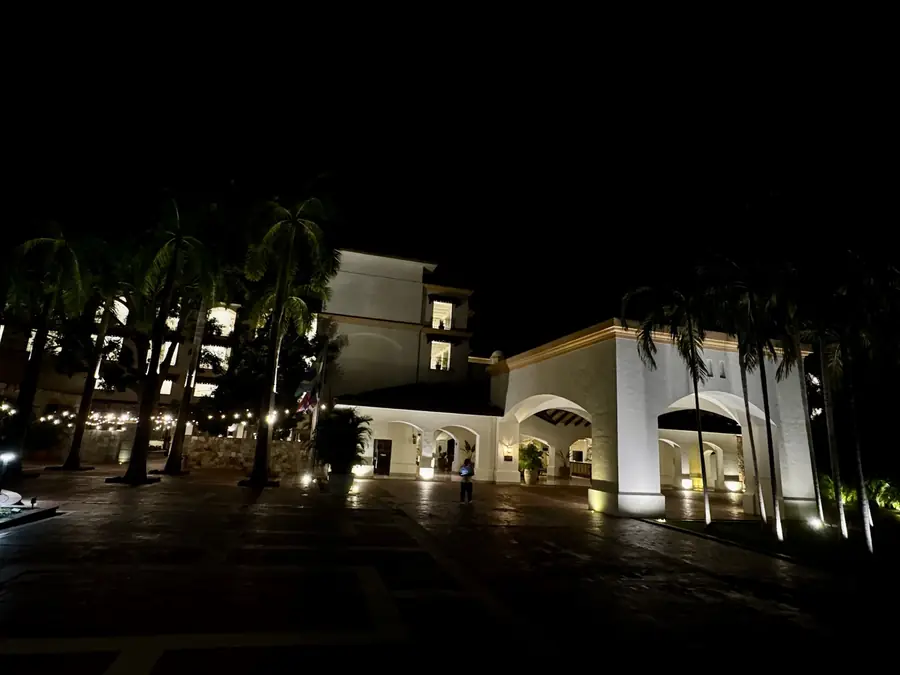
Das Hauptgebäude bei Nacht
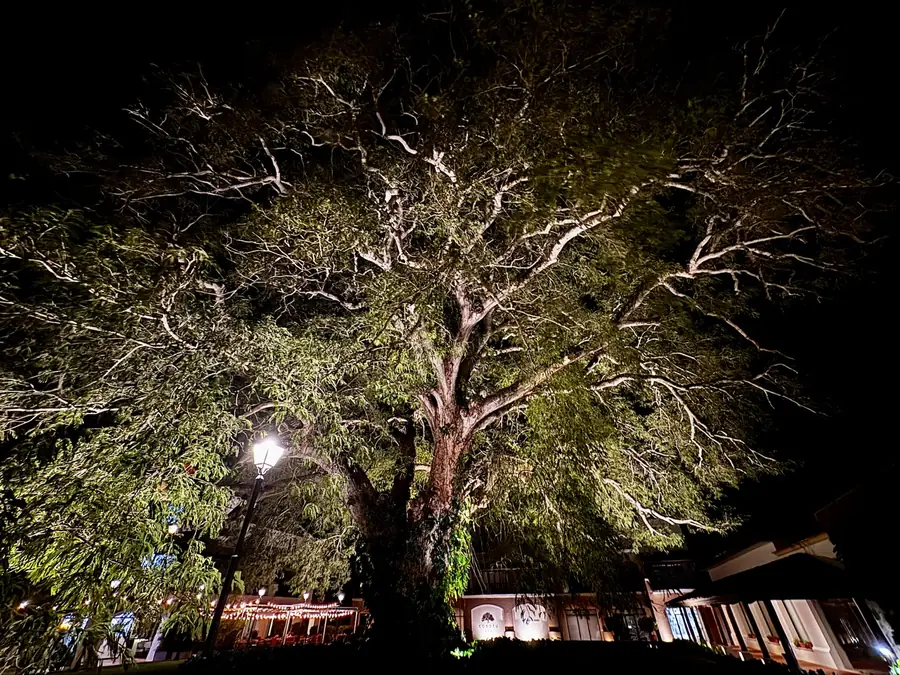
Der große Baum über der Terrasse
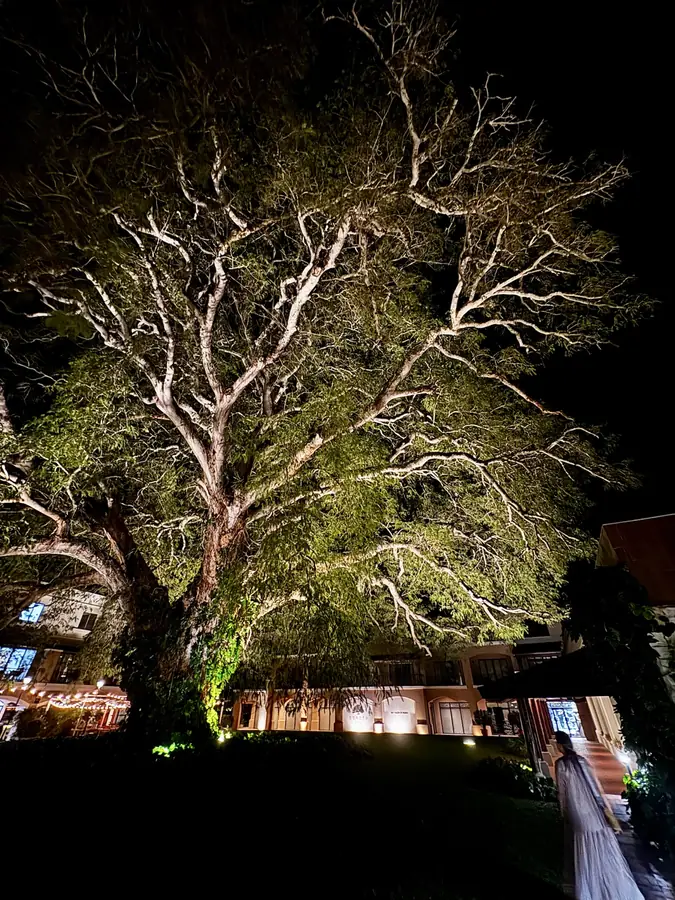
Der Baum im Scheinwerferlicht — und ganz klein jemand darunter
Sieben Stunden, ein Gastanker und der beste Kaffee der WeltSeven hours, a gas tanker and the best coffee in the world
5. – 10. August · fünf Nächte5–10 August · five nights
Die Fahrt von der Pazifikküste nach Boquete ist die längste Etappe
unserer Reise: rund sieben Stunden über die Panamericana. Sie hat uns mehr über Panama
beigebracht als manche Sehenswürdigkeit.The drive from the Pacific coast to Boquete is the longest leg of our trip: around seven hours along the Pan-American Highway. It taught us more about Panama than a good few sights did.
Auf der PanamericanaOn the Pan-American Highway
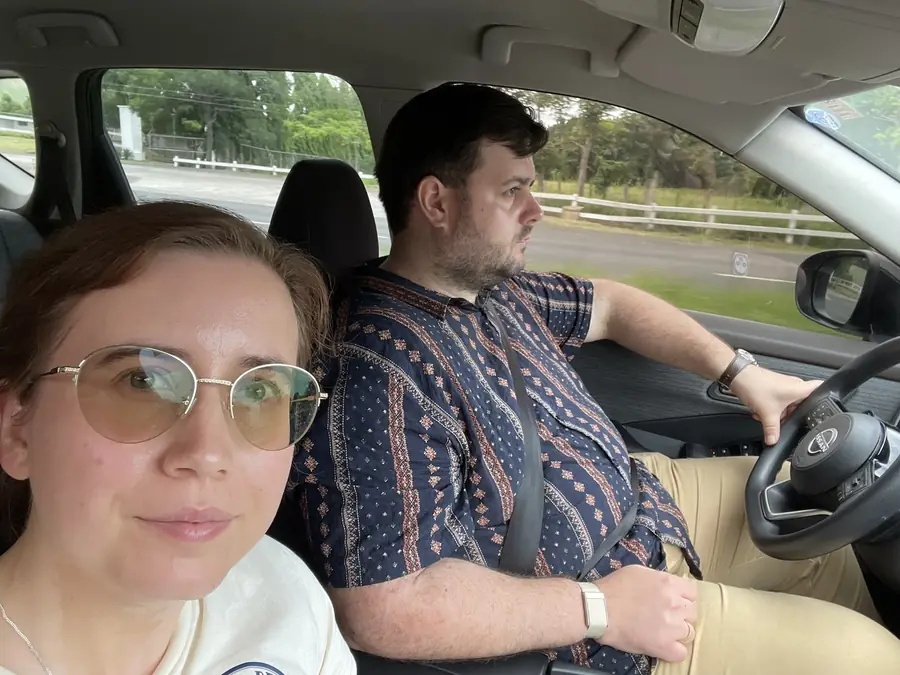
Die Panamaer sind im Alltag ausgesprochen entspannte Leute. Im Auto werden manche
allerdings ein bisschen komisch. Dazu kommen Schlaglöcher, die volle
Konzentration verlangen — man fährt hier nicht nebenbei.Panamanians are thoroughly relaxed people in everyday life. Behind the wheel some of them turn a little strange. Add potholes that demand your full attention — you don't drive here with half your mind elsewhere.
Was uns aufgefallen ist: viel Polizei, kein Militär. Panama hat seit 1990
keine Armee mehr, und man merkt es im Straßenbild. Kontrolliert wurden wir nie.Something we noticed: plenty of police, no military. Panama has had no army since 1990, and you can see it in the street. We were never stopped.
Und dann stand plötzlich alles. Ein Gastanker lag quer über der Autobahn, der
Fahrer war verletzt. Etwa eine Stunde ging nichts. Bemerkenswert war, wie es weiterging:
Die Personenwagen wurden nach und nach halb über die Unfallstelle vorbeigelotst, die
Lastwagen mussten warten. In Deutschland wäre die Strecke stundenlang komplett gesperrt
gewesen — da ist man hier ein bisschen pragmatischer.And then everything came to a halt. A gas tanker was lying across the highway and the driver was injured. Nothing moved for about an hour. What was remarkable was how it went on from there: cars were waved past the crash site one by one, half around it; the lorries had to wait. In Germany the road would have been closed completely for hours — people are a little more pragmatic here.
Statt wie geplant im Hellen kamen wir im Regen und in der Dunkelheit an.Instead of arriving in daylight as planned, we came in through rain and darkness.
Die Auffahrt, die beim ersten Mal scheiterteThe driveway we failed at first time
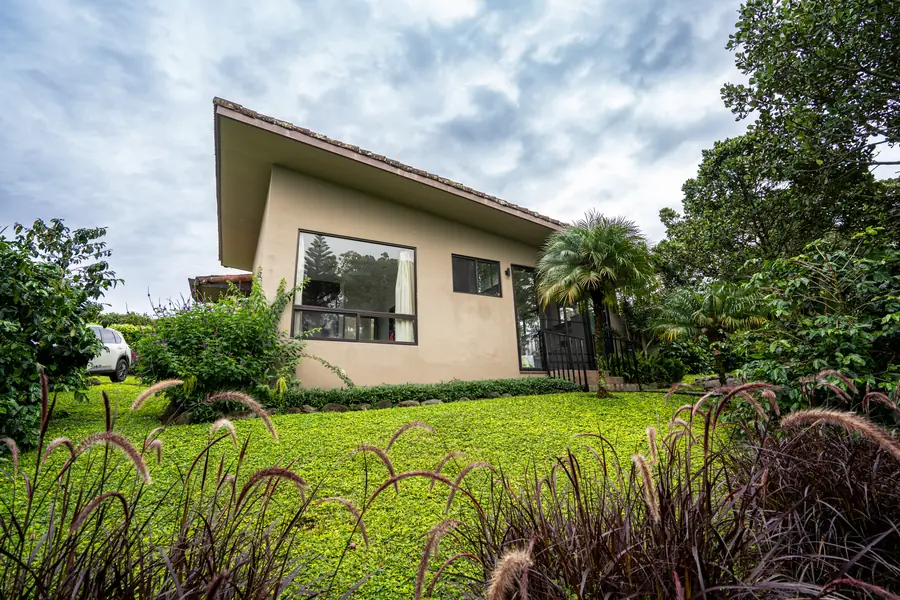
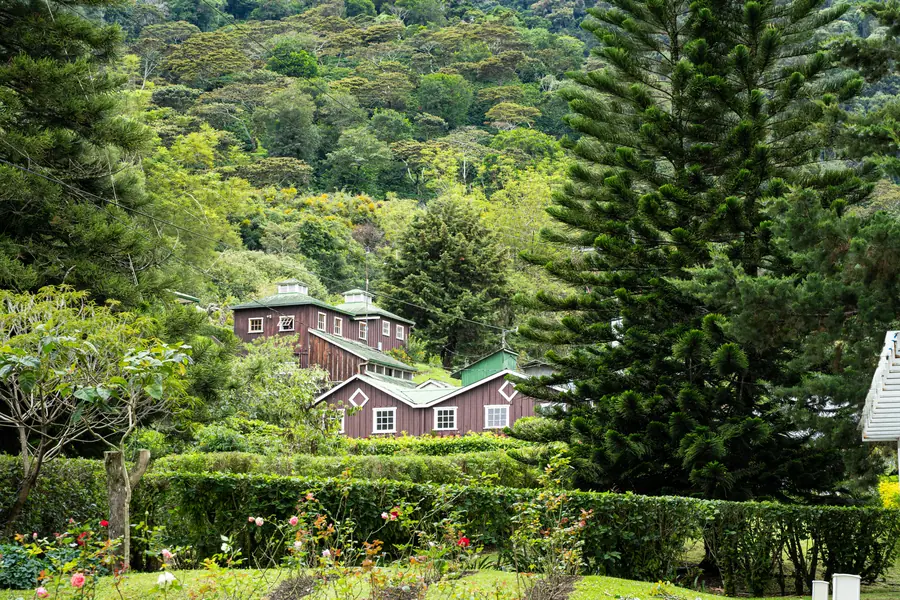
Das Estate liegt oben in den Hügeln über Boquete. Google Maps kennt nur einen groben
Punkt — für den Rest braucht man Randy, unseren Gastgeber.The estate sits up in the hills above Boquete. Google Maps only knows a rough point — for the rest you need Randy, our host.
Die Zufahrt ist steil, und an diesem Abend war sie nass und matschig. Beim ersten
Versuch blieb unser Wagen auf halber Strecke stehen — es ging schlicht nicht weiter. Wir
mussten rückwärts wieder hinunter, unten neu ansetzen und mit Anlauf hoch. Dann
hat es geklappt. Im Nachhinein weiß ich, was der Fehler war: das Zögern. Man muss
darauf vertrauen, dass einem da oben kein Gegenverkehr entgegenkommt, und durchziehen.
Charlotte war entsprechend angespannt. Am nächsten Tag, trocken und bei Tageslicht, ging
es im ersten Anlauf — und machte dann sogar richtig Spaß.The track up is steep, and that evening it was wet and muddy. On our first attempt the car stopped halfway up — it simply would not go any further. We had to reverse all the way back down, start again from the bottom and take a run at it. That worked. In hindsight I know what the mistake was: hesitating. You have to trust that nothing is coming the other way up there, and commit. Charlotte was suitably tense. The next day, dry and in daylight, we made it first time — and it was actually great fun.
Die Auffahrt bei Tageslicht. Kameras machen Steigungen flach —
in Wirklichkeit geht es deutlich steiler hinauf, als es hier wirkt. Am Ankunftsabend
war dieser Weg nass, dunkel und für uns im ersten Versuch nicht zu schaffen.The driveway in daylight. Cameras flatten gradients — in reality it climbs far more steeply than it looks here. On the evening we arrived this track was wet, dark and, at the first attempt, beyond us.
Über Randy müssen wir etwas loswerden: So zuvorkommend haben wir in unserem Leben
noch niemanden erlebt. Er kam uns im Dunkeln entgegen, lotste uns hoch, war rund um
die Uhr erreichbar. Das Frühstück wird nach unseren Wünschen frisch gekocht — die geben
wir am Vorabend durch.We have to say something about Randy: we have never in our lives met anyone this attentive. He came down to meet us in the dark, guided us up, was reachable around the clock. Breakfast is cooked fresh to order — we tell him the evening before what we would like.
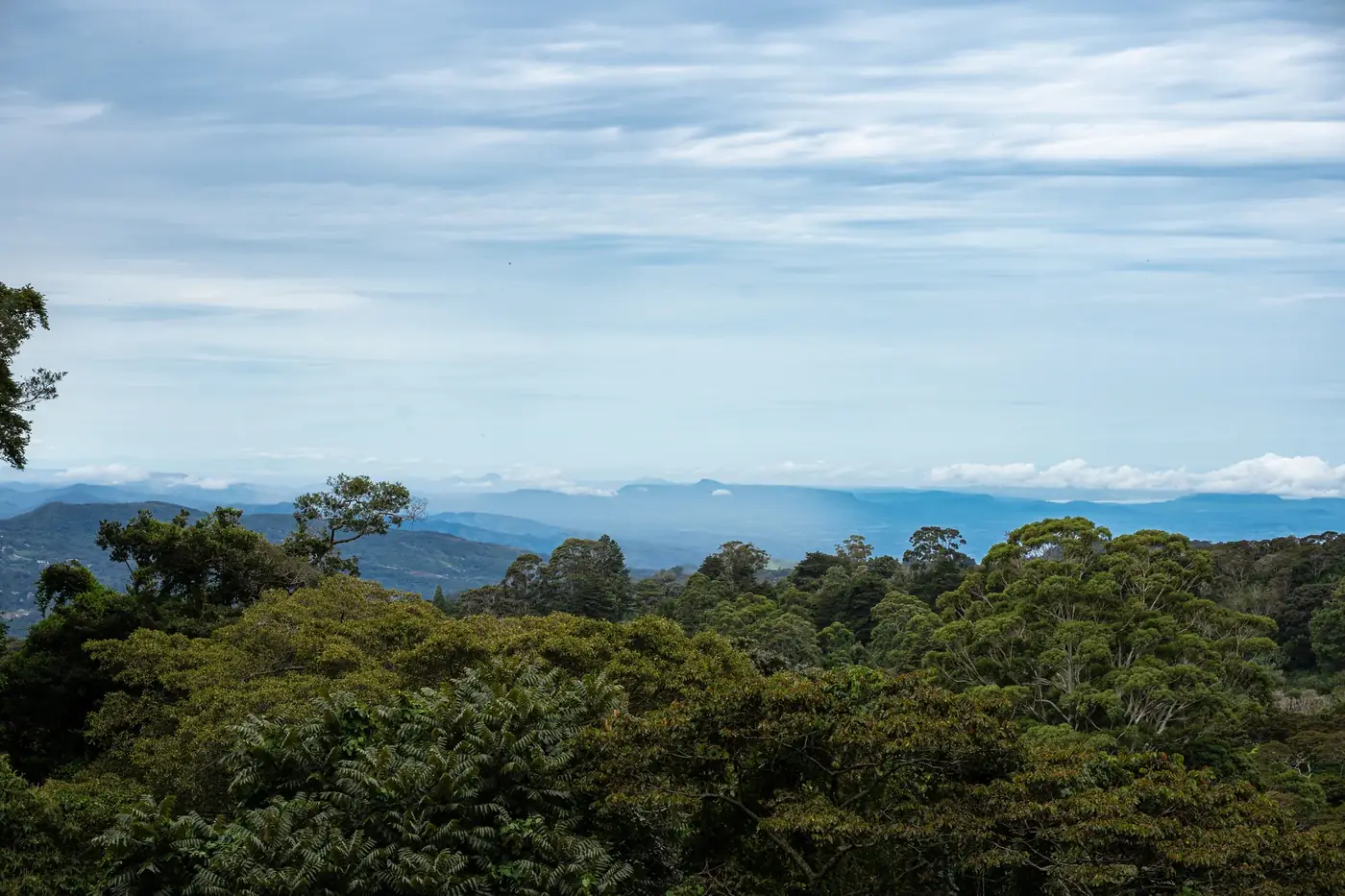
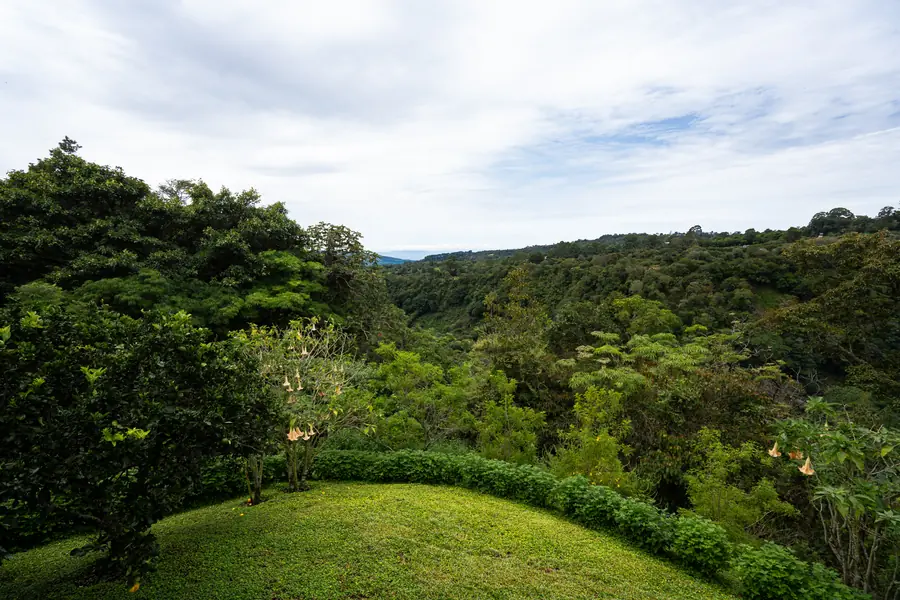
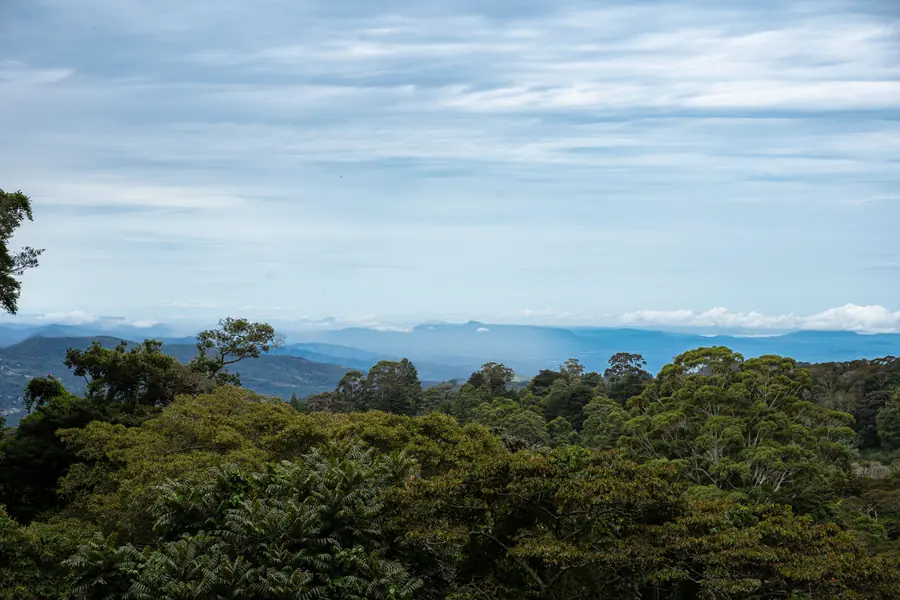
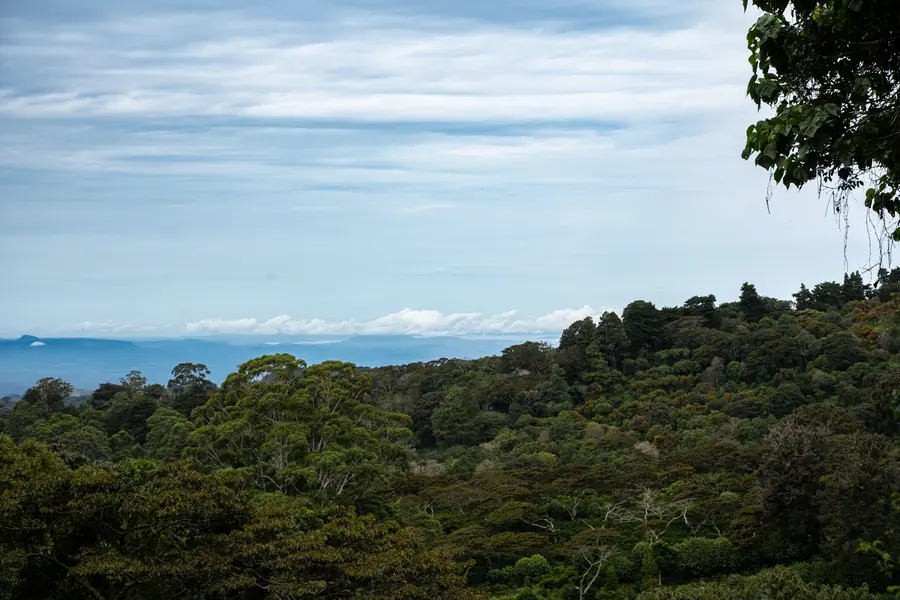
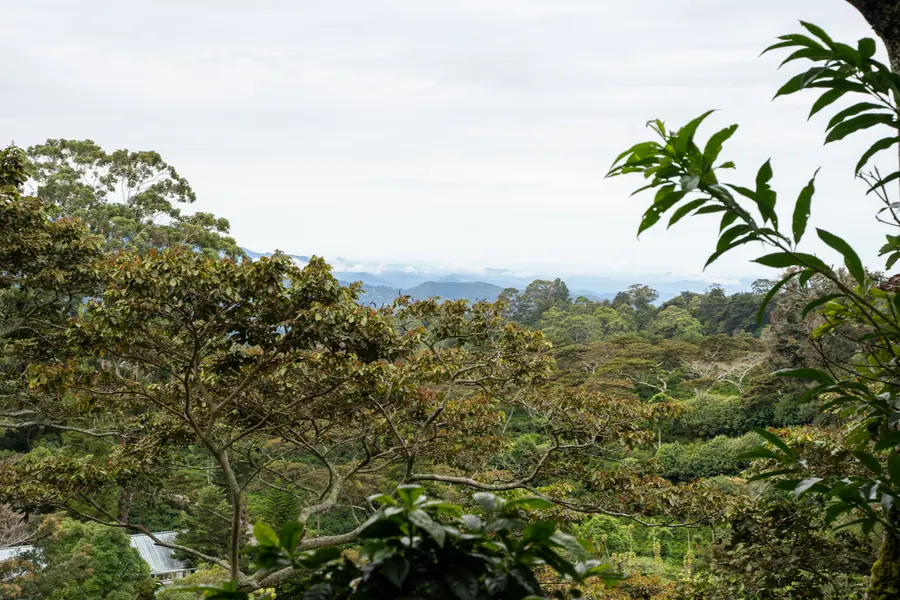
Die eigentliche Überraschung kam am nächsten Morgen. Von der Terrasse aus sieht man
über die Berge bis zum Pazifik. Ringsherum Hochland-Dschungel, und eine
Vogelvielfalt, wie wir sie noch nie gesehen haben. Nachts ist es hier stockdunkel und
kühl: Am Vortag 35 Grad am Strand, hier oben 18 bis 20. Charlotte war tagsüber
kalt. Das ist schon Wahnsinn, in den Tropen.The real surprise came the next morning. From the terrace you look out over the mountains all the way to the Pacific. Highland jungle all around, and a variety of birds we had never seen anywhere. At night it is pitch black up here and cool: 35 degrees on the beach the day before, 18 to 20 up here. Charlotte was cold during the day. That is remarkable, in the tropics.
Warum ausgerechnet hierWhy here of all places
Boquete — ein Ort, den ein Vulkan gemacht hatBoquete — a town made by a volcano
Über dem Ort steht der Volcán Barú, mit 3.475 Metern der
höchste Punkt Panamas — und kein erloschener, sondern ein ruhender Vulkan. Sein letzter
Ausbruch liegt rund fünfhundert Jahre zurück. Die Asche von damals ist der Grund, warum
hier alles wächst: Kaffee, Erdbeeren, Blumen und das Gemüse für halb Panama.Above the town stands the Volcán Barú, at 3,475 metres the highest
point in Panama — not extinct but dormant. Its last eruption was around five hundred
years ago. That ash is the reason everything grows here: coffee, strawberries, flowers
and the vegetables for half of Panama.
Das Wetter hat hier einen eigenen Namen. Bajareque heißt der
feine Sprühregen, der aus scheinbar heiterem Himmel kommt — und weil dabei meist die
Sonne scheint, gehören Regenbögen zum Alltag. Dazu kühle Nächte und ständige
Nebelfeuchte.The weather here has its own name. Bajareque
is the fine drizzle that arrives out of an apparently clear sky — and since the sun
usually keeps shining, rainbows are an everyday occurrence. Add cool nights and
constant mist.
Genau das erklärt den Kaffee. Die Geisha kam in den 1960er
Jahren aus Äthiopien hierher und galt lange als unbrauchbar: wenig Ertrag, anfällige
Pflanze. Erst 2004 stellte eine Finca in Boquete sie bei einem Wettbewerb vor — die
Jury hielt die Probe zunächst für vertauscht. Seither ist Panama-Geisha der teuerste
Kaffee der Welt.Which is exactly what explains the coffee. The
Geisha variety came here from Ethiopia in the 1960s and was long considered
useless: low yield, fragile plant. Only in 2004 did a finca in Boquete enter it in a
competition — the judges assumed the sample had been mixed up. Panama Geisha has been
the world's most expensive coffee ever since.
Gepflückt wird er überwiegend von den Ngäbe-Buglé, Panamas
größter indigener Gruppe. Zur Erntezeit kommen sie aus ihrem Autonomiegebiet ins
Hochland, oft mit der ganzen Familie. Die Frauen tragen weite, leuchtend bunte Kleider —
wer sie im Ort sieht, erkennt sie sofort.It is picked largely by
the Ngäbe-Buglé, Panama's largest indigenous group. At harvest time they come up
from their autonomous territory, often as whole families. The women wear wide, brightly
coloured dresses — unmistakable once you have seen them.
Und dann sind da noch die Zugezogenen. Anfang der 2000er führten
amerikanische Ruhestandsmagazine Boquete als eines der besten Ziele weltweit — mildes
Klima, niedrige Kosten, gute Ärzte in der Hauptstadt. Seither ist eine große
nordamerikanische Gemeinde entstanden. Das merkt man an englischen Schildern, an
Craft-Beer-Bars und an Immobilienpreisen über dem Landesschnitt.And then there are the newcomers. In the early 2000s American retirement
magazines listed Boquete among the best places in the world — mild climate, low cost of
living, good doctors in the capital. A large North American community has grown up
since. You notice it in the English signage, the craft beer bars, and property prices
above the national average.
Die KaffeetourThe coffee tour
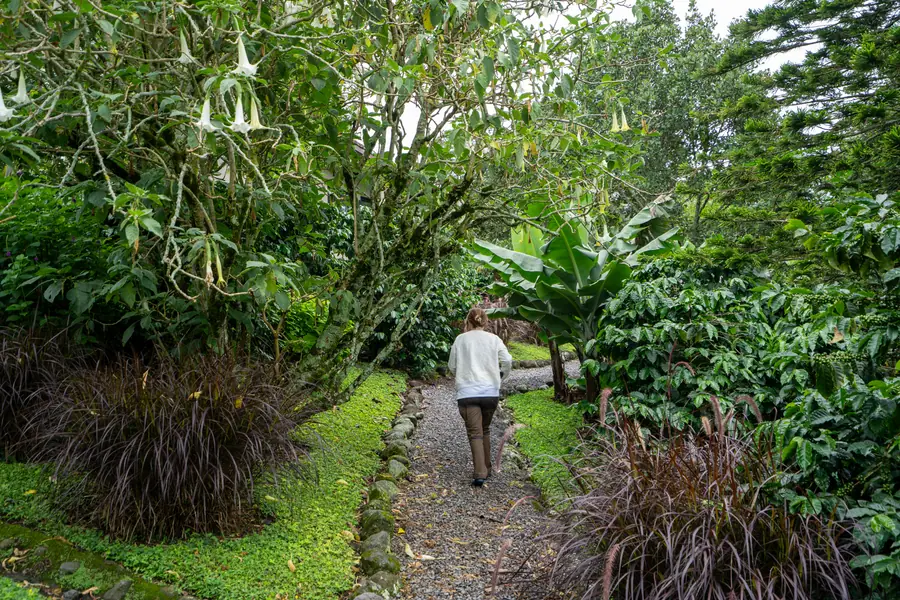
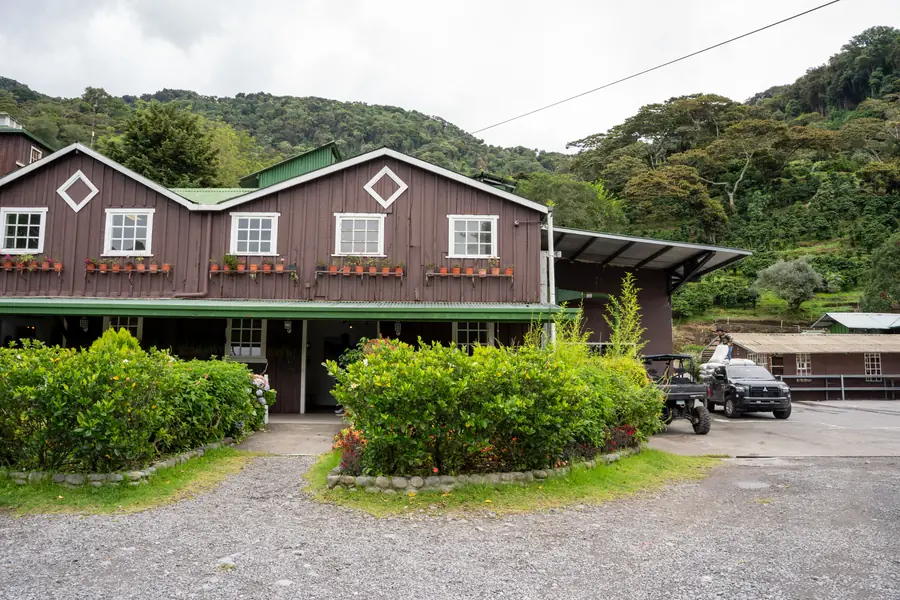
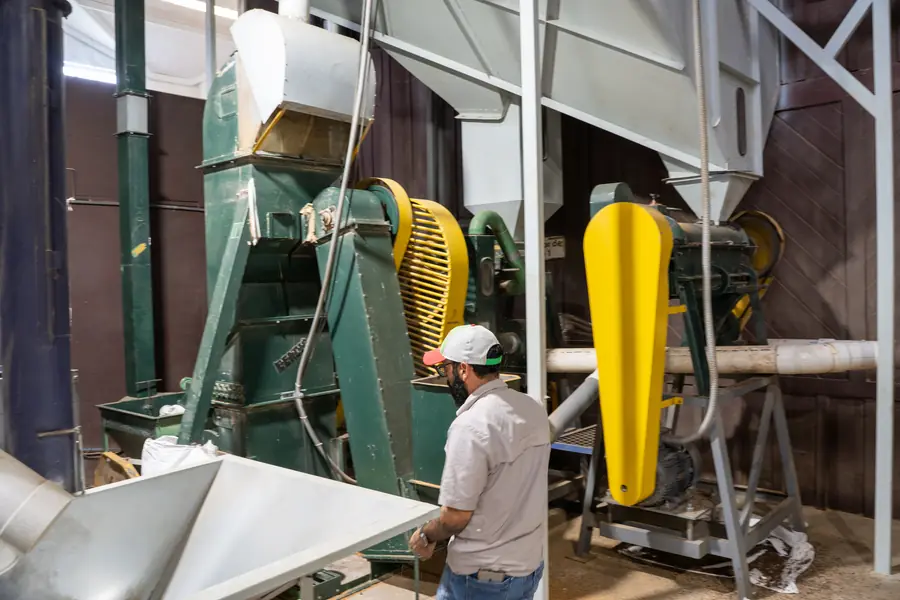
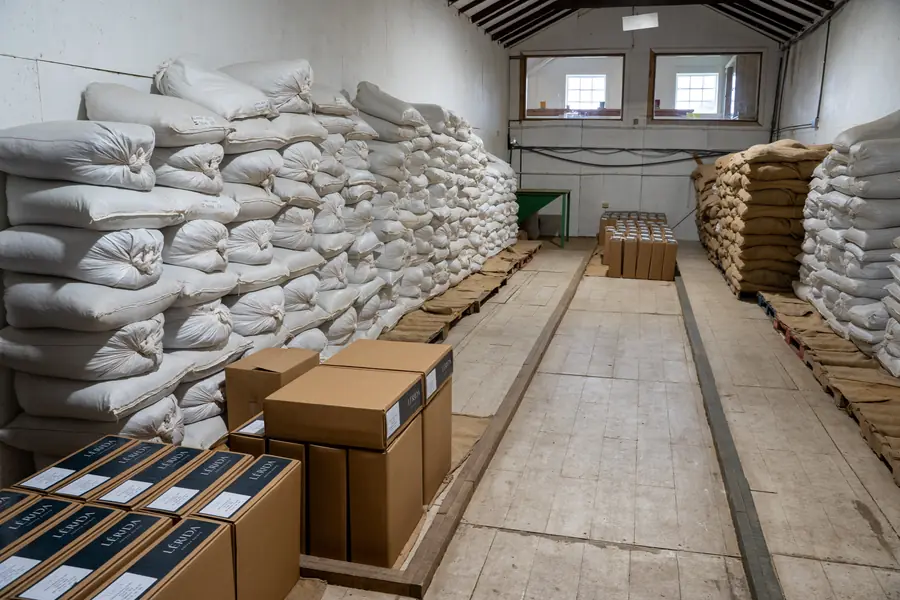
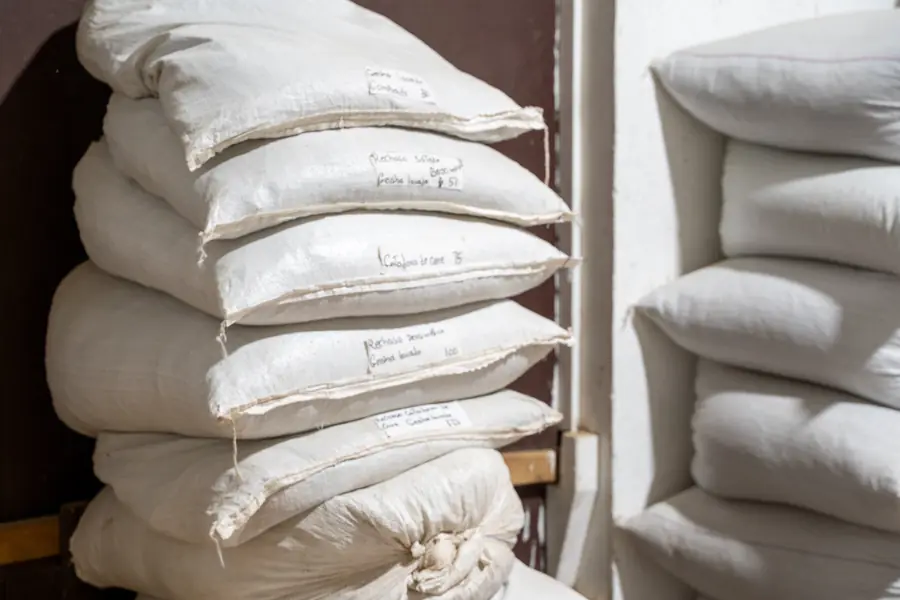
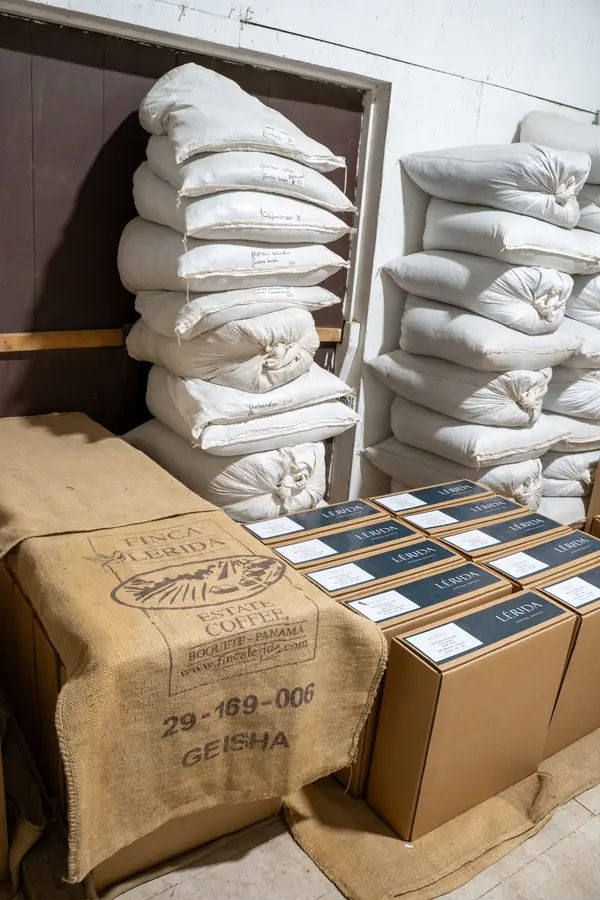
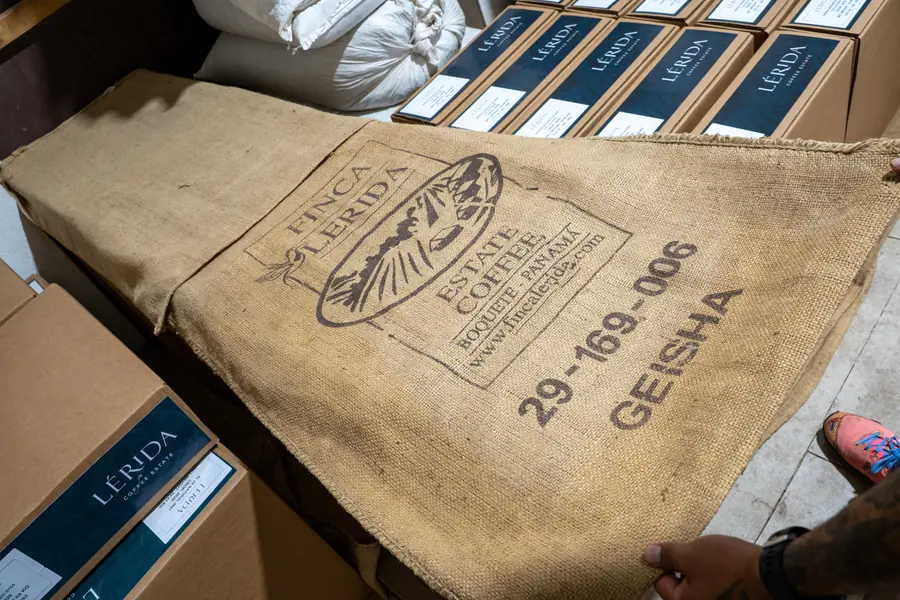
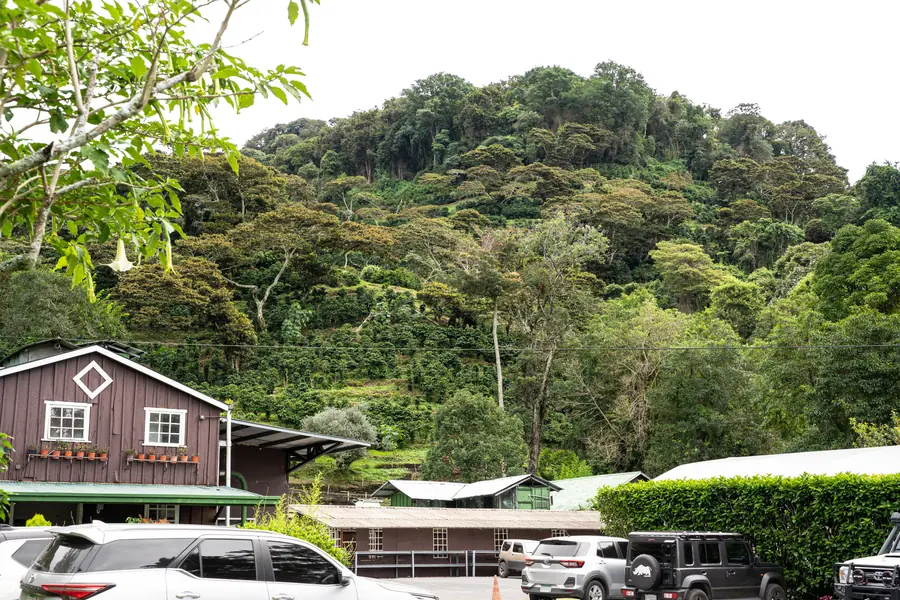
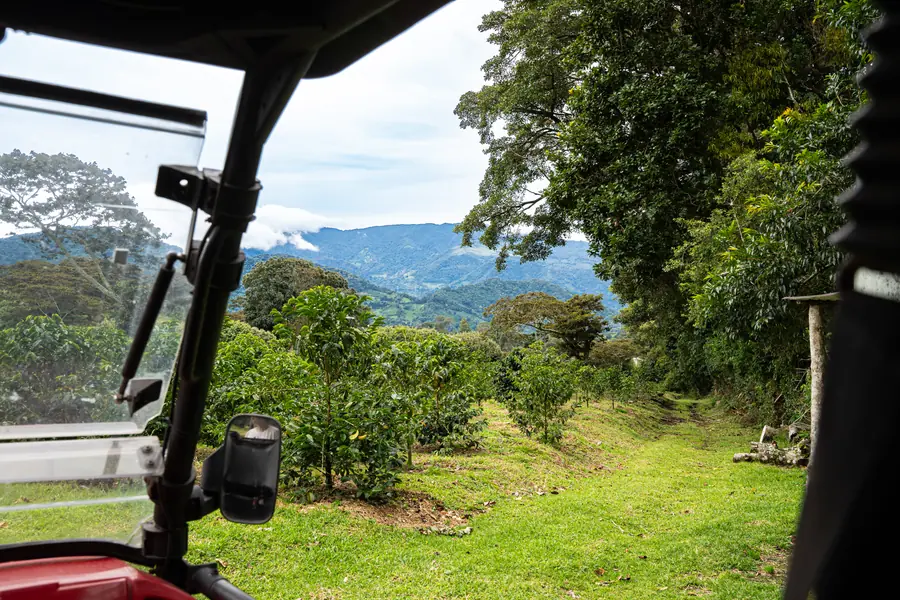
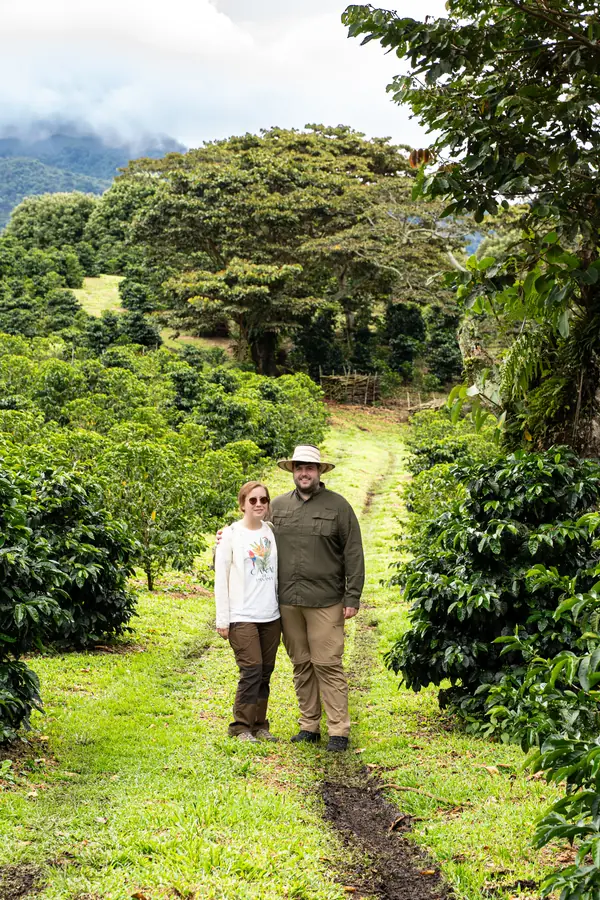
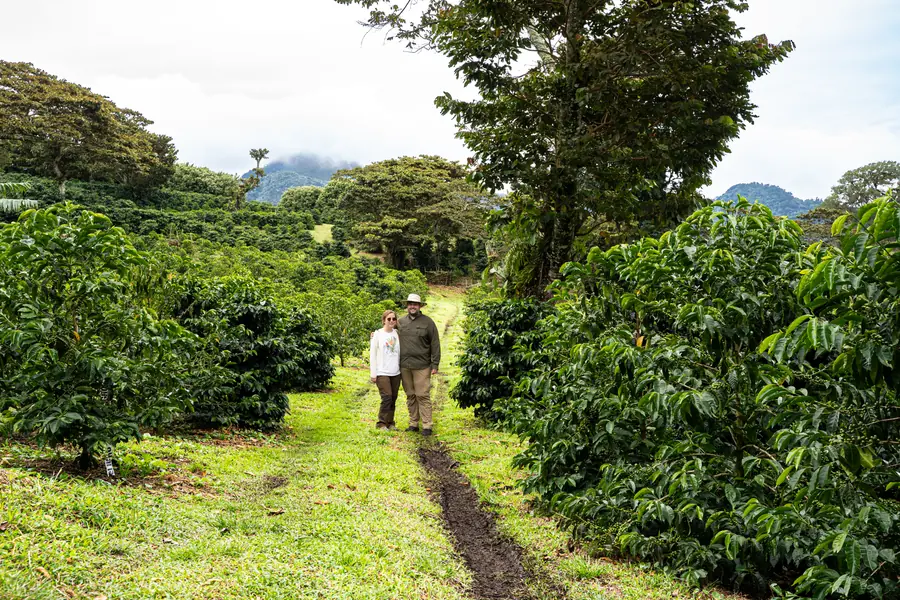
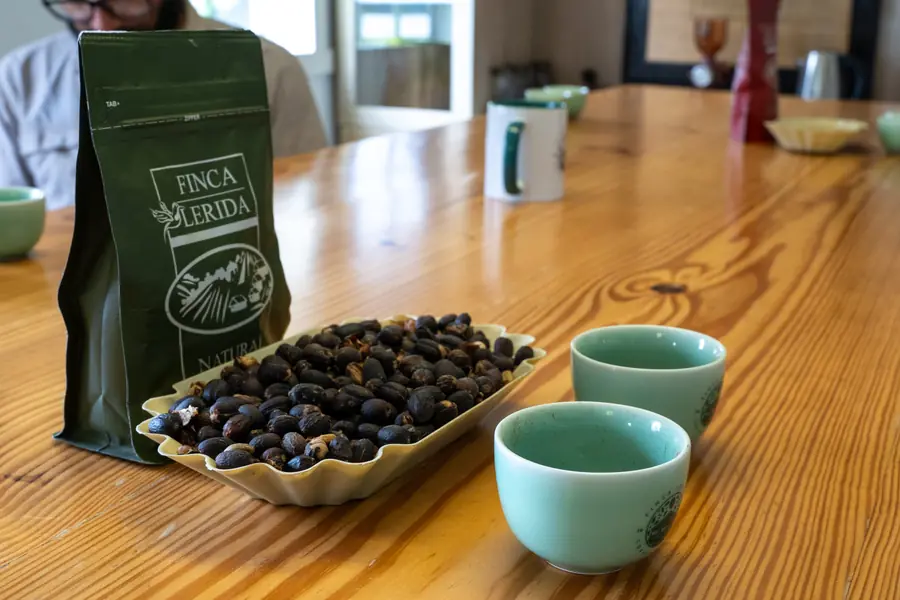
Fünf Minuten entfernt liegt die Finca Lérida, eine der geschichtsträchtigsten
Kaffeefincas des Landes. Fünfzig Hektar, über hundert Saisonarbeiter zur Erntezeit. Unser
Guide war César — studierter Ornithologe, was auf einer Kaffeefarm sinnvoller ist,
als es zunächst klingt.Five minutes away lies Finca Lérida, one of the most storied coffee estates in the country. Fifty hectares, more than a hundred seasonal workers at harvest time. Our guide was César — a trained ornithologist, which makes more sense on a coffee farm than it first sounds.
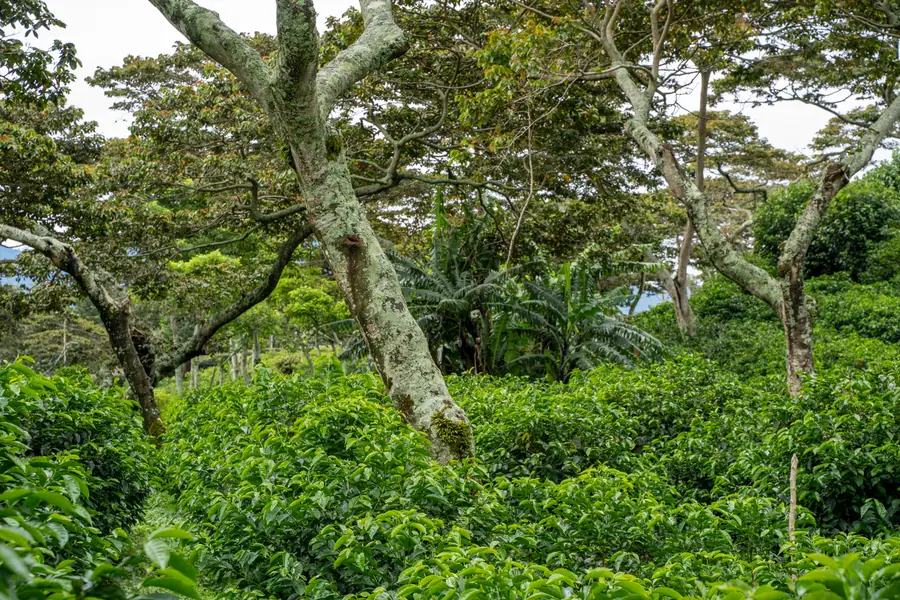
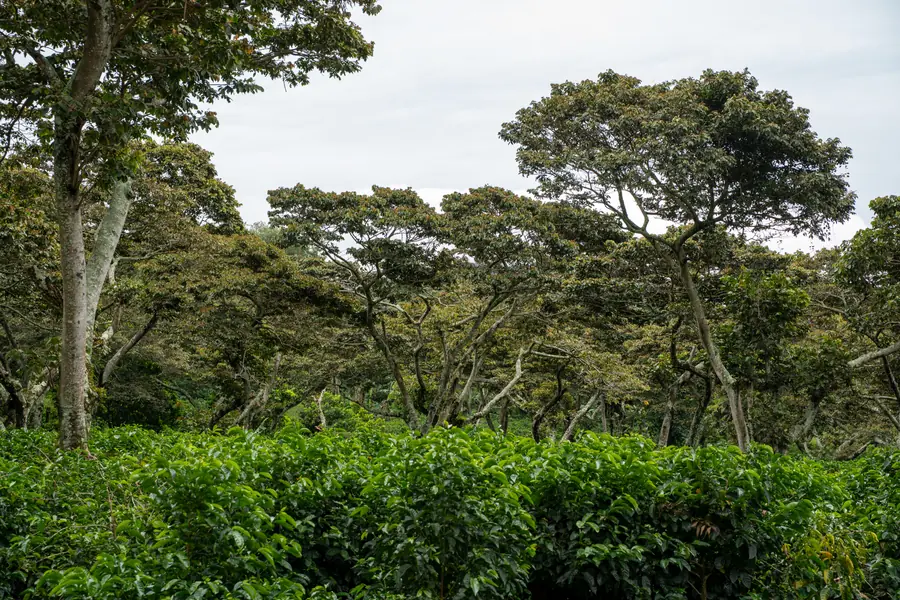
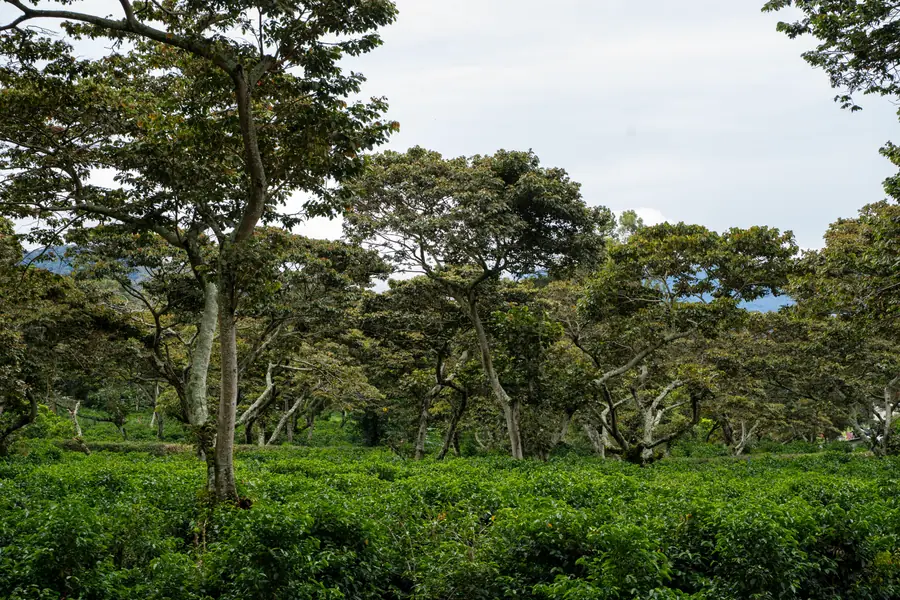
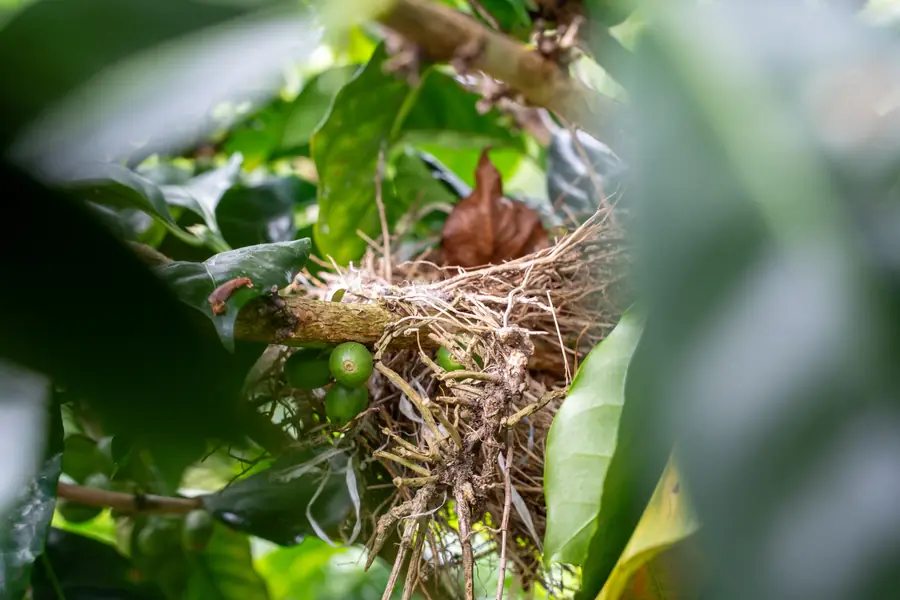
Denn hier wächst keine Monokultur. Zwischen den Kaffeesträuchern stehen
Schattenbäume, und es wurden gezielt Vögel angesiedelt, die Schädlinge fressen.
Das Ganze reguliert außerdem das Kleinklima. Statt Pestiziden arbeitet man mit einem
System, das sich weitgehend selbst im Gleichgewicht hält. César hat mit uns nebenbei
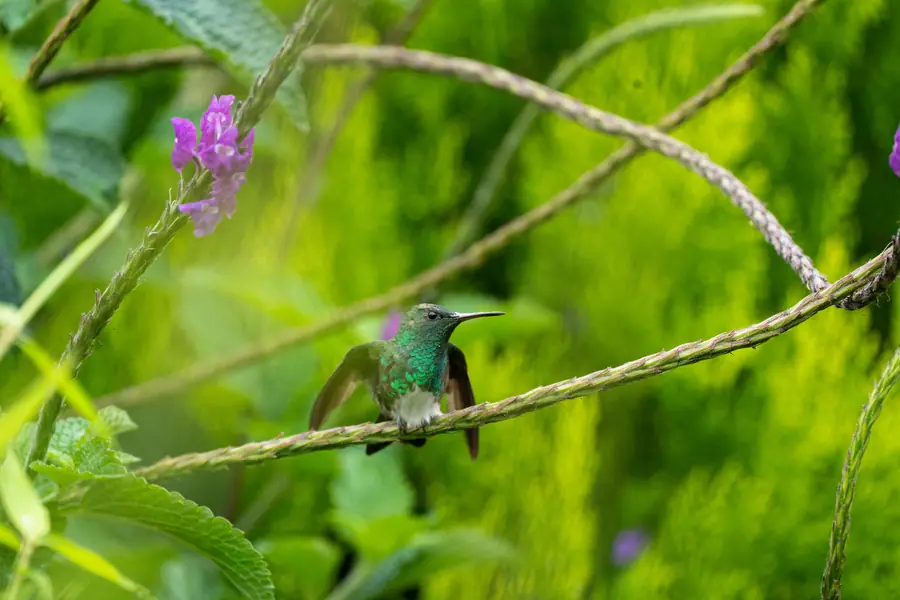
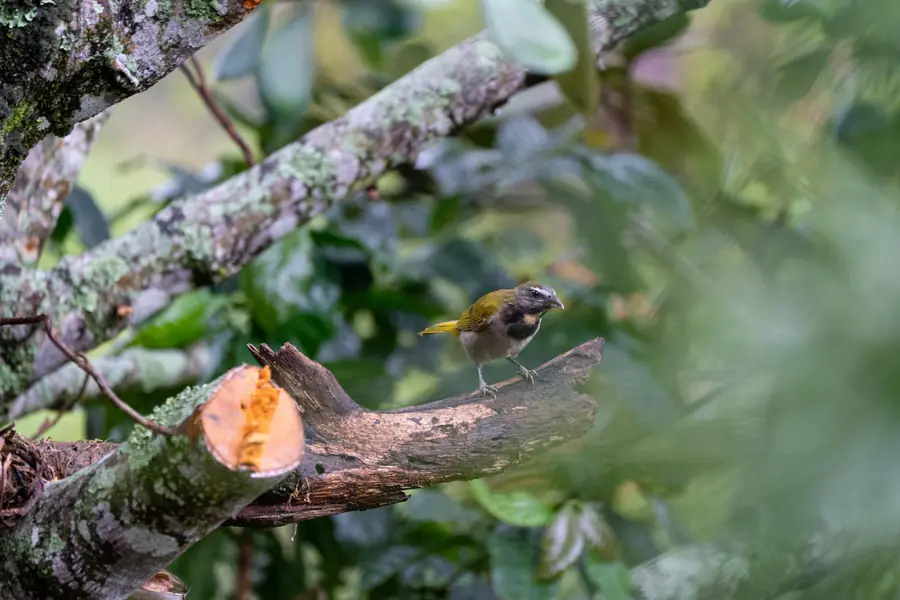
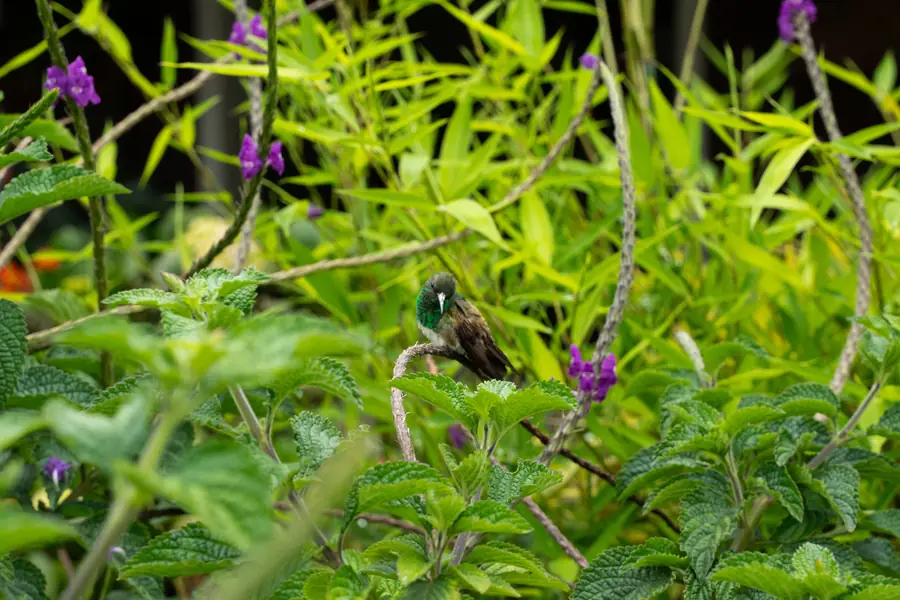
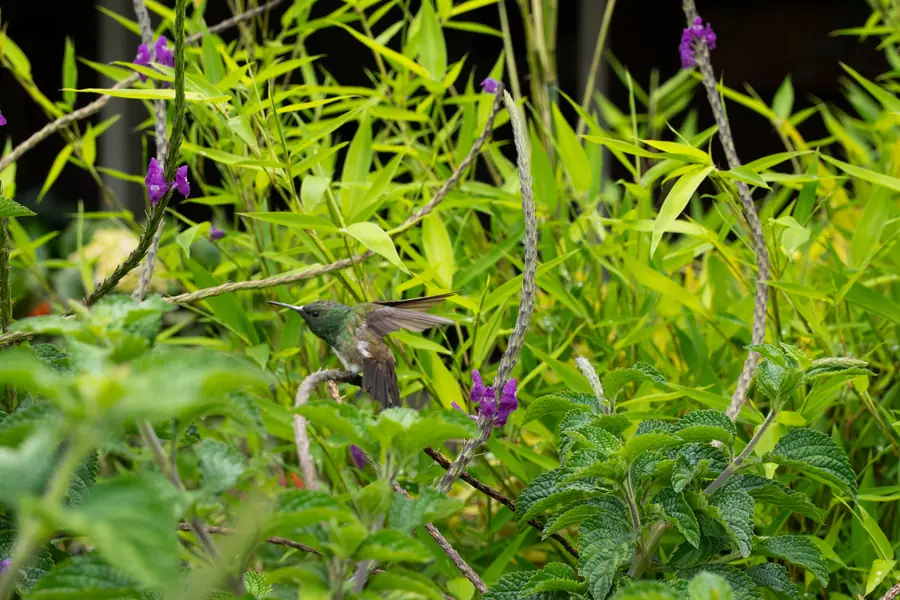
Kolibris fotografiert.Because nothing here grows as a monoculture. Shade trees stand between the coffee shrubs, and birds that eat the pests have been deliberately settled. The whole thing also regulates the microclimate. Instead of pesticides they work with a system that largely keeps itself in balance. César photographed hummingbirds with us along the way.
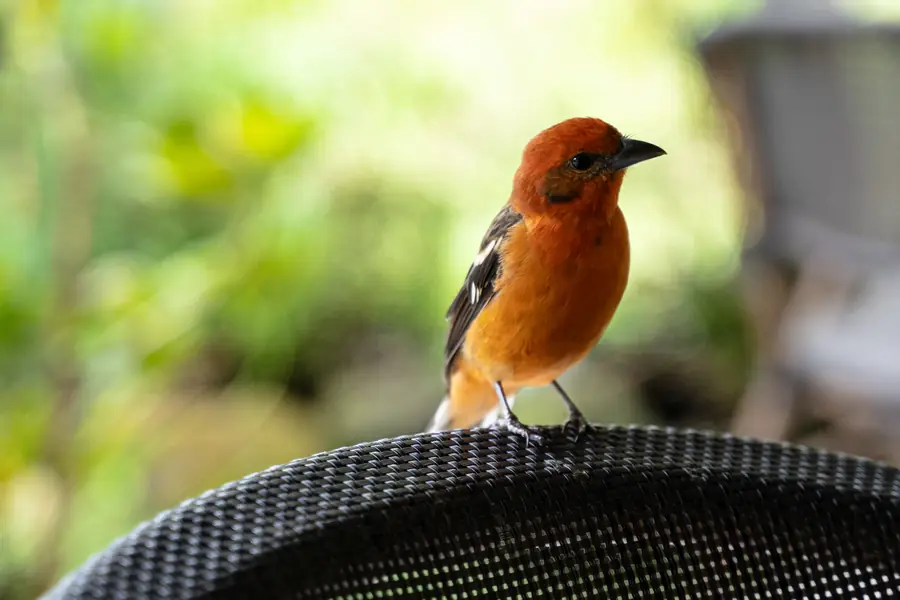
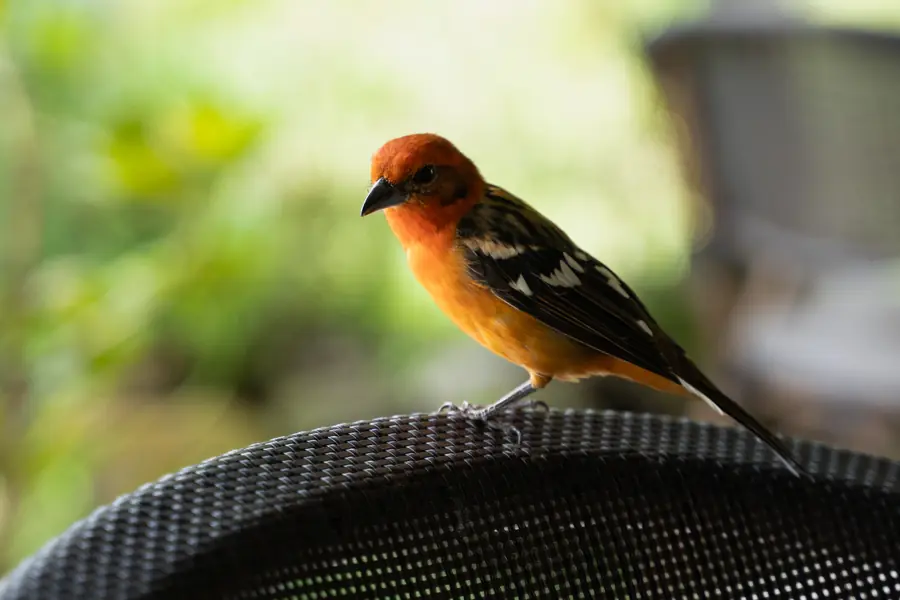
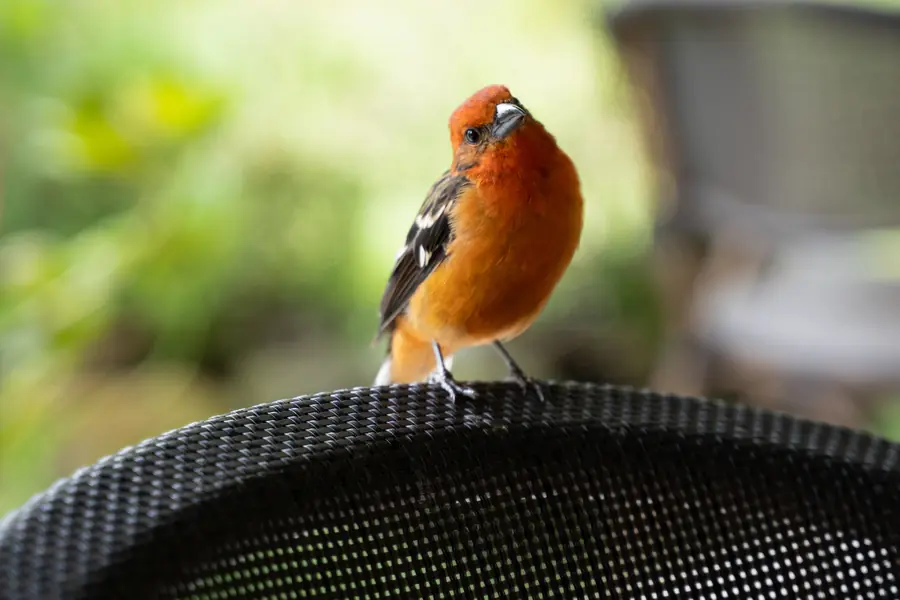
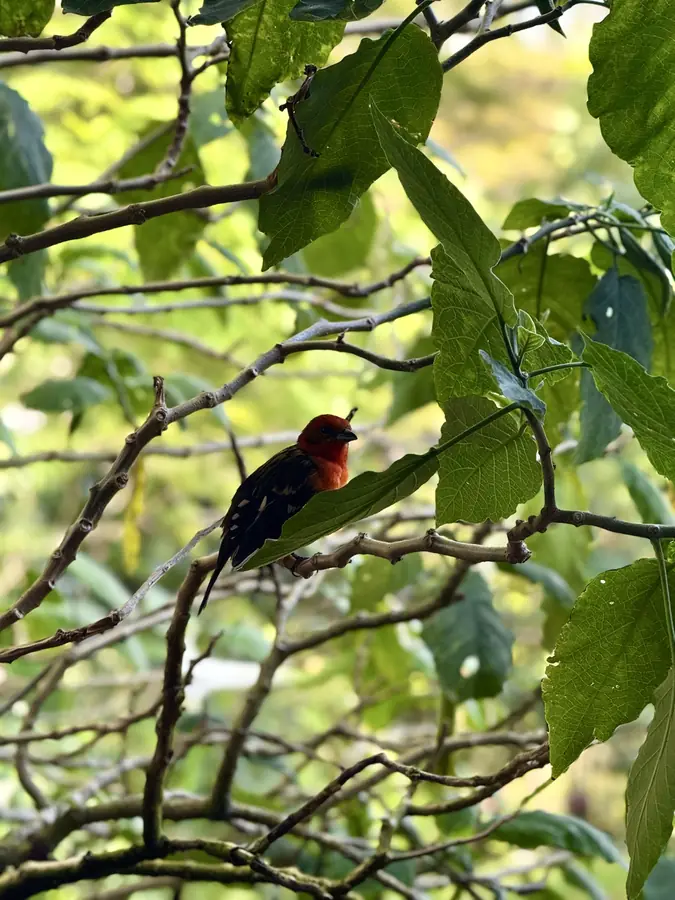
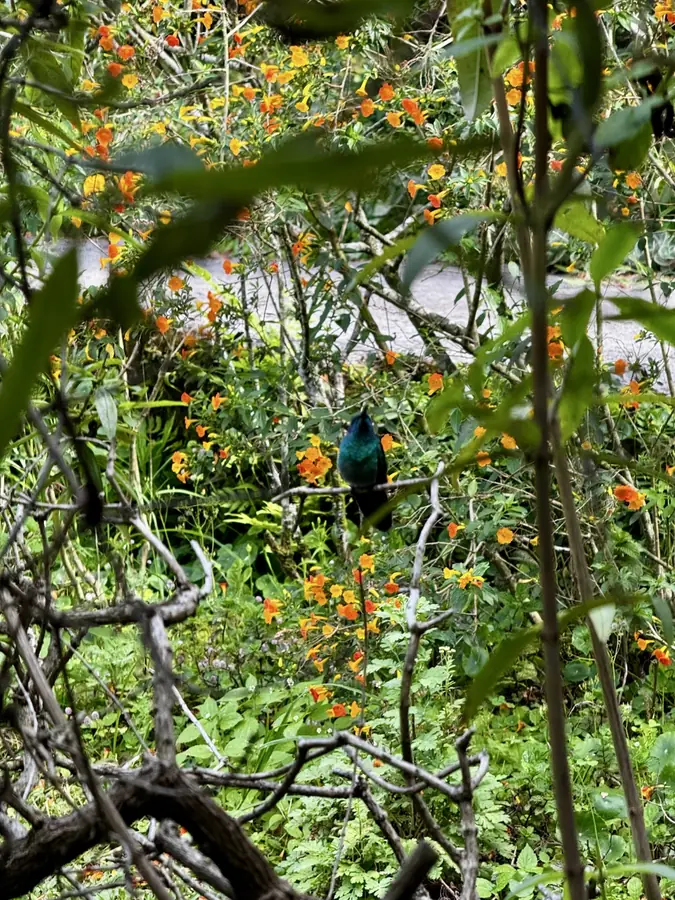
Nebenbei-Ausbeute einer Kaffeetour. César kennt die Vögel hier
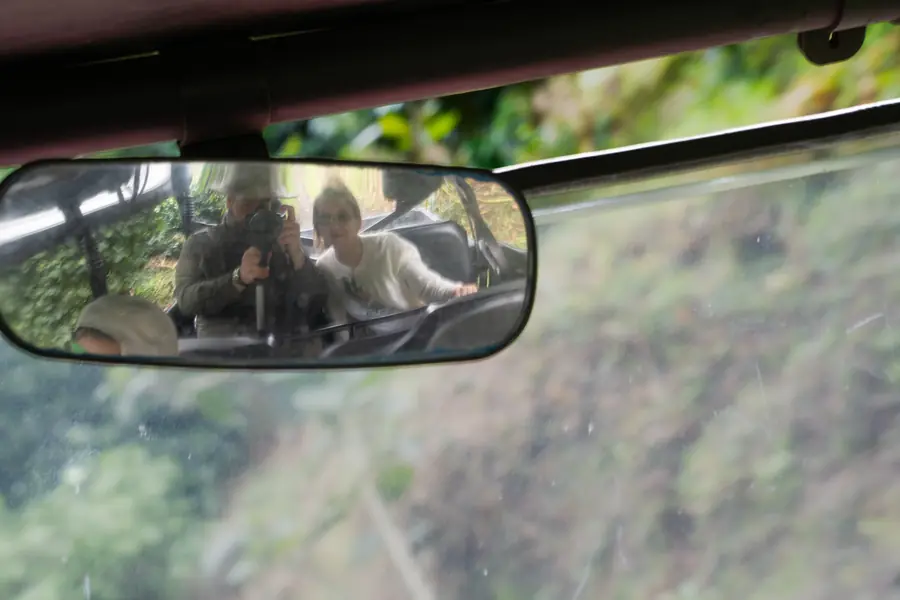
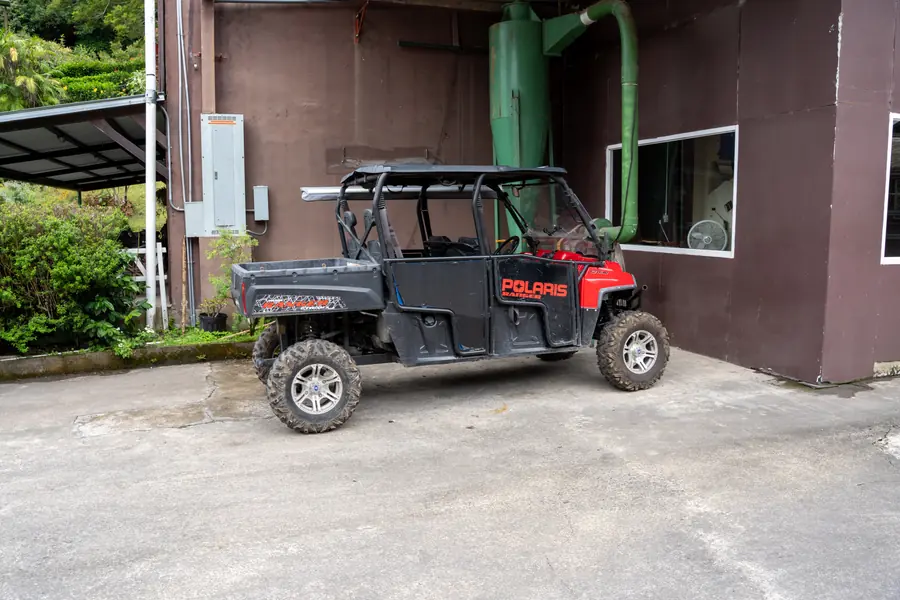
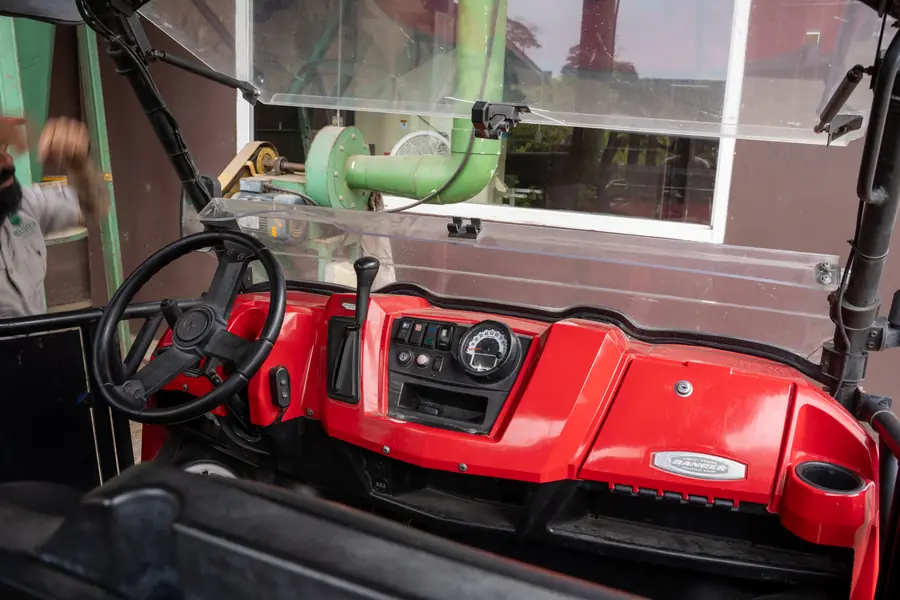
beim Namen — er hat Ornithologie studiert.The side catch of a coffee tour. César knows the birds here by name — he studied ornithology.Über die Finca geht es mit dem Geländewagen.
Fünfzig Hektar laufen sich nicht nebenbei ab — und im Rückspiegel sieht man, wer
gerade fotografiert.You cross the finca by buggy.
Fifty hectares are not something you walk — and the rear-view mirror shows who is
doing the photographing.
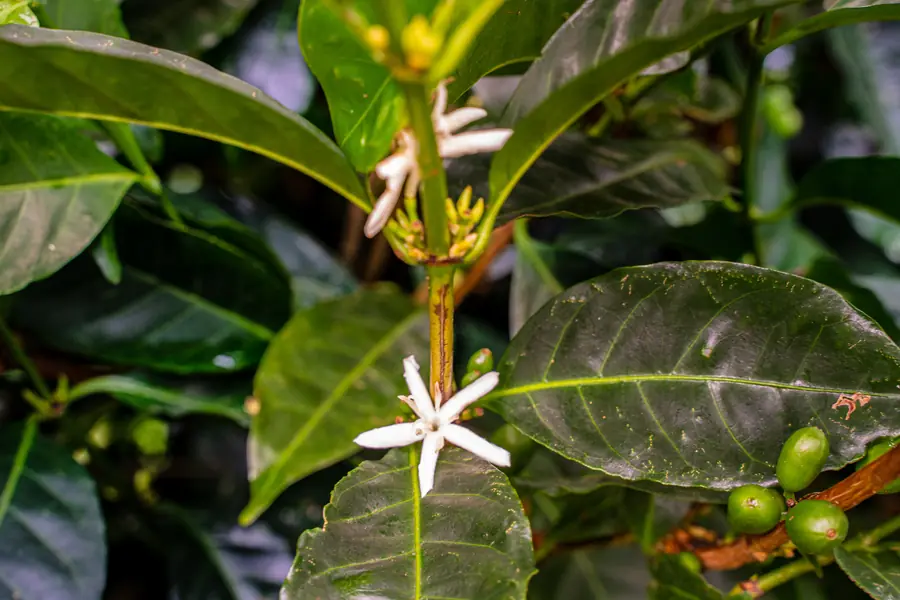
Ein Detail, das wir nicht erwartet hatten: Die Kaffeeblüte riecht intensiv nach
Jasmintee. Nicht entfernt ähnlich — man steht davor und denkt, jemand hätte eine
Kanne aufgegossen. Die weißen Blüten halten nur wenige Tage, dann fällt alles ab, und
aus jeder Blüte wird eine Kirsche.One detail we had not expected: coffee blossom smells intensely of jasmine tea. Not vaguely similar — you stand in front of it convinced someone has just brewed a pot. The white flowers last only a few days, then everything drops, and every blossom turns into a cherry.
Die Blüte. Weiß, sternförmig, und der Duft geht unverkennbar in
Richtung Jasmintee. Nach wenigen Tagen ist sie ab — und an ihrer Stelle wächst die
Kirsche heran.The blossom. White, star-shaped, and the scent goes unmistakably towards jasmine tea. After a few days it drops — and the cherry grows in its place.
Wie Kaffee entstehtHow coffee is made
Vom Strauch in die Tasse — und warum Panama besonders istFrom the shrub to the cup — and why Panama is special
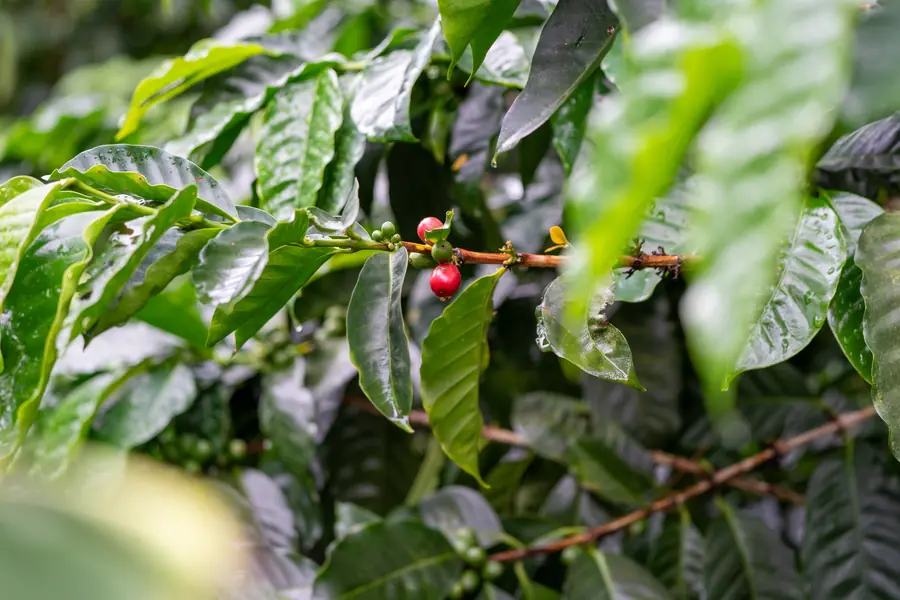
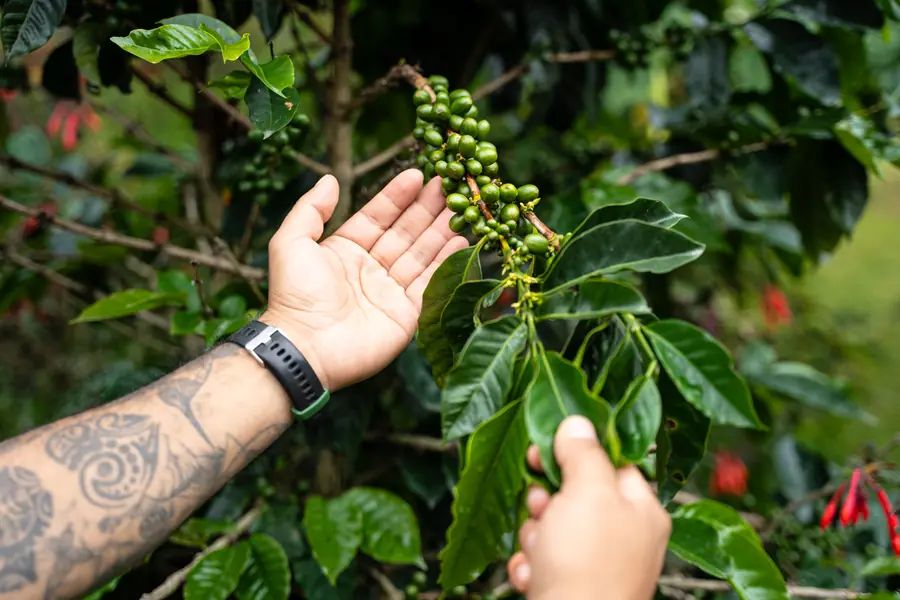
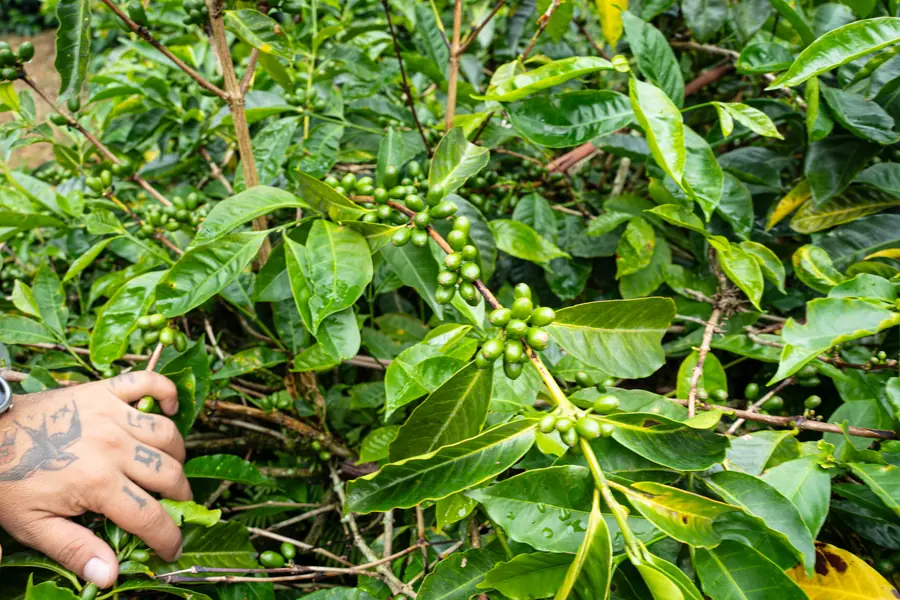
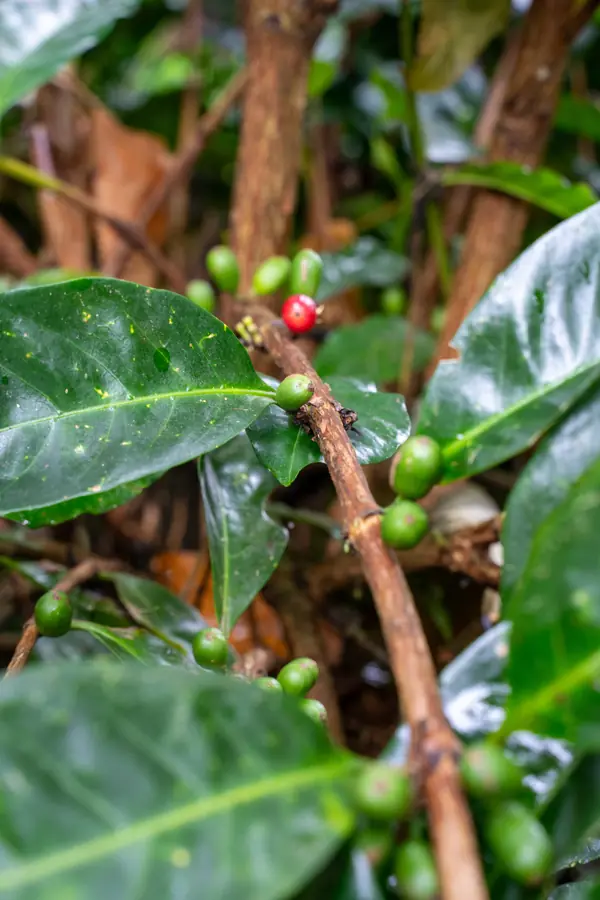
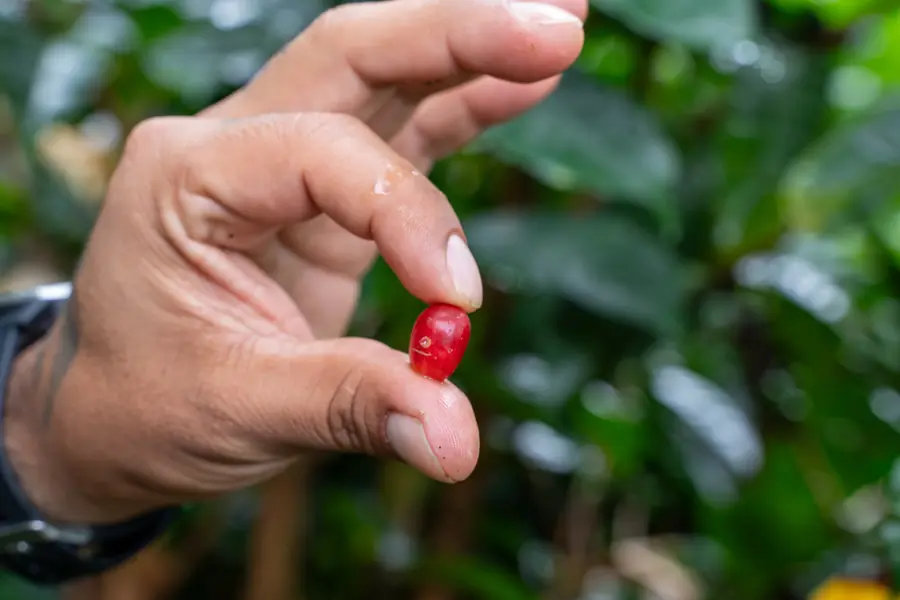
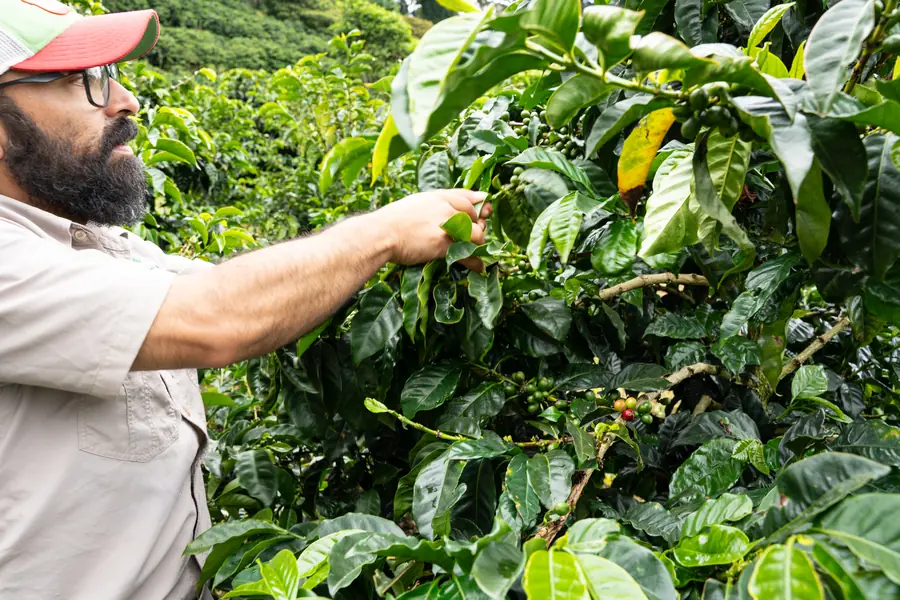
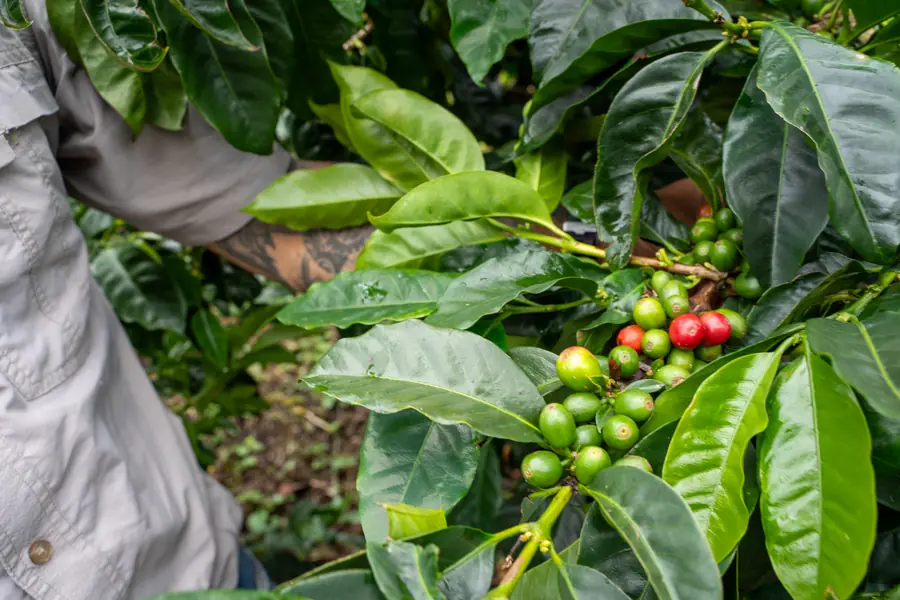
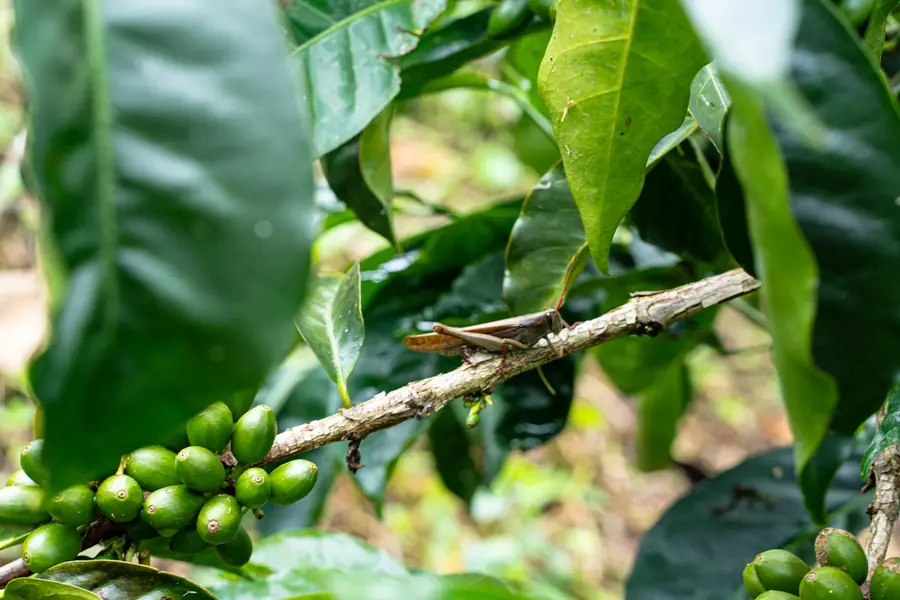
Kaffee wächst an Sträuchern, die in der Natur mehrere Meter hoch werden; auf
Plantagen hält man sie auf Erntehöhe. Nach der Blüte reifen die Kaffeekirschen
heran — grün, dann gelb, schließlich tiefrot. In jeder Kirsche stecken zwei Bohnen.
Weil die Früchte nicht gleichzeitig reifen, wird bis heute von Hand gepflückt,
in mehreren Durchgängen über die Erntemonate.Coffee grows on shrubs that reach several metres in the wild; on plantations they are kept at picking height. After flowering, the coffee cherries ripen — green, then yellow, finally deep red. Each cherry holds two beans. Because the fruit does not ripen all at once, picking is still done by hand, in several passes across the harvest months.
Was danach passiert, entscheidet über den Geschmack mehr als die Sorte. Bei der
gewaschenen Aufbereitung wird das Fruchtfleisch sofort entfernt und die Bohne
fermentiert im Wasser — das ergibt den klaren, säurebetonten Kaffee, den die meisten
kennen. Bei der natürlichen Aufbereitung trocknet die ganze Kirsche in der
Sonne, das Fruchtfleisch gibt Süße und Beerennoten ab. Dazwischen liegen Verfahren
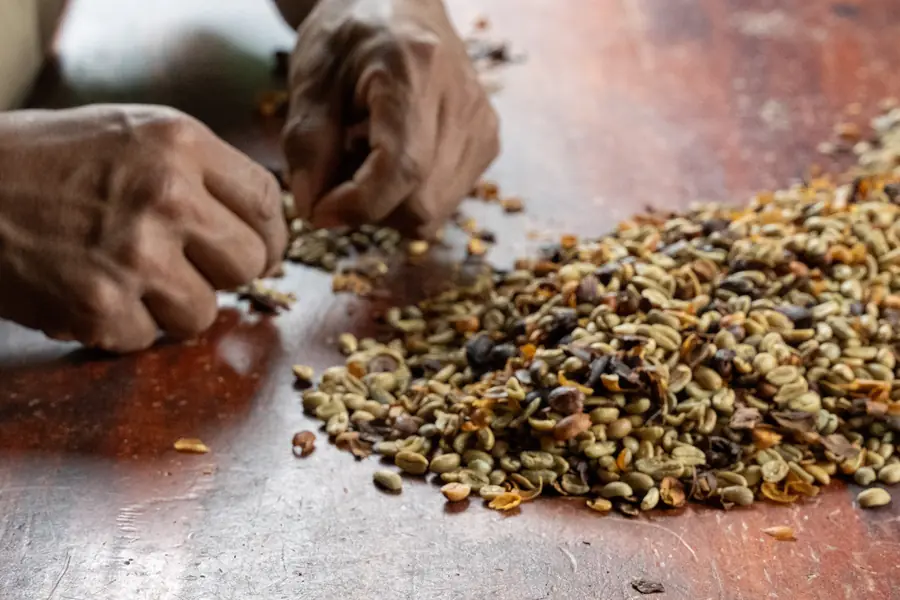
wie Honey oder Anaerobic. Erst danach kommt die Röstung.What happens next decides the flavour more than the variety does. In the washed process the pulp is removed straight away and the bean ferments in water — that gives the clear, acidity-forward coffee most people know. In the natural process the whole cherry dries in the sun, and the pulp lends sweetness and berry notes. In between sit methods such as honey or anaerobic. Only then comes the roast.
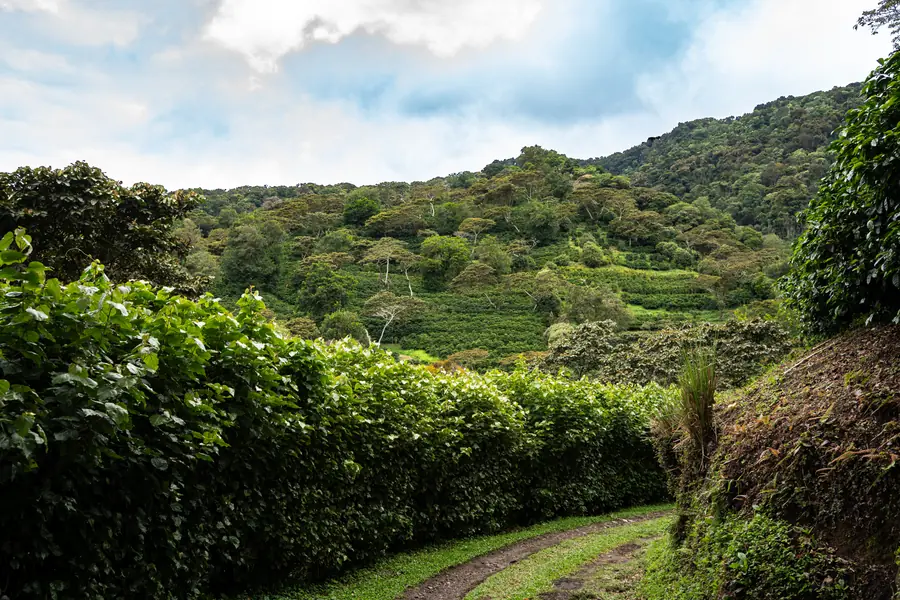
Panamas Besonderheit ist die Höhe. Rund um den Vulkan Barú liegen die
Fincas auf 1.200 bis über 1.800 Metern. Je höher und kühler, desto langsamer reift
die Kirsche — und desto komplexer wird die Bohne. Dazu kommen zwei Windsysteme, die
sich hier treffen, und vulkanische Böden.Panama's particular advantage is altitude. Around the Barú volcano the fincas sit between 1,200 and over 1,800 metres. The higher and cooler it is, the more slowly the cherry ripens — and the more complex the bean becomes. Add two wind systems meeting here, and volcanic soils.
Berühmt wurde das Land durch eine Sorte, die lange als unbrauchbar galt: die
Geisha, ursprünglich aus Äthiopien. 2004 gewann sie überraschend einen
Wettbewerb und gilt seither als teuerster Kaffee der Welt — Spitzenlose werden für
mehrere tausend Dollar pro Pfund versteigert.The country made its name with a variety long written off as useless: Geisha, originally from Ethiopia. In 2004 it unexpectedly won a competition and has been considered the most expensive coffee in the world ever since — top lots are auctioned for several thousand dollars a pound.
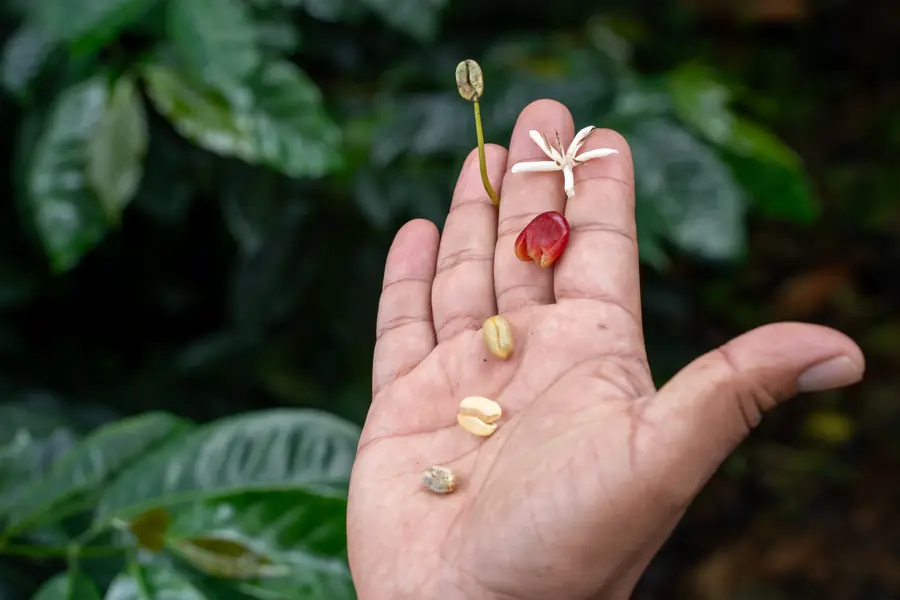
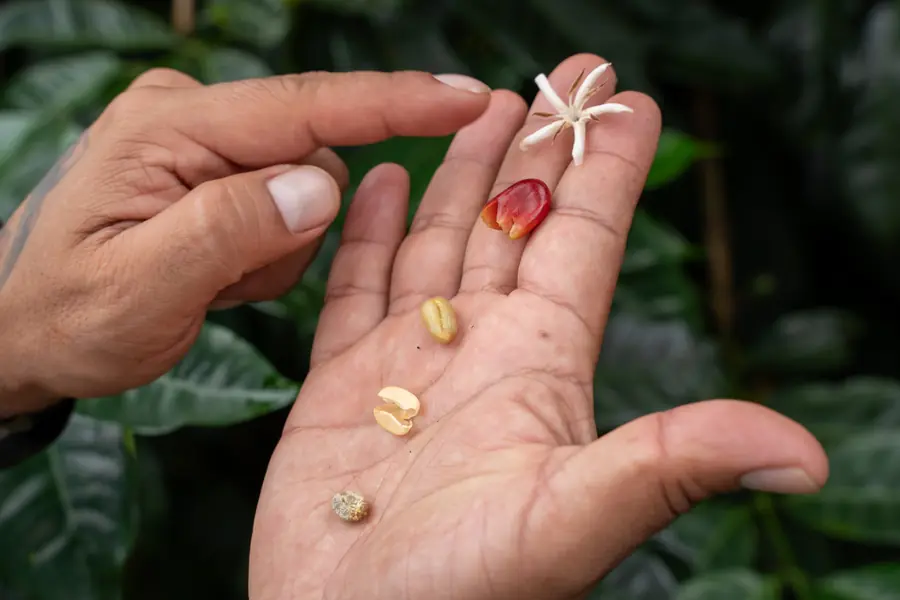
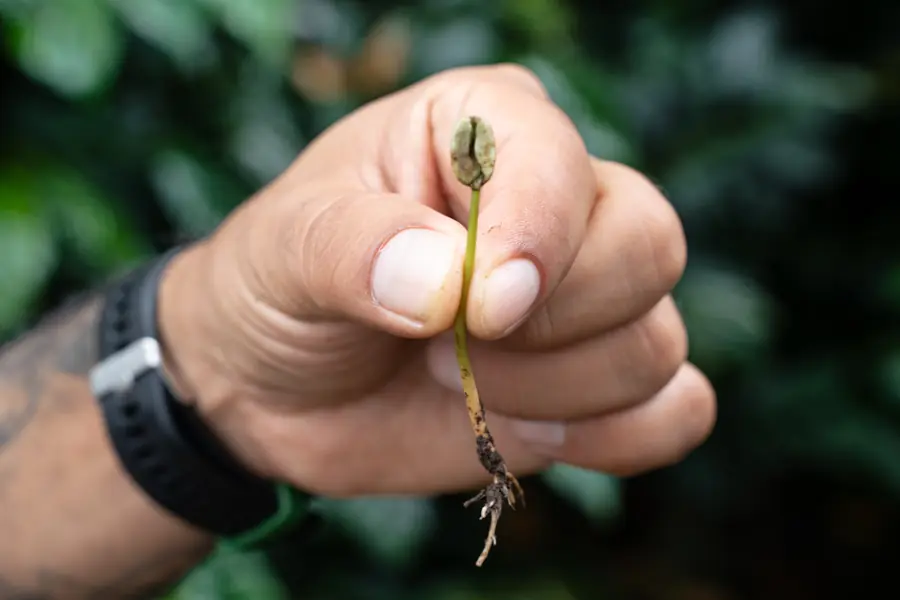
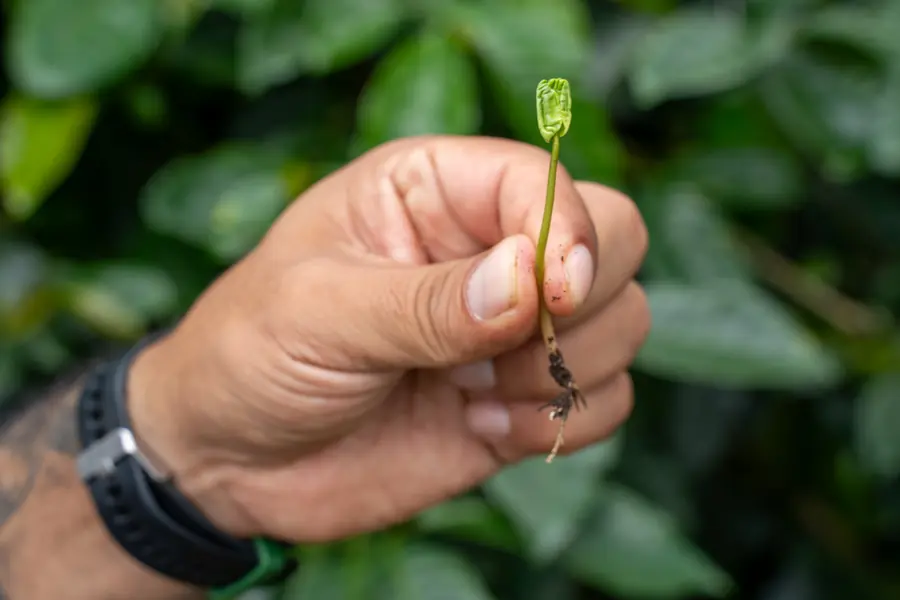
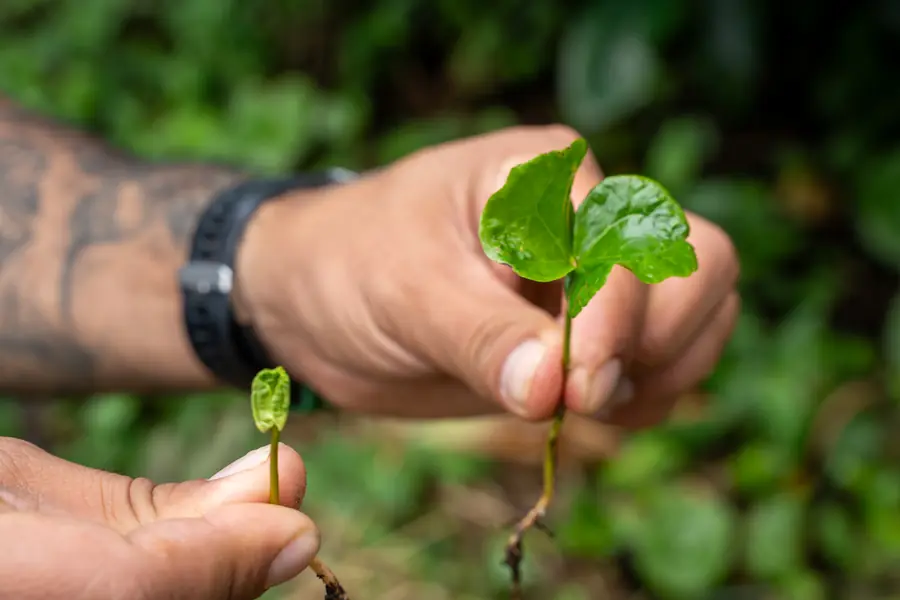
Der ganze Weg in einer Hand: grüne Kirsche, weiße Blüte, rote
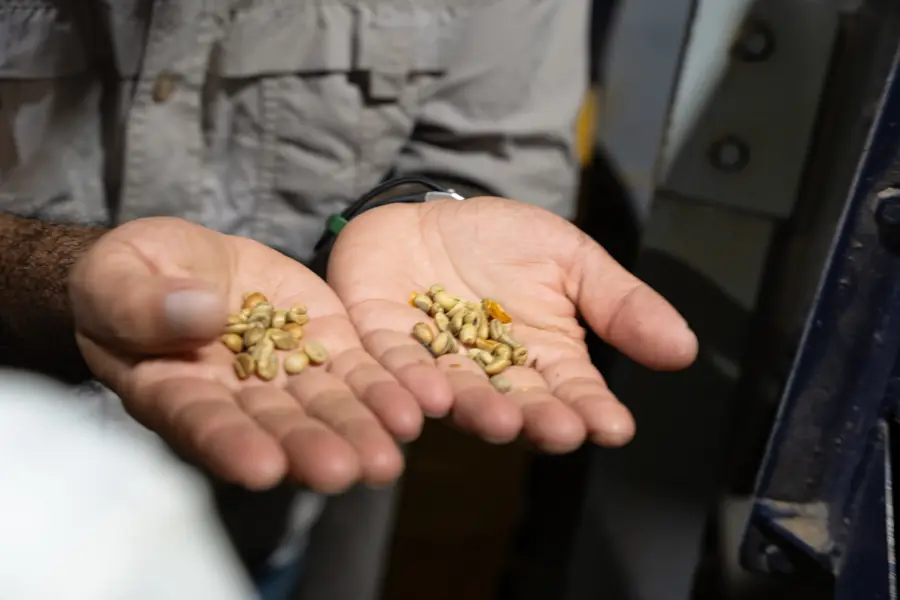
Kirsche — und daneben die Bohne in Pergamenthaut, geschält und getrocknet.The whole journey in one hand: green cherry, white blossom, red cherry — and beside them the bean in its parchment skin, hulled and dried.
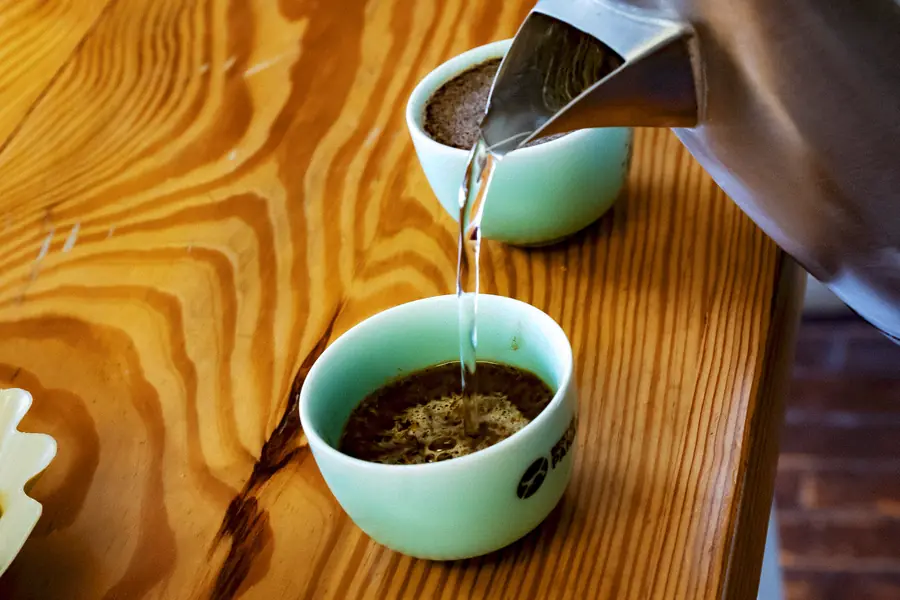
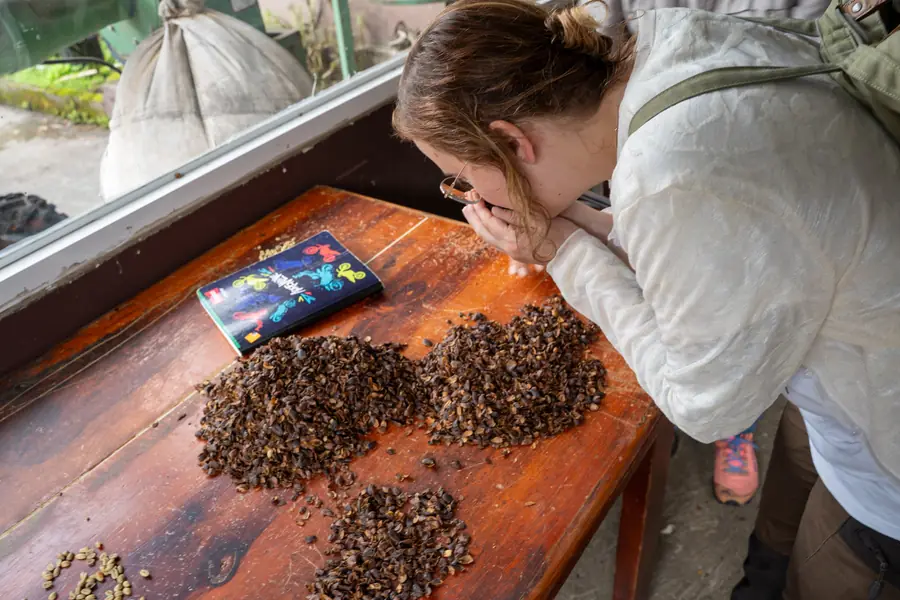
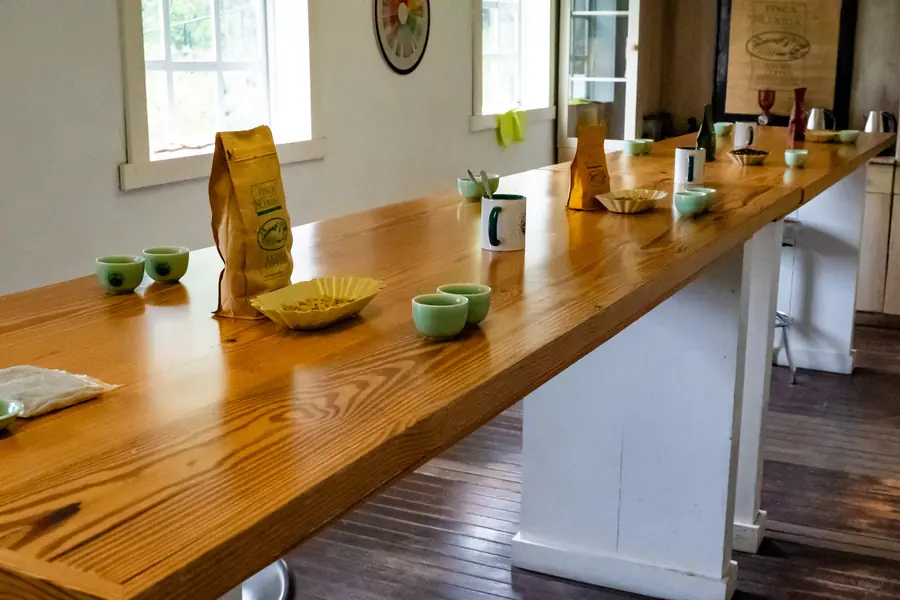
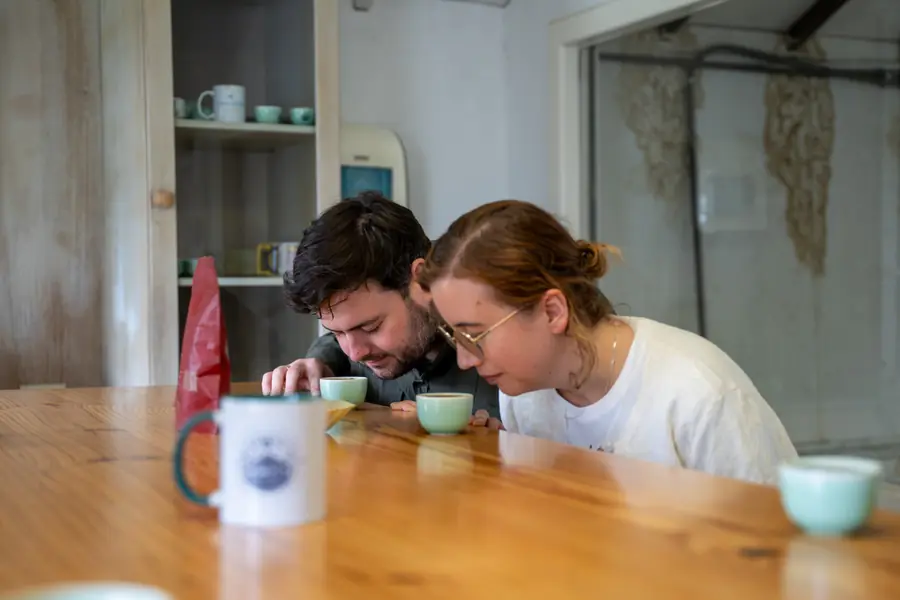
Bei der Verkostung standen vier bis fünf Aufbereitungen nebeneinander — alle von
derselben Pflanze. Sie schmeckten vollkommen unterschiedlich. Die Geisha geht ins
Teeige, fast Weinige und verliert dabei das, was man normalerweise als Kaffeearoma
bezeichnet. Diese Bandbreite an Aromen aus einer einzigen Pflanze war eine echte neue
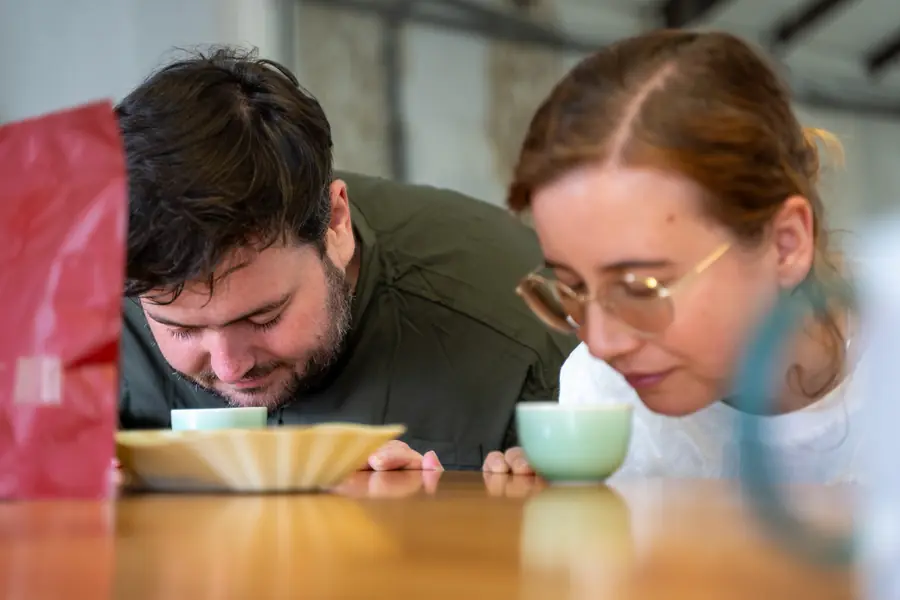
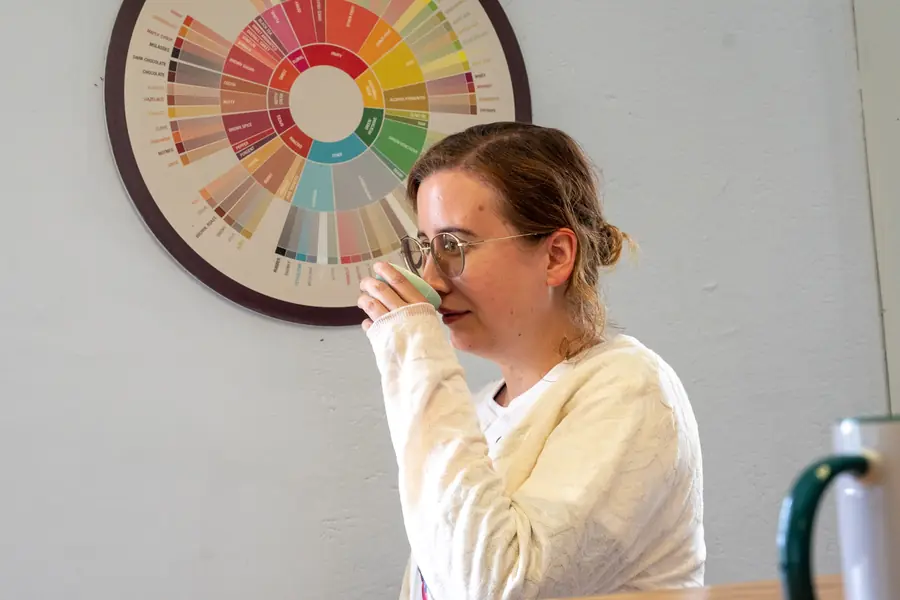
Erkenntnis für uns.At the tasting, four or five processing methods stood side by side — all from the same plant. They tasted completely different. The Geisha goes towards tea, almost towards wine, and in doing so loses what you would normally call coffee aroma. That range of flavours from a single plant was a genuine revelation for us.
Vier bis fünf Aufbereitungen, alle von derselben Pflanze.Four or five processing methods, all from the same plant.Erst riechen, dann schmecken — und staunen.Smell first, then taste — then be amazed.
Eine Frage haben wir uns vorher gestellt: Wie steht es um die Menschen, die das alles
pflücken? Es ist reine Handarbeit, hunderte Saisonkräfte. Wir können nur berichten, was
wir gesehen haben — und hier hatten wir nicht den Eindruck, dass jemand ausgebeutet
wird. Im Gegenteil, die Leute wirkten zufrieden.One question we had asked ourselves beforehand: how are the people who pick all this treated? It is pure manual labour, hundreds of seasonal workers. We can only report what we saw — and we had no impression that anyone was being exploited. On the contrary, people seemed content.
Was bleibt: Ich habe vorher noch nie in meinem Leben eine Kaffeepflanze mit
frischem Kaffee daran gesehen. Und die nächste Tasse zu Hause — die wird anders.What stays with us: I had never in my life seen a coffee plant with fresh coffee on it before. And the next cup at home — that one will be different.
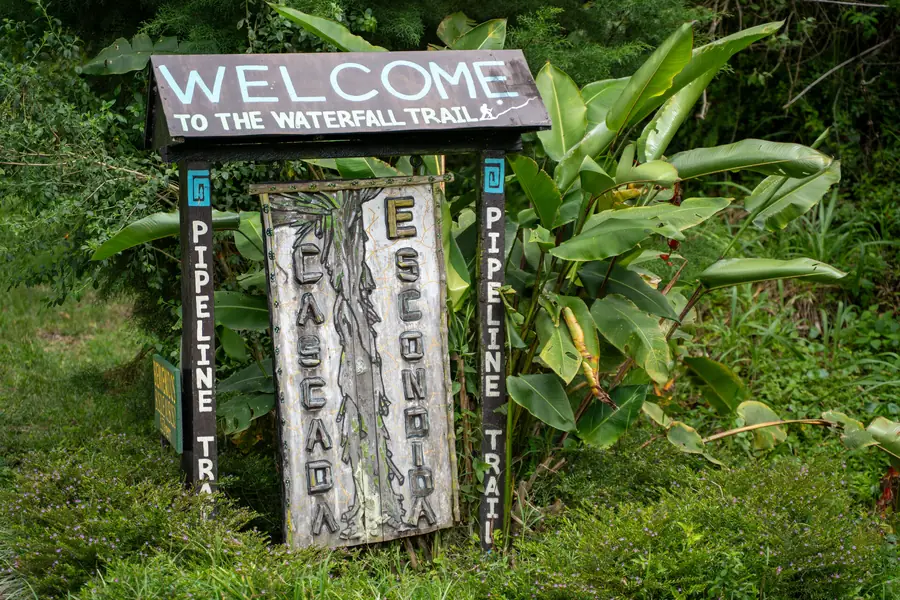
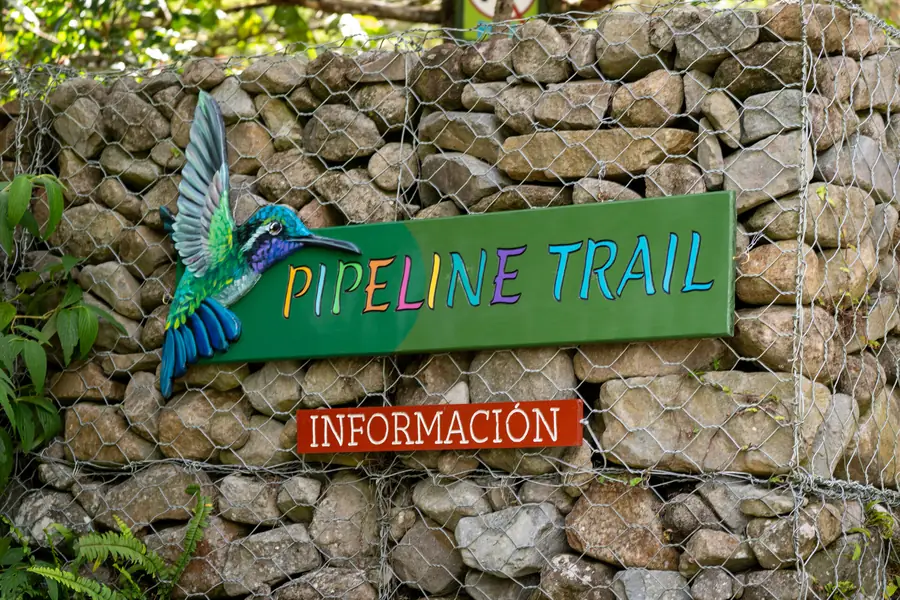
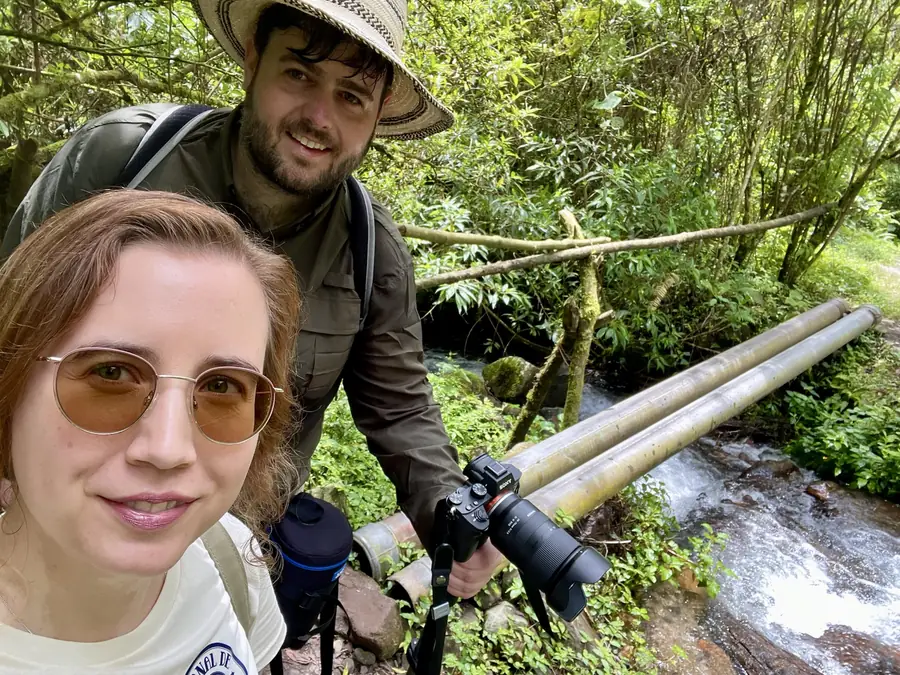
Der Pipeline TrailThe Pipeline Trail
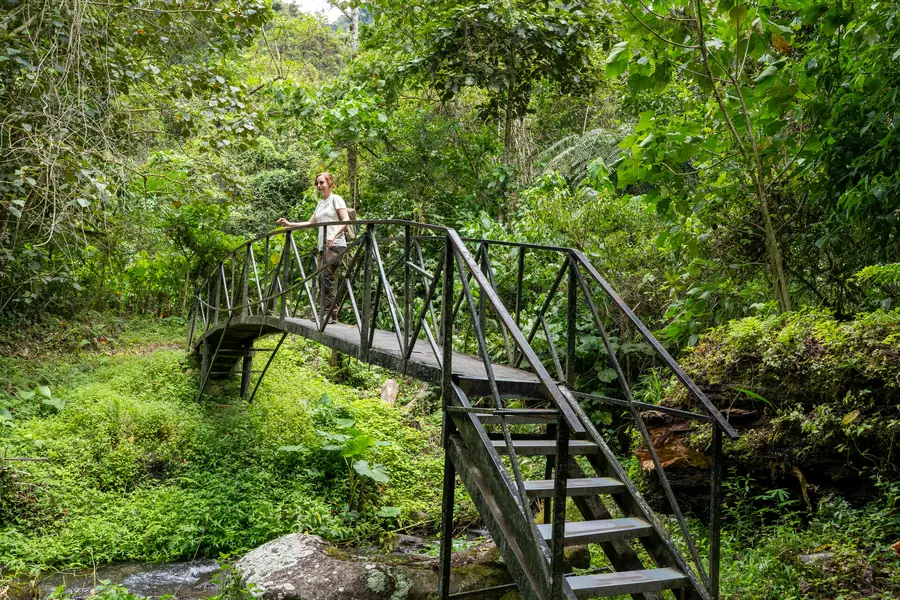
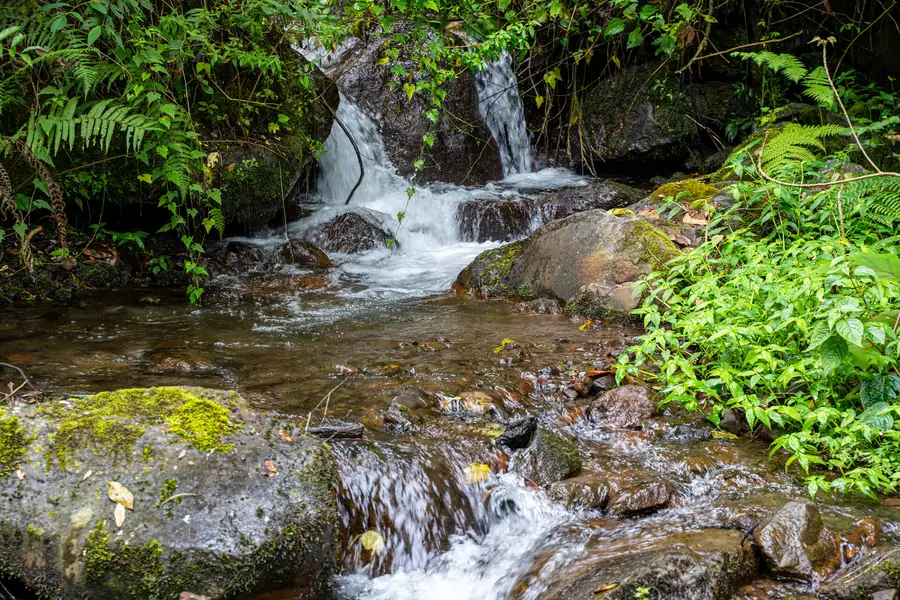
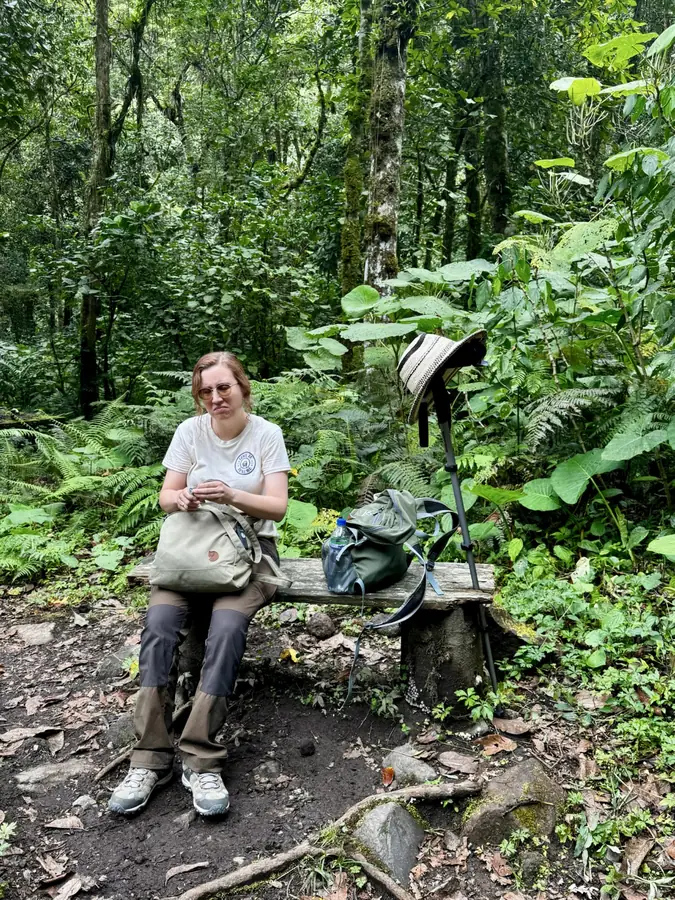
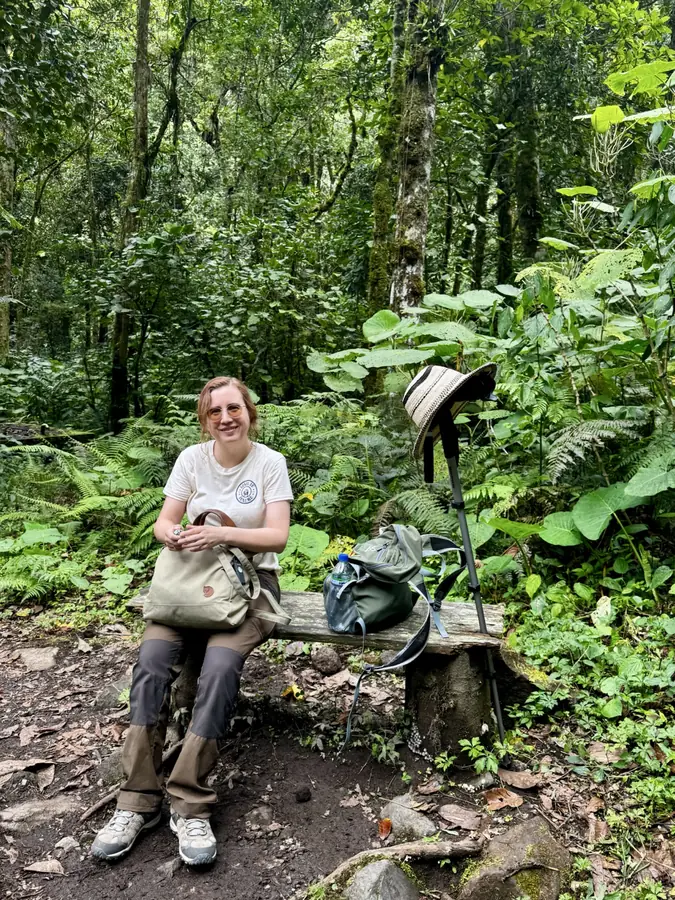
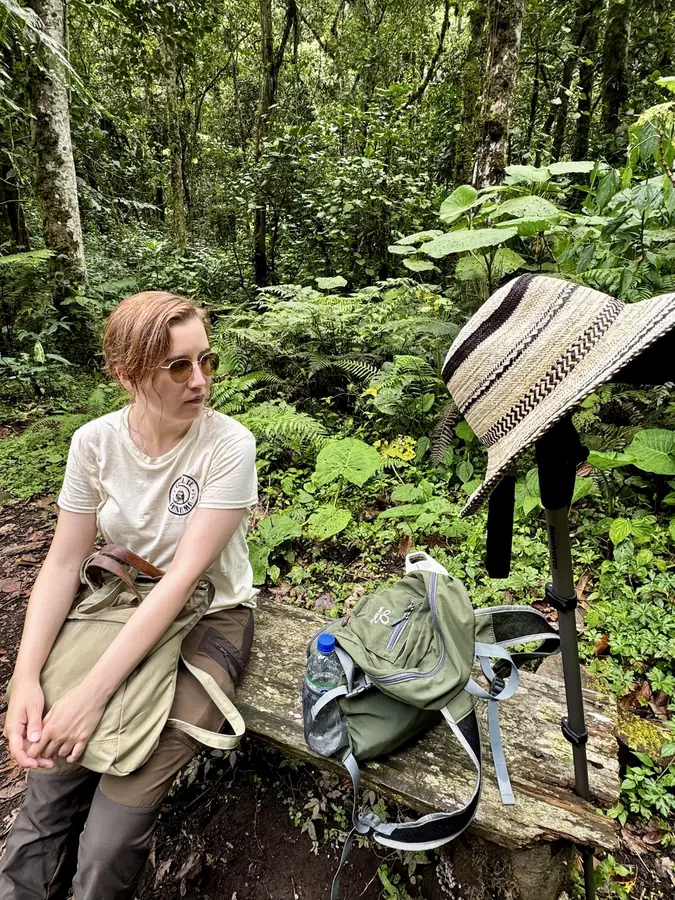
Am Tag darauf sind wir gelaufen. Der Pipeline Trail beginnt
praktisch vor unserer Haustür — er folgt einer alten Wasserleitung durch den Nebelwald
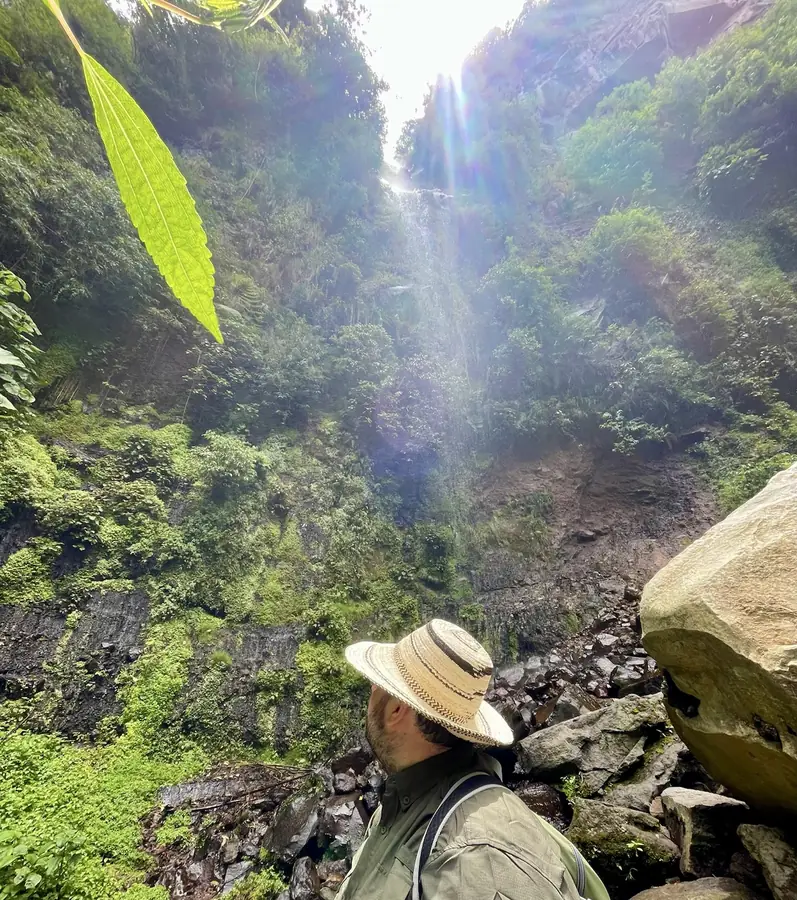
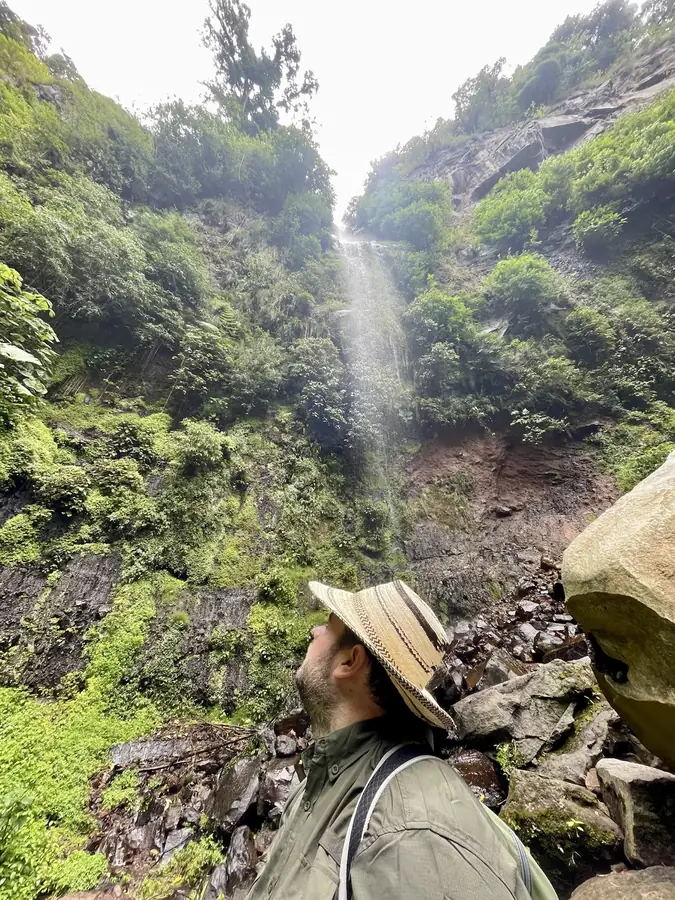
und endet an einem Wasserfall. Zwei bis zweieinhalb Stunden haben wir gebraucht, aber
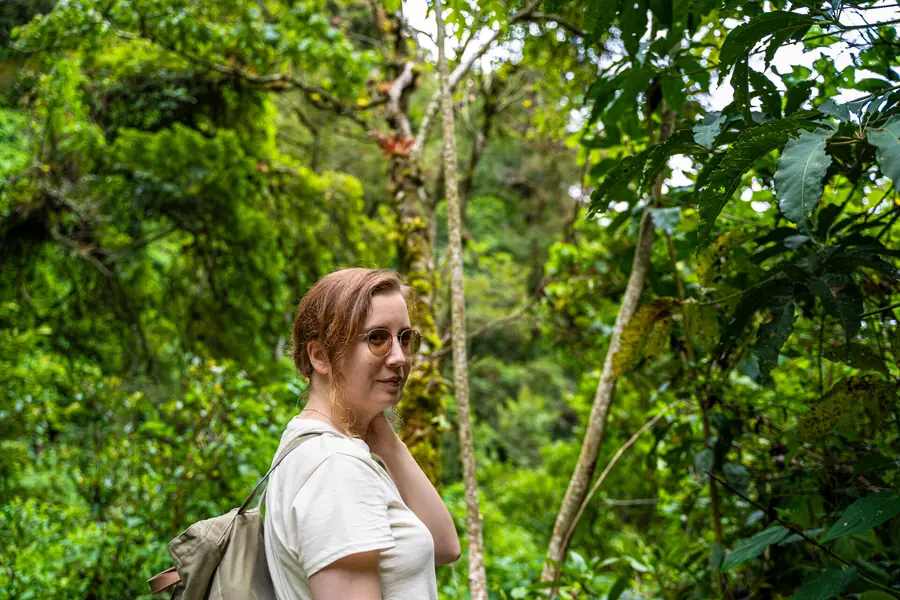
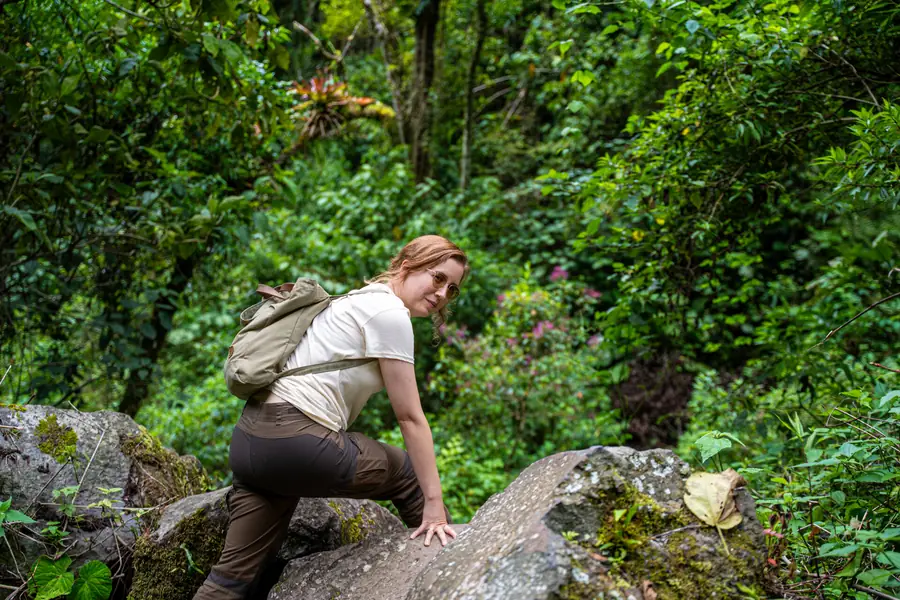
nur, weil wir uns Zeit gelassen und viel fotografiert haben.The
next day we walked. The Pipeline Trail starts practically at our doorstep — it
follows an old water pipe through the cloud forest and ends at a waterfall. We took two
to two and a half hours, but only because we went slowly and took a lot of photographs.
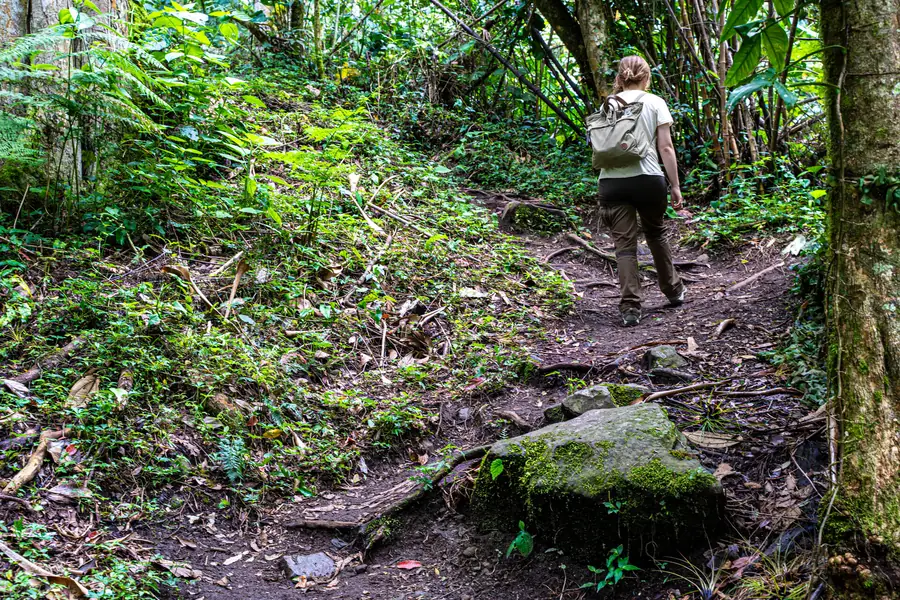
Es geht durchgehend bergauf. Nicht dramatisch, aber kontinuierlich —
man merkt es die ganze Zeit. Anstrengend ist es vor allem, weil wir so etwas nicht jeden
Tag machen. Zum Ende hin wird der Weg dann richtig spannend: Man klettert über Steine,
um zum Wasserfall zu kommen. Da muss man ein bisschen mutig sein.It
climbs the whole way. Not dramatically, but steadily — you feel it constantly. It is
demanding mainly because we don't do this every day. Towards the end the trail gets
genuinely exciting: you clamber over rocks to reach the waterfall. You need a little
nerve there.
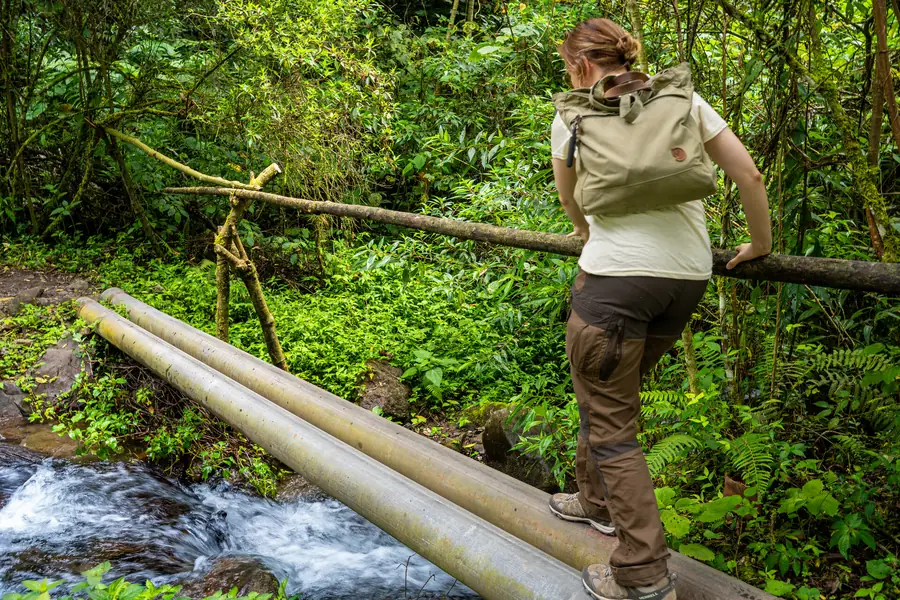
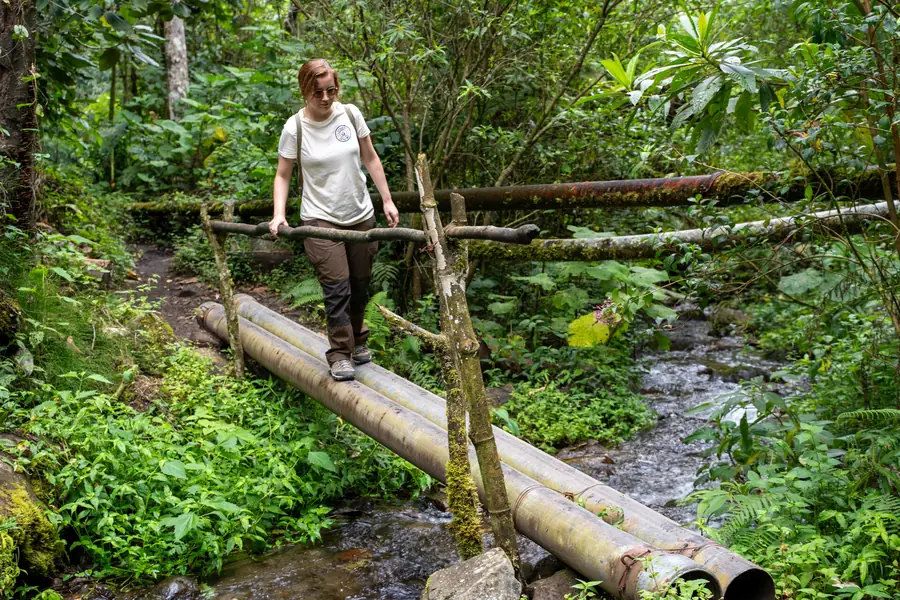
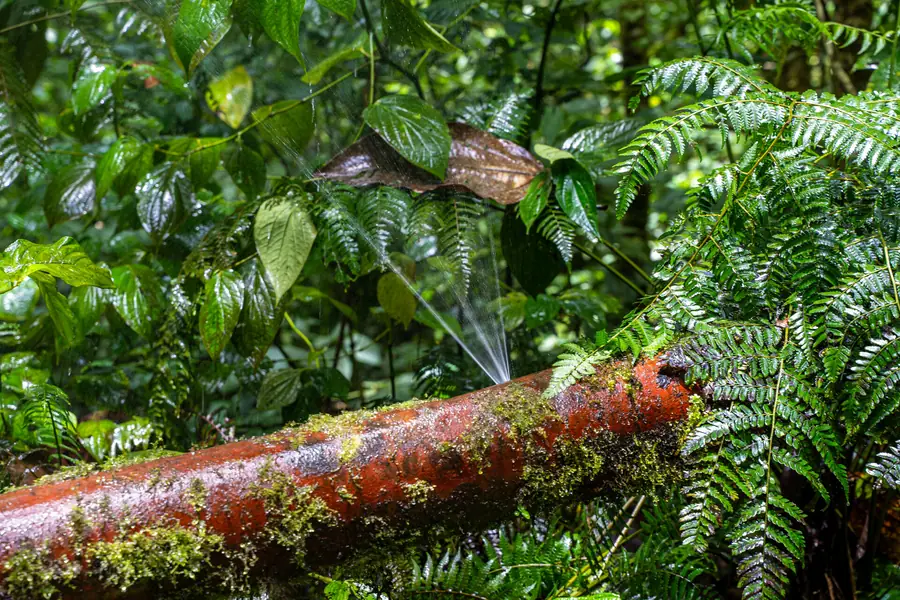
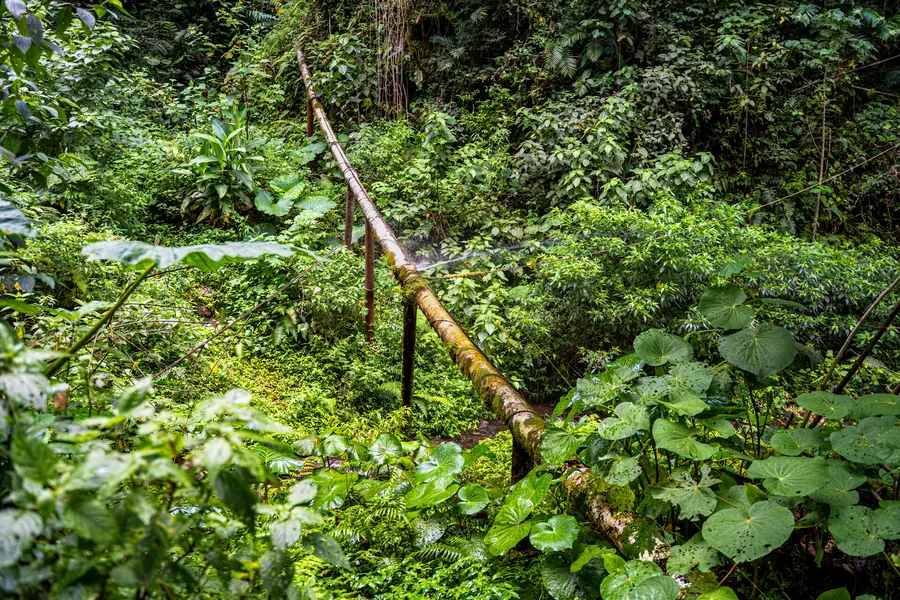
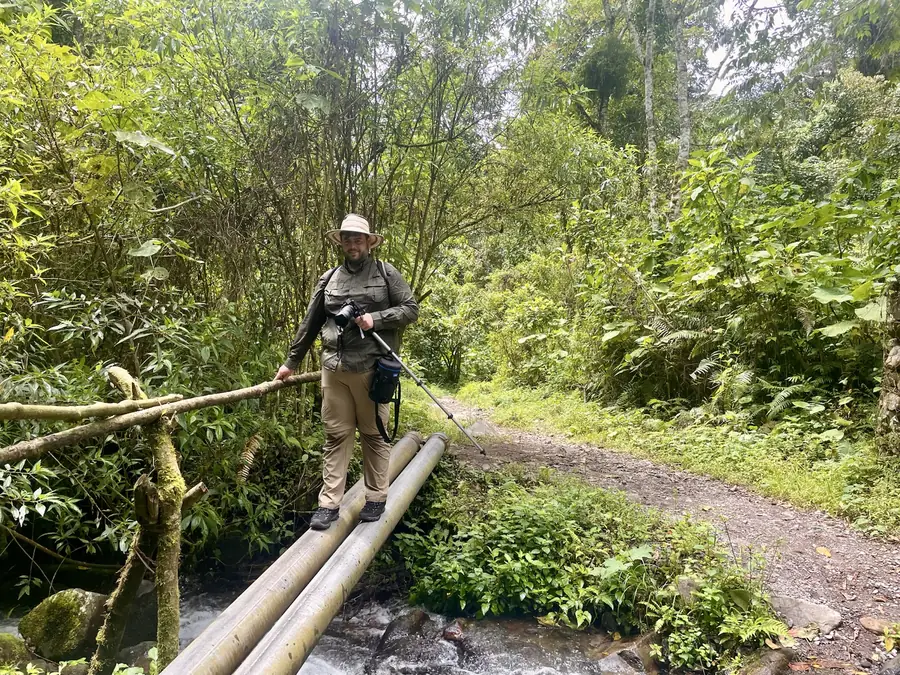
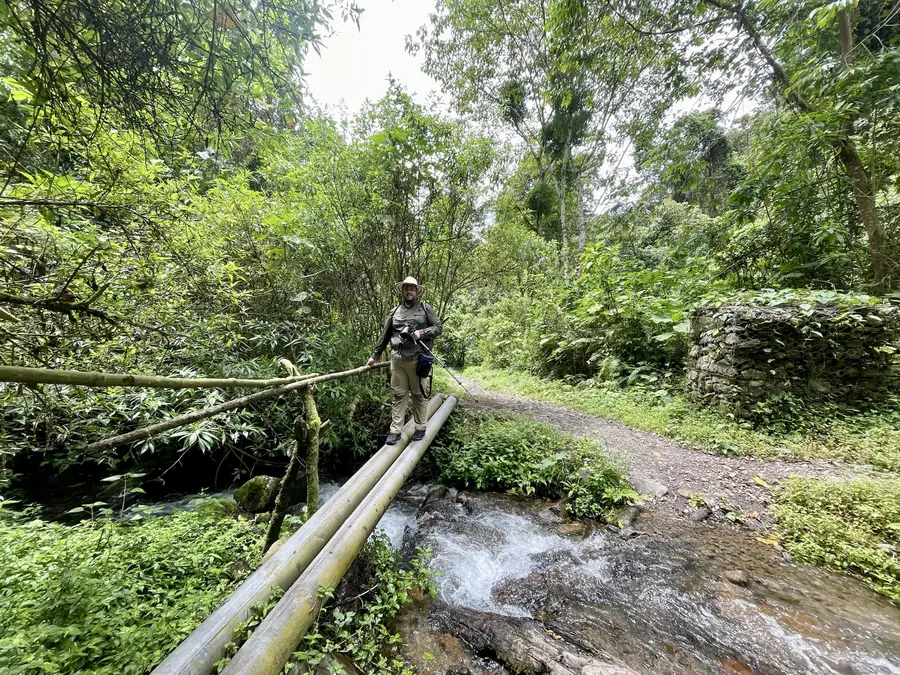
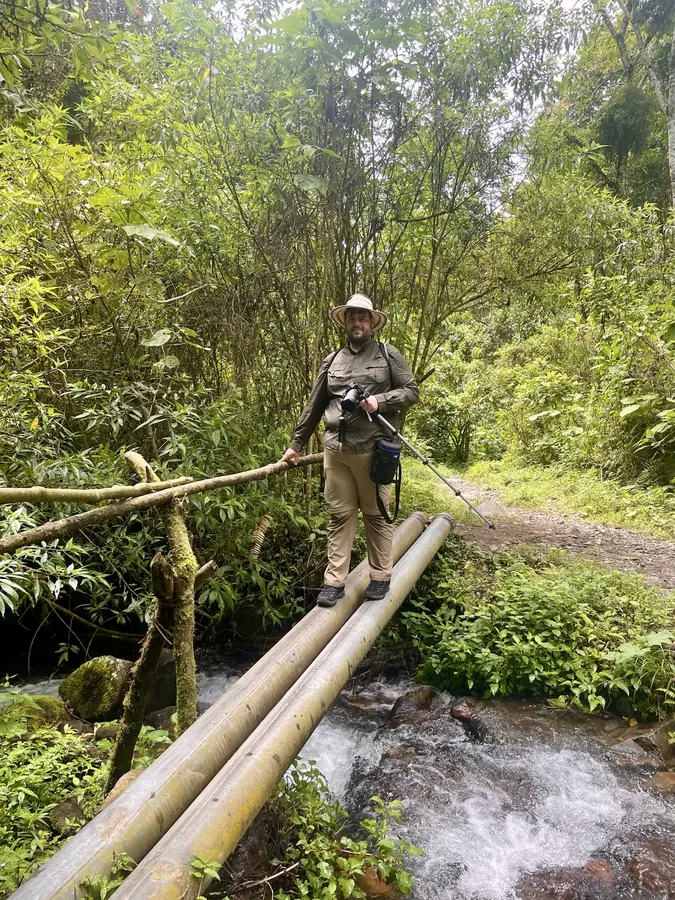
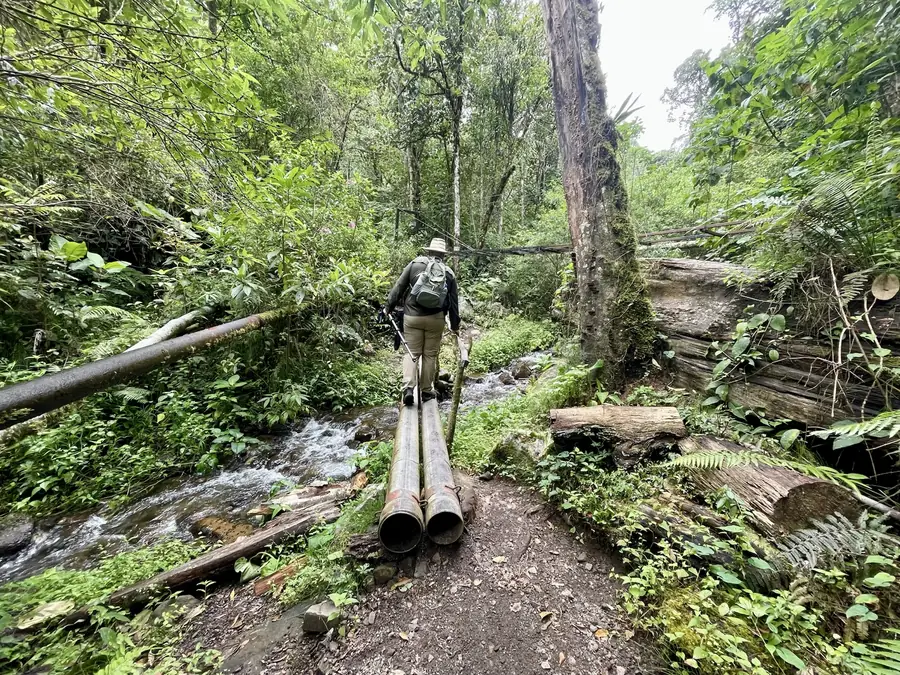
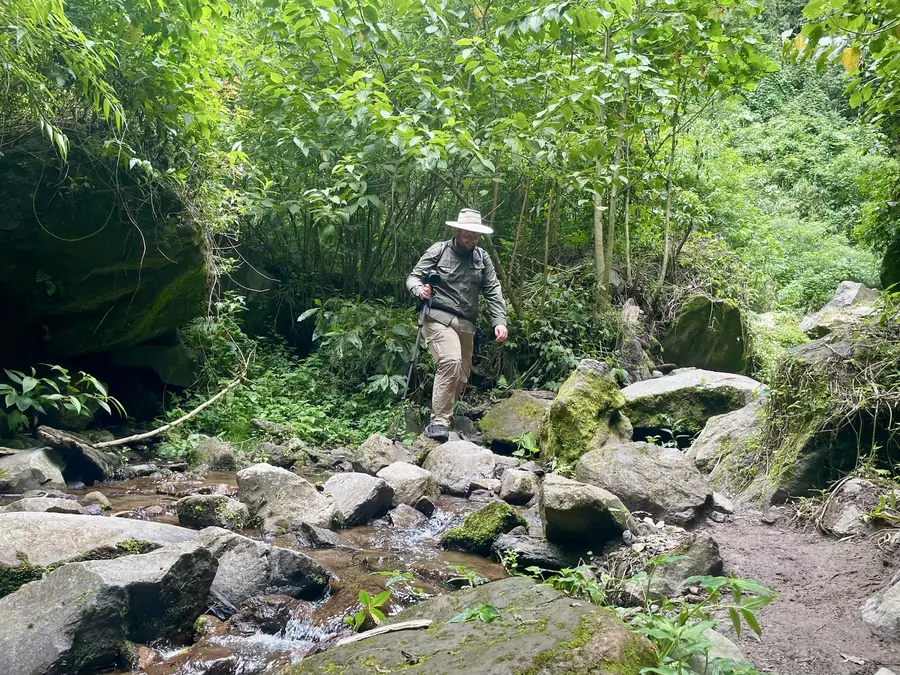
Der Weg heißt nicht ohne Grund so. Stellenweise läuft man direkt auf der alten Wasserleitung, die dem Trail den Namen gegeben hat.The trail is named for a reason. In places you walk straight along the old water pipe the path is named after.
Und dann war da dieses Gefühl, das wir vorher so noch nicht hatten.
In El Valle waren wir auf einem befestigten Weg unterwegs, eine halbe Stunde, sehr
geführt. Das war beeindruckend — aber hier war es richtiger Regenwald, volle
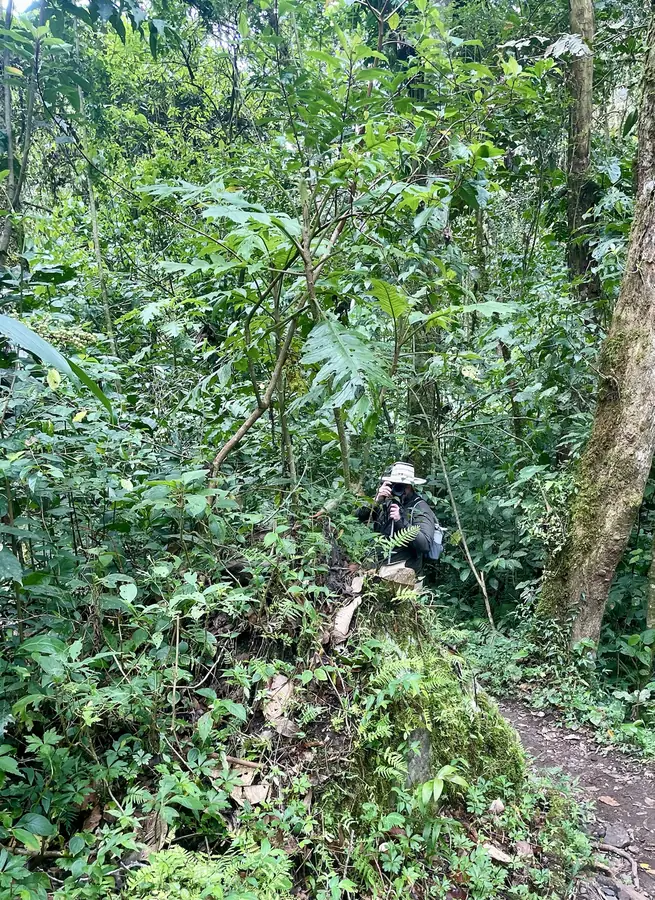
Pulle Dschungel, und wir mittendrin. Das war unser erstes echtes Regenwaldgefühl.And then there was a feeling we hadn't had before. In El Valle we walked a
secured path for half an hour, very much guided. That was impressive — but this was
real rainforest, full-on jungle, and we were in the middle of it. Our first
genuine rainforest experience.
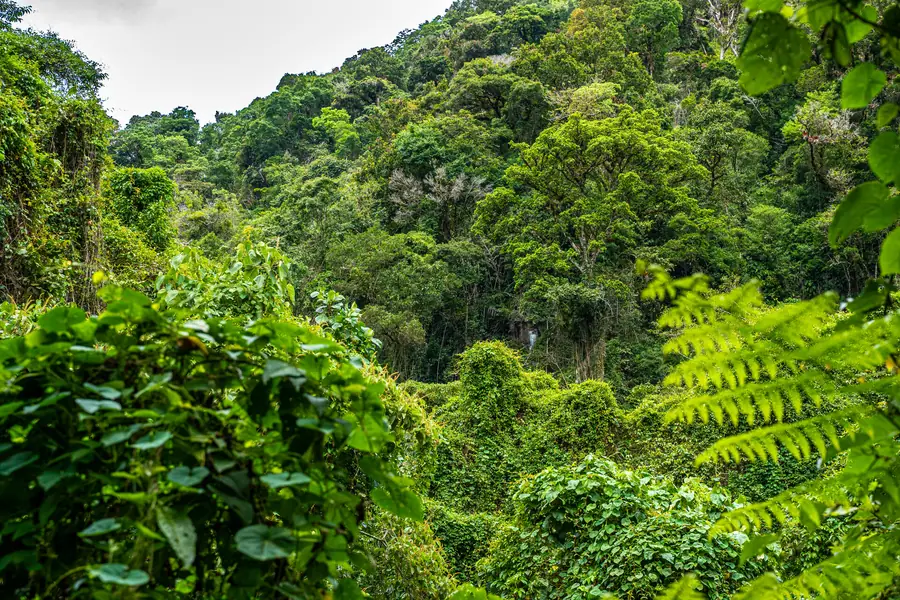
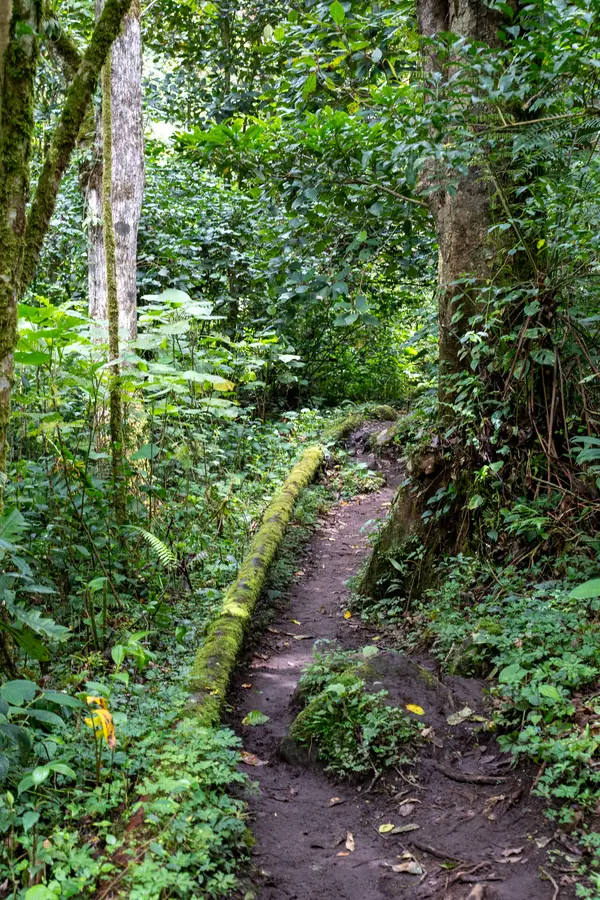
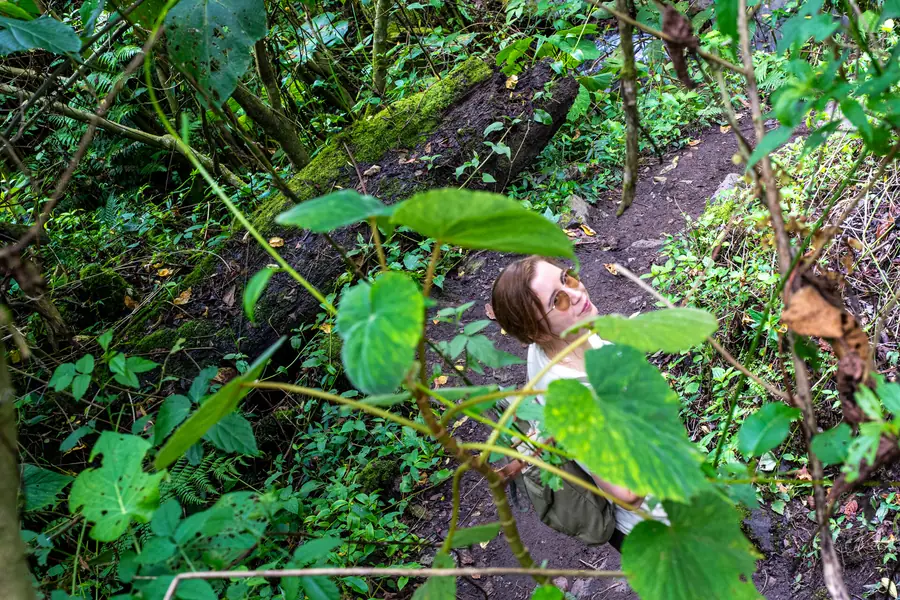
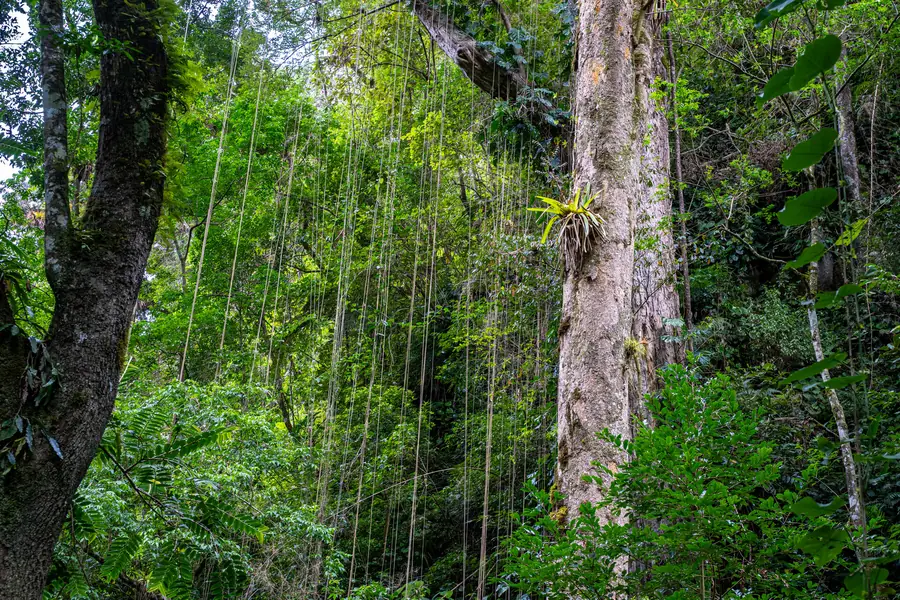
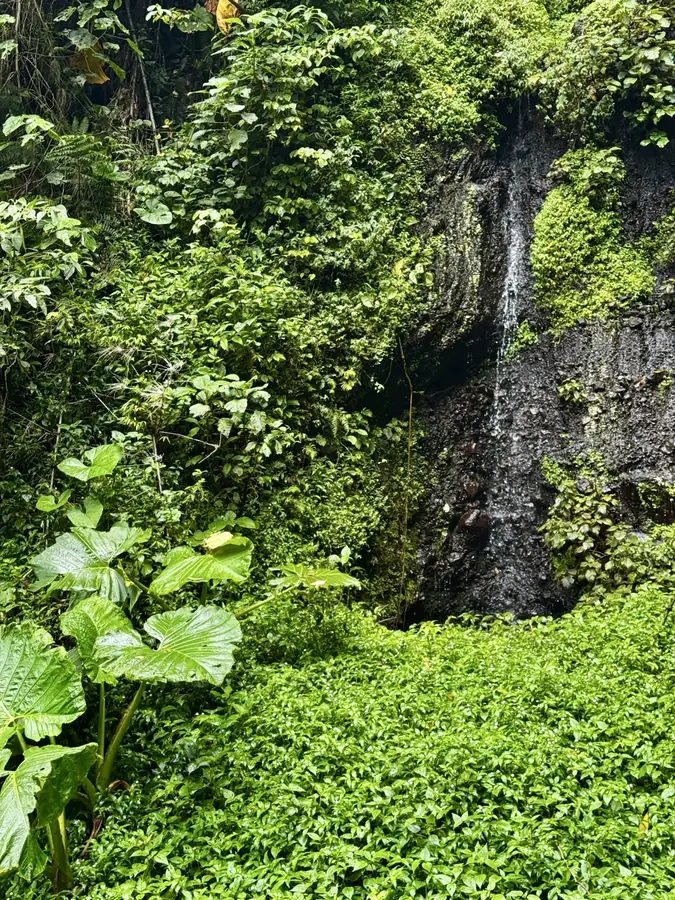
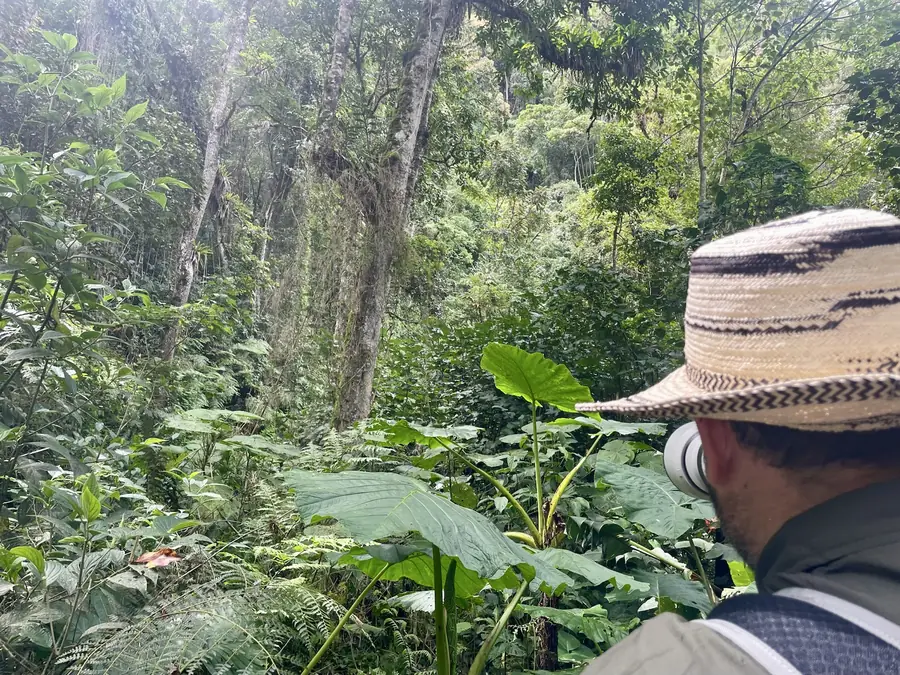
Unter dem Blätterdach. Das Licht kommt nur in Flecken durch — Sonnenschutz braucht man hier unten kaum.Beneath the canopy. Light only comes through in patches — you barely need sunscreen down here.
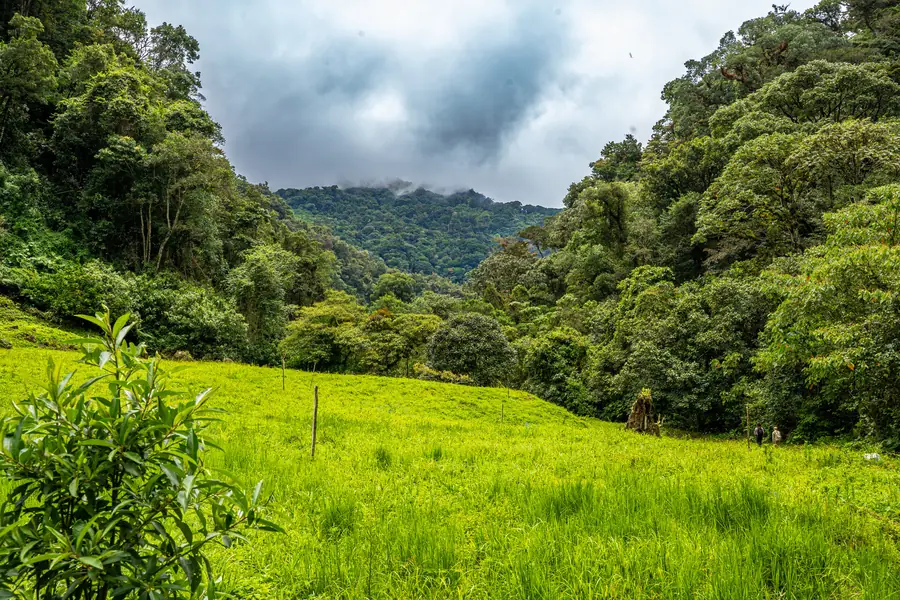
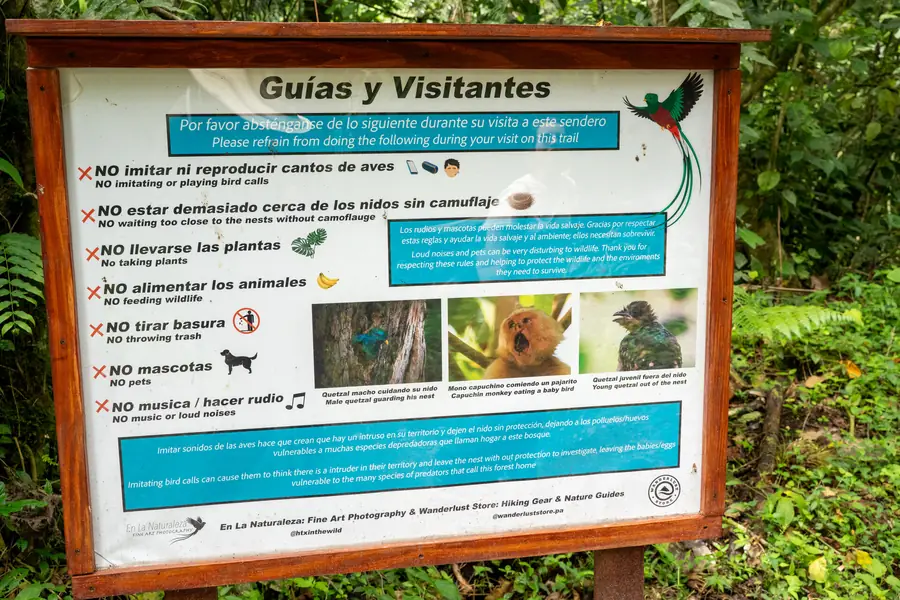
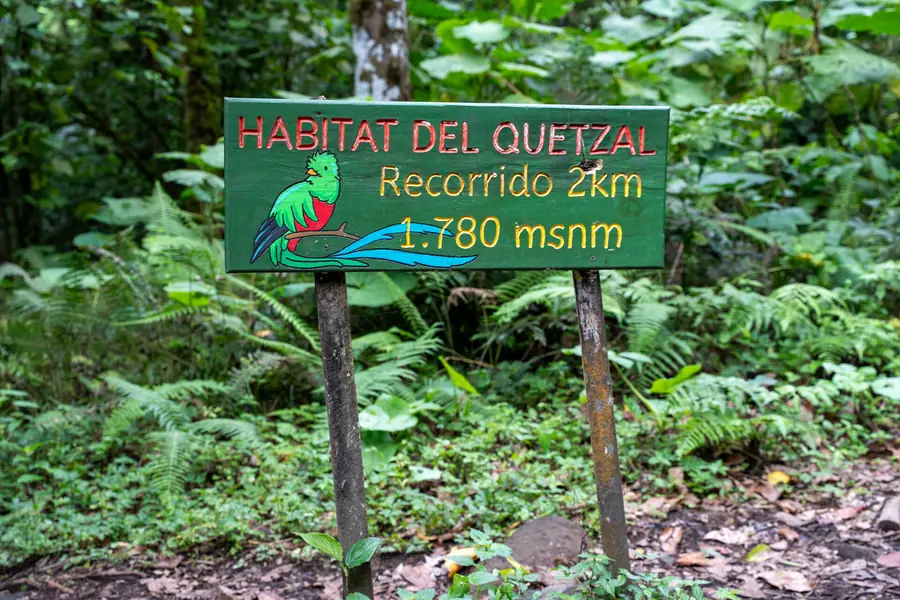
Nach dem Quetzal haben wir die Augen offen gehalten — der Pipeline
Trail gilt als eines der besten Reviere Panamas. Gesehen haben wir keinen. Es ist gerade
nicht die richtige Jahreszeit dafür. Traurig waren wir deshalb nicht, dafür haben wir zu
viel anderes gesehen. Aber wer ihn wirklich sehen will, sollte sich einen Guide
nehmen. Die Leute hier wissen, wo die Vögel sich zu welcher Jahreszeit aufhalten —
das ist die paar Dollar wert.We kept an eye out for the quetzal —
the Pipeline Trail is considered one of Panama's best territories for it. We didn't see
one; it simply isn't the right season. That didn't disappoint us, we saw too much else.
But anyone who really wants to see one should hire a guide. The people here know
where the birds are in which month — well worth the few dollars.
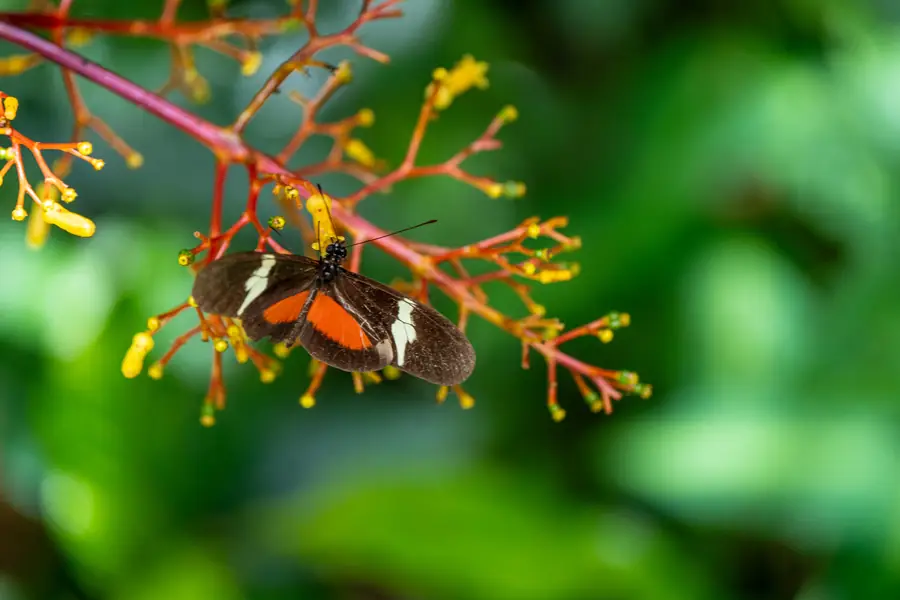
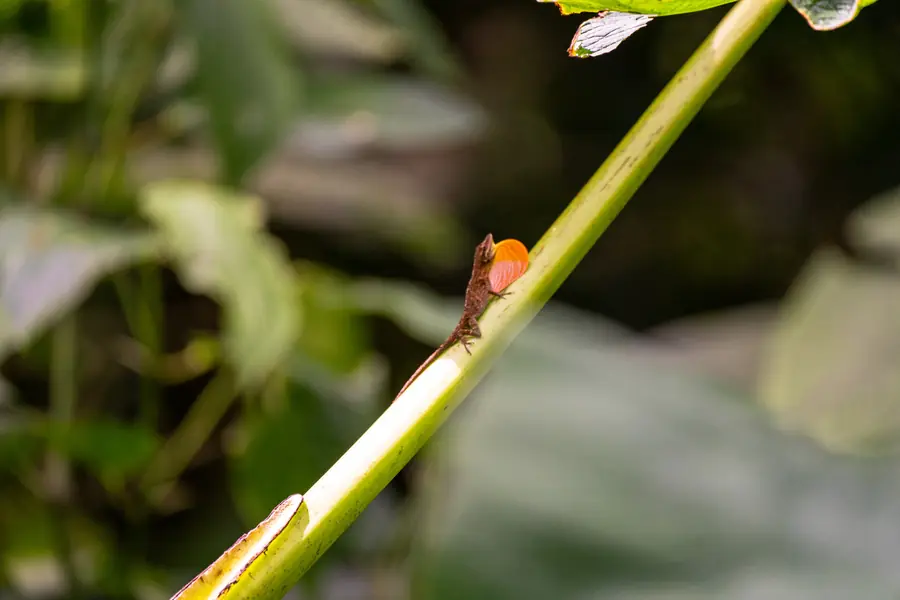
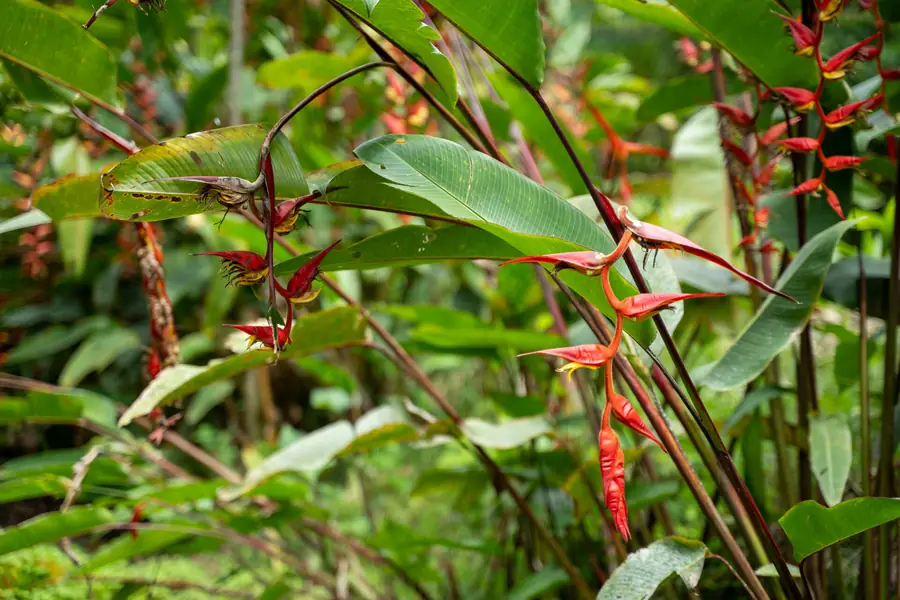
Schwarz-orange auf rotem Blütenstand. An Farbe fehlt es hier auch ohne Quetzal nicht.Black and orange on a red flower spike. Even without a quetzal, there is no shortage of colour here.Kehlfahne voll ausgeklappt, orangerot. So etwas sieht man nur, wenn man stehen bleibt.Throat fan fully out, orange-red. You only get to see this if you stop walking.
Der Vogel, den alle suchenThe bird everyone looks for
Quetzal — heilig, spektakulär, schwer zu findenThe Quetzal — sacred, spectacular, hard to find
Der Quetzal lebt in den Nebelwäldern Mittelamerikas zwischen
1.200 und 3.000 Metern — also genau hier. Das Männchen trägt zur Brutzeit
Schwanzfedern, die bis zu 65 Zentimeter lang werden, weit länger als der Vogel
selbst.The quetzal lives in the cloud forests of Central
America between 1,200 and 3,000 metres — exactly here. In breeding season the male
grows tail feathers up to 65 centimetres long, far longer than the bird itself.
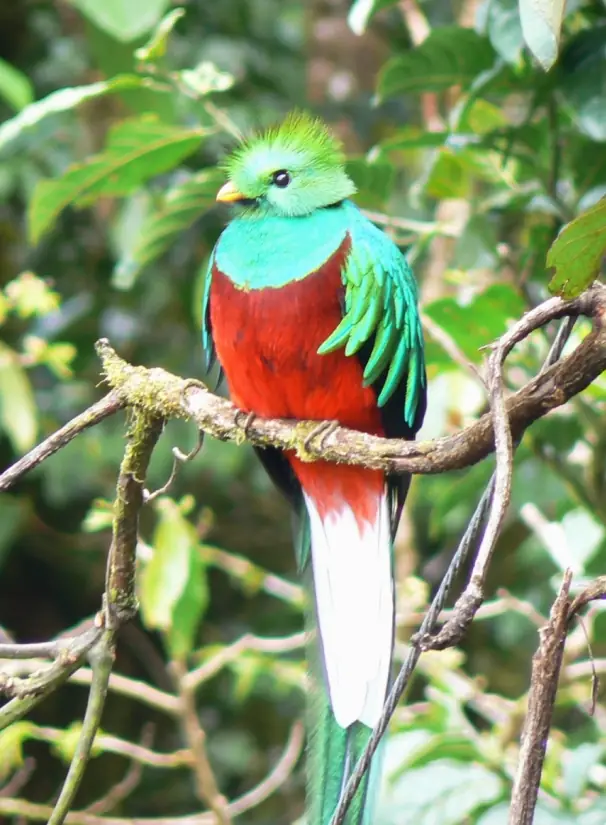
Ein Quetzal-Männchen in voller Pracht. Wir haben keinen
gesehen — dieses Bild stammt von D. Hatcher, gemeinfrei (Public Domain), über Wikimedia
Commons.A male quetzal in full splendour. We didn't see one —
this photograph is by D. Hatcher, public domain, via Wikimedia Commons.
Für Maya und Azteken war er heilig; seine Federn galten als
wertvoller als Gold, und einen Quetzal zu töten war ein Verbrechen. Guatemala hat ihn
zum Nationalvogel gemacht und die Landeswährung nach ihm benannt.The
Maya and Aztecs held it sacred; its feathers were worth more than gold, and killing one
was a crime. Guatemala made it the national bird and named its currency after it.
Die beste Zeit ihn zu sehen ist die Brutzeit von März bis
Juni, wenn die Männchen ihr volles Gefieder tragen und lauter rufen. Im August sind
die Vögel da, aber still und unauffällig — deshalb der Rat mit dem Guide.The best time to see one is the breeding season from March to June,
when the males wear full plumage and call more loudly. In August the birds are here but
quiet and inconspicuous — hence the advice about a guide.
Der Wasserfall am Ende war größer als der in El Valle, und er liegt
tiefer im Dschungel — schwerer zu erreichen, dafür wilder und uriger. Er führte deutlich
mehr Wasser. Wir haben uns eine Weile hingesetzt, in diesem Nebel, den so ein Wasserfall
im Regenwald erzeugt. Dafür hat sich der Aufstieg gelohnt.The
waterfall at the end was bigger than the one in El Valle, and it sits deeper in the
jungle — harder to reach, but wilder and more untamed. It carried considerably more
water. We sat there a while, in that mist a waterfall makes inside a rainforest. That
alone was worth the climb.
Der Wasserfall am Ende. Tiefer im Dschungel, schwerer zu erreichen — und deutlich wasserreicher als der in El Valle.The waterfall at the end. Deeper in the jungle, harder to reach — and carrying far more water than the one in El Valle.
Unterwegs steht ein Baum, den man fast übersieht. Auf dem Schild
davor steht „Cenizo · Ulmus mexicana · 1.000 años aprox.“ — eine Mexikanische
Ulme, geschätzt tausend Jahre alt. Solche Bäume haben eine Ausstrahlung, die schwer
zu beschreiben ist; man bleibt einfach stehen.Along the way stands a tree you could almost walk past — said to be a
thousand years old. A sign tells its story. Trees like that have a presence that is
hard to put into words; you simply stop.
Allein war man nicht. Zum Mittag hin kamen immer mehr Gruppen, und
einige davon wirkten mit dem Weg durchaus überfordert. Überlaufen ist es trotzdem nicht —
man muss hier nirgends anstehen. Und das Wetter war perfekt: um die zwanzig bis
dreiundzwanzig Grad beim Losgehen, kein Regen, nachmittags sogar richtig sonnig.
Sonnenschutz braucht man unter dem Blätterdach kaum. Geschwitzt haben wir trotzdem, die
Luftfeuchtigkeit nimmt einem das nicht ab.We weren't alone.
Towards midday more and more groups came through, and some clearly found the trail
harder than expected. It still isn't crowded — nobody queues here. And the weather was
perfect: around twenty to twenty-three degrees when we set off, no rain, genuinely sunny
by the afternoon. Under the canopy you barely need sunscreen. We still sweated — the
humidity sees to that.
Nachmittags kam die Sonne durch. Auf der Metallbrücke standen die Strahlen plötzlich zwischen den Bäumen.The sun came through in the afternoon. On the metal bridge the beams suddenly stood between the trees.
Wir sind den Weg bewusst langsam gegangen. Stehenbleiben, schauen,
horchen. Wer hier nur hochrennt, ein Selfie am Wasserfall macht und wieder
hinunterhastet, sieht die Hälfte nicht. Das ist nicht unsere Art zu reisen.We deliberately took our time. Stopping, looking, listening. Anyone who just
races up, takes a selfie at the waterfall and hurries back down misses half of it. That
isn't how we travel.
Hunderte kleine Pilze auf einem Fleck Waldboden. Wer hochrennt, läuft daran vorbei.Hundreds of tiny mushrooms on one patch of forest floor. Anyone racing uphill walks straight past this.
Das EstateThe estate
Blättern · zum Vergrößern anklickenSwipe · click to enlarge
Eine halbe Orange am Ast reicht als Einladung
Kurz darauf sitzt schon der Nächste da
Das Autodach als bester Platz im Haus
Erste rote Kirschen zwischen dunklem Laub
Bananen, noch grün am Stamm
Das Tal verliert sich im Blau der Berge
Kleine Früchte und hängende Blütentrompeten
Ganz oben in der Krone sitzt einer
Violette Blütenähren im Gestrüpp
Wiese, Wald, Wolken — der Blick vom Estate
Der Weg führt mitten durch den Garten
Viel Glas, und viel Grün davor
Rotes Holz, weiße Fensterrahmen, Blumenkästen
Grauer Himmel über Bäumen und Dächern
Über den Garten hinweg auf die roten Häuser
Vom Estate über die Baumkronen auf die Bergrücken des Hochlands
Dasselbe Panorama, diesmal von Blättern gerahmt
Bewaldeter Hang, Zweige darüber
Der Stuhl auf der Terrasse war schon besetzt
Er bleibt einfach sitzen
Auf der Terrasse wird man beim Frühstück beobachtet
Von hinten sieht man das schwarz-weiße Flügelmuster
Und wieder ab in den Busch
Zwei Hibiskusblüten in Apricot
Eine Wanze nimmt das Geländer in Beschlag
Noch immer da, keinen Zentimeter weiter
Die KaffeetourThe coffee tour
Blättern · zum Vergrößern anklickenSwipe · click to enlarge
An der blauen Maschine werden die Bohnen sortiert
An der Sortiermaschine
Rohbohnen wandern übers Sieb
Mit und ohne Pergamenthaut, nebeneinander in der Hand
In der Mühle dreht sich die gelbe Schnecke
Stahlgestelle und Trichter, gerade still
Getrocknete Kirschen, dunkel und hart
Im Lager stapeln sich die Säcke bis in den Gang
Jeder Sack trägt seine eigene Beschriftung
Noch mehr Säcke, noch mehr Kartons
Ein Sack mit dem Aufdruck, der den Preis erklärt: GEISHA
Erst einmal daran riechen
Gepflückt wird von Hand — die Kirschen reifen nicht gleichzeitig
Rotes Holz, grünes Dach, mitten im Wald
Knospen und grüne Kirschen am selben Zweig
Kaffeeblüten — sie halten nur wenige Tage und riechen nach Jasmintee
Nach dem Regen: rot und grün nebeneinander
Reif ist sie, wenn sie tiefrot ist
Keine Monokultur — zwischen den Reihen stehen Schattenbäume
Aus jeder Blüte wird eine Kirsche, in jeder Kirsche stecken zwei Bohnen
Alle Stadien in einer Hand: Blüte, grüne und rote Kirsche, fertige Bohne
Der Sämling trägt seine Bohnenschale noch mit sich
So klein fängt ein Kaffeestrauch an
Die ersten beiden Blätter sind da
Die Sträucher stehen im Halbschatten
Reihe für Reihe, dazwischen die großen Bäume
Damit geht es gleich hoch ins Feld
Am Steuer, kurz vor der Abfahrt
Ein Erdweg zieht sich den terrassierten Hang entlang
Zwischen den Sträuchern hindurch ins Tal
Aus dem Wagen heraus: Wiese, dahinter die Berge
Rote Kappe zwischen grünen Blättern
Eine Traube roter und grüner Kirschen am Strauch
Ein Nest in der Astgabel, gut versteckt
Zwischen den Reihen wirkt man klein
Allein auf dem Weg durchs Feld
Die Sonne steht hinter dem Zweig
Wir beide im Rückspiegel
Ein Kolibri macht Pause auf einem Halm
Zwischen den Blüten hindurch fotografiert
Helle Kehle, violette Blüten ringsum
Und derselbe im Sitzen — César ist studierter Ornithologe
Ein Kolibri, frontal
Und weg ist er
Halb im Blattwerk verschwunden
Wieder einer, mitten in den Blüten
Diesmal zeigt er uns nur den Rücken
Von Hand sortiert, Stück für Stück
Der Tisch für die Verkostung ist gedeckt
Bohnen, Beutel und zwei mintgrüne Tassen
Im Hintergrund das Aromarad
Aufgebrüht wird in mintgrüne Tassen
Über die Tassen gebeugt, hochkonzentriert
Erst riechen, dann schmecken
Der Pipeline TrailThe Pipeline Trail
Blättern · zum Vergrößern anklickenSwipe · click to enlarge
Pipeline Trail · 7. August
Pipeline Trail · 7. August
Pipeline Trail · 7. August
Pipeline Trail · 7. August
Pipeline Trail · 7. August
Pipeline Trail · 7. August
Pipeline Trail · 7. August
Pipeline Trail · 7. August
Pipeline Trail · 7. August
Pipeline Trail · 7. August
Unter dem Blätterdach
Pipeline Trail · 7. August
Pipeline Trail · 7. August
Pipeline Trail · 7. August
Pipeline Trail · 7. August
Pipeline Trail · 7. August
Pipeline Trail · 7. August
Pipeline Trail · 7. August
Über die alte Wasserleitung, der der Weg seinen Namen verdankt
Pipeline Trail · 7. August
Pipeline Trail · 7. August
Pipeline Trail · 7. August
Pipeline Trail · 7. August
Pipeline Trail · 7. August
Der Cenizo — laut Schild rund tausend Jahre alt
Pipeline Trail · 7. August
Pipeline Trail · 7. August
Pipeline Trail · 7. August
Pipeline Trail · 7. August
Pipeline Trail · 7. August
Von großen Blättern gerahmt
Pipeline Trail · 7. August
Er führt deutlich mehr Wasser als der in El Valle
Unten hat das Wasser die rote Erde freigelegt
Pipeline Trail · 7. August
Der Wasserfall am Ende des Weges
Pipeline Trail · 7. August
Pipeline Trail · 7. August
Pipeline Trail · 7. August
Pipeline Trail · 7. August
Pipeline Trail · 7. August
Pipeline Trail · 7. August
Pipeline Trail · 7. August
Pipeline Trail · 7. August
Hunderte winziger Pilze am Waldboden
Bromelien und Lianen am Stamm
Pipeline Trail · 7. August
Und einer mit durchsichtigen Flügeln
Stellenweise ist das Rohr der Steg
Pipeline Trail · 7. August
Pipeline Trail · 7. August
Zwischen Blättern, die größer sind als man selbst
Pipeline Trail · 7. August
Pipeline Trail · 7. August
Pipeline Trail · 7. August
Eine Echse stellt ihre Kehlfahne auf
Pipeline Trail · 7. August
Pipeline Trail · 7. August
Pipeline Trail · 7. August
Schmetterling auf rotem Blütenstand
Pipeline Trail · 7. August
Pipeline Trail · 7. August
Pipeline Trail · 7. August
Pipeline Trail · 7. August
Der Bach über bemooste Stufen
Pipeline Trail · 7. August
Pipeline Trail · 7. August
Pipeline Trail · 7. August
Pipeline Trail · 7. August
Pipeline Trail · 7. August
Pipeline Trail · 7. August
Ein Vogel mit leuchtend rotem Kopf
Pipeline Trail · 7. August
Mit Kamera und Stativ auf dem Rohr
Pipeline Trail · 7. August
Pipeline Trail · 7. August
Kurze Pause am Bach
Pipeline Trail · 7. August
Pipeline Trail · 7. August
Der Blick nach oben, wenn man endlich davorsteht
Pipeline Trail · 7. August
Pipeline Trail · 7. August
Pipeline Trail · 7. August
Pipeline Trail · 7. August
Sonnenstrahlen auf der Metallbrücke
Pipeline Trail · 7. August
Noch unterwegsStill on the road
Was als Nächstes kommtWhat comes next
5
Bocas del ToroBocas del Toro
10.–12. August10–12 August
6
Panama-StadtPanama City
12.–16. August12–16 August
7
Die WaleThe whales
15. August15 August
Fortsetzung folgtTo be continued
Die Reise läuft noch.The journey isn't over yet.
Schaut in ein paar Tagen wieder vorbei — dann steht hier das nächste Kapitel.
Max & Charlotte · Sommer 2026 🌴
Come back in a few days — the next chapter will be waiting here.